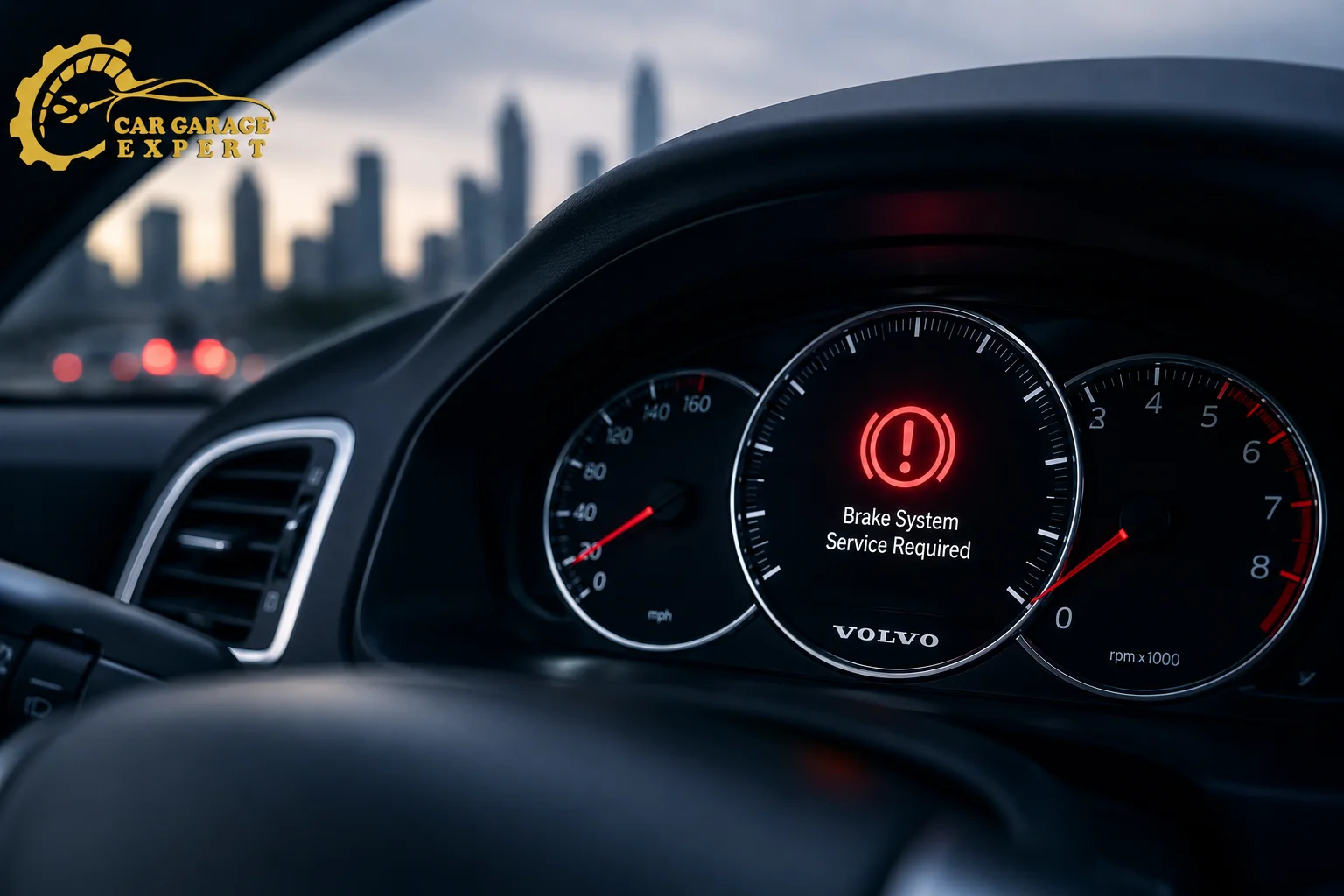
If your Volvo Brake Warning Light comes on while driving, do not treat it as a minor dashboard notification. It can indicate low brake fluid, a parking-brake fault, a braking system issue or on some models, a problem associated with ABS. Volvo advises drivers to stop safely and check the brake-fluid level when the brake warning appears. If the fluid is below the MIN mark, do not drive the vehicle until the cause is investigated. When the brake and ABS warnings appear together, the situation can be particularly serious.
If you notice unusual braking, a soft pedal, fluid leakage, grinding, vibration or multiple warning lights, arrange professional assistance rather than continuing your journey.
Table of Contents
- Problem Overview
- Symptoms to Watch For
- Common Causes
- Diagnostic Process
- Repair Process
- Risks of Ignoring It
- Can You Continue Driving?
- Repair Time
- Cost Factors
- Dubai-Specific Advice
- Why Choose Car Garage Expert for Roadside Assistance?
- Frequently Asked Questions
- Related Services
- Final Call-to-Action
Problem Overview: What the Volvo Brake Warning Light Means While You Are Driving
Seeing a Volvo Brake Warning Light during a journey can understandably make a driver nervous. The important thing is to understand that the warning does not identify one specific failed component. It tells you that the braking system needs attention.
Depending on the Volvo model and warning combination, the cause may involve brake fluid, the parking brake, ABS, brake-force distribution or another braking-system fault. Volvo documentation states that a brake warning can indicate a low brake-fluid level, while a brake warning appearing with the ABS warning can indicate a brake-system problem.
The safest response is to reduce speed, avoid sudden braking and find a safe location to stop. From there, you can inspect the warning message and, if appropriate, the brake-fluid level.
Symptoms That Can Accompany a Volvo Brake Warning Light
The dashboard warning may be the first sign, but your Volvo can also give you physical clues that something is wrong.
Watch for:
- A soft or spongy brake pedal
- Brake pedal traveling farther than normal
- Longer stopping distances
- Grinding or squealing noises
- Pulling to one side while braking
- Brake vibration or pulsation
- Burning smells around a wheel
- Visible brake-fluid leakage
- ABS or traction-control warnings
- Parking-brake warning messages
- A change in braking response
If the Volvo Brake Warning Light appears together with an ABS warning, take the situation especially seriously. Volvo explains that an ABS fault can leave the normal braking system functioning. At the same time, ABS itself is unavailable, while simultaneous brake and ABS warnings may indicate a broader brake-system issue.
Common Causes of a Volvo Brake Warning Light: Why the Warning May Appear
Several problems can trigger a brake-related warning while your Volvo is moving.
Low Brake Fluid
Low fluid is one of the first things to check. Brake-fluid loss can result from a leak, worn brake components or another hydraulic problem. Volvo specifically advises checking the reservoir when the brake warning appears and investigating the cause of fluid loss rather than treating the warning as a routine top-up.
Parking Brake or Electronic Parking Brake Fault
On Volvo models equipped with an electronic parking brake, an electrical or mechanical fault can activate a warning. A parking brake that hasn’t fully released can also cause unusual symptoms.
ABS-Related Problem
A faulty wheel-speed sensor, damaged wiring, ABS module problem or another electronic fault can trigger ABS-related warnings. If the brake warning and ABS warning appear together, professional diagnosis is recommended.
Worn Brake Components
Brake pads and other friction components gradually wear. Although warning systems vary by Volvo model, worn components can contribute to braking problems. Inspect them rather than assuming the dashboard warning will disappear on its own.
Hydraulic Brake-System Problem
A leaking hose, damaged line, failing master cylinder or another hydraulic issue can affect braking pressure. This type of fault requires prompt inspection because it can directly affect braking performance.
Diagnostic Process: How a Professional Finds the Fault
When a Volvo Brake Warning Light remains illuminated, a proper inspection should go beyond simply clearing the dashboard message.
A technician may:
- Confirm which warning symbols are active.
- Read the Volvo’s diagnostic fault codes.
- Check brake-fluid level and condition.
- Inspect the reservoir and hydraulic lines for leaks.
- Examine brake pads, discs, calipers and related components.
- Inspect ABS sensors and wiring where applicable.
- Check the electronic parking-brake system.
- Test the braking system after repairs.
This approach helps identify the actual cause instead of replacing parts based only on the warning symbol.
Repair Process: What May Need to Be Fixed
The repair depends entirely on the underlying fault.
For a low-fluid condition, the technician should identify why the level dropped before simply adding fluid. If a leak is found, the affected component must be repaired or replaced.
For worn brake pads or discs, replacement may restore proper braking performance. An ABS-related fault may require diagnosis of the sensor, wiring, module or related components. An electronic parking-brake problem may require electrical testing and mechanical inspection.
If you searched for a garage near me after seeing the warning, choose a workshop that can perform both mechanical brake inspections and electronic diagnostics rather than relying on a basic visual check.
For drivers in Dubai, Car Garage Expert is an option when you need professional vehicle inspection and help with braking concerns.
Risks of Ignoring the Warning
Ignoring a Volvo Brake Warning Light can turn a manageable repair into a safety-critical problem.
Potential risks include:
- Reduced braking performance
- Longer stopping distances
- Loss of ABS functionality
- Further damage to brake components
- Increased repair costs
- Brake-fluid loss becoming more severe
- Increased risk during emergency braking
Volvo specifically warns that if brake fluid is below the MIN level, the vehicle should not be driven until the cause has been investigated. The manufacturer also warns that simultaneous brake and ABS warnings can increase the risk of rear-end skidding during heavy braking.
Can You Continue Driving With the Warning On?
This depends on what caused the warning and what your Volvo is telling you.
If the warning appears briefly and disappears after restarting, the issue may still require checking, particularly if it returns. If the warning remains on but braking feels completely normal and the fluid level is correct, Volvo documentation for some models indicates you may be able to drive carefully to a workshop.
However, do not continue driving if:
- Brake fluid is below MIN.
- The brake pedal suddenly feels soft.
- Braking performance has changed.
- You see brake-fluid leakage.
- The brake and ABS warnings remain illuminated together.
- You hear severe grinding.
- The vehicle pulls heavily while braking.
- A warning message specifically tells you to stop.
In these situations, roadside assistance is the safer option than taking the vehicle to a workshop yourself.
Repair Time: How Long Could the Job Take?
Repair time varies according to the fault.
A basic inspection and diagnostic scan may be completed relatively quickly. Brake-pad replacement can often be handled during the same workshop visit. At the same time, hydraulic repairs, ABS diagnosis, electronic parking-brake faults or more extensive brake work can take longer.
| Problem | Typical Work | Approximate Time |
|---|---|---|
| Brake-fluid inspection | Fluid-level and leak check | 30–60 minutes |
| Diagnostic warning scan | Fault-code testing and system diagnosis | 30–90 minutes |
| Brake pad replacement | Pad replacement and brake inspection | 1–3 hours |
| Brake disc replacement | Disc and pad replacement with inspection | 2–4 hours |
| ABS sensor fault | Sensor testing and replacement | 1–3 hours |
| Brake-fluid leak | Leak detection and repair | Several hours |
| Major hydraulic fault | Component diagnosis and replacement | Varies by vehicle |
These are general estimates, not guaranteed workshop times.
Cost Factors: What Determines the Repair Price?
The price of repairing a Volvo Brake Warning Light issue depends on the model, failed component, parts required, labor time and whether additional damage is present.
A simple sensor or brake-pad repair is generally less complex than diagnosing a hydraulic fault or replacing an electronic braking component.
Before approving major repairs, ask the workshop to explain:
- The exact fault detected
- Which component has failed
- Whether replacement is necessary
- Whether genuine or aftermarket parts are being used
- Labour charges
- Diagnostic charges
- Any additional work discovered during inspection
A proper diagnosis can help prevent unnecessary parts replacement.
Prevention Tips for Volvo Owners
Regular brake maintenance is one of the easiest ways to reduce unexpected warning lights.
Consider these habits:
- Check brake-fluid level during routine servicing.
- Never ignore a recurring warning.
- Have brake pads inspected at recommended service intervals.
- Watch for changes in pedal feel.
- Investigate fluid leaks immediately.
- Do not postpone unusual braking noises.
- Keep ABS and other warning messages documented.
- Have warning codes professionally scanned when they return.
If the Volvo Brake Warning Light appears repeatedly, keeping a record of when it happens can also help a technician identify an intermittent problem.
Dubai-Specific Advice: Why Brake Problems Need Quick Attention
Dubai’s heat, traffic congestion, frequent stop-and-go driving and long road journeys can place significant demands on braking components.
Drivers may also encounter heavy traffic on major routes, sudden braking situations and high temperatures, making good vehicle maintenance particularly important.
If a brake warning appears during a journey, avoid continuing through heavy traffic simply because the vehicle still seems drivable. Find a safe place to stop and assess the situation.
If the vehicle cannot be driven safely, arranging roadside assistance can help transport it to a suitable workshop without putting additional stress on the braking system.
Why Choose Car Garage Expert for Roadside Assistance?
When a Volvo develops a brake-related problem on the road, getting the vehicle to a safe location should come first. Car Garage Expert offers vehicle support and repair services in Dubai to help drivers deal with unforeseen automotive problems.
A professional service can assess the vehicle based on its actual symptoms, not just the dashboard warning. For a serious braking concern, the priority should be safe recovery, accurate diagnosis and appropriate repair.
If you are searching online for a garage near me, consider a provider that can handle both roadside support and workshop-level brake diagnostics.
Frequently Asked Questions
1. Why does my Volvo show a brake warning while driving?
A brake warning may be related to low brake fluid, a parking-brake fault, ABS problems or another brake-system issue. The exact cause depends on the Volvo model and accompanying warning messages.
2. Is it safe to drive with the brake warning illuminated?
Not always. If the brake fluid is below MIN, braking performance changes or brake and ABS warnings appear together, stop safely and arrange professional assistance. Volvo advises against driving when brake fluid is below the MIN level.
3. Can low brake fluid cause the warning?
Yes. Volvo documentation identifies low brake-fluid level as a reason to check the brake warning symbol. However, you should investigate fluid loss rather than simply topping up the reservoir.
4. What should I do if the brake and ABS lights come on together?
Stop somewhere safe and check the information displayed by the vehicle. If both warnings remain illuminated, arrange a professional brake inspection. If the brake-fluid level is below MIN, do not drive the vehicle.
5. Should I call roadside assistance for a Volvo brake problem?
Yes, particularly if the pedal feels abnormal, braking performance has changed, fluid is leaking or multiple brake-related warnings remain active. Professional recovery is safer than driving a potentially unsafe vehicle.
Related Services
For Volvo owners experiencing braking problems, useful services may include:
- Volvo brake inspection
- Brake pad and disc replacement
- Brake-fluid inspection and replacement
- ABS diagnostics
- Electronic parking-brake diagnosis
- Brake-system leak inspection
- Vehicle computer diagnostics
- Volvo maintenance and repair
- Emergency roadside assistance
- Vehicle recovery and towing
Final Call-to-Action
A warning on the dashboard is your Volvo telling you that something needs attention. If the Volvo Brake Warning Light stays on while driving, don’t assume it will disappear on its own.
If your brakes feel different or the warning is accompanied by an ABS light, a fluid leak, an unusual noise or a soft pedal, stop safely and arrange professional help.
For drivers in Dubai, Car Garage Expert can assist with vehicle diagnostics, brake inspection, repairs and roadside support. Car Garage Expert
Don’t risk driving with a brake problem contact a professional service and have the braking system checked before continuing your journey.
Also Find Us on Google Map: https://maps.app.goo.gl/2TkrA5b3pRk8e3sQA