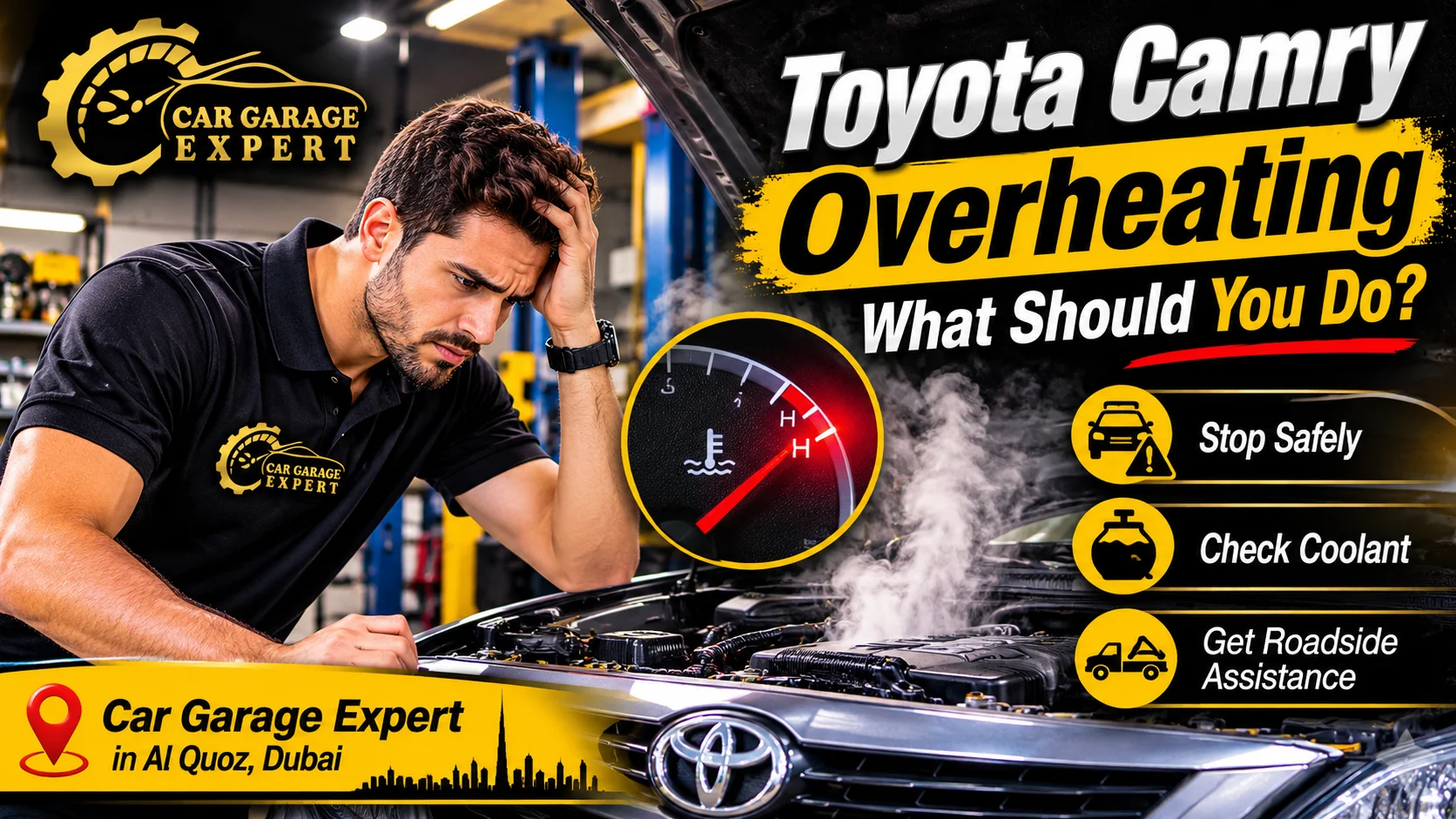
Quick Answer: Toyota Camry Overheating
If your Toyota Camry starts overheating while driving, stay calm and act quickly. Turn off the air conditioning and switch on the heater if it is safe to do so. Move to a safe place, stop the car and turn off the engine. Do not open the radiator cap while engine is hot. Allow the engine to cool before checking the coolant level. If you see steam, a coolant leak or a red temperature warning, do not continue driving. Arrange roadside assistance and have a mechanic inspect the cooling system.
Table of Contents
- Toyota Camry Overheating: Immediate Steps to Take
- Warning Signs Your Camry Is Overheating
- Common Causes of Engine Overheating
- How Mechanics Diagnose Cooling System Problems
- Repair Process: How to Fix an Overheating Camry
- What Happens If You Ignore Overheating?
- Can You Drive an Overheating Toyota Camry?
- How Long Do Cooling System Repairs Take?
- What Affects the Cost of Overheating Repairs?
- How to Prevent Overheating in Dubai
- Why Choose Car Garage Expert?
- Frequently Asked Questions
- Final Call to Action
Toyota Camry Overheating: Immediate Steps to Take
An overheating engine needs quick attention. Your actions can help prevent serious engine damage.
1. Turn Off the Air Conditioning
Switch off the AC as soon as you notice the temperature rising. The AC adds extra load to the engine.
2. Turn On the Heater
If it is safe and practical, turn on the cabin heater and fan. This can help move some heat away from the engine. However, it is only a temporary step while you find a safe place to stop.
3. Pull Over Safely
Look for a safe parking area or roadside stopping point. Avoid stopping in a dangerous traffic lane.
4. Switch Off the Engine
Once you stop, turn off the engine. Do not leave it running if the temperature is in the red zone or steam is coming from the bonnet.
5. Wait for the Engine to Cool
Give the engine time to cool. The cooling system can remain hot and pressurized after you switch off the car.
Do not open the radiator cap when engine is hot. Hot coolant can spray out and cause serious burns.
6. Arrange Roadside Assistance
If you notice a coolant leak, steam or repeated temperature warnings, do not restart the car. Contact roadside assistance and arrange recovery to a workshop.
Warning Signs Your Camry Is Overheating
Your Toyota may show several signs before serious engine damage occurs.
Rising Temperature Gauge
The temperature gauge moves above its normal range. If it reaches the red zone, stop safely and switch off the engine.
Steam From the Bonnet
White steam may come from the engine area when coolant leaks onto hot parts or the engine overheats.
Coolant Warning Light
A warning light may indicate a cooling system problem or low coolant level. Check the owner’s manual for the exact warning.
Sweet Smell From the Engine
A sweet smell can sign of a coolant leak. Have the system inspected as soon as possible.
Weak Engine Performance
An overheating engine may lose power or run poorly. Do not keep driving to test whether the problem goes away.
Common Causes of Engine Overheating
Several cooling system faults can cause Toyota Camry Overheating. Finding the correct cause is important before replacing parts.
|
Common cause |
How it affects the engine |
|---|---|
|
Low coolant |
Reduces the system’s ability to control engine heat. |
|
Coolant leakage |
Causes coolant levels to drop. |
|
Faulty radiator fan |
Reduces airflow through the radiator. |
|
Damaged thermostat |
Prevents proper coolant circulation. |
|
Failing water pump |
Reduces coolant movement. |
|
Blocked radiator |
Restricts heat transfer. |
|
Damaged radiator hose |
Allows coolant to escape. |
|
Faulty radiator cap |
Affects cooling system pressure. |
Low Coolant Level
Coolant absorbs heat from engine and helps control its temperature. A low level may result from a leak or poor maintenance.
Faulty Radiator Fan
The radiator fan helps move air through the radiator, especially in traffic. A faulty fan can make the engine temperature rise while driving slowly or idling.
Damaged Thermostat
The thermostat controls coolant flow through engine. If it gets stuck closed, the engine may overheat.
Water Pump Problems
The water pump circulates coolant through engine and radiator. A damaged pump can reduce circulation and cause overheating.
How Mechanics Diagnose Cooling System Problems
A proper diagnosis helps identify why Toyota Camry Overheating occurs. A mechanic should inspect the full cooling system instead of replacing parts without testing.
Coolant Level Inspection
The mechanic checks the coolant level and looks for signs of contamination or leakage.
Radiator and Hose Inspection
The mechanic checks the radiator, hoses, clamps and connections for cracks, blockages and leaks.
Radiator Fan Test
The mechanic checks whether the radiator fan operates correctly under the required conditions.
Thermostat Inspection
The thermostat is tested to confirm that it opens and closes at the correct temperature.
Cooling System Pressure Test
A pressure test can help locate leaks in the cooling system.
Water Pump Inspection
The mechanic checks the pump for leaks, noise and signs of poor circulation.
Repair Process: How to Fix an Overheating Camry
The repair depends on the cause of the problem and the engine’s condition.
Coolant Leak Repair
The mechanic repairs or replaces damaged hoses, seals, clamps or other leaking components.
Radiator Repair or Replacement
A blocked or damaged radiator may need cleaning or replacement.
Thermostat Replacement
A faulty thermostat is replaced to restore proper coolant flow.
Water Pump Replacement
A damaged water pump may need replacement to restore coolant circulation.
Radiator Fan Repair
The mechanic checks the fan motor, relay, fuse and wiring before carrying out the required repair.
Engine Damage Inspection
If the engine has overheated badly, the mechanic may check for head gasket damage or other internal problems.
What Happens If You Ignore Overheating?
Ignoring Toyota Camry Overheating can turn a cooling system fault into a major engine repair.
Possible problems include:
- Warped cylinder head
- Blown head gasket
- Damaged pistons
- Engine oil breakdown
- Cracked engine components
- Complete engine failure
Continuing to drive with a high temperature reading can worsen the damage. Stop safely and arrange professional help.
Can You Drive an Overheating Toyota Camry?
No. You should not continue driving when the temperature gauge reaches the red zone or a serious overheating warning appears.
Driving with a hot engine can damage internal components. Even if the temperature drops after stopping, the original fault may still exist.
If you experience Toyota Camry Overheating, switch off the engine and arrange roadside assistance. Do not restart the vehicle until a mechanic confirms it is safe.
How Long Do Cooling System Repairs Take?
Repair time depends on the damaged component, vehicle condition and parts availability.
|
Repair type |
Estimated repair time |
|---|---|
|
Initial cooling system inspection |
30 minutes to 1 hour |
|
Coolant leak inspection |
30 minutes to 1 hour |
|
Coolant replacement |
30 minutes to 1 hour |
|
Radiator hose replacement |
1–2 hours |
|
Thermostat replacement |
1–3 hours |
|
Radiator fan repair |
1–3 hours |
|
Radiator replacement |
2–4 hours |
|
Water pump replacement |
3–6 hours |
|
Head gasket repair |
Several days |
These times are estimates. The actual time depends on the Camry model and the amount of damage.
What Affects the Cost of Overheating Repairs?
The cost of Toyota Camry Overheating repairs depends on the fault and the parts required.
|
Cost factor |
How it affects the price |
|---|---|
|
Camry model and year |
Different models may require different parts. |
|
Damage severity |
Major engine damage increases repair costs. |
|
Radiator condition |
Repair or replacement affects the total price. |
|
Water pump condition |
Pump replacement adds parts and labour costs. |
|
Thermostat condition |
A faulty thermostat requires replacement. |
|
Parts quality |
Genuine and aftermarket parts have different prices. |
|
Labour charges |
Complex repairs require more working time. |
|
Parts availability |
Imported parts may increase expenses. |
Ask for a proper inspection and repair estimate before approving major work.
How to Prevent Overheating in Dubai
Dubai’s high temperatures and heavy traffic can put extra pressure on your car’s cooling system. Regular and proper checks can help reduce the risk of engine overheating.
Check Coolant Levels Regularly
Check the coolant reservoir when engine is completely cool. Follow the owner’s manual for the correct level and coolant type.
Inspect for Coolant Leaks
Look for wet spots under the vehicle and signs of coolant around hoses and the radiator.
Maintain the Radiator
Keep the radiator clean and have it checked for blockages or damage.
Check the Cooling Fan
Make sure the cooling fan works correctly, especially during slow traffic and hot weather.
Follow the Service Schedule
Replace coolant and inspect cooling system parts at the intervals recommended by Toyota.
Visit a Trusted Garage
Search for a reliable garage near me if your temperature gauge rises often or your coolant level keeps dropping. Early repairs can help protect your engine.
Why Choose Car Garage Expert?
Car Garage Expert helps Dubai drivers identify vehicle problems and understand the repairs their cars may need.
If your Toyota Camry shows signs of overheating, expect inspection can help find the cause before the problem becomes more serious.
You can seek help with:
- Engine overheating inspections
- Cooling system checks
- Radiator and coolant leak inspections
- Thermostat and water pump checks
- Engine fault diagnosis
- General vehicle maintenance
If your car is unsafe to drive, arrange roadside assistance instead of trying to reach the workshop yourself.
For Toyota Camry Overheating, Car Garage Expert can help you identify the fault and plan the right repair.
Frequently Asked Questions
Why Does My Toyota Camry Overheat?
Low coolant, radiator problems, a faulty fan or a damaged thermostat can cause overheating.
Can I Drive With a High Temperature Gauge?
No. Stop safely, switch off the engine and arrange an inspection.
Should I Add Coolant To A Hot Engine?
Do not open the hot cooling system. Wait until the engine cools completely.
How Long Does A Camry Take To Cool?
It may take 30–60 minutes or longer, depending on the temperature and severity of overheating.
Will A Faulty Radiator Fan Cause Overheating?
Yes. Poor airflow through the radiator can cause the engine temperature to rise.
Can Overheating Damage A Head Gasket?
Yes. Severe overheating can warp the cylinder head and damage the head gasket.
Final Call to Action: Protect Your Toyota Camry Engine
An overheating engine should never be ignored. Stop safely, switch off the engine and avoid driving until a mechanic checks the cooling system.
If you notice a rising temperature gauge, steam or coolant leaks, arrange professional help as soon as possible.
Contact Car Garage Expert for vehicle inspection and repair support in Dubai. Do not wait for a small cooling system problem to become a major engine failure.
Find Car Garage Expert on the map: