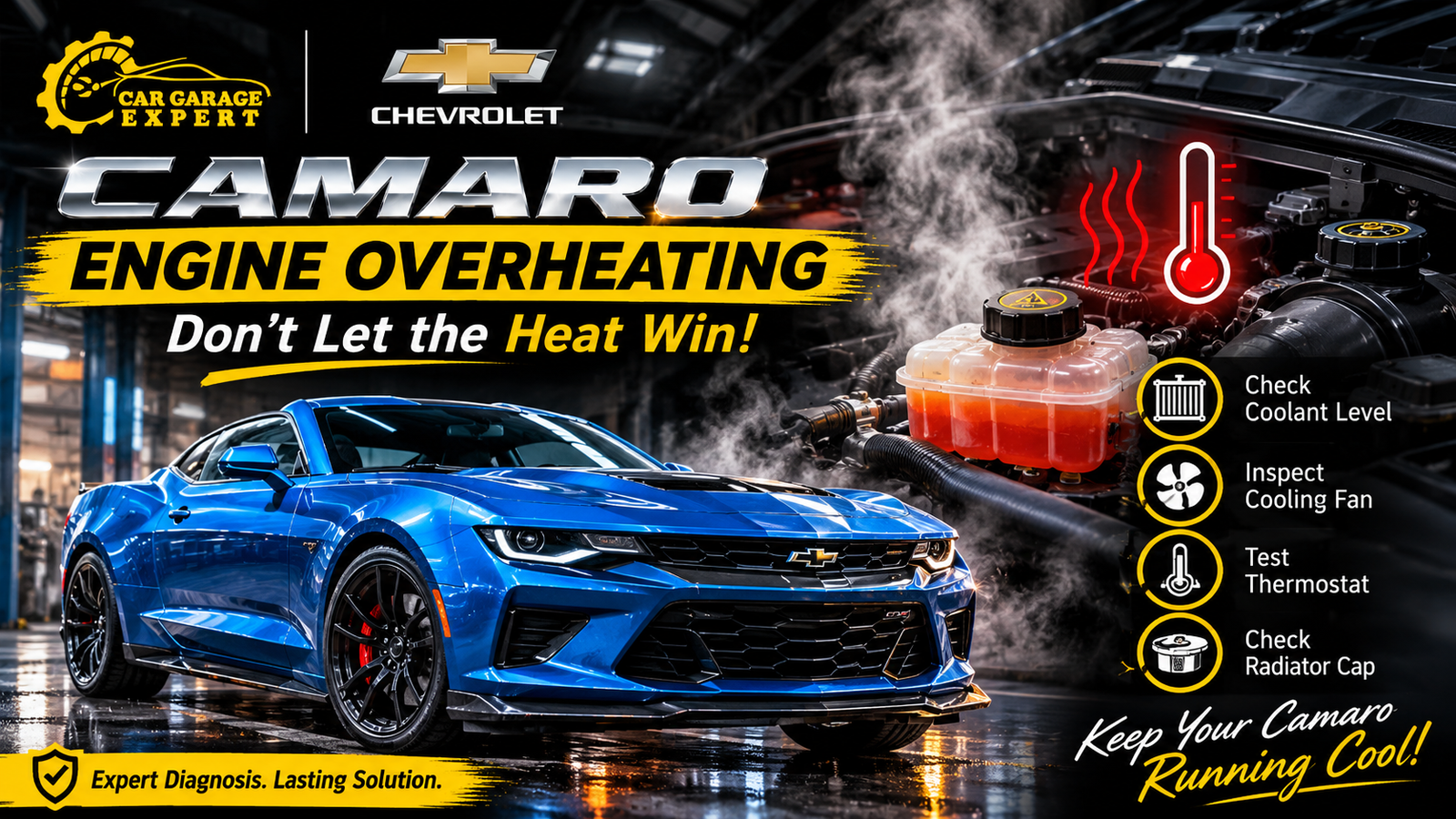
The Chevrolet Camaro is known for its powerful engine, sporty performance, and exciting driving experience. However, like any performance car, it needs a properly working cooling system to maintain a safe engine temperature. If you notice your temperature gauge rising, steam coming from under the hood, or an engine temperature warning, your Camaro may have a cooling system problem.
Chevrolet Camaro engine overheating is an issue that deserves attention, especially in Dubai. High outdoor temperatures, heavy traffic, long drives, and frequent use of air conditioning can put extra demands on a vehicle’s cooling system. Even a small coolant leak or a faulty radiator fan can become a serious problem if left untreated.
The good news is that early diagnosis can help prevent major engine damage. Understanding the warning signs and possible causes can help you decide when to stop driving and when to seek professional assistance.
In this guide, we explain why your Chevrolet Camaro may overheat, how to recognize the problem, what repairs may be needed, and how to protect your vehicle in Dubai’s demanding climate.
Why Does Your Chevrolet Camaro Need a Proper Cooling System?
Your Camaro’s engine produces a large amount of heat while running. The cooling system controls this heat and helps the engine maintain its designed operating temperature.
The system uses several important components, including:
- Radiator: Transfers heat from the engine coolant to the surrounding air.
- Water pump: Circulates coolant through the engine and radiator.
- Thermostat: Controls coolant flow according to engine temperature.
- Cooling fans: Help move air through the radiator when natural airflow is limited.
- Coolant reservoir: Stores and supplies coolant as the system needs it.
- Radiator cap: Helps maintain the required cooling system pressure.
- Coolant hoses: Carry coolant between different cooling system components.
When these parts work together, they help prevent excessive engine temperatures.
However, if one component fails, heat may build up faster than the system can remove it. This can cause overheating and may damage important engine parts.
Common Signs of Chevrolet Camaro Engine Overheating
Recognizing the early symptoms can help you avoid expensive repairs. Here are some warning signs Camaro owners should never ignore.
1. Rising Engine Temperature Gauge
The temperature gauge is one of the first things to monitor. If the needle moves toward the red zone or the dashboard displays a high-temperature warning, your engine may be overheating.
A temperature reading can rise under certain driving conditions, including heavy traffic, uphill driving, and high-speed operation in warm weather. However, a reading that enters the warning area or continues to climb needs attention.
2. Steam Coming from Under the Hood
Steam or visible coolant vapor coming from the engine compartment can indicate a cooling system problem.
This may happen when coolant escapes from a damaged hose, radiator, reservoir, or another pressurized component.
Do not open the hood if doing so would expose you to escaping steam. Keep a safe distance and allow the vehicle to cool.
3. Coolant Leaking Beneath the Vehicle
If you notice a puddle or wet area under your parked Camaro, check whether it could be coolant.
Coolant may appear in different colors depending on the product used. A leak can come from a hose, radiator, water pump, or connection.
Never rely on color alone to identify the fluid. A professional inspection can confirm its source.
4. Weak Air Conditioning Performance
If your Camaro’s air conditioning becomes less effective while the engine temperature is also rising, the vehicle may have a cooling system or fan-related issue.
These symptoms can occur together, particularly when airflow around the radiator and condenser is poor.
However, weak cabin cooling does not automatically mean the engine is overheating. The air conditioning system may have a separate fault.
5. Unusual Engine Smell
A sweet smell may indicate leaking coolant. A burning smell could point to overheated components or fluid contacting hot engine surfaces.
If you notice an unusual smell along with a rising temperature gauge, arrange an inspection instead of continuing your journey.
Main Causes of Chevrolet Camaro Engine Overheating
Several mechanical problems can cause your Camaro’s engine temperature to rise. The following are some of the most common possibilities.
1. Low Coolant Level or Coolant Leakage
Coolant is essential for transferring heat away from the engine. If its level becomes too low, the cooling system may not be able to control engine temperature effectively.
Leaks can develop in different areas, including:
- Radiator hoses and connections
- Radiator tanks
- Water pump seals
- Coolant reservoir
- Thermostat housing
- Other cooling system connections
Dubai’s high temperatures make regular fluid inspections especially important. A small leak may become more noticeable during long drives or heavy traffic.
A technician should locate the leak and repair the damaged component before refilling the system.
2. Faulty Radiator Fan
The radiator fan helps move air through the radiator, especially when the vehicle is moving slowly or standing in traffic.
If the fan motor, relay, fuse, wiring, or control system fails, airflow may become insufficient.
This can lead to a temperature increase when driving through busy areas of Dubai or waiting at traffic signals.
A technician can check fan operation, electrical connections, and control signals to identify the problem.
3. Damaged or Stuck Thermostat
The thermostat regulates coolant flow between the engine and radiator.
If it becomes stuck in the closed position, coolant circulation through the radiator may be restricted. As a result, engine temperature can rise beyond its normal range.
A faulty thermostat can also cause inconsistent temperature readings or slow warm-up, depending on how it fails.
Replacing a defective thermostat can restore proper temperature regulation when testing confirms that it is the cause.
4. Water Pump Failure
The water pump is responsible for circulating coolant throughout the cooling system.
If its internal components become worn or its seals begin leaking, coolant circulation may become inadequate.
Common warning signs include coolant loss, unusual noises near the pump, and repeated overheating.
A damaged water pump should be inspected and replaced when necessary. Simply adding more coolant will not solve a circulation problem.
5. Blocked or Damaged Radiator
The radiator releases engine heat into the surrounding air. Over time, dirt, debris, internal deposits, or physical damage can reduce its performance.
In Dubai, dust and sand can collect around the radiator and air-conditioning condenser.
External blockage can reduce airflow, while internal restrictions can affect coolant circulation.
A technician should inspect the radiator for damaged fins, leaks, blockages, and signs of poor heat transfer. Cleaning or replacement will depend on its condition.
6. Faulty Radiator Cap
The radiator cap helps maintain the pressure needed for the cooling system to operate correctly.
If the cap seal becomes damaged or the pressure valve stops working properly, the system may lose pressure or coolant.
This can contribute to coolant loss and overheating.
A pressure test can help determine whether the cap is working within its specified range.
7. Air Trapped Inside the Cooling System
Air can enter the cooling system after certain repairs, coolant loss, or incorrect refilling.
Air pockets may interfere with coolant circulation and cause uneven temperature readings or poor cooling performance.
The system may need to be filled and bled using the correct procedure for your Camaro’s specific engine.
8. Head Gasket Damage
A damaged head gasket is a more serious possible cause of engine overheating.
The head gasket seals the connection between the engine block and cylinder head. If it fails, coolant and combustion gases may enter areas where they should not.
Possible symptoms include:
- Repeated coolant loss without an obvious external leak
- White exhaust smoke after the engine has warmed up
- Bubbles in the coolant reservoir
- Engine misfiring
- Persistent overheating
These signs do not prove that the head gasket has failed. Proper testing is needed before recommending major engine repairs.
Why Dubai’s Climate Can Make Camaro Overheating Worse
Dubai presents challenging conditions for vehicle cooling systems.
During summer, outdoor temperatures can become very high. Your Camaro’s cooling system must manage engine heat while also dealing with hot air entering through the radiator.
Several local driving conditions can add to the challenge.
Heavy Traffic and Frequent Idling
Stop-and-go traffic reduces natural airflow through the radiator. The cooling fans must work properly to maintain suitable airflow when the vehicle is moving slowly.
A weak fan or partially blocked radiator may become more noticeable in these conditions.
High Outdoor Temperatures
When the surrounding air is already hot, the radiator has less favorable conditions for releasing engine heat.
A cooling system that is already weak may struggle more during long journeys.
Dust and Sand Accumulation
Dust and sand can collect around the radiator and condenser. If airflow becomes restricted, heat transfer may be reduced.
Regular inspection and suitable cleaning can help maintain proper airflow.
Frequent Air Conditioning Use
Air conditioning is important for comfortable driving in Dubai. However, the air-conditioning condenser and engine radiator are positioned close together in many vehicles.
Restricted airflow, fan problems, or other cooling system faults may affect overall thermal performance.
This is why both the cooling system and related airflow components should be checked when overheating occurs.
What Should You Do If Your Chevrolet Camaro Starts Overheating?
If your temperature gauge enters the warning area or an engine overheating message appears, take the situation seriously.
Follow these safety steps:
- Reduce engine load: Avoid hard acceleration and unnecessary high engine speeds.
- Find a safe place to stop: Move away from traffic and stop as soon as it is safe.
- Turn off the engine: Follow the instructions in your Camaro’s owner’s manual. A confirmed overheating warning requires stopping and switching off the engine.
- Stay away from escaping steam: Do not touch hot engine components.
- Never open a hot radiator cap: The cooling system is pressurized. Hot coolant and steam can cause serious burns.
- Wait for the engine to cool: Do not attempt to inspect or refill a hot cooling system.
- Arrange professional assistance: If coolant is leaking, steam is present, or the temperature warning returns, have the vehicle transported for inspection.
Do not continue driving simply because the temperature gauge drops after a short wait. The underlying problem may still be present.
How Do Professionals Diagnose Camaro Cooling System Problems?
A proper diagnosis helps identify the actual cause instead of replacing parts without evidence.
A professional Chevrolet Camaro inspection may include the following checks.
Cooling System Visual Inspection
The technician checks coolant hoses, connections, radiator surfaces, reservoir condition, and visible signs of leakage.
Coolant Pressure Test
A pressure test can help reveal leaks that may not be easy to see during a basic inspection.
The radiator cap can also be tested to check whether it maintains the specified pressure.
Cooling Fan Inspection
The technician checks whether the fans operate correctly and examines their electrical connections, fuses, relays, and control signals.
Thermostat and Water Pump Testing
The thermostat and water pump are inspected to identify restrictions, circulation problems, leaks, or mechanical faults.
Computer Diagnostics
A diagnostic scanner can retrieve relevant fault codes and display engine coolant temperature data.
This helps the technician assess whether the engine is genuinely overheating or whether a sensor or electrical fault may be affecting the reading.
Internal Engine Checks
If the symptoms suggest an internal coolant leak or head gasket problem, additional tests may be required.
These may include combustion-gas testing in the cooling system or other engine-specific checks.
Chevrolet Camaro Overheating Repair Services in Dubai
The correct repair depends on the results of the inspection. There is no single solution for every overheating problem.
Depending on the fault, the required service may include:
- Coolant leak detection and repair
- Radiator repair or replacement
- Radiator fan motor or electrical repair
- Thermostat replacement
- Water pump replacement
- Radiator cap replacement
- Cooling system cleaning and correct coolant refill
- Cooling system bleeding
- Head gasket diagnosis and engine repair
Always use coolant that meets the specifications for your Camaro’s model year and engine. Different Camaro versions may have different requirements.
If you are experiencing repeated overheating, Car Garage Expert can be your point of contact in Dubai for arranging a professional vehicle inspection and identifying the repair your Camaro needs.
A proper diagnosis before replacing parts can help avoid unnecessary work.
How to Prevent Chevrolet Camaro Engine Overheating in Dubai
Preventive maintenance can help reduce the risk of unexpected cooling system problems.
Here are some useful practices for Camaro owners.
1. Check Coolant Levels Regularly
Check the coolant reservoir when the engine is completely cold. Keep the level within the manufacturer’s marked range.
If the level keeps dropping, investigate the cause rather than repeatedly adding coolant.
2. Inspect Radiator Hoses
Look for cracks, swelling, loose connections, or signs of coolant leakage.
Old or damaged hoses may fail under pressure and cause coolant loss.
3. Keep the Radiator Area Clean
Dust and debris can reduce airflow through the radiator and condenser.
Arrange suitable cleaning when needed. Avoid aggressive high-pressure washing that could damage delicate radiator fins.
4. Follow the Correct Maintenance Schedule
Follow the service schedule for your Camaro’s model year and engine.
Check the condition of cooling system components and replace worn parts when required.
5. Monitor the Temperature Gauge
Pay attention to changes in engine temperature, especially during heavy traffic and long journeys.
If the gauge moves into the warning area, do not ignore it.
6. Use the Correct Engine Coolant
Do not choose coolant based only on its color.
Use a product that meets Chevrolet’s requirements for your specific vehicle. Avoid mixing incompatible coolant types.
7. Inspect the Cooling System Before Summer
Before the hotter months, arrange an inspection of the radiator, fan, hoses, water pump, coolant level, and related components.
Finding a weak part early may help prevent a breakdown during a busy day.
8. Pay Attention to Small Warning Signs
A slightly low coolant level, an unusual smell, or repeated temperature fluctuations can point to an underlying problem.
Early inspection is usually better than waiting for a major overheating event.
Frequently Asked Questions
1. Why does my Chevrolet Camaro overheat in Dubai traffic?
A faulty radiator fan, low coolant, a partially blocked radiator, or a weak cooling system can cause overheating in slow-moving traffic. Without enough airflow, the radiator may struggle to remove engine heat.
2. Can I drive my Chevrolet Camaro if the engine is overheating?
No. If the engine temperature reaches the warning area or an overheating warning appears, stop in a safe place and switch off the engine. Continuing to drive may cause serious engine damage.
3. How do I know if my Camaro has a coolant leak?
Common signs include a falling coolant level, wet areas under the vehicle, visible residue around hoses, and repeated overheating. A professional pressure test can help locate the leak.
4. How often should I check my Camaro’s coolant in Dubai?
Check the coolant reservoir regularly when the engine is cold, and follow the maintenance schedule for your specific model. If the level drops repeatedly, have the cooling system inspected.
5. Can a faulty thermostat cause Chevrolet Camaro engine overheating?
Yes. A thermostat stuck in the closed position can restrict coolant flow through the radiator. This may cause the engine temperature to rise and lead to overheating.
Conclusion
Chevrolet Camaro engine overheating should never be treated as a minor issue, particularly in Dubai’s hot climate. Low coolant, radiator problems, faulty cooling fans, thermostat failure, and water pump damage are among the possible causes.
The most important step is to recognize the warning signs and arrange a proper inspection before the problem leads to more serious damage. Regular coolant checks, radiator maintenance, and timely servicing can also help keep your Camaro’s cooling system in good condition.
Visit us in our Al Quoz, Dubai branch or visit Car Garage Expert
If your Camaro is showing signs of overheating, contact Car Garage Expert in Dubai to arrange an inspection. Finding the actual cause is the first step toward restoring reliable engine cooling and enjoying your Camaro with greater confidence.