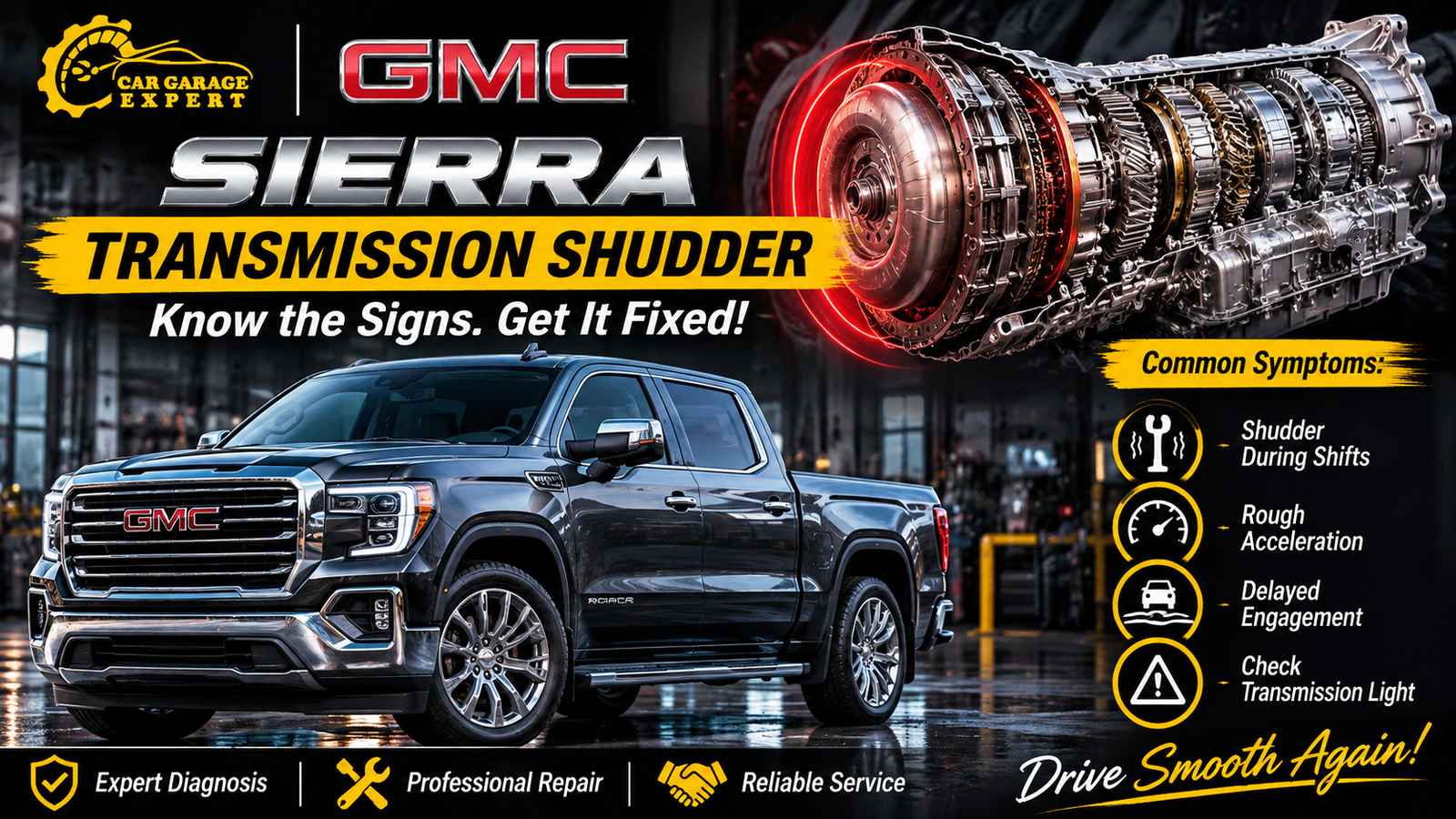
The GMC Sierra is a powerful pickup truck designed for daily driving, heavy loads, towing, and demanding road conditions. However, some owners experience an uncomfortable problem known as transmission shudder. It can feel like the truck is vibrating, shaking, or driving over a rough road, even when the road surface is smooth.
If you notice a GMC Sierra transmission shudder while accelerating, cruising, or changing gears, it is important to identify the cause before the problem becomes more serious. Sometimes, the issue comes from the torque converter or transmission fluid. In other cases, engine performance, sensors, or drivetrain components may be responsible.
This problem deserves attention in Dubai, where heavy traffic, high temperatures, frequent stop-and-go driving, and demanding vehicle use can affect maintenance requirements.
In this guide, Car Garage Expert explains the common causes of GMC Sierra transmission shudder, how to recognize the warning signs, which repairs may help, and how to protect your truck’s transmission.
What Is GMC Sierra Transmission Shudder?
Transmission shudder is a vibration or shaking sensation that occurs while a vehicle is moving. It may feel like driving over rumble strips or crossing small bumps repeatedly, even when the road is completely smooth.
In a GMC Sierra, this problem can occur during light acceleration, steady-speed driving, gear changes, or under load. Some drivers notice it more clearly when maintaining a constant speed on a highway.
One possible cause is a problem with the torque converter clutch (TCC). The torque converter connects the engine to the automatic transmission and helps transfer power smoothly. Its clutch locks and unlocks under different driving conditions to improve efficiency.
When the clutch does not operate smoothly, it may produce repeated vibration or shuddering.
However, not every vibration means the transmission is failing. Engine misfires, fuel-system problems, damaged mounts, and drivetrain components can create similar symptoms.
Identifying the exact source is the first step toward choosing the correct repair.
Common Causes of GMC Sierra Transmission Shudder
Several mechanical and electrical problems can cause transmission shudder in a GMC Sierra. Understanding these causes can help owners recognize why professional diagnosis is important.
1. Torque Converter Clutch Problems
A faulty or poorly operating torque converter clutch is one of the important causes to investigate when a GMC Sierra develops shuddering at steady speeds.
The torque converter transfers engine power to the transmission. When the vehicle reaches certain driving conditions, the TCC engages to reduce unnecessary slipping.
If the clutch engages unevenly, releases unexpectedly, or struggles to maintain a consistent connection, the driver may feel vibration.
Common signs include:
- Shaking during light acceleration.
- Vibration at steady highway speeds.
- Shuddering that appears and disappears.
- Changes in engine RPM without a clear gear change.
- Repeated vibration under light engine load.
General Motors has published technical service information addressing torque converter clutch shudder in certain Sierra configurations.
For example, bulletin 19-NA-121 covers specific 2019 GMC Sierra 1500 vehicles sold in the Middle East Operations region. It describes shudder during light-throttle driving between approximately 40 and 128 km/h under certain conditions.
The bulletin also explains that the correct repair depends on the vehicle’s production details and transmission configuration.
2. Old or Contaminated Transmission Fluid
Automatic transmission fluid performs several important functions. It lubricates moving components, helps control hydraulic pressure, supports clutch operation, and transfers heat.
As the fluid ages, its performance can change. Contamination, incorrect fluid, or an unsuitable fluid level can also affect transmission operation.
General Motors bulletin 20-NA-142 identifies depleted fluid additives as a possible cause of shudder or surging in certain vehicles equipped with MYC and MYD six-speed automatic transmissions.
Possible warning signs include:
- Rough or delayed gear changes.
- Shudder during acceleration.
- Unusual transmission noise.
- Fluid leaks.
- Abnormal shifting after extended driving.
The correct fluid specification is essential. GMC Sierra models can use different transmission fluids depending on their gearbox and model year.
Using an incorrect fluid or adding aftermarket additives without proper diagnosis can create further problems.
3. Low Transmission Fluid Level
Low transmission fluid can interfere with the hydraulic pressure required for smooth gear operation.
Although some newer GMC Sierra models do not have a conventional transmission dipstick, the fluid level can still be checked using the manufacturer’s specified service procedure.
A low level may result from:
- Damaged transmission seals.
- Loose connections.
- Leaking transmission lines.
- Damaged transmission pan.
- Other fluid leaks.
If the transmission does not receive the correct fluid supply, shifting performance may become inconsistent.
Drivers should not ignore visible fluid leaks or assume that adding more fluid will automatically solve the problem. The leak must be identified, and the fluid level must be corrected according to the vehicle’s service specifications.
4. Transmission Solenoid or Valve Body Problems
The transmission valve body controls the movement of transmission fluid through different hydraulic passages. Solenoids help regulate pressure and control gear changes.
When these components malfunction, the transmission may struggle to select or maintain the correct gear.
Possible symptoms include:
- Delayed engagement when selecting Drive or Reverse.
- Hard shifting between gears.
- Unexpected gear changes.
- Shuddering during acceleration.
- Transmission warning messages.
Electrical faults, internal wear, contamination, or hydraulic problems can affect these components.
A technician may need to inspect diagnostic trouble codes, transmission pressure readings, and live operating data before recommending a repair.
5. Engine Misfires and Fuel System Issues
A vibration that feels like transmission shudder may actually come from the engine.
An engine misfire occurs when one or more cylinders fail to burn the air-fuel mixture correctly. This creates uneven engine power and can produce noticeable shaking during acceleration.
Other possible engine-related causes include:
- Faulty oxygen sensors.
- Fuel injector wiring problems.
- Fuel delivery issues.
- Ignition system faults.
- Intake air problems.
- Incorrect engine operating conditions.
This distinction is particularly important for some newer GMC Sierra models.
GM bulletin PIP6060, published in May 2025, covers certain 2023–2025 Sierra models equipped with the L3B engine and eight-speed transmissions. It explains that highway shudder or surge under light throttle may sometimes result from an engine-related concern rather than a transmission fault.
Therefore, replacing the torque converter without checking the engine could lead to unnecessary repairs.
6. Worn Engine or Transmission Mounts
Engine and transmission mounts hold the powertrain in position while reducing vibration.
Over time, rubber components can become damaged, weakened, or separated.
When mounts lose their ability to absorb movement, normal engine vibration may become more noticeable inside the cabin.
You may experience:
- Excessive vibration at idle.
- Shaking during acceleration.
- A noticeable movement when shifting into Drive or Reverse.
- Clunking sounds when applying or releasing power.
A professional inspection can determine whether the vibration comes from the mounts or an internal transmission problem.
7. Driveshaft and Drivetrain Problems
The GMC Sierra uses several drivetrain components to transfer power to the wheels. Depending on the model, these may include driveshafts, universal joints, transfer cases, and differentials.
Wear or damage in these components can produce vibrations that drivers sometimes mistake for transmission shudder.
A damaged universal joint, worn driveshaft component, or drivetrain imbalance may cause vibration that increases with vehicle speed.
If the shaking continues regardless of gear selection or changes with road speed, the technician should also investigate these components.
Common Symptoms of GMC Sierra Transmission Shudder
Recognizing the symptoms early can help prevent additional damage.
Here are some warning signs that deserve attention:
Vibration at steady speeds: The truck shakes while maintaining a consistent speed, particularly during light acceleration.
Shudder during acceleration: You feel repeated vibrations when pressing the accelerator.
Rough gear changes: The transmission shifts harder than usual or produces noticeable hesitation.
RPM fluctuations: Engine speed changes unexpectedly while driving at a steady speed.
Delayed gear engagement: The vehicle takes longer than normal to respond when selecting Drive or Reverse.
Unusual noises: You hear humming, whining, clunking, or other sounds from the drivetrain.
Warning messages: A transmission temperature warning, check-engine light, or other dashboard alert may appear.
These symptoms do not confirm a specific failure. They provide useful information that a technician can use during diagnosis.
How to Diagnose GMC Sierra Transmission Shudder
Accurate diagnosis is essential because several different problems can create similar driving sensations.
A qualified technician should follow a systematic inspection process rather than immediately replacing transmission components.
Step 1: Perform a Diagnostic Scan
The first step is to connect a professional diagnostic scanner to the vehicle.
The technician should check the engine and transmission control systems for stored, pending, or active trouble codes.
These codes may provide information about:
- Torque converter operation.
- Transmission pressure.
- Gear ratio performance.
- Solenoid operation.
- Engine misfires.
- Sensor performance.
A diagnostic code is a starting point, not automatic proof that a particular component has failed.
Step 2: Inspect Transmission Fluid
The technician should check the transmission for fluid leaks, contamination, and an incorrect fluid level.
Fluid condition can provide useful clues about the transmission’s health.
Burnt-smelling fluid, unusual discoloration, or metallic debris may indicate an underlying problem.
However, fluid appearance alone cannot confirm the exact cause of shudder.
Step 3: Conduct a Road Test
A controlled road test helps reproduce the problem under the conditions in which it normally occurs.
The technician may observe the vehicle during:
- Light acceleration.
- Steady-speed driving.
- Gear changes.
- Low-speed movement.
- Different engine loads.
This helps determine whether the vibration is related to torque converter operation, engine performance, or another drivetrain component.
Step 4: Check Live Transmission and Engine Data
Professional diagnostic equipment can monitor transmission and engine parameters while the truck is running.
Depending on the suspected problem, a technician may inspect torque converter clutch slip, transmission input and output speed, engine misfire data, fuel trims, and sensor readings.
This information helps separate transmission-related problems from engine-related vibrations.
Step 5: Inspect Mechanical Components
If electronic testing does not identify the problem, the technician may inspect the transmission mounts, driveshaft, universal joints, transfer case, and other related components.
A complete inspection helps avoid replacing expensive parts unnecessarily.
How to Fix GMC Sierra Transmission Shudder
The correct repair depends on the cause, transmission type, model year, and vehicle condition.
There is no single repair that works for every GMC Sierra.
1. Perform the Correct Transmission Fluid Service
If the problem is related to fluid condition and the applicable service procedure supports it, a professional transmission fluid exchange may help restore proper clutch operation.
However, the correct procedure and fluid specification must be confirmed first.
For example, GM bulletin 19-NA-121 specifies a particular fluid exchange procedure for certain 2019 Sierra 1500 vehicles.
A general-purpose fluid flush or aftermarket additive is not a substitute for the manufacturer’s prescribed procedure.
2. Repair or Replace the Torque Converter
If testing confirms that the torque converter clutch is damaged, replacement may be necessary.
The technician should first check for other possible causes and inspect the transmission for internal contamination or damage.
Installing a replacement torque converter without addressing the underlying issue may not provide a lasting solution.
3. Repair Transmission Solenoids or Valve Body Components
If the problem comes from faulty solenoids, pressure control, or valve body operation, the affected components may require repair or replacement.
The technician should verify the fault through electrical and hydraulic testing.
4. Update Transmission Software When Applicable
Some shifting concerns may involve transmission control module calibration.
If an applicable GM service update or software revision exists for the vehicle’s VIN and configuration, a qualified technician can determine whether reprogramming is appropriate.
Software updates should not be performed simply because the vehicle experiences vibration. The underlying condition must first be identified.
5. Repair Engine or Drivetrain Problems
If the diagnosis identifies an engine misfire, oxygen sensor issue, damaged wiring, worn mount, or driveshaft problem, the appropriate component should be repaired.
This is especially important because engine-related surging can sometimes feel almost identical to transmission shudder.
Does Dubai’s Climate Affect GMC Sierra Transmission Performance?
Driving conditions in Dubai deserve special consideration when maintaining a GMC Sierra.
High ambient temperatures, heavy city traffic, frequent acceleration, and regular towing can place additional demands on a vehicle’s cooling and drivetrain systems.
Several factors are worth considering.
High temperatures: Automatic transmission fluid operates within a designed temperature range. Excessive transmission temperature can affect fluid performance and increase the risk of component damage.
Heavy traffic: Frequent stopping and accelerating can increase the amount of work the transmission performs during everyday driving.
Frequent towing: Carrying heavy loads or towing trailers increases powertrain demands and makes correct transmission maintenance particularly important.
Dust and sand exposure: Vehicles regularly used in dusty environments may require more frequent maintenance under the manufacturer’s severe-service guidelines.
Short-distance driving: Repeated short trips may prevent some vehicle systems from reaching their normal operating conditions.
Importantly, Dubai’s climate does not automatically mean that every GMC Sierra will develop transmission shudder. These conditions make proper maintenance and temperature monitoring more important.
The 2025 GMC Sierra 1500 owner’s manual identifies heavy city traffic in hot weather and frequent trailer towing as severe-service conditions. It also lists high-sand or high-dust environments and certain short-trip and commercial-use patterns under conditions requiring additional maintenance consideration.
Its severe-service schedule specifies automatic transmission fluid and filter replacement every 72,000 km. However, this interval should not be applied universally to every Sierra in Dubai. Always confirm the maintenance schedule for your specific model, engine, transmission, and regional specification.
How to Prevent GMC Sierra Transmission Shudder
Preventive maintenance can help reduce the risk of transmission problems and protect expensive components.
Here are some practical steps for GMC Sierra owners in Dubai.
Follow the correct maintenance schedule: Check your owner’s manual and follow the service intervals for your specific vehicle and operating conditions.
Use the correct transmission fluid: Never choose transmission fluid based only on its general compatibility. Confirm the exact GM specification required for your gearbox.
Check for leaks: Have any visible transmission fluid leaks inspected before the fluid level becomes too low.
Monitor transmission temperature: If your vehicle has a transmission temperature display, pay attention to abnormal readings and warning messages.
Avoid excessive loads: Stay within the truck’s recommended towing and payload limits.
Respond to early symptoms: Do not ignore repeated vibration, slipping, delayed engagement, or unusual gear changes.
Maintain the cooling system: Ensure the engine and transmission cooling systems receive the maintenance specified for your vehicle.
Keep service records: Document fluid changes, repairs, diagnostic results, and software updates. This information can help technicians understand recurring problems.
When Should You Visit a GMC Sierra Transmission Specialist in Dubai?
Not every transmission vibration requires an emergency repair. However, certain symptoms should never be ignored.
Arrange an inspection if your Sierra repeatedly shudders during acceleration, develops harsh gear changes, or begins slipping between gears.
You should stop driving when it is safe to do so and arrange professional assistance if you notice severe slipping, a sudden loss of drive, significant fluid leakage, or a transmission overheating warning.
Continuing to drive with an overheating or severely malfunctioning transmission can increase the risk of expensive internal damage.
When choosing a workshop in Dubai, look for technicians who understand GMC and GM automatic transmissions and have access to suitable diagnostic equipment.
Ask for a clear explanation of the diagnosed fault, the recommended repair, the required fluid specification, and whether any relevant GM service bulletins apply to your vehicle.
For owners researching GMC Sierra transmission shudder, Car Garage Expert provides this guide to help them understand the problem and make more informed decisions about professional vehicle diagnosis and repair.
Frequently Asked Questions
1. Why does my GMC Sierra shudder when accelerating?
A GMC Sierra may shudder during acceleration because of torque converter clutch problems, unsuitable or degraded transmission fluid, engine misfires, or worn drivetrain components. A diagnostic scan and road test can help identify the actual cause.
2. Can low transmission fluid cause GMC Sierra transmission shudder?
Yes. Low transmission fluid can affect hydraulic pressure and interfere with smooth gear operation. However, fluid loss usually indicates a leak or another underlying problem that needs attention.
3. How much does it cost to fix GMC Sierra transmission shudder in Dubai?
The repair cost depends on the actual fault, model year, transmission type, parts required, and labour involved. A fluid service may cost less than replacing a torque converter or repairing internal transmission components. A workshop inspection is necessary to obtain an accurate quotation in Dubai.
4. Is it safe to drive a GMC Sierra with transmission shudder?
Mild, occasional vibration may allow you to reach a safe inspection location, but repeated shudder should not be ignored. If the transmission slips severely, overheats, loses drive, or leaks significant fluid, stop driving when safe and arrange recovery.
5. Can changing transmission fluid fix GMC Sierra transmission shudder?
It can help when the problem is related to degraded fluid and the correct manufacturer-approved service procedure applies. However, fluid replacement will not repair a damaged torque converter, faulty solenoid, engine misfire, or worn internal components. Proper diagnosis is essential.
Conclusion
GMC Sierra transmission shudder can result from several different problems, including torque converter clutch issues, degraded transmission fluid, low fluid levels, faulty solenoids, engine misfires, and drivetrain wear.
For owners in Dubai, regular maintenance is especially important when the truck is frequently driven in heavy traffic, exposed to high temperatures, or used for towing.
Visit us in our Al Quoz, Dubai branch or visit Car Garage Expert
The most effective approach is to identify the actual cause before choosing a repair. Avoid unnecessary fluid treatments, incorrect transmission fluids, and premature component replacements.
If your GMC Sierra develops repeated shaking, slipping, or unusual shifting, arrange a professional inspection as soon as possible. Early diagnosis can help prevent further damage and keep your truck operating smoothly and reliably.