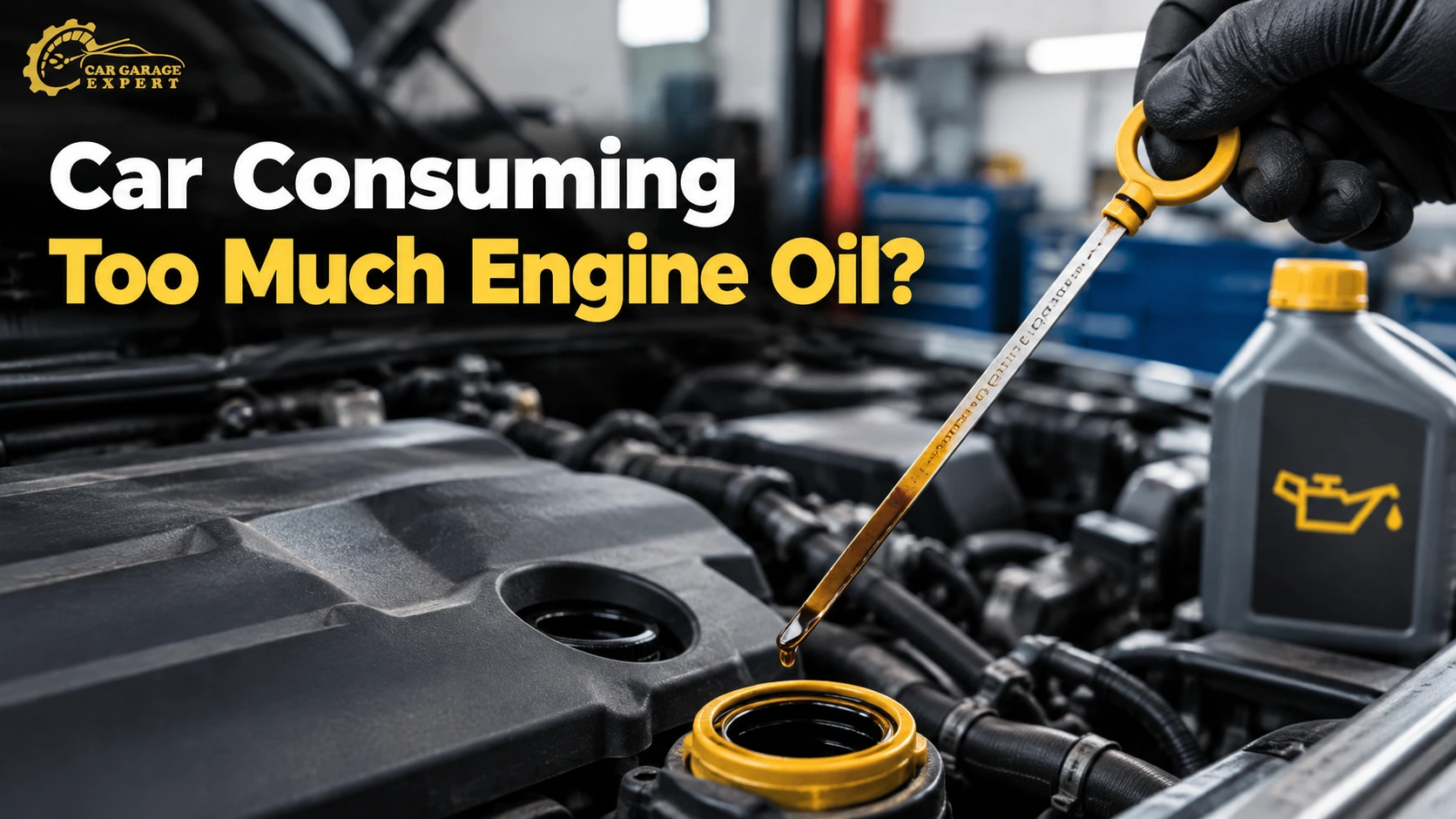
A car consuming too much engine oil usually points to worn engine seals, bad piston rings, or a leak you have not spotted yet. Normal engines use very little oil between changes. If you are topping up every week or two, something is wrong. Common causes include worn valve seals, a clogged PCV valve, or oil burning past old piston rings. Dubai’s heat makes this worse by thinning the oil faster. A proper diagnostic checks for leaks, measures oil burn rate, and inspects the seals. Left unchecked, this can lead to engine damage. A good workshop can pinpoint the exact cause and stop the oil loss.
What This Guide Covers
- What Does It Mean When a Car Is Consuming Too Much Engine Oil?
- Warning Signs of High Engine Oil Consumption
- Common Causes Behind Excessive Oil Consumption
- Car Consuming Too Much Engine Oil? How We Diagnose the Cause
- Comparing Engine Oil Consumption Causes and Fixes
- How an Engine Consuming Too Much Oil Gets Repaired
- What Happens If You Ignore Rapid Oil Loss
- Can You Keep Driving With High Oil Consumption?
- How Long Does the Repair Take?
- What Affects the Cost of Fixing Oil Consumption
- Simple Ways to Prevent Frequent Oil Top-Ups
- Dubai-Specific Advice for Engine Oil Consumption
- Why Choose Car Garage Expert for Engine Oil Change in Dubai
- Frequently Asked Questions
- Related Services
- Final Thoughts
What Does It Mean When a Car Is Consuming Too Much Engine Oil?
Every engine burns a small amount of oil over time. This is normal. A car consuming too much engine oil is different. It means the oil level drops fast, often before your next scheduled service.
Most modern engines should not need a top-up between oil changes. If your dipstick shows low oil every few weeks, your engine is consuming oil at a rate that’s a real problem, not just bad luck.
This matters because low oil starves moving parts of lubrication. Running an engine dry, even briefly, can cause permanent damage.
Warning Signs of High Engine Oil Consumption
High car consuming engine oil does not always come with a warning light. Some signs are easy to miss until the problem gets serious.
Watch for these symptoms:
- Frequent oil top-ups between scheduled services
- Blue-grey smoke from the exhaust, especially on startup
- A burning oil smell inside or outside the car
- The oil light flickering on acceleration or turns.
- Lower oil level on the dipstick than expected
- Oil spots under the car after parking
If you notice two or more of these, book a check with a nearby garage soon. Catching excessive engine oil use early is much cheaper than replacing a damaged engine later.
Common Causes Behind Excessive Oil Consumption
A few common causes can lead to oil consumption. Some are simple fixes. Others need deeper engine work.
Worn piston rings. Rings seal the combustion chamber and keep oil out. When they wear down, oil slips past and burns with the fuel. This is one of the top causes of a car using too much oil.
Bad valve seals. These seals stop oil from leaking into the intake. Cracked or hardened seals let oil seep in and burn off, especially on startup.
External oil leaks. A worn gasket or seal can leak oil onto hot engine parts, where it burns off before it ever reaches the dipstick. This is often mistaken for internal engine oil.
Clogged PCV valve. This valve manages crankcase pressure. If it clogs, pressure builds up and pushes oil past seals that would otherwise hold it in.
Wrong oil grade or old oil. Using the wrong viscosity or leaving old oil in too long can thin it faster than normal, adding to rapid oil loss.
Extreme heat exposure. Dubai’s high temperatures thin oil faster than cooler climates. This speeds up oil burn and increases car engine oil consumption over time.
Car Consuming Too Much Engine Oil? How We Diagnose the Cause
A proper diagnosis rules out simple leaks before assuming deeper engine damage. This saves you from paying for major repairs you may not need.
Here is the typical process:
- Visual leak check — inspecting gaskets, seals, and the oil pan for visible leaks.
- Oil consumption test — measuring how much oil is used over a set distance, usually around 1,000 kilometers.
- Exhaust smoke check — blue smoke on startup or acceleration points to burning oil.
- Compression test — low compression can point to worn piston rings.
- PCV valve inspection — checking if the valve is clogged or stuck.
This process shows whether your car’s oil consumption comes from an external leak or internal wear. A mobile car mechanic can spot obvious leaks, but internal testing needs full workshop equipment.
Comparing Engine Oil Consumption Causes and Fixes
Different causes need different fixes, and costs vary widely. This table breaks down the most common reasons why a car consuming too much engine oil shows up on a diagnostic test.
| Cause | How It Shows Up | Fix Required | Rough Repair Time |
| Worn piston rings | Blue smoke, gradual oil drop, low compression | Ring replacement or engine rebuild | 3–7 days |
| Worn valve seals | Smoke on startup, oil in intake | Valve seal replacement | 1–3 days |
| External gasket leak | Oil spots under car, no smoke | Gasket or seal replacement | 1–2 days |
| Clogged PCV valve | Rough idle, oil pushed past seals | PCV valve replacement | Same day |
| Wrong oil grade | Faster than normal top-ups | Correct oil grade at next change | Same day |
Use this table as a starting point. If your car consuming too much engine oil then a proper diagnostic test confirms which cause applies to your car.
How an Engine Consuming Too Much Oil Gets Repaired
Once the cause is confirmed, the repair depends on what the diagnostic found. Small fixes are quick. Deeper engine work takes longer.
For a leaking gasket or seal, the technician replaces the part and cleans the area to confirm the leak stops. A pressure test afterward checks that the fix holds.
For worn valve seals, the technician removes the valve cover, replaces the seals, and resets valve clearances to spec. This stops oil from seeping into the intake.
If piston rings are worn, the fix is more involved. This can mean an engine rebuild or, in bad cases, a replacement engine. The technician will walk you through cost and time before starting this level of work.
After any oil-related repair, a full engine oil change with the correct oil grade finishes the job. Fresh engine oil also helps the technician confirm the leak,and why the car consuming too much engine oil, or burn issue is fully resolved.
What Happens If You Ignore Rapid Oil Loss
Ignoring rapid oil loss puts your engine at real risk. A car consuming too much engine oil means less lubrication for moving parts, which increases friction and heat.
Over time, this wears down bearings, pistons, and the crankshaft faster than normal. What started as a simple seal leak can turn into a full engine failure.
There is also a safety risk. If oil runs critically low while driving, the engine can seize suddenly. If this happens on a busy Dubai road, call roadside assistance instead of trying to keep driving or restart the car.
Can You Keep Driving With High Oil Consumption?
Short trips with a low oil level may be possible, but it is risky. Check your oil level first. If it is close to the minimum mark, top it up before driving further.
If the oil light comes on, or you notice knocking noises, stop the car right away. Continuing to drive with excessive oil consumption can cause sudden engine damage, especially on the highway where the engine runs hard.
When in doubt, get it checked before a long journey. It is far cheaper than an emergency repair on the road.
How Long Does the Repair Take?
Repair time depends on the cause. A gasket or PCV valve fix can be done the same day. Valve seal replacement usually takes one to three days.
If piston rings need replacing, or the engine needs a rebuild, expect three to seven days. Parts availability for your Mercedes, Toyota, or other model can also affect the timeline.
What Affects the Cost of Fixing Oil Consumption
Several things affect the final repair cost for a car consuming too much engine oil. Knowing these helps you budget properly.
- Root cause — a simple gasket fix costs far less than an engine rebuild.
- Parts needed — genuine seals and gaskets cost more than aftermarket versions but last longer.
- Labor time — deeper engine work, like valve seal replacement, takes more hours.
- Oil grade used — synthetic oil costs more than conventional oil but handles Dubai heat better.
- Hidden issues found during testing — a compression test may reveal problems not visible at first glance.
Ask for a written estimate after the diagnostic test, not before, so the price reflects the actual cause.
Simple Ways to Prevent Frequent Oil Top-Ups
You cannot stop all engine wear, but you can prevent a car from consuming too much engine oil with good habits.
- Check your oil level monthly, especially before long drives.
- Use the correct oil grade for Dubai’s climate, as recommended by your manufacturer.
- Change the oil every 8,000 to 10,000 kilometers, or as your manual states.
- Book routine car service packages in Dubai to catch small leaks early
- Avoid ignoring the oil light, even if the car still drives normally.
Dubai-Specific Advice for Engine Oil Consumption
Dubai’s extreme summer heat is hard on engine oil. High temperatures thin the oil faster, which can speed up burning past worn seals or rings.
Stop-start traffic on roads like Sheik Zayed Road also raises engine temperature more often than steady highway driving. This adds extra stress on seals and gaskets over time.
If you notice your car using too much oil during the hottest months, do not wait for winter to get it checked. Search for a garage that offers a full oil consumption test, not just a quick top-up.
Why Choose Car Garage Expert for Engine Oil Change in Dubai
Car Garage Expert in Al Quoz runs a proper oil consumption test before recommending any repair. This means you are not paying for guesswork.
The team uses genuine or OEM-equivalent parts for seals, gaskets, and valve work, which hold up better under Dubai heat. Every engine oil change uses the correct oil grade for your specific make and model.
For anyone dealing with rapid oil loss or frequent oil top-ups, this transparency is why many Dubai drivers choose this workshop for engine oil change and related repairs.
Frequently Asked Questions
Q1: Why does my car need oil every week?
This usually means worn seals, piston rings, or a leak. A proper oil consumption test finds the exact cause.
Q2: Is it normal for a car to use some oil between changes?
A small amount is normal. Frequent top-ups before your next service are not normal and should be checked.
Q3: Can I keep topping up the oil instead of fixing it?
You can for a short time, but the underlying cause will likely get worse. It is safer and cheaper to fix the root problem.
Q4: Does Dubai heat cause engine oil consumption?
Yes. High temperatures thin the oil faster, which can speed up burning past worn seals or rings.
Q5: How much does it cost to fix high oil consumption in Dubai?
Cost depends on the cause, ranging from a simple gasket fix to a full engine rebuild. A diagnostic test gives the most accurate estimate.
Related Services
Beyond oil consumption repairs, the workshop also offers general car mechanic services, mobile car mechanic visits, and car painting for related bodywork needs.
Fix Your Car’s Oil Consumption Problem Today
A car consuming too much engine oil rarely fixes itself. The longer it runs low on oil, the more damage builds up inside the engine.
Car Garage Expert offers accurate diagnostics, honest pricing, and expert engine oil change service in Al Quoz, Dubai. Visit cargarageexpert.com or message us on WhatsApp to book your inspection today.