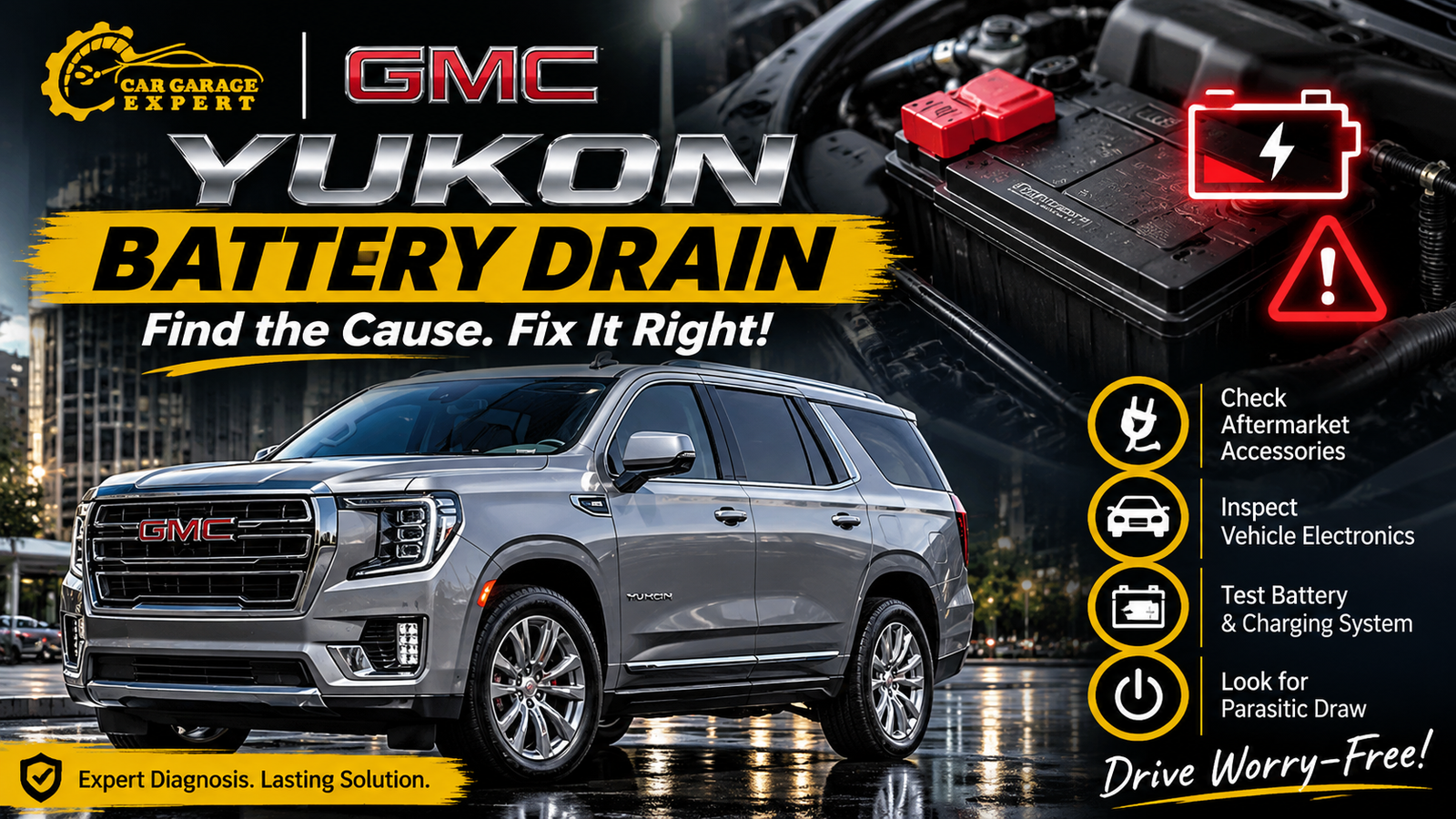
The GMC Yukon is a powerful full-size SUV designed for comfortable driving, family travel, and long journeys. However, battery problems can affect reliability, especially when the vehicle loses power after being parked overnight. A recurring GMC Yukon battery drain problem can leave the SUV unable to start, even when the battery was recently charged or replaced.
In Dubai, high temperatures, frequent air-conditioning use, extended parking periods, and heavy electrical demand can put additional pressure on the battery and charging system. However, a battery that repeatedly goes flat may also have an electrical fault that needs professional attention.
Understanding the cause is important before replacing any components. This guide explains the common causes of GMC Yukon battery drain, the warning signs to watch for, and the diagnostic and repair options available to vehicle owners in Dubai.
What Causes GMC Yukon Battery Drain?
Battery drain occurs when the battery loses more electrical energy than the charging system can restore. Sometimes, the problem comes from an aging battery. In other cases, an electrical component continues consuming power after the engine is switched off.
The following are some common reasons a GMC Yukon may experience battery drain.
1. Weak or Aging Battery
An aging battery is one of the first things technicians should check when a GMC Yukon struggles to start. Over time, the battery loses its ability to store and deliver sufficient electrical power.
Dubai’s hot climate can accelerate battery deterioration. High temperatures increase internal chemical activity and contribute to corrosion and electrolyte loss. As a result, a battery may become unreliable even when it appears to be working normally.
Common signs of a weak battery include:
- Slow engine cranking when starting.
- Dashboard lights becoming dim.
- Clicking sounds when turning the ignition.
- Electrical accessories operating inconsistently.
- The engine failing to start after the vehicle has been parked.
A battery load test can help determine whether the existing battery can still deliver sufficient starting power.
2. Parasitic Battery Drain
Parasitic battery drain is another important cause of repeated battery discharge. It occurs when an electrical component continues drawing excessive current while the vehicle is switched off.
Some electrical systems naturally consume a small amount of power when the GMC Yukon is parked. This supports functions such as security monitoring, memory settings, and electronic system readiness.
However, excessive current consumption can gradually discharge the battery.
Possible sources include:
- A glovebox light that remains switched on.
- A luggage compartment light that does not turn off.
- A faulty relay that stays activated.
- An electronic control module that fails to enter sleep mode.
- An electrical accessory that continues consuming power.
A professional parasitic draw test can identify whether the vehicle is consuming more electricity than its specified limits.
3. Faulty Alternator or Charging System
The alternator supplies electrical power while the engine is running and helps recharge the battery. If it develops a fault, the battery may not receive enough charge during normal driving.
Although alternator problems often show up as charging warnings, some faults can be less obvious and may cause repeated starting difficulties.
Possible warning signs include:
- Battery warning light appearing on the dashboard.
- Dimming headlights while driving.
- Electrical accessories behaving irregularly.
- Battery voltage failing to remain within the manufacturer’s charging specifications.
- Repeated battery discharge despite installing a replacement battery.
A technician should test alternator output, charging-system performance, wiring connections, and the battery condition before recommending replacement.
4. Electrical Module or Software Problems
Modern GMC Yukon models depend on multiple electronic control modules to operate vehicle functions. These systems manage everything from body electronics and security features to climate control and infotainment.
If a module remains active after the vehicle is switched off, it may continue consuming battery power.
This issue can be difficult to identify because the vehicle may operate normally during the day but lose battery charge while parked.
Depending on the model year, technicians may need to investigate:
- Body Control Module (BCM) activity.
- Infotainment and communication systems.
- Climate-control modules.
- Electronic control unit communication.
- Software calibration or update-related problems.
Confirm the exact cause through model-specific diagnostic procedures rather than replacing electronic modules without testing.
5. Aftermarket Accessories and Electrical Modifications
Many GMC Yukon owners install additional accessories to improve convenience, security, and entertainment.
These additions can drain the battery if they are installed or connected incorrectly, or if they draw power from a source that stays active when the ignition is switched off.
Common examples include:
- Aftermarket dash cameras.
- GPS tracking devices.
- Additional entertainment screens.
- Security systems.
- USB charging adapters.
- Non-original lighting equipment.
A poorly installed accessory may continue drawing current even when the vehicle is parked.
If battery problems begin after installing new equipment, inspect the accessory and its wiring first.
6. Short Trips and Extended Parking
Driving habits can also influence battery performance.
The GMC Yukon requires sufficient driving time for its charging system to restore the energy used during engine starting and electrical operation. Repeated short journeys may not provide enough charging time, particularly when several electrical accessories are operating.
Extended parking can create another problem. Even normal standby electrical consumption gradually reduces battery charge when the vehicle remains unused for several days or weeks.
This situation can become more noticeable when the battery is already weak or aging.
7. Faulty HVAC Components
The GMC Yukon offers advanced climate-control features, including rear passenger temperature and airflow controls. Problems with HVAC actuators or their electrical connections can sometimes prevent vehicle systems from entering their normal sleep mode.
General Motors published technical service information for certain 2021–2022 GMC Yukon models concerning low battery voltage, parasitic drain, and dead-battery conditions. The investigation included rear HVAC actuators that repeatedly attempted to complete an incomplete calibration process after the vehicle was switched off. This could continue until the battery was depleted.
If your Yukon has this problem, a technician should inspect the rear HVAC actuators, wiring, connectors, and door movement before replacing the battery.
8. Body Control Module (BCM) Issues
The Body Control Module manages several electrical functions, including lighting, security, and other body-related systems.
A software-related problem can sometimes prevent the BCM from allowing the vehicle to enter its normal power-saving state.
General Motors issued bulletin PIT6260A for certain 2022–2024 GMC Yukon and Yukon XL models. It describes a battery drain condition associated with a BCM software anomaly. The bulletin notes that the condition is more likely when the vehicle is left unlocked or the key fob remains inside. The prescribed correction involves checking and updating the BCM calibration where applicable.
This is an important reason to check the vehicle’s software and diagnostic history before purchasing another battery.
9. Security System and Alarm Circuit Problems
The GMC Yukon uses electronic security features to protect the vehicle. Faults in these systems can sometimes cause unexpected electrical activity while the SUV is parked.
For example, General Motors published bulletin PIT5993F in January 2026 covering certain 2021–2026 GMC Yukon and Yukon XL vehicles equipped with specified theft-deterrent alarm systems. It identifies high resistance in the glass-breakage detection circuit as a possible cause of battery draw and unwanted alarm activity.
If the alarm activates unexpectedly or the battery discharges while the vehicle is locked, include the security system and related wiring in the diagnostic inspection.
Common Signs of GMC Yukon Battery Drain
Recognizing battery drain early can help prevent unexpected breakdowns. Some symptoms are easy to notice, while others may appear only after the vehicle has been parked for several hours.
Here are the common warning signs to monitor.
| Warning sign | What it may indicate |
| Engine does not start | Weak battery or excessive electrical drain |
| Slow engine cranking | Low battery charge or poor electrical connections |
| Clicking noise during starting | Insufficient power to the starter |
| Battery warning light | Possible charging system problem |
| Dashboard lights remain illuminated | Electrical system not entering sleep mode |
| Battery repeatedly goes flat overnight | Possible parasitic current draw |
| Security alarm activates unexpectedly | Potential alarm circuit or electrical fault |
| Electrical settings reset | Battery disconnection or unstable electrical supply |
One symptom alone cannot confirm the exact cause. A proper inspection helps distinguish between a failing battery, charging-system fault, and parasitic electrical drain.
How to Diagnose GMC Yukon Battery Drain
Accurate diagnosis is essential because replacing the battery without investigating the underlying problem may only provide temporary relief.
A professional technician should follow a systematic inspection process to identify the source of the electrical issue.
1. Inspect the Battery Condition
The first step is to examine the battery and its connections.
The technician checks the battery’s physical condition, terminals, cables, and ground connections. Corrosion, loose connections, and damaged cables can interfere with electrical performance.
A professional battery tester can measure the battery’s condition and starting capability.
If the battery cannot maintain sufficient capacity, you may need to replace it.
2. Perform a Charging System Test
After inspecting the battery, the technician checks the alternator and charging system.
This involves testing the charging output under suitable operating conditions and inspecting the related wiring and connections.
The purpose is to determine whether the battery receives sufficient charging power while the engine is running.
3. Conduct a Parasitic Draw Test
A parasitic draw test measures how much electrical current the GMC Yukon consumes while parked.
Prepare the vehicle correctly before taking measurements. Handle the doors, bonnet, and other access points according to the manufacturer’s testing procedure.
Technicians also need to allow the electronic modules enough time to enter their sleep states. Measuring too early can produce misleading results because some electrical systems remain active temporarily after shutdown.
For example, GM service information for a 2023 Yukon describes checking for less than 40 mA of parasitic current after the required sleep conditions are met. Always confirm the correct specification and waiting procedure for your model year.
4. Scan Electronic Control Modules
Modern GMC Yukon vehicles contain multiple electronic systems that communicate with each other.
A professional diagnostic scan can help identify stored fault codes, communication problems, and abnormal module activity.
The technician may inspect:
- Body Control Module.
- HVAC control modules.
- Infotainment system.
- Security and alarm systems.
- Battery monitoring system.
- Other relevant electronic control units.
A diagnostic trouble code does not always identify the failed component directly. Interpret it alongside electrical measurements and the vehicle’s symptoms.
5. Inspect Fuses and Individual Circuits
If technicians confirm excessive current draw, they can investigate the relevant electrical circuits to locate the source.
Fuse testing and circuit isolation help narrow down which system is consuming excessive power.
This process should follow the correct service procedure because disconnecting a battery or removing certain fuses can reset electronic modules and temporarily hide an intermittent fault.
6. Verify the Repair
After the repair, the vehicle should undergo another battery drain test.
The technician should confirm that the faulty circuit operates correctly, the electronic modules enter their normal sleep states, and the battery maintains its charge under the tested conditions.
A successful repair should address the original cause rather than simply restore enough power to start the engine.
How to Fix GMC Yukon Battery Drain in Dubai
The right repair depends on the diagnostic results. No single repair works for every GMC Yukon battery drain problem.
Some common repair solutions include:
Battery Replacement
If the existing battery has lost capacity, you may need to replace it.
The replacement battery should match the vehicle’s required specifications, including the correct size, capacity, and starting performance. Consider battery technology and monitoring requirements.
Alternator Repair or Replacement
If testing confirms the alternator isn’t charging correctly, the technician may need to repair its wiring or connections, or replace the faulty unit.
Electrical Wiring Repair
Damaged insulation, loose connectors, corroded terminals, and faulty ground connections can interfere with the electrical system.
Repairing the affected wiring can restore normal electrical operation and prevent recurring problems.
Parasitic Drain Repair
If an electrical component continues to consume excessive power while parked, the technician must identify and repair that circuit or component.
Depending on the findings, the repair may involve a faulty relay, interior light switch, aftermarket accessory, or electronic module.
Software Updates and Module Programming
Some battery drain conditions are related to software calibration rather than physical component failure.
If the applicable GMC service information identifies a software issue, the technician may need to update or reprogram the relevant control module using suitable diagnostic equipment.
For example, GM’s PIT6427 bulletin addresses a possible battery draw condition on certain 2025–2026 GMC Yukon models involving fluctuating sunshade lamp supply circuits and the overhead console. The prescribed diagnostic process checks those circuits and related components.
Important: These General Motors technical bulletins describe specific model years and configurations, and their stated regional applicability is North America. They should not automatically be treated as confirmed faults in every Dubai-spec GMC Yukon. A qualified technician should check the vehicle’s VIN, equipment, software version, and applicable regional service information before recommending a repair.
How Dubai’s Climate Affects GMC Yukon Battery Performance
Dubai’s climate creates additional challenges for vehicle batteries. High temperatures can accelerate battery aging, especially when the SUV sits parked outdoors for long periods.
Heat can contribute to internal battery corrosion, electrolyte loss, and reduced battery capacity. These effects may make an ageing battery less reliable.
According to battery-industry guidance for the UAE, many conventional car batteries have an expected service life of approximately two to three years, although actual lifespan depends on usage, battery quality, and operating conditions.
Dubai Heat Guide+1
Here are some factors GMC Yukon owners in Dubai should consider:
- High outdoor temperatures: Prolonged heat exposure can accelerate battery deterioration.
- Frequent air-conditioning use: Heavy electrical demand makes a healthy charging system important.
- Long parking periods: Extended inactivity can allow the battery charge to decrease.
- Short-distance driving: Repeated short journeys may not provide enough time to restore the charge used during starting.
- Battery maintenance: Loose terminals, corrosion, and ageing connections can affect electrical performance.
Dubai’s heat does not automatically mean your vehicle has a parasitic drain. If the battery repeatedly dies overnight, have a technician test the electrical system to identify the cause.
How to Prevent GMC Yukon Battery Drain
Preventive maintenance can reduce unexpected battery problems and improve your GMC Yukon’s reliability.
Consider following these practical recommendations:
1. Check Battery Health Regularly
Have the battery tested periodically, particularly when it approaches the end of its expected service life.
A battery inspection can identify reduced capacity before the vehicle develops starting problems.
2. Avoid Leaving Electrical Accessories Running
Before leaving your GMC Yukon, check that interior lights, charging accessories, and other electrical equipment are switched off where appropriate.
Do not leave devices connected if you don’t need them.
3. Inspect Aftermarket Electrical Equipment
If you have installed a dash camera, tracking system, or additional lighting, make sure the equipment is wired correctly.
Accessories should not consume excessive power while the vehicle is parked.
4. Drive the Vehicle Regularly
If your GMC Yukon remains unused for extended periods, its battery may gradually lose charge.
Regular driving can help maintain battery charge, although a battery with an underlying fault may still require repair or replacement.
5. Keep Battery Connections Clean
Inspect the battery terminals and connections for corrosion or looseness.
Poor electrical connections can interfere with starting and charging performance.
6. Check the Charging System
Battery maintenance should include checking the alternator, battery cables, and related charging components.
This helps identify problems that may otherwise lead to repeated battery discharge.
7. Take Your Key Fob Away When Parking
Avoid leaving the key fob inside the vehicle when parked. For certain Yukon model years, GM has documented a battery drain condition associated with leaving the vehicle unlocked or keeping the key fob inside. Follow the appropriate parking instructions for your model.
Why Choose Professional GMC Yukon Battery Drain Diagnosis in Dubai?
The GMC Yukon uses an advanced electrical system that requires appropriate diagnostic equipment and technical knowledge.
Replacing the battery without identifying the underlying problem can result in unnecessary expenses. If a faulty module, charging component, or electrical circuit keeps drawing power, the replacement battery may have the same problem.
A professional automotive inspection should include:
- Battery condition and load testing.
- Alternator and charging system inspection.
- Parasitic current draw testing.
- Battery terminal and wiring inspection.
- Electronic control module scanning.
- Relevant software and technical bulletin checks.
- Final verification after repairs.
At Car Garage Expert, GMC Yukon owners in Dubai can seek professional assistance with battery-related concerns and electrical system troubleshooting.
Whether your SUV struggles to start in the morning, loses battery power overnight, or repeatedly requires jump-starting, identifying the underlying fault is the first step towards a reliable repair.
A proper diagnosis helps avoid unnecessary component replacements and supports long-term vehicle performance.
Frequently Asked Questions (FAQs)
1. Why Does My GMC Yukon Battery Keep Dying Overnight?
A GMC Yukon battery may die overnight because of a weak battery, excessive parasitic current draw, faulty electrical components, or a charging system problem. An electronic module that remains active after the vehicle is switched off can also discharge the battery. A professional parasitic draw test can help identify the cause.
2. Can a Faulty Alternator Cause GMC Yukon Battery Drain?
Yes. A faulty alternator may fail to recharge the battery properly while the engine is running. Some alternator faults can also contribute to unwanted electrical consumption. Testing the alternator and charging system helps determine whether it needs repair or replacement.
3. How Long Does a GMC Yukon Battery Last in Dubai?
Battery lifespan depends on battery quality, vehicle usage, maintenance, and environmental conditions. In the UAE, conventional car batteries commonly last around two to three years. Dubai’s high temperatures can accelerate battery deterioration, making regular battery health checks important.
4. What Is a Parasitic Battery Drain in a GMC Yukon?
Parasitic battery drain occurs when an electrical component consumes excessive current while the vehicle is switched off. Possible causes include faulty relays, interior lights, aftermarket accessories, and electronic modules that fail to enter sleep mode. A technician can use specialised equipment to identify the affected circuit.
5. Should I Replace My GMC Yukon Battery If It Keeps Losing Charge?
Not necessarily. Replace the battery only if testing confirms it has deteriorated or cannot maintain sufficient capacity. If an alternator, wiring issue, or parasitic electrical drain is responsible, you must address that issue as well. Replacing the battery without diagnosing the underlying fault may not solve the problem.
Conclusion
Never ignore a recurring GMC Yukon battery drain problem. Although an aging battery is a common cause of starting difficulties, faulty alternators, parasitic electrical loads, electronic modules, HVAC components, and aftermarket accessories can also contribute to battery discharge.
Dubai’s hot climate makes regular battery inspections particularly important. However, repeated overnight battery discharge requires a proper electrical diagnosis, not just a new battery.
If your GMC Yukon experiences slow starting, unexpected battery discharge, or repeated no-start conditions, arrange a professional inspection with Car Garage Expert in Dubai.
Visit us in our Al Quoz, Dubai branch or visit Car Garage Expert
Identifying the actual cause, repairing the affected component, and verifying the charging and electrical systems can help restore dependable starting performance and prevent recurring battery problems.