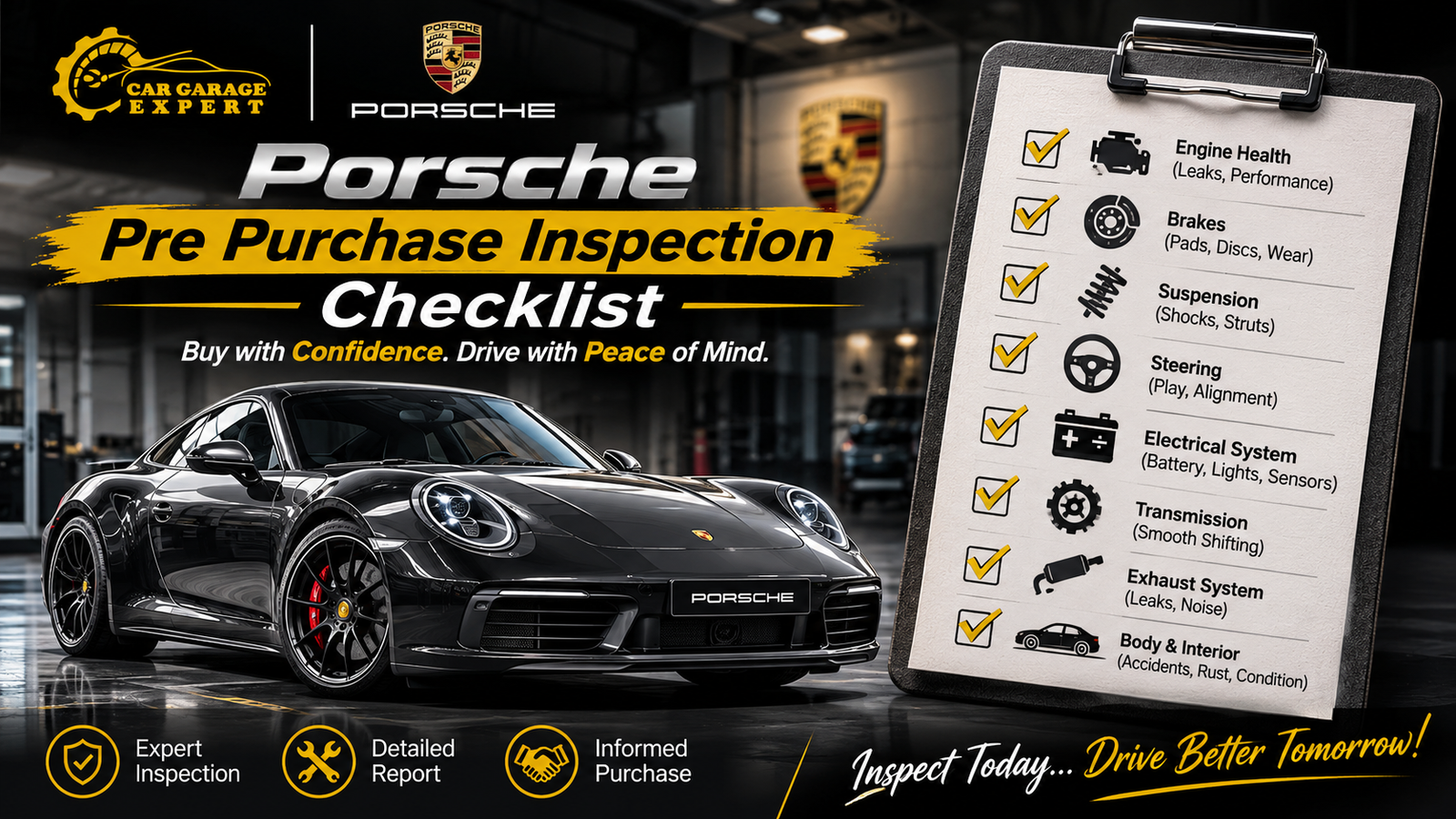
Buying a Porsche is an exciting investment for any car enthusiast. Whether you are interested in a Porsche 911, Cayenne, Panamera, Macan, or 718 Cayman, owning one offers an exceptional combination of performance, luxury, engineering, and driving comfort. However, purchasing a pre-owned Porsche requires careful consideration, especially in a competitive luxury car market like Dubai.
Although many used Porsche vehicles available in Dubai look impressive from the outside, their actual mechanical condition may tell a different story. Previous accidents, hidden engine problems, transmission faults, neglected maintenance, and electrical issues can turn an attractive deal into an expensive ownership experience.
This is why following a comprehensive Porsche pre purchase inspection checklist is essential before making your final buying decision. A professional inspection helps identify potential problems, evaluate the vehicle’s condition, and determine whether its asking price reflects its actual value.
Dubai’s hot climate, dusty environment, heavy traffic, and demanding driving conditions also make certain vehicle components particularly important to inspect. A Porsche that has received consistent maintenance can deliver years of enjoyable performance, but a neglected example may require significant repairs.
In this guide, Car Garage Expert explains everything you should check before purchasing a used Porsche in Dubai, from engine performance and transmission condition to accident history, electronics, suspension, and service records.
Why Is a Porsche Pre-Purchase Inspection Important in Dubai?
A pre-purchase inspection (PPI) is a detailed mechanical and physical assessment performed before buying a used vehicle. It allows an experienced technician to examine important systems and identify defects that may not be noticeable during a normal test drive.
Porsche vehicles are precision-engineered performance cars. Their advanced electronics, sophisticated suspension systems, powerful engines, and specialised transmissions require appropriate technical knowledge and diagnostic equipment.
There are several reasons why a professional Porsche inspection is especially valuable in Dubai.
1. Dubai’s Extreme Weather Conditions
High temperatures can place additional stress on cooling systems, batteries, rubber components, tyres, and air-conditioning systems. Dust and sand can also accumulate around cooling components and air filters.
A thorough inspection should therefore include the radiator, cooling fans, coolant hoses, condenser, battery, and air-conditioning performance.
2. Expensive Porsche Components
Porsche replacement parts and specialised repairs can be expensive. Even relatively small problems involving sensors, suspension components, brakes, or transmission systems may require a substantial repair budget.
Identifying these problems before purchasing allows you to negotiate with the seller or reconsider the deal.
3. Hidden Accident Damage
Some used luxury cars may have undergone body repairs following previous accidents. Poor-quality repairs can affect structural integrity, alignment, paint quality, and vehicle safety.
A professional inspection can identify suspicious repairs, inconsistent paintwork, damaged components, and possible structural issues.
4. Understanding the Vehicle’s Maintenance History
A Porsche with complete service documentation is generally easier to evaluate than one with missing records.
Maintenance invoices, service schedules, mileage records, and previous repair details help establish whether the previous owner maintained the vehicle correctly.
Porsche Pre Purchase Inspection Checklist: 12 Essential Areas to Check
Before purchasing a used Porsche in Dubai, make sure the following areas are carefully examined by a qualified automotive technician.
1. Engine Condition and Performance
The engine is one of the most important components to evaluate when buying a used Porsche. Whether the vehicle has a naturally aspirated or turbocharged engine, its mechanical condition directly affects performance, reliability, and ownership costs.
During the inspection, the technician should check:
- Engine oil level and overall condition.
- Signs of oil leakage around the engine.
- Coolant leakage and cooling system condition.
- Unusual knocking, ticking, or rattling sounds.
- Engine mounting condition.
- Exhaust smoke and abnormal emissions.
- Turbocharger operation, where applicable.
- Engine temperature and idle stability.
The engine should also be started from cold whenever possible. A cold start can reveal noises or running problems that might become less noticeable after the engine warms up.
Pay particular attention to warning lights, unstable idling, excessive smoke, and signs of overheating.
2. Transmission and Gearbox Inspection
Porsche vehicles are equipped with advanced transmission systems, including PDK dual-clutch transmissions and conventional automatic or manual gearboxes, depending on the model and year.
Transmission problems can be expensive, making this an essential part of any Porsche pre purchase inspection checklist.
The technician should evaluate:
- Smoothness during gear changes.
- Delayed engagement when selecting Drive or Reverse.
- Unusual noises during acceleration.
- Jerking or hesitation during shifting.
- Transmission fluid leakage, where applicable.
- Transmission warning messages.
- Diagnostic fault codes and available transmission data.
During the road test, the transmission should operate smoothly under different driving conditions.
For PDK-equipped models, a Porsche-capable diagnostic assessment is particularly useful for identifying stored faults and evaluating relevant transmission operating data.
3. Exterior Bodywork and Paint Inspection
A Porsche’s exterior condition can provide important clues about its previous ownership and accident history.
Never assume that a clean-looking vehicle has never been involved in an accident.
Check the following:
- Scratches, dents, and paint imperfections.
- Uneven paint shades between body panels.
- Gaps around doors, bonnet, and bumpers.
- Damaged headlights and taillights.
- Cracked front and rear bumpers.
- Rust or corrosion in relevant areas.
- Signs of previous body repairs.
- Windshield cracks and replacement quality.
A professional paint thickness measurement can help identify panels that may have been repainted or repaired.
The technician should also inspect the vehicle’s chassis and structural areas for evidence of accident damage or poor-quality repairs.
4. Suspension and Steering System
Porsche vehicles are designed to deliver precise handling, excellent road stability, and a comfortable driving experience.
However, worn suspension components can affect handling and increase repair expenses.
Important inspection points include:
- Shock absorbers and struts.
- Control arms and bushings.
- Ball joints and suspension links.
- Wheel bearings.
- Steering rack condition.
- Power steering operation, where applicable.
- Suspension noises over uneven roads.
- Ride height and vehicle alignment.
For Porsche models equipped with PASM or air suspension, the inspection should include system operation, warning messages, and relevant diagnostic faults.
Listen for knocking, creaking, or unusual vibrations during the road test. These symptoms may indicate worn suspension components or steering-related problems.
5. Brake System Inspection
A Porsche’s braking system is designed to handle powerful acceleration and demanding driving conditions. Therefore, the brakes must be in excellent condition before you purchase the vehicle.
Ask the technician to inspect:
- Front and rear brake pads.
- Brake disc thickness and surface condition.
- Brake calipers and visible leakage.
- Brake hoses and lines.
- Brake fluid condition.
- Parking brake operation.
- ABS warning lights.
- Brake pedal response.
Some Porsche models are equipped with Porsche Ceramic Composite Brakes (PCCB). These systems require appropriate specialist inspection because their condition and replacement costs can be significantly different from conventional braking systems.
Do not rely only on how the brakes feel during a short test drive. A physical inspection is necessary to evaluate their remaining condition.
6. Tyres, Wheels, and Alignment
Tyres are particularly important when buying a performance car in Dubai.
High road temperatures, extended exposure to sunlight, and driving conditions can affect tyre condition and performance.
Check:
- Tyre tread depth.
- Tyre manufacturing dates.
- Cracks or sidewall damage.
- Uneven tyre wear.
- Correct tyre specifications.
- Wheel alignment.
- Alloy wheel cracks and bends.
- Missing or damaged wheel bolts.
Uneven tyre wear may indicate alignment problems, suspension damage, or previous accident repairs.
Also confirm that the tyres are suitable for the specific Porsche model and that all four wheels meet the manufacturer’s requirements.
7. Air Conditioning and Cooling System
Dubai’s climate makes air-conditioning and engine cooling particularly important.
A Porsche’s air-conditioning system should provide consistent cooling, including when the vehicle is stationary in traffic.
The inspection should cover:
- Air-conditioning compressor operation.
- Cooling performance from all vents.
- Condenser condition.
- Radiator condition.
- Cooling fan operation.
- Coolant level and quality.
- Hoses and visible connections.
- Signs of coolant leakage.
- Engine temperature stability.
Dust accumulation around the radiator and condenser can restrict airflow and affect cooling performance.
The technician should also check for previous overheating problems, as excessive engine temperatures can cause serious mechanical damage.
8. Electrical System and Computer Diagnostics
Modern Porsche vehicles use sophisticated electronic systems to control engine performance, transmission operation, safety features, comfort functions, and vehicle communication.
A professional diagnostic scan can reveal stored or active faults that may not be visible on the dashboard.
Check the following:
- Engine control unit (ECU) fault codes.
- Transmission control module.
- ABS and stability control systems.
- Airbag and safety system warnings.
- Parking sensors and cameras.
- Infotainment system.
- Navigation and connectivity features.
- Power windows and door locks.
- Instrument cluster functionality.
- Battery and charging system.
A Porsche-capable diagnostic tool should be used whenever possible.
Importantly, a clean dashboard does not automatically mean the vehicle is fault-free. Some diagnostic faults may remain stored even when warning lights are not currently illuminated.
9. Interior Condition and Comfort Features
The interior condition can help you understand how carefully the previous owner treated the vehicle.
Although normal wear is expected in used cars, excessive deterioration may indicate poor maintenance or usage inconsistent with the advertised mileage.
Inspect:
- Leather seats and upholstery.
- Dashboard and centre console.
- Steering wheel condition.
- Seat adjustment functions.
- Door panels and interior trim.
- Climate control buttons.
- Seat heating and ventilation, if equipped.
- Sunroof or convertible roof operation.
- Interior lighting.
- Seat belts and safety equipment.
Make sure all electronic comfort features work correctly.
For convertible Porsche models, carefully inspect the roof mechanism, seals, and drainage areas for water ingress or operating problems.
10. Undercarriage and Chassis Inspection
The undercarriage is an important part of the Porsche inspection process because many mechanical problems cannot be identified from above.
A workshop inspection using a vehicle lift allows technicians to examine areas that are otherwise difficult to access.
Look for:
- Engine and transmission oil leaks.
- Damaged suspension components.
- Chassis damage.
- Corrosion or unusual deterioration.
- Damaged underbody covers.
- Exhaust system leaks.
- Coolant leakage.
- Previous repair marks.
- Damaged mounting points.
Special attention should be given to the vehicle’s structural condition.
Any evidence of significant chassis damage or poorly executed structural repairs should be investigated before proceeding with the purchase.
11. Service Records, Mileage, and Vehicle History
A complete Porsche service history provides valuable information about the vehicle’s maintenance and ownership.
Ask the seller to provide:
- Previous service invoices.
- Maintenance records.
- Repair receipts.
- Previous inspection reports.
- Warranty information.
- Available accident records.
- Original ownership and registration documentation.
Compare the recorded mileage across available service invoices and inspection documents.
Look for inconsistencies that could indicate mileage discrepancies or missing maintenance periods.
Also verify the vehicle identification number (VIN) against the available documentation and the vehicle itself.
If the Porsche is imported, confirm its market specification and investigate its previous history before purchasing.
12. Professional Road Test
A road test is the final essential step in the Porsche pre-purchase inspection process.
A vehicle may appear mechanically sound while stationary but reveal problems during actual driving.
During the road test, evaluate:
- Engine acceleration and responsiveness.
- Transmission shifting behaviour.
- Steering precision.
- Braking performance.
- Suspension comfort and stability.
- Unusual vibrations.
- Engine temperature.
- Road and wind noise.
- Air-conditioning performance.
- Electronic warning messages.
The road test should take place under safe and legal driving conditions.
If possible, the technician should evaluate the vehicle at different speeds and during normal acceleration and braking.
Any unusual behaviour should be investigated before the purchase is finalised.
Dubai-Specific Checks Before Buying a Used Porsche
In addition to the mechanical checklist, buyers in Dubai should consider several local factors.
Verify GCC Specifications
Confirm whether the Porsche is a GCC-specification vehicle or an imported model.
Check the VIN, available documentation, cooling system configuration, equipment, and vehicle history. Imported vehicles are not automatically unsuitable, but their previous market, accident history, and specifications should be verified.
Check Registration and Ownership Requirements
Dubai’s Roads and Transport Authority (RTA) has technical inspection and documentation requirements associated with vehicle ownership transfers.
An official RTA vehicle transfer process includes electronic technical inspection, insurance, and other applicable requirements.
Remember that an RTA technical inspection and an independent pre-purchase inspection serve different purposes. Passing a registration-related test does not replace a detailed mechanical assessment.
Investigate Previous Accident History
Request all available accident and repair documentation. Check the chassis, paintwork, structural components, and vehicle identification details.
Do not rely exclusively on the seller’s verbal assurances.
Evaluate Previous Usage
Ask whether the Porsche was used for daily commuting, long-distance driving, performance driving, or occasional weekend trips.
Previous usage is not necessarily an indication of poor condition, but it helps the technician understand which components deserve additional attention.
Should You Hire a Professional Porsche Inspection Service in Dubai?
Yes. A professional pre-purchase inspection is strongly recommended before purchasing any expensive used luxury or performance vehicle.
Although buyers can perform basic visual checks themselves, identifying hidden mechanical faults requires professional experience, specialist equipment, and access to the vehicle’s diagnostic systems.
A qualified Porsche-experienced technician can provide a more comprehensive assessment of the engine, gearbox, brakes, suspension, electronics, bodywork, and undercarriage.
At Car Garage Expert, arranging a professional vehicle assessment before committing to a Porsche purchase can help you make a more informed buying decision.
A proper inspection should provide:
- A detailed assessment of the vehicle’s mechanical condition.
- Identification of visible defects and potential repair requirements.
- Computerised diagnostic findings where applicable.
- An evaluation of important safety components.
- Information about immediate and future maintenance needs.
- A clear explanation of any significant concerns.
Always request a written inspection report and ask the workshop to explain the severity of identified problems.
Common Mistakes to Avoid When Buying a Used Porsche
Even experienced car buyers can overlook important details when purchasing a performance vehicle.
Avoid these common mistakes:
- Buying Based on Appearance: A polished exterior and spotless interior do not guarantee good mechanical condition.
- Ignoring Service History: Missing maintenance records make it harder to evaluate how the car was maintained.
- Skipping Computer Diagnostics: Hidden electronic and transmission faults may not trigger visible dashboard warnings.
- Avoiding a Professional Inspection: A short test drive cannot replace a detailed mechanical assessment.
- Ignoring Future Repair Costs: A lower purchase price may not represent good value if the car requires expensive repairs.
- Trusting Only the Seller’s Inspection Report: Arrange an independent assessment from a workshop of your choice to obtain an unbiased evaluation.
Frequently Asked Questions (FAQs)
1. What is included in a Porsche pre-purchase inspection in Dubai?
A Porsche pre-purchase inspection generally includes checking the engine, transmission, suspension, brakes, tyres, electrical systems, air conditioning, exterior bodywork, undercarriage, and service history. A diagnostic scan and road test are also recommended to identify hidden mechanical or electronic issues.
2. How long does a Porsche pre-purchase inspection take?
The inspection duration depends on the Porsche model, vehicle condition, and level of diagnostic testing required. A comprehensive assessment may take several hours. Additional time may be needed if technicians discover faults requiring further investigation.
3. Is a Porsche diagnostic scan necessary before buying a used car?
Yes. A diagnostic scan helps identify stored and active fault codes in important vehicle systems, including the engine, transmission, ABS, and electronic control modules. It provides additional information that cannot always be obtained through a visual inspection.
4. Should I buy an imported Porsche or a GCC-spec model in Dubai?
Both imported and GCC-specification Porsche vehicles can be suitable purchases. However, buyers should carefully verify the vehicle’s specifications, accident history, previous market, maintenance records, and overall mechanical condition before making a decision.
5. Is a pre-purchase inspection worth the cost when buying a used Porsche?
Absolutely. A professional inspection can identify hidden defects and potential repair expenses before you purchase the vehicle. It can also help you negotiate a more appropriate price or avoid buying a vehicle with serious mechanical or structural problems.
Conclusion
Purchasing a pre-owned Porsche in Dubai can be an excellent decision when you select a vehicle that has been properly maintained and thoroughly inspected. However, luxury performance vehicles require more attention than ordinary used cars, particularly when it comes to engine health, transmission performance, suspension, electronics, brakes, and cooling systems.
Following a detailed Porsche pre purchase inspection checklist helps you identify potential problems, understand upcoming maintenance expenses, and avoid unexpected repair bills after purchasing your vehicle.
From checking accident history and service documentation to performing advanced computer diagnostics and a professional road test, every inspection step contributes to a safer and more informed purchase.
Visit us in our Al Quoz, Dubai branch or visit Car Garage Expert
At Car Garage Expert, we recommend arranging a professional Porsche pre-purchase inspection before finalising any used vehicle purchase. Taking the time to assess the car properly today can help protect your investment and give you greater confidence when enjoying your Porsche on Dubai’s roads.