
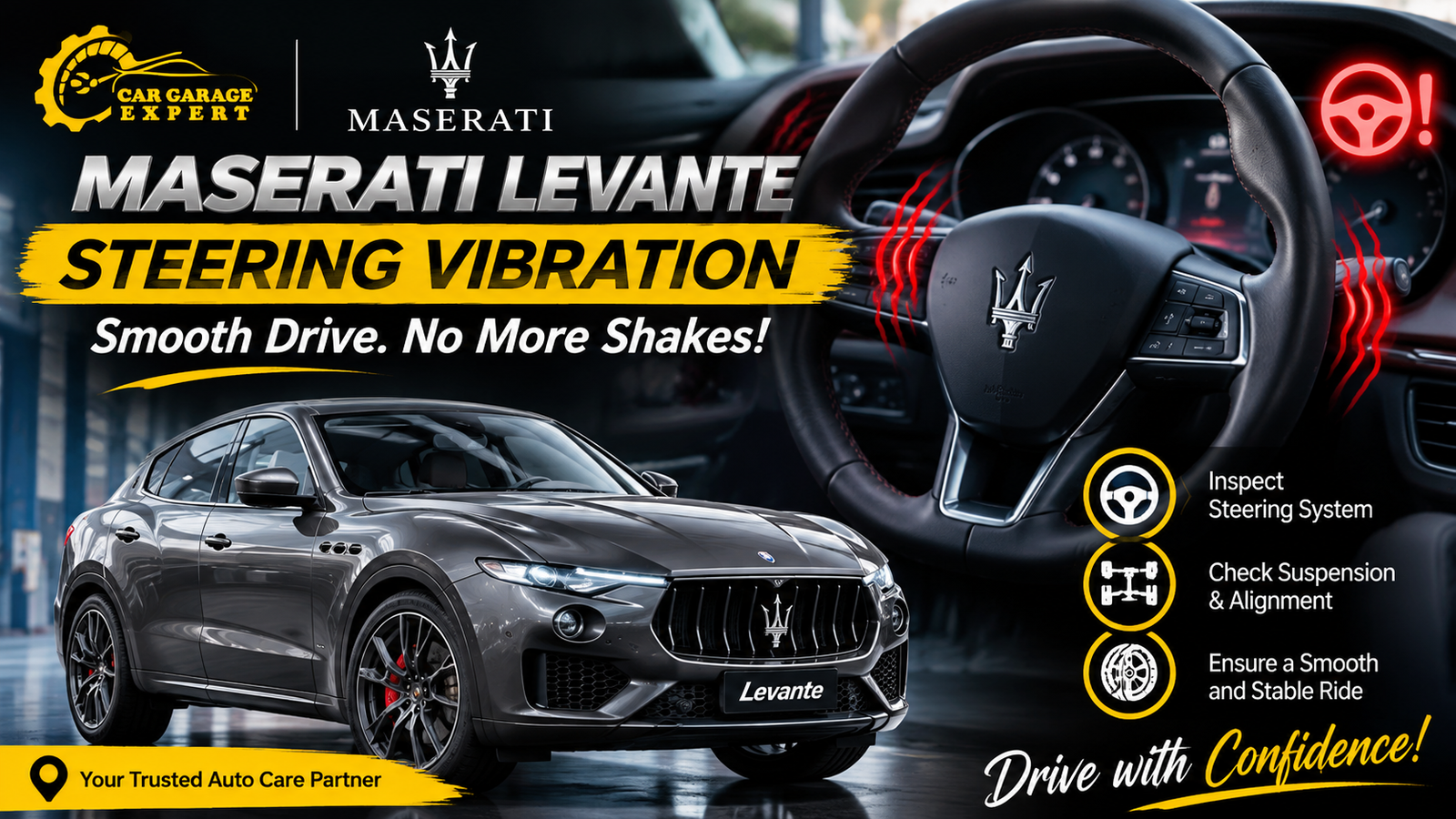
If you notice Maserati Levante steering vibration while driving, identify the cause before it affects your vehicle’s handling, comfort, and safety. Steering wheel vibration can result from unbalanced tires, damaged wheels, brake disc problems, worn suspension components, or steering system issues. Even a minor vibration can become more noticeable at higher speeds or during braking.
The Maserati Levante is a luxury SUV designed to deliver a smooth, controlled, and comfortable driving experience. However, regular driving in Dubai, long highway journeys, high temperatures, road debris, and occasional impacts with road obstacles can affect tires, wheels, suspension, and braking components.
At Car Garage Expert, understanding the source of steering vibration is key to maintaining your Maserati’s performance. Whether the steering wheel shakes at highway speeds, vibrates when applying the brakes, or feels unstable on uneven roads, a professional inspection can help identify the underlying mechanical issue.
In this guide, we explain the common causes of Maserati Levante steering vibration, warning signs to watch for, diagnostic procedures, and professional repair solutions available for Maserati owners in Dubai.
What Causes Maserati Levante Steering Vibration?
Steering vibration occurs when an issue within the rotating wheels, tires, braking system, suspension, or steering components creates unwanted movement that travels through the steering column and reaches the steering wheel.
The vibration may appear at particular speeds, during acceleration, when braking, or while driving over uneven surfaces. Knowing when the vibration occurs helps technicians narrow down the possible causes.
Here are the most common reasons behind this problem.
1. Unbalanced Wheels and Tires
Unbalanced wheels are among the most common causes of steering wheel vibration in luxury SUVs, including the Maserati Levante.
Every wheel and tire assembly has a weight distribution. If the weight isn’t evenly distributed around the wheel, it can create an imbalance as the wheel rotates. This imbalance produces centrifugal forces that may cause the steering wheel to shake.
You may notice the following symptoms:
- Steering wheel vibration at highway speeds.
- Shaking that becomes more noticeable as speed increases.
- Vibrations that appear within a particular speed range.
- Uneven tire wear over time.
- Reduced driving comfort on smooth roads.
For example, if your Maserati Levante feels smooth at lower speeds but starts vibrating at higher highway speeds in Dubai, wheel balancing should be one of the first things to check.
Professional wheel-balancing equipment identifies uneven weight distribution and helps technicians correct it by adding the right balancing weights.
However, balancing alone will not solve the problem if a tire or wheel is physically damaged.
2. Damaged or Unevenly Worn Tires
Tires play a key role in vehicle stability, steering response, and road contact. Damaged or unevenly worn tires can create vibrations that travel through the steering system.
Dubai’s high temperatures and regular highway driving make proper tire maintenance especially important. Heat increases tire pressure, while impacts with curbs, potholes, and road obstacles can damage tire structures.
Common tire-related problems include:
Uneven tread wear: When tires wear unevenly, their contact with the road becomes inconsistent, which can cause vibration.
Tire bulges: A bulge on the tire sidewall may indicate internal structural damage. It can create an unsafe driving condition.
Flat spots: Tires can develop flat spots after prolonged parking or certain driving conditions, causing temporary or persistent vibration.
Internal tire damage: Damage to internal tire components can affect the tire’s shape and balance, even when the outside appears normal.
If your Maserati Levante steering vibration continues after wheel balancing, inspect the tires for structural damage, tread irregularities, and uneven wear.
The Maserati owner’s manual also recommends checking tires for cuts, cracks, bulges, and damage caused by impacts with curbs and road obstacles.
3. Brake Disc Problems
If your Maserati Levante steering wheel vibrates mainly when you apply the brakes, the braking system should receive immediate attention.
Brake discs rotate with the wheels and provide the friction surface needed to slow down the vehicle. Over time, excessive heat, uneven friction, disc thickness variation, or mounting problems can create braking vibrations.
Some common brake-related causes include:
- Uneven brake disc thickness.
- Brake disc runout.
- Worn or uneven brake pads.
- Sticking brake caliper components.
- Incorrectly installed braking components.
- Uneven contact between brake pads and discs.
One noticeable symptom is a shaking steering wheel when slowing down from higher speeds.
For example, if the steering wheel remains stable during normal driving but starts shaking when you brake on a Dubai highway, the front braking system may require inspection.
Maserati has published technical diagnostic guidance concerning steering wheel vibration during braking. Its recommended checks include examining brake disc surfaces, measuring disc variation, checking tire pressure, and inspecting related braking components.
A professional technician should measure the brake discs and inspect the complete braking assembly before recommending resurfacing or replacement.
4. Wheel Alignment Issues
Incorrect wheel alignment can affect how your Maserati Levante drives.
Wheel alignment refers to adjusting the wheel angles to the manufacturer’s specifications. Proper alignment helps maintain predictable handling, even tire wear, and correct steering response.
When alignment becomes incorrect, you may experience:
- Steering wheel vibration.
- Vehicle pulling towards one side.
- Crooked steering wheel while driving straight.
- Uneven tire tread wear.
- Reduced steering stability.
Alignment problems can develop after hitting a curb, driving over a pothole, or replacing suspension components.
In Dubai, regular inspection is useful if your vehicle frequently travels on different road surfaces or hits road obstacles.
A professional wheel alignment service uses specialized equipment to measure and adjust the relevant wheel angles.
However, wheel alignment should not automatically be considered the solution to every vibration problem. Technicians should first inspect the tires, wheels, suspension, and steering components to identify any mechanical damage.
5. Worn Suspension Components
The Maserati Levante uses a sophisticated suspension system designed to provide comfort, stability, and responsive handling.
However, suspension components can wear out over time, particularly when a vehicle is regularly driven over uneven surfaces.
Several suspension parts may contribute to steering vibration, including:
Control arms: Worn control arm bushes or damaged joints can allow unwanted movement within the suspension assembly.
Ball joints: Worn ball joints may affect wheel positioning and steering stability.
Shock absorbers: Weak or damaged shock absorbers can reduce the suspension system’s ability to control wheel movement.
Suspension bushes: Deteriorated bushes can create excessive movement and transmit unwanted vibrations into the vehicle.
Stabilizer links: Worn stabilizer links may produce knocking noises and affect suspension control.
You might notice additional symptoms, such as clunking noises, excessive movement over bumps, uneven tire wear, or unstable handling.
A complete suspension inspection is recommended when steering vibration occurs alongside unusual noises or changes in driving behavior.
6. Damaged Wheels or Bent Rims
Large alloy wheels contribute to the Maserati Levante’s appearance and road performance. However, they can become damaged after hitting curbs, potholes, or other obstacles.
A bent rim can prevent the wheel from rotating evenly, creating vibration that becomes noticeable through the steering wheel.
Common warning signs include:
- Steering wheel shaking at certain speeds.
- Visible damage around the wheel edges.
- Air pressure loss from the affected tire.
- Repeated wheel balancing problems.
- Vibration that continues after tire balancing.
Sometimes, rim damage is difficult to identify without removing the wheel and checking it using specialized equipment.
If a wheel is bent, a technician should determine whether it can be safely repaired or needs replacement. Do not treat cracked or structurally unsafe wheels as ordinary cosmetic damage.
7. Worn Wheel Bearings
Wheel bearings allow the wheels to rotate smoothly while supporting the vehicle’s weight.
When a wheel bearing wears or is damaged, it can cause unwanted movement, friction, and vibration.
Some common symptoms include:
- Humming or grinding sounds while driving.
- Vibration that changes with vehicle speed.
- Noise that becomes louder during cornering.
- Excessive wheel movement.
- Unusual handling behavior.
Wheel bearing problems can sometimes feel similar to tire or suspension issues. Therefore, proper inspection is necessary before replacing any components.
A technician can check wheel bearing condition by inspecting wheel movement, listening for abnormal noise, and performing appropriate mechanical tests.
8. Steering System Problems
If the wheels, tires, brakes, and suspension appear to be in good condition, the steering system may require further investigation.
The steering system contains several components that work together to translate steering wheel movement into controlled wheel direction.
Potential problem areas include:
- Steering rack wear or damage.
- Loose tie rod ends.
- Worn steering joints.
- Steering column components.
- Power steering system faults.
- Incorrect steering angle calibration.
Depending on the vehicle’s model year and steering configuration, electronic steering assistance and related sensors may also require diagnostic checks.
If the steering wheel feels unusually heavy, doesn’t return smoothly to the center, or makes abnormal noises, a professional steering system inspection is recommended.
Electronic diagnostic equipment can identify relevant fault codes, while a physical inspection can detect mechanical looseness or damage.
Common Symptoms of Maserati Levante Steering Vibration
Recognizing the exact vibration pattern can help you identify which vehicle system needs attention.
Here are some common symptoms and their possible causes.
| Symptom | Possible Cause |
| Vibration at highway speeds | Wheel imbalance or tyre damage |
| Steering shakes during braking | Brake disc or caliper problems |
| Steering wheel pulls to one side | Wheel alignment or suspension issues |
| Vibration over bumps | Worn suspension components |
| Humming with steering vibration | Possible wheel bearing damage |
| Vibration after hitting a kerb | Damaged tyre or bent rim |
| Heavy or inconsistent steering | Steering system fault |
These symptoms are diagnostic clues, not confirmed diagnoses. Several mechanical problems can produce similar driving sensations.
How to Diagnose Maserati Levante Steering Vibration
Accurate diagnosis matters because replacing the wrong component can waste time and money without fixing the original problem.
At Car Garage Expert, a systematic inspection approach can help identify the actual source of steering vibration.
Step 1: Initial Vehicle Inspection
The technician begins by discussing the problem with the vehicle owner.
Important questions include:
- At what speed does the vibration begin?
- Does it happen during braking?
- Is the vibration constant or intermittent?
- Does it become worse on uneven roads?
- Has the vehicle recently received new tires or suspension repairs?
These details help narrow down the possible causes.
Step 2: Tire and Wheel Inspection
The technician checks tire pressure, tread condition, sidewalls, and wheel surfaces.
The technician should also inspect each wheel for visible damage, uneven wear, and possible runout.
Step 3: Computerized Wheel Balancing
If the technician suspects a tire or wheel imbalance, specialized balancing equipment measures weight distribution.
Correct balancing can reduce vibration caused by an unbalanced wheel assembly.
Step 4: Brake System Inspection
The technician inspects the braking system for uneven wear, disc condition, caliper movement, and other potential faults.
Where necessary, technicians measure brake disc runout and thickness variation using appropriate instruments.
Step 5: Suspension and Steering Inspection
The technician examines suspension bushes, ball joints, tie rods, wheel bearings, and steering components for excessive play, wear, or damage.
Step 6: Road Test and Final Verification
After the necessary repairs, the vehicle should undergo a controlled road test to confirm whether the vibration has been resolved.
The technician should also verify steering response, braking performance, and overall driving stability.
Best Solutions for Maserati Levante Steering Vibration in Dubai
The correct repair depends on the identified cause. No single solution fits every steering vibration complaint.
Some common repair solutions include:
Professional wheel balancing: Corrects uneven weight distribution in the wheel and tire assembly.
Tire replacement: Recommended when tires have structural damage, excessive wear, or irregularities that cannot be safely corrected.
Wheel alignment: Restores the manufacturer’s recommended wheel angles when alignment measurements are outside specifications.
Brake disc and pad service: Addresses braking vibration caused by disc variation, uneven wear, or related braking component problems.
Suspension repairs: Replaces worn or damaged control arms, bushes, ball joints, shock absorbers, and other affected components.
Wheel repair or replacement: Corrects impact damage when a safe repair is possible, or replaces structurally damaged rims.
Steering system repair: Addresses faulty steering rack components, tie rods, steering joints, or related electronic faults.
Using suitable replacement parts and following Maserati’s service specifications are important for maintaining the vehicle’s performance and reliability.
Why Address Maserati Levante Steering Vibration Early?
Ignoring steering vibration can allow a mechanical problem to worsen.
For example, an unbalanced wheel may contribute to uneven tire wear, while worn suspension components can affect handling and put additional stress on connected parts.
Brake-related vibration also deserves attention because the braking system is essential for vehicle safety.
Early inspection offers several advantages:
- Helps prevent additional component damage.
- Supports stable steering and handling.
- Improves driving comfort.
- Helps identify tire and brake problems.
- Reduces the risk of unexpected mechanical issues.
- Supports long-term vehicle reliability.
If the vibration is severe, the steering becomes difficult to control, or you notice a tire bulge, grinding noise, or a suspected loose wheel, stop driving when safe and arrange professional assistance.
Professional Maserati Levante Steering Vibration Repair in Dubai
Finding the correct cause of steering vibration requires more than a quick visual inspection. Luxury SUVs such as the Maserati Levante need careful attention to their tires, wheels, brakes, suspension, and steering systems.
Car Garage Expert provides automotive inspection and repair solutions for drivers in Dubai looking to maintain their vehicles.
Whether your Maserati Levante shakes at highway speeds, vibrates during braking, or develops unusual steering behavior, a proper diagnostic inspection can identify the problem and determine the right repair.
A professional approach includes examining the affected components, checking relevant mechanical and electronic systems, and verifying the results after repairs.
The aim is to restore smooth steering response, improve vehicle stability, and help maintain the driving experience expected from a Maserati.
If you are experiencing Maserati Levante steering vibration, arrange an inspection with Car Garage Expert before the issue develops into a more serious mechanical concern.
Frequently Asked Questions (FAQs)
1. Why does my Maserati Levante steering wheel vibrate at high speeds?
High-speed steering vibration is often caused by unbalanced wheels, damaged tires, uneven tread wear, or bent rims. Suspension and wheel bearing problems can also contribute. A professional wheel and tire inspection can help identify the cause.
2. Why does my Maserati Levante shake when braking?
Steering vibration during braking may indicate brake disc thickness variation, disc runout, uneven brake pad contact, or sticking caliper components. A technician should inspect the complete braking system before recommending repairs.
3. Can wheel alignment fix Maserati Levante steering vibration?
Wheel alignment can correct problems caused by incorrect wheel angles, particularly when the vehicle pulls to one side or the steering wheel is not centered. However, it will not resolve every vibration issue. Tires, wheel balance, brakes, and suspension should also be inspected.
4. Is it safe to drive a Maserati Levante with steering vibration?
It depends on the severity and underlying cause. Mild vibration still requires inspection, while severe shaking, steering instability, damaged tires, grinding noises, or suspected wheel looseness can indicate an unsafe condition. Stop driving when safe and arrange professional assistance.
5. How can I prevent steering vibration in my Maserati Levante?
Follow the recommended tire pressure specifications, check tire condition regularly, maintain proper wheel balancing and alignment, inspect brakes and suspension, and address unusual vibrations early. Regular maintenance helps reduce the risk of related mechanical problems.
Conclusion
Maserati Levante steering vibration can develop because of several mechanical issues, including unbalanced wheels, damaged tires, brake disc problems, incorrect wheel alignment, worn suspension components, damaged rims, and steering system faults.
Identifying the exact cause is essential for choosing the correct repair and maintaining safe driving performance. Regular inspections, proper tire maintenance, and timely repairs are especially important for luxury SUVs operating in Dubai’s driving conditions.
Visit us in our Al Quoz, Dubai branch or visit Car Garage Expert
If your Maserati Levante experiences steering vibration, do not ignore the warning signs. Contact Car Garage Expert for professional vehicle inspection and repair assistance in Dubai. Addressing the issue early can help restore comfortable driving, reliable steering response, and confidence on the road.