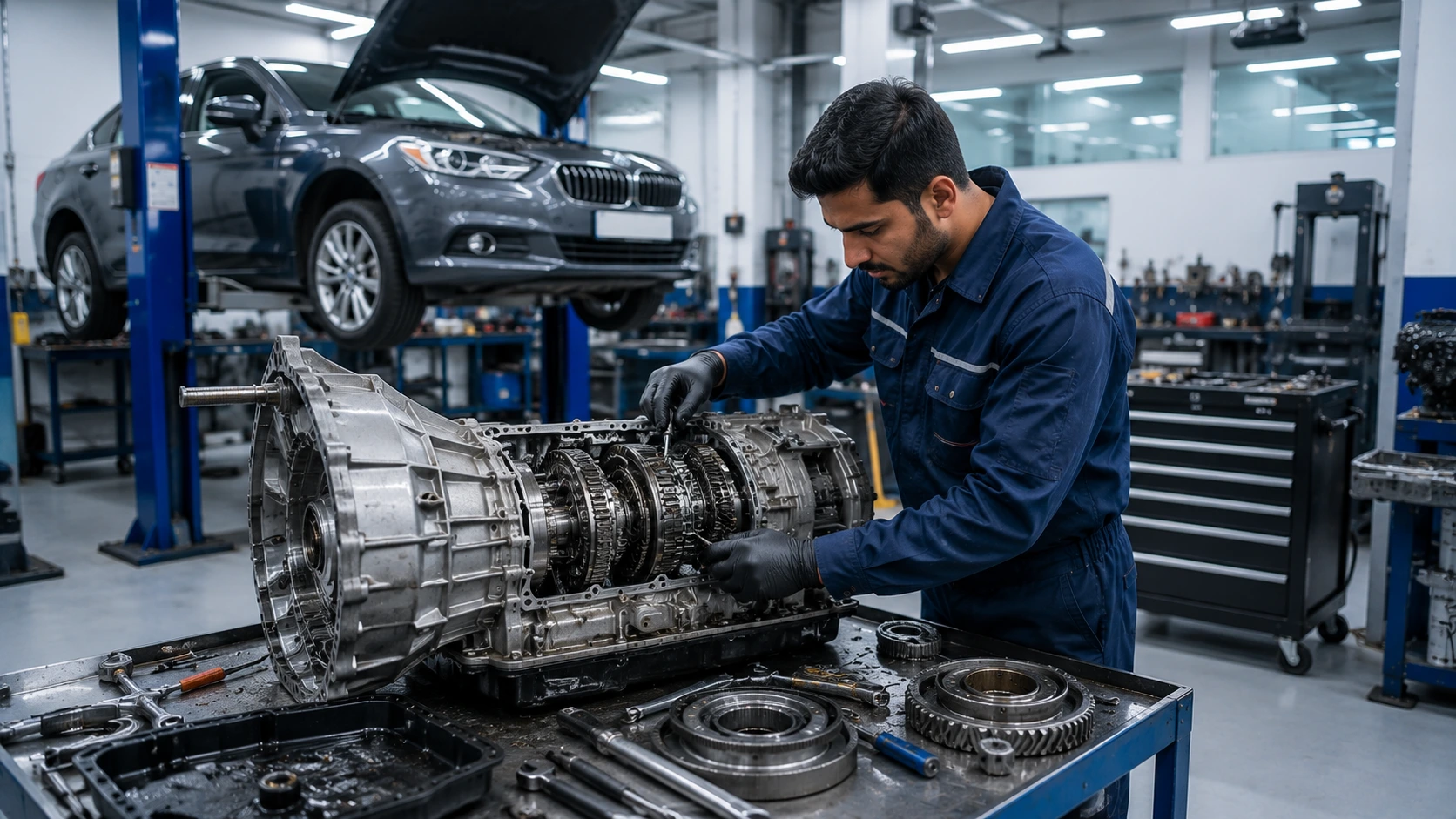

A Bentley is not just a car. It’s a machine built to a standard most cars can’t touch — hand-assembled, engineered with tight tolerances, and carrying a 6.0-litre W12 or V8 engine that produces more power than most people will ever need on a Dubai road. But here’s the thing nobody tells you when you buy one: that level of engineering also means that when something goes wrong, it goes wrong in a way that cheap shortcuts cannot fix.
Bentley engine repair done right requires someone who understands these cars — their architecture, their quirks, and what Dubai’s climate does to their components over time. Get it wrong and you’re not just looking at a failed repair. You’re looking at a cascading fault that turns a AED 3,000 problem into a AED 30,000 one.
At Car Garage Expert, we work on Bentleys regularly. This is an honest breakdown of what causes expensive engine failures in these cars — and how to catch them before they empty your wallet.
Why Bentley Engine Repair in Dubai Is a Different Problem Entirely
Dubai isn’t kind to high-performance engines. You’ve got 45°C+ ambient temperatures in summer, long slow-moving commutes on Sheikh Zayed Road, stop-start traffic through Al Quoz and Business Bay, and then stretches of open highway where the engine finally opens up after idling for 40 minutes. That thermal cycle — constant heat, slow movement, sudden load — does things to a W12 engine that a temperate European climate simply doesn’t.
The W12 is essentially two VR6 engines joined at the crankshaft. It’s a piece of mechanical art. But that architecture creates specific vulnerabilities that every Bentley owner in Dubai should know about — because most of the costly breakdowns we see weren’t sudden failures. They were gradual problems that went undiagnosed too long.
The Real Causes Behind Expensive Bentley Engine Failures
Vacuum Hose Degradation — The Silent Fault
The W12 engine bay is packed. Every inch of space under that bonnet is used, and the heat generated by a twin-turbo 6-litre engine in a Dubai summer accelerates the drying and cracking of rubber vacuum hoses faster than in any European or North American climate. Once a vacuum hose develops even a small leak, the effects ripple through multiple systems. Rough idling, random warning lights across the dashboard, failed emissions readings, erratic throttle response. Many owners visit garages that scan the codes and replace parts — sensors, throttle bodies, sometimes even injectors — without ever finding the actual source, because no one traced the vacuum circuit properly.
One customer brought his Continental GT to us after two other workshops had replaced the MAF sensor, a boost pressure sensor, and the throttle body actuator. Total spend: over AED 12,000. The real issue was a split vacuum hose near the intake manifold. Thirty minutes to diagnose properly, a fraction of the cost to fix.
Head Gasket Failure — Expensive by Design
The W12’s head gasket is not shaped like anything you’d find on a conventional engine. Because of how the two VR6 blocks are married at the crankshaft, the gasket has an irregular profile with minimal material between the cylinder bore and the block wall. It’s an area that’s prone to seepage — and in Dubai’s heat, coolant loss here can happen gradually enough that most owners don’t notice until the engine temperature starts climbing.
By the time a head gasket failure becomes obvious on a Bentley, you’re usually looking at warping risk on the cylinder head, contaminated oil (the milky appearance in the oil filler cap is the giveaway), and potential scoring on cylinder walls. Catch it early and the repair is manageable. Ignore it and you’re rebuilding the top end of a W12, which is not a small job.
Turbo Oil Feed Line Blockage
The Continental GT and Flying Spur run twin turbos. Each turbo has oil feed and return lines that depend on clean, uncontaminated oil to keep the bearings lubricated at the temperatures these turbos generate. If oil changes are delayed — and in Dubai, the heat accelerates oil degradation faster than the service interval assumes — carbon and sludge build up in those lines.
A blocked turbo feed line starves the bearing. A starved bearing fails. A failed bearing on a W12 turbo is not a roadside fix. We’ve seen turbo failures on Bentleys where the damage was entirely preventable with shorter oil change intervals and the right oil specification. These cars need 0W-40 fully synthetic oil, changed no later than every 10,000 km in Dubai conditions — not every 15,000 as the onboard computer might suggest.
Oil Leaks from Valve Cover and Sump Gaskets
This is one of the most frequently seen issues on older Bentley models — anything past five years of regular Dubai use. The valve cover gasket and the oil pan gasket both use materials that cope well in standard conditions but suffer in sustained high-heat environments. When they start weeping oil, it often pools near hot exhaust components, creating a burning smell that owners initially dismiss as normal. It isn’t.
Left alone, the oil loss gradually drops the sump level. Low oil on a W12 at operating temperature is serious. The engine doesn’t forgive it the way a simpler motor might.
Ignition Coil and Spark Plug Failures
A W12 has twelve cylinders. Each has a coil and a plug. When one coil fails — and they do fail, particularly in older Bentleys — you get a misfire on that cylinder. A single misfiring cylinder on a smooth-running Bentley can be hard to feel at first. But a flashing check engine light, slightly rough running at idle, and a small drop in fuel economy are all signs. Ignore it and the misfire dumps unburnt fuel into the exhaust, damaging the catalytic converter — and replacing a Bentley catalytic converter makes the coil replacement cost look trivial.
Why a Proper Car Mechanic Diagnosis Changes Everything
The most expensive Bentley engine repairs we see aren’t caused by sudden catastrophic failures. They’re caused by misdiagnosis — or by garages that read a fault code, order the part the code points to, and replace it without checking whether that part is actually the cause or just a symptom.
A proper diagnostic on a Bentley engine requires live data analysis across multiple control modules, not just pulling a fault code number. The engine management, transmission control, and air suspension modules all communicate on a shared network. A fault in one system can trigger codes in others. Without reading live parameters — oil temperature, boost pressure, fuel trims, ignition timing — you’re guessing. Guessing on a Bentley is expensive.
Our team uses dealer-level diagnostic equipment for Bentley vehicles. Before any part is ordered, we verify the fault through live data, compression testing where relevant, and visual inspection of the components involved. That approach saves our customers money and means the repair actually solves the problem.
What a Proper Bentley Car Service Covers in Dubai
Routine service on a Bentley in Dubai should go beyond the standard checklist. At minimum, it should include:
- Engine oil change with correct viscosity grade (0W-40 or manufacturer-specified fully synthetic)
- Fuel filter inspection and replacement on schedule
- Vacuum hose circuit visual inspection — particularly around the intake manifold and turbo connections
- Coolant system check including pressure test for slow leaks
- Turbo feed and return line condition assessment
- Valve cover and sump gasket inspection for seepage
- Ignition coil and spark plug condition check (typically every 30,000–40,000 km)
- Transmission fluid condition — ZF automatic and dual-clutch variants have different service intervals
- Air suspension height sensor calibration check
- Full dealer-level diagnostic scan with live data review, not just a fault code pull
A service that doesn’t include most of these isn’t really a Bentley service. It’s an oil change with a stamp.
What About Mobile Car Mechanic Support for Bentley Owners?
Not every Bentley issue happens near a garage. If you’re in Al Quoz, Barsha, or nearby and your car is showing warning lights, has developed a rough idle, or simply won’t start cleanly, our mobile car mechanic service can come to you for an initial assessment. We can run diagnostics on-site and advise whether the car needs to come in or can be driven safely. For a breakdown or sudden loss of power on the road, our roadside assistance covers the area and can arrange a safe recovery without you having to trust your car to an unfamiliar tow company.
Paint and Exterior Care for Bentley Owners
Engine health aside, Bentley’s paint work deserves separate attention. The factory finish on a Continental GT or Flying Spur is deep and high-gloss — but Dubai’s UV intensity and parking lot stone chips take their toll. If the clear coat is beginning to oxidise or you’ve got panel damage from a minor parking incident, our car painting team handles colour-matched touch-ups and full panel resprays for luxury vehicles. It’s work that requires patience and the right materials — not a quick spray and walk away.
FAQ — Bentley Engine Repair in Dubai
How often should I change the oil on my Bentley in Dubai?
Every 10,000 km in Dubai conditions, regardless of what the onboard service indicator says. The factory intervals are calibrated for European driving. Dubai heat degrades fully synthetic oil faster, and turbo-bearing lubrication depends entirely on clean, uncontaminated oil.
What does a Bentley W12 head gasket failure repair typically involve?
At minimum — cylinder head removal, surface inspection for warping, gasket replacement, coolant system flush, and reassembly to manufacturer torque specifications. If the head is warped, it needs resurfacing or replacement. It's a multi-day job requiring someone who has done it before, because the W12 head configuration is not the same as a conventional engine.
Are fault codes reliable for diagnosing Bentley engine problems?
Fault codes are a starting point, not a conclusion. On a networked luxury platform like a Bentley, one faulty sensor can generate codes in three different systems. Proper diagnosis means reading live data, cross-referencing parameters, and physically inspecting components — not just replacing whatever the code number suggests.
Why is my Bentley's check engine light on but the car drives normally?
This is common with ignition coil faults, minor boost pressure deviations, and oxygen sensor faults in the exhaust system. "Driving normally" doesn't mean the fault is minor — it means it hasn't escalated yet. Get it read properly before it does.
What's the difference between the V8 and W12 Bentley in terms of repair complexity?
The W12 is more mechanically complex due to its unique architecture, larger component count, and tighter engine bay packaging. The V8 (used in newer Bentayga and Continental models) is still a high-performance unit but follows a more conventional layout that some independent workshops find easier to access and service. Both require specialist-level diagnostic capability.
In Conclusion
A Bentley rewards proper maintenance far more generously than it tolerates neglect. The engine problems that cost the most — head gasket failures, turbo bearing damage, vacuum circuit faults — are almost always repairable at reasonable cost when caught early. They become wallet-draining jobs when they’re ignored, misdiagnosed, or handled by a workshop that doesn’t understand the platform.
If your Bentley has a warning light showing, an unusual sound from the engine bay, or has simply been a while since a proper service, don’t leave it. Book an appointment with us directly through WhatsApp and we’ll arrange a time that works for you.
Car Garage Expert is based in Al Quoz and serves Bentley owners across nearby areas — Business Bay, Jumeirah, Barsha, Satwa, and surrounding parts of Dubai. Find us on Google Maps and bring your car in before a small fault becomes a large bill.
Car Garage Expert — Bentley Engine Repair | Al Quoz, Dubai and Nearby Areas