Finding a proper VW workshop in Dubai means more than finding a garage that lists Volkswagen on its service menu. It means a workshop that uses VCDS diagnostic software, understands the TSI engine platform, knows what Dubai’s heat and stop-start traffic does to a DSG gearbox, and has seen enough Golfs, Tiguans, and Passats to recognise which faults are common, which are serious, and which are being misdiagnosed at less experienced workshops across the city.
At Car Garage Expert in Al Quoz, we work on Volkswagen across all current and recent models — Golf, Tiguan, Passat, Touareg, Polo, Arteon, T-Roc, Amarok, and Caravelle. Every visit starts with a full VCDS multi-module scan before any repair is quoted or work begins.
VW Workshop in Dubai — What Makes Al Quoz the Right Place for VW Repairs
Al Quoz is where most of Dubai’s serious mechanical work happens. The workshops here handle higher volume, operate with better equipment, and see a wider range of faults than smaller community garages. But not every VW workshop in Al Quoz is set up equally — and on a Volkswagen with CAN bus electronics, a direct-injection turbo engine, and a dual-clutch DSG, the difference between a workshop that understands the platform and one that doesn’t shows up quickly in the quality of the diagnosis and the durability of the repair.
Car Garage Expert is in Al Quoz specifically because it’s where proper VW work can be done properly. VCDS scanning equipment. VW-specification oil grades. The experience to read live data and find the actual fault rather than the most obvious one.
VW Workshop — Engine Oil, TSI Specification, and Service Intervals in Dubai
Volkswagen’s TSI direct-injection turbocharged engines — the 1.0-litre three-cylinder in the Polo, the 1.4-litre in the Golf 7 and earlier Tiguan, the 1.5 TSI in the Golf 8 and T-Roc, and the 2.0 TSI across the Tiguan, Passat, and Touareg — all require VW-specification fully synthetic engine oil. VW 502.00 for petrol TSI engines. VW 507.00 for TDI diesel variants.
These specifications aren’t interchangeable with generic synthetics carrying the same viscosity number. The VW 502.00 additive package maintains oil film stability at turbocharger bearing temperatures, protects the timing chain tensioner hydraulics, and supports variable valve timing cam phaser operation. A non-spec synthetic degrades these protections — accelerating turbo wear and timing chain tensioner deterioration in Dubai’s heat specifically.
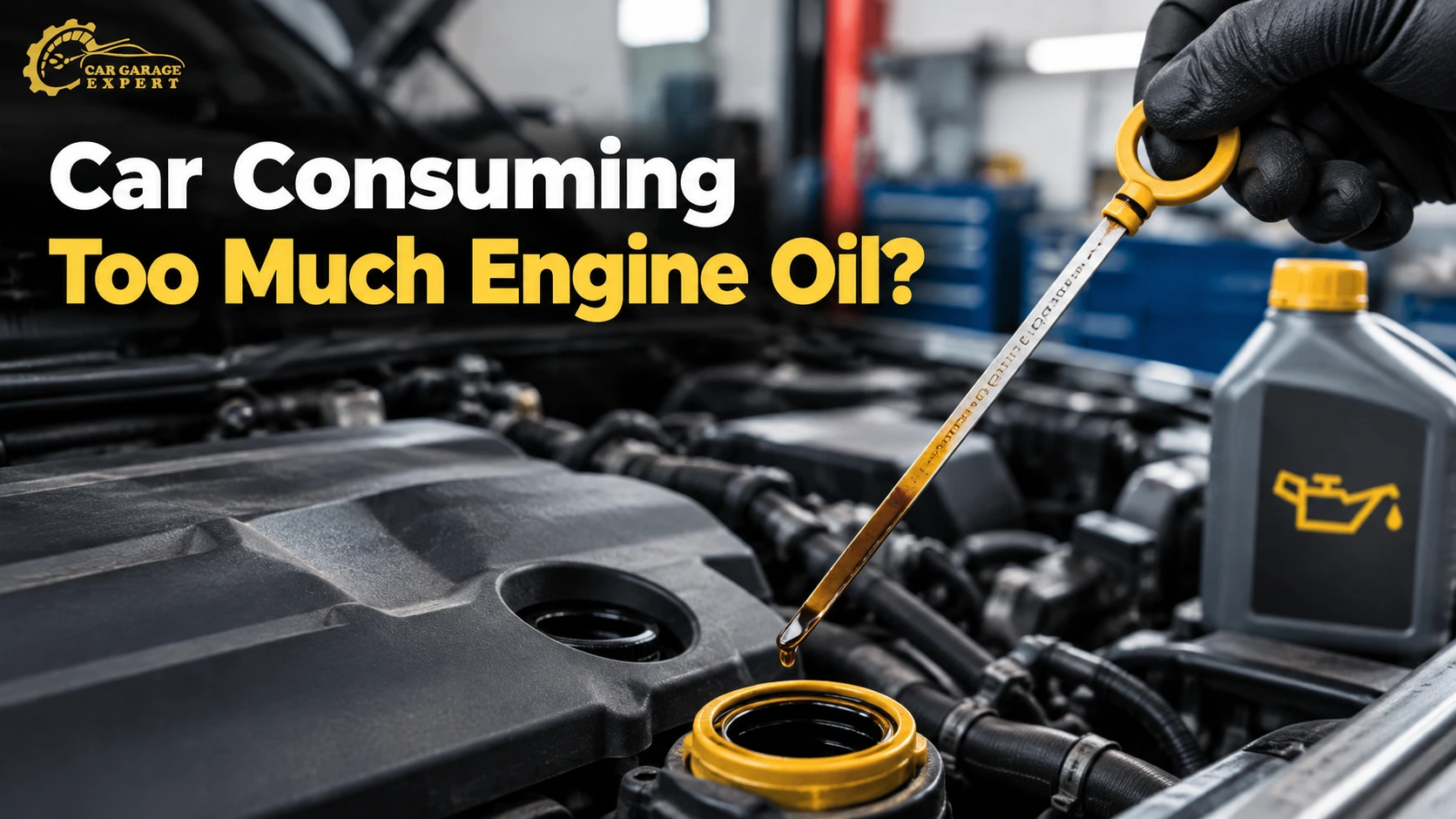
In Dubai’s driving pattern — school runs, Business Bay commutes, short Al Quoz errands — the engine frequently starts cold and switches off before the oil reaches full operating temperature. Combustion blowby and moisture accumulate faster than VW’s service interval counter accounts for. We recommend oil changes at 8,000 km at this VW workshop for Dubai city drivers, not waiting for the 15,000 km service prompt that was calibrated for German autobahn commuting.
Our car service packages include oil condition assessment, correct VW-spec synthetic, oil filter, and drain plug washer at every visit.
TSI Engine Repairs — The Faults Dubai Conditions Create
These are the engine faults we see most consistently in Al Quoz across the TSI petrol range.
Carbon buildup on intake valves is the most common TSI complaint. Direct injection doesn’t wash the intake valves with fuel — oil vapour from the PCV system deposits carbon on the valve backs continuously without anything removing it. In Dubai’s short-trip pattern, significant deposits build before 60,000 km. Symptoms: rough idle, throttle hesitation from low speed, a gradual loss of top-end power. The correct fix is walnut shell blasting — pressurised walnut shell media directed at the valve backs through the removed intake manifold. Fuel additives don’t reach the deposits adequately. We carry out walnut blasting as a standalone service and alongside major service intervals.
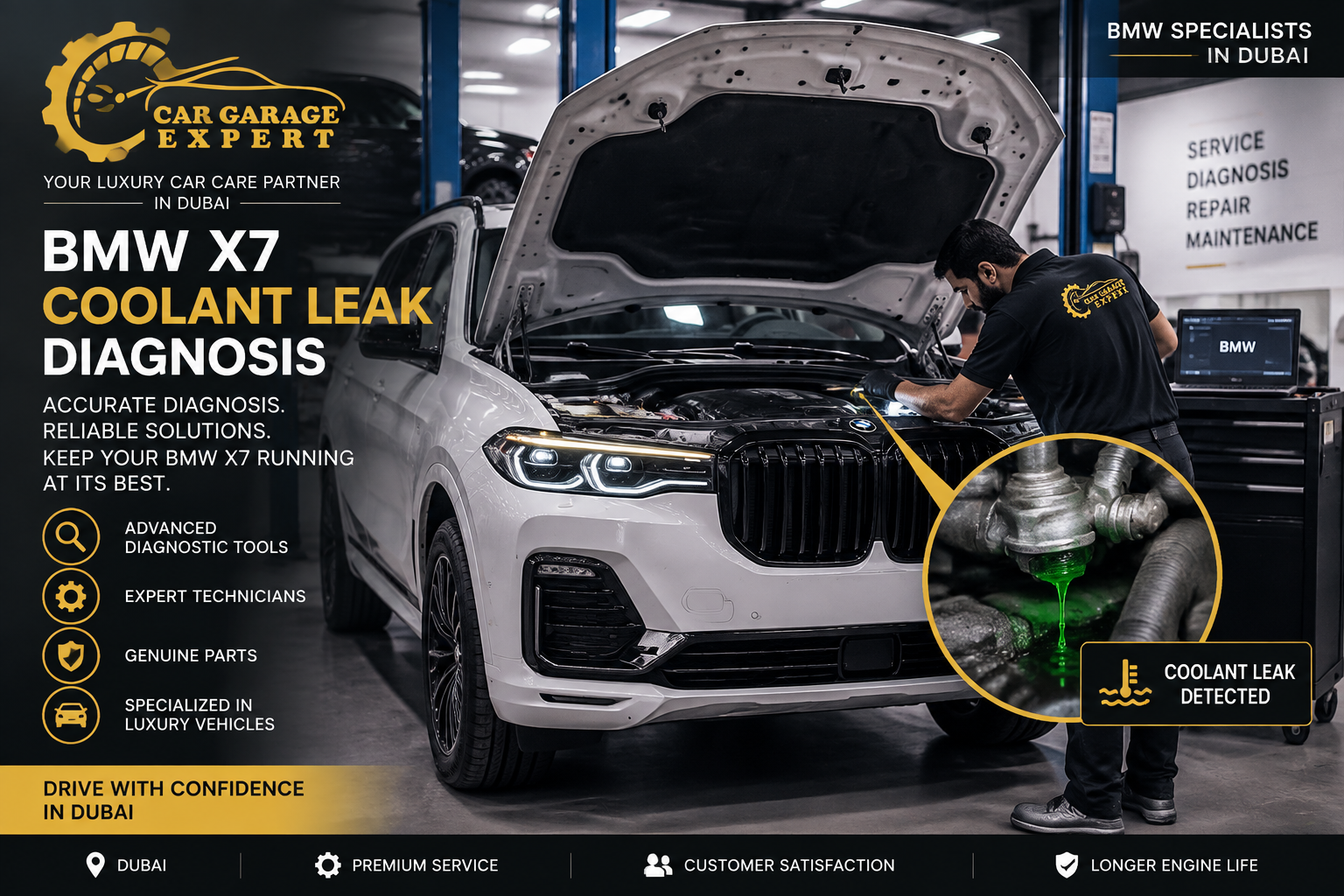
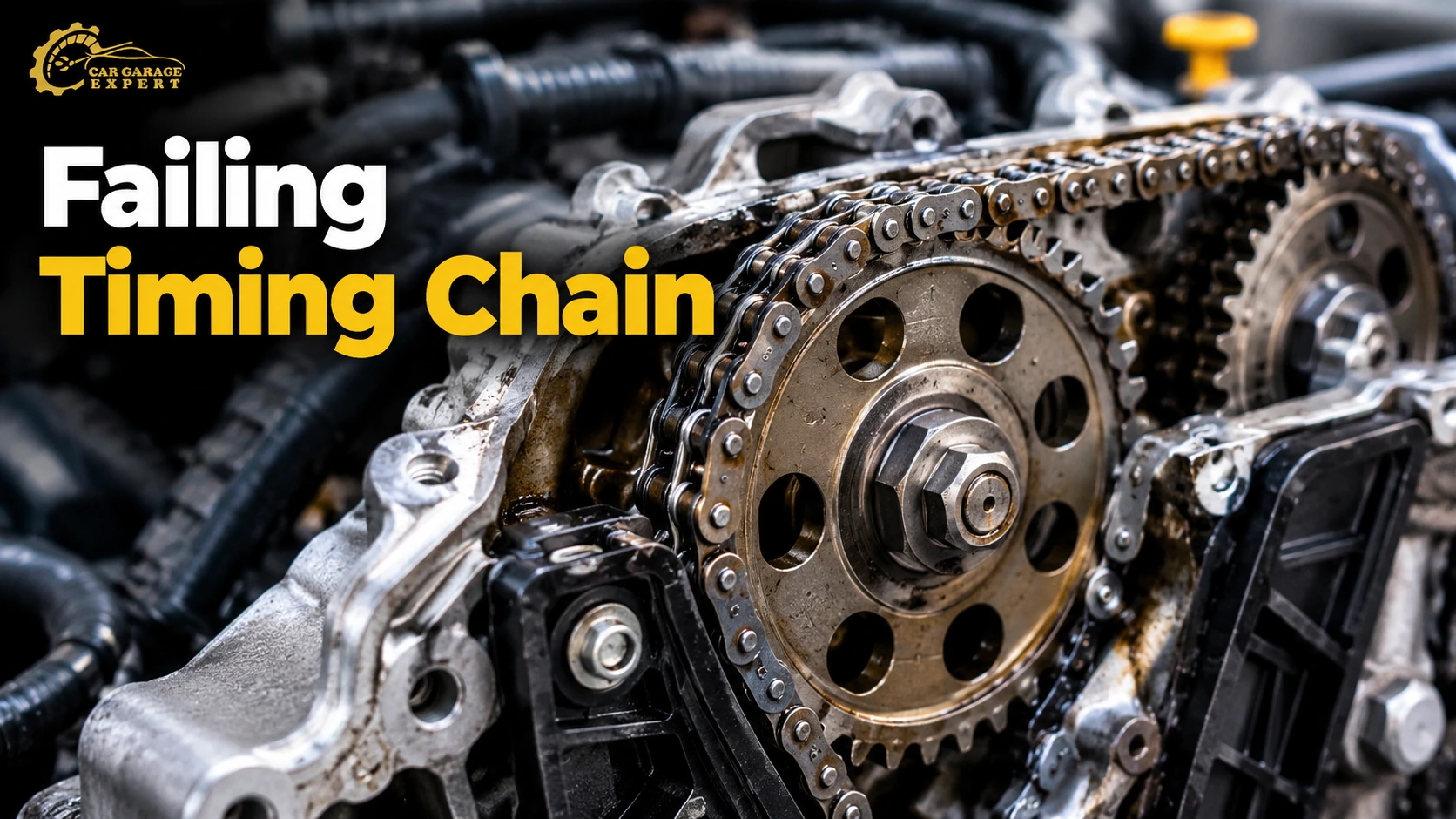
Timing chain tensioner wear on the EA111 and EA211 engine families produces a metallic rattling on cold starts that disappears as the engine warms. This one doesn’t resolve — it progresses. A stretched chain on an interference engine eventually jumps timing, causing valve-to-piston contact and serious top-end damage. VCDS live data showing cam timing offset deviation confirms the issue before physical rattle assessment. Early repair is a manageable cost. Waiting is not.
Coolant flange cracking is regular on the 2.0 TSI in the Tiguan and Passat. The plastic coolant pipe fitting near the cylinder head cracks from Dubai’s heat cycling. A slow leak develops, temperature rises in traffic, and the head gasket is at risk if not caught at the weeping stage.
Turbocharger wear from oil that’s run past its correct change interval in Dubai heat is a consistent finding on higher-mileage TSI vehicles. Turbo shaft play, a faint whine at boost, and increased oil consumption are the indicators. Early diagnosis through VCDS boost pressure deviation data and physical assessment of turbo shaft play determines whether the unit is rebuildable or needs replacement.
Our car mechanic team runs a full VCDS engine scan — live fuel trims, cam timing data, boost pressure deviation, misfire counters — before any engine repair is quoted.
DSG Service — Dubai’s Stop-Start Traffic Is the Hardest Test for Dual-Clutch
The DQ200 7-speed dry dual-clutch and DQ250 6-speed wet dual-clutch DSG units are fitted across the Golf, Tiguan, Passat, Polo, and T-Roc range. The DSG is one of the most efficient and responsive gearboxes available in this vehicle class. In Dubai’s driving conditions, it’s also the system that generates the most complaints — and most of those complaints are handled incorrectly at workshops that don’t understand the platform.
The DQ200 dry clutch wasn’t designed for sustained low-speed Dubai traffic. Creeping through Business Bay at 10 km/h for 20 minutes, repeated standstill-to-move engagement in underground car parks, inching through Al Quoz industrial area in slow-moving traffic — all of these create low-speed clutch slip conditions that cause adaptation drift and, over time, fluid degradation in the DQ200’s mechatronic unit.
The result: juddering on low-speed engagement, hesitation from standstill, occasional abrupt shifts at low speed that feel nothing like the DSG was when the car was newer.
At this VW workshop, the correct DSG service process is: full VCDS scan of the mechatronic unit fault memory and adaptation values, DSG fluid drain and refill with correct G052182A2 specification fluid for the DQ200, and a clutch adaptation reset under controlled engagement conditions. Most Dubai DSG judder complaints resolve from this process alone — the clutch pack itself is fine. Garages that replace the clutch without running adaptation first cost owners AED 3,000–6,000 unnecessarily.
For the DQ250 wet clutch unit, DSG fluid service at 40,000–50,000 km using correct G052145S2 specification is the right maintenance approach in Dubai conditions.
VCDS Diagnostics — Why VW Needs Its Own Scan Tool
A Volkswagen with a warning light, an intermittent fault, or a system that isn’t performing correctly needs VCDS to read accurately. VCDS — VAG-COM Diagnostic System — is the OEM-level platform for the VW Group. It reads live data across every module: engine, DSG, ABS, airbag, body control, instrument cluster, power steering, and HVAC. A generic OBD reader shows engine fault codes and stops there.
The difference matters most on VW because of how the CAN bus architecture distributes fault reporting. A single corroded ground on the engine loom can trigger simultaneous fault codes in the engine module, the ABS module, and the body control module — all pointing to different components, none of which are actually failed. A workshop that reads these codes individually and replaces parts accordingly wastes the owner’s money. VCDS shows the communication error structure, the ground fault pattern, and the actual source.
A customer came to Car Garage Expert with a Passat B8 showing “Engine Fault,” “ESP Fault,” and “Steering Fault” simultaneously. A previous garage had replaced a steering angle sensor and an ABS wheel speed sensor. Neither fault cleared. We ran a full VCDS scan, identified a common ground reference fault across all three systems tied to the same chassis earth point, cleaned and re-terminated the earth connection. All three faults cleared on the first drive. Total spend at the previous garage: AED 2,900. Our repair: significantly less.
Cooling System Service — Dubai Heat and Water Pump Vulnerabilities
VW’s cooling system on the TSI range runs at tighter thermal margins than most owners assume. The water pump — a plastic impeller design on the EA211 and EA888 engines — is a known wear point in Dubai. Impeller cracks or shaft seal weeping starts as a slow coolant loss and progresses to overheating in traffic if not caught.
The thermostat on VW TSI engines uses a map-controlled design that opens and closes based on engine load data rather than purely on temperature. When it fails — either sticking open or sticking closed — fuel consumption changes and temperature management is compromised. In Dubai’s heat, a stuck-closed thermostat causes overheating events that damage the cylinder head and head gasket.
We pressure-test the cooling circuit at every major service visit. Coolant concentration checked with a refractometer, hose integrity assessed, and water pump for early seal weeping. Catching a weeping water pump at service is a AED 400–700 repair. Missing it until the engine overheats on Emirates Road is not.
For any breakdown on the road, our roadside assistance covers Al Quoz and nearby Dubai areas.
Suspension and Brake Service
VW’s multi-link rear suspension on the Golf MQB platform and the front MacPherson strut setup across all models use rubber bushings that wear faster on Dubai’s speed bumps and service road surfaces than factory service intervals predict. A knock from the front over bumps, a slight steering wander at motorway speed, or uneven tyre wear pointing to inner edge wear — these are control arm bushing or front strut mount issues on most Dubai-driven Golfs and Tiguans between 60,000–90,000 km.
Brake pad and rotor wear on Dubai-driven VWs follows the same accelerated pattern as every other brand here. We measure pad thickness and rotor condition physically at every service visit. Brake fluid moisture content tested digitally and replaced on condition. VCDS reads ABS and ESC module faults alongside the physical inspection.
For on-site assessment before bringing the car in, our mobile car mechanic covers Al Quoz and nearby Dubai areas.
AC Repair and Climate System Diagnostics
AC faults on VW in Dubai follow a predictable pattern: refrigerant leaks from O-ring seal degradation in sustained heat, condenser blockage from Al Quoz dust between the fins, and HVAC module electrical faults that require VCDS to read accurately. Evaporator icing from cabin filter restriction — where the evaporator freezes over when airflow drops below the threshold needed to keep it above 0°C — is also common on VWs with neglected cabin filters in Dubai.
Every AC job at Car Garage Expert starts with a system pressure test and leak location before any refrigerant is added. Condenser cleaning is part of every major service. Cabin filter is replaced at every service visit — it clogs faster here than the VW service book assumes.
For stone chip repairs, paint fading from Dubai UV, or any panel damage, our car painting team handles colour-matched VW repairs using correct factory paint codes.
Finding This VW Workshop in Al Quoz
If you’ve been searching for a garage near me in Dubai for proper VW servicing and repairs, Car Garage Expert is the VW workshop in Al Quoz accessible from Business Bay, Barsha, Jumeirah, Satwa, Downtown, and the Sheikh Zayed Road corridor. We work on the full VW range. Every visit starts with a VCDS full-system scan before anything is quoted.
FAQ — VW Workshop in Dubai
How often should I service my VW in Dubai?
Every 8,000 km for TSI turbo models in city driving — VW's 15,000 km CBS interval was built for European highway patterns, not Dubai's stop-start heat.
Why does my VW DSG judder in low-speed Dubai traffic?
Drifted clutch adaptation and degraded DSG fluid from stop-start heat load — VCDS scan, correct fluid change, and adaptation reset resolves most cases without clutch replacement.
Can you fix VW warning lights that other workshops couldn't clear?
Yes — VCDS reads all VW modules and live data, so we trace faults to their actual source rather than replacing parts indicated by individual fault codes.
What makes Car Garage Expert different from other VW workshops in Al Quoz?
VCDS-level diagnostics across all modules, VW-spec 502.00/507.00 oils only, walnut blasting for TSI carbon buildup, and honest advice before any repair is authorised.
Is independent VW workshop service as reliable as the VW dealership?
For all maintenance and out-of-warranty repairs, yes — same VCDS diagnostic standard and VW-spec parts at typically 30–40% lower cost than main dealer rates.
In Conclusion
A proper VW workshop in Dubai understands the TSI platform, uses VCDS to diagnose accurately, services the DSG correctly for local conditions, and adjusts maintenance intervals for what Dubai’s heat and traffic actually does to these vehicles. That’s what Car Garage Expert delivers at every visit in Al Quoz.
Car Garage Expert is in Al Quoz, serving VW owners across nearby Dubai areas — Business Bay, Barsha, Jumeirah, Satwa, Downtown, and the Sheikh Zayed Road corridor. Book your appointment on WhatsApp and find us on Google Maps.
Car Garage Expert — VW Workshop Dubai | Al Quoz and Nearby Areas