There’s a version of a VW car service that ticks boxes on a checklist and returns the car looking like nothing happened — oil changed, sticker updated, invoice paid. And there’s a version that actually addresses what a Volkswagen needs to keep performing correctly in Dubai’s conditions. The difference between them isn’t always visible on the invoice. It shows up six months later when the DSG starts shuddering, or twelve months later when a timing chain rattle appears at cold start that a proper oil specification would have prevented.
Dubai’s operating environment changes what a VW car service needs to cover. The heat accelerates oil degradation. The stop-start traffic loads the DSG clutch pack in ways European service intervals don’t account for. The fine dust from shamal events fills air filters faster than any mileage schedule assumes. A service that was designed for German conditions needs adjustment for Al Quoz — not a complete rewrite, but specific calibrations that reflect what Dubai actually does to these cars.
VW Car Service Dubai — The Interval Question
The first thing to address is how often. Volkswagen’s flexible service indicator — the system that calculates service intervals from driving patterns and oil temperature — extends intervals up to 30,000 km on some variants under ideal European conditions. In Dubai, that number is not appropriate.
The correct VW car service interval for Dubai is every 10,000 km or six months, whichever comes first. This applies across the Golf, Tiguan, Passat, Polo, and Touareg. Not because the cars are unreliable, but because sustained ambient temperatures above 40°C, stop-start urban traffic, and short daily trips that never fully warm the engine all accelerate oil degradation beyond the pace the flexible service indicator was calibrated for.
A workshop that services your VW on the dashboard indicator without adjusting for Dubai conditions isn’t doing you a disservice intentionally — they’re applying guidance that simply wasn’t written for this climate.
What Every VW Car Service Must Include
Engine Oil and Filter — Specification Matters More Than Brand
The single most important item in any VW car service is also the most frequently done wrong.
Volkswagen Group petrol engines require oil carrying VW 504.00 or 507.00 specification approval — not just any full synthetic that meets the viscosity grade on the label. These specifications define the additive package that protects timing chain tensioners, VVT solenoid screens, and turbocharger bearings. An oil that carries the correct viscosity but not the VW approval code is an approximation that accumulates consequences over multiple service intervals in Dubai’s heat.
TDI diesel engines specifically require VW 507.00 — the low-SAPS formulation that’s compatible with the diesel particulate filter. Using a standard diesel oil in a DPF-equipped TDI contaminates the filter and shortens its life significantly.
The oil filter matters independently. An OEM or OE-equivalent filter with a proper anti-drainback valve and correct bypass pressure rating keeps the oil circuit functioning correctly at cold start — when oil pressure demand is highest and bearing clearances are tightest.
Air Filter
In Dubai, the air filter deserves more attention than a mileage interval suggests. Shamal season loads filters with fine particulate matter that can significantly restrict airflow in days — regardless of where the car sits on its service schedule. Every VW car service should include a physical filter inspection, not a mileage-based pass.
A clogged air filter raises intake restriction, increases inlet air temperature, and forces the ECU to compensate with richer fuelling. On TSI engines with MAF sensors, a compromised filter housing seal that allows unfiltered air past the element contaminates the sensing wire — producing MAF fault codes that look like sensor failure but are actually a maintenance issue.
Spark Plugs
VW Group TSI engines use extended-life iridium or platinum plugs that are genuinely long-lived under European conditions. Dubai’s stop-start cycle changes the calculation. Short trips that never reach sustained combustion temperatures allow carbon to accumulate on plug tips — mild fouling that doesn’t trigger a fault code but reduces combustion efficiency and increases fuel consumption over time.
A proper VW car service at 40,000–50,000 km should include plug inspection. On higher-mileage cars, replacement as a scheduled item rather than waiting for misfires is the correct approach.
DSG Transmission Fluid
This is the VW car service item most commonly skipped and most consequentially neglected in Dubai’s market.
Volkswagen lists DSG fluid as lifetime fill on many variants. That designation was written for European driving conditions and doesn’t apply in Dubai. The DQ250 wet-clutch DSG — used in Golf GTI, Golf R, Tiguan 2.0 TSI, and Passat variants — carries both the clutch pack and the gearbox in the same fluid bath. In Dubai’s stop-start traffic, the thermal load on this fluid is substantially higher than in European conditions. Degraded fluid causes progressive clutch pack wear that starts as a subtle shudder under light throttle and develops into consistent hesitation and shift deterioration.
DSG fluid service interval in Dubai: every 60,000 km maximum. The cost of a fluid service runs AED 600–900. A DSG clutch pack replacement runs AED 8,000–15,000. The economics are straightforward.
After the fluid change, a clutch adaptation reset via VCDS is required — this recalibrates the engagement point to the current clutch condition. Without it, the gearbox continues using pre-service adaptation values and the improvement in shift quality is partial rather than complete.
Haldex Fluid on 4MOTION Models
Tiguan, Golf R, and other 4MOTION VW models have a Haldex coupling that engages the rear axle on demand. The Haldex has its own fluid and filter — separate from the DSG fluid, different specification, different service interval.
Haldex fluid service interval: every 40,000 km. Neglected Haldex fluid causes slow coupling engagement — the 4MOTION system provides reduced rear traction contribution when it’s needed. The failure doesn’t show in normal driving. Any VW car service for a 4MOTION vehicle that doesn’t include the Haldex as a specific line item has left the AWD system unserviced.
Brake Fluid
Volkswagen specifies brake fluid replacement every two years regardless of mileage. In Dubai’s humidity cycling — the contrast between air-conditioned cabin environments and 45°C outdoor temperatures — brake fluid absorbs moisture faster than European conditions assume. Degraded fluid with elevated moisture content has a lower boiling point — real safety implications on vehicles used for sustained braking on Hatta Road or in heavy traffic.
Brake fluid condition should be tested with a moisture content tester at every VW car service visit. Colour alone tells you nothing useful about boiling point.
Cabin Air Filter
The cabin filter on a Dubai Volkswagen works harder than almost anywhere else. AC runs nine to ten months of the year, continuously drawing outside air through the filter. Fine dust from wind events loads the filter faster than fixed intervals assume.
A blocked cabin filter restricts airflow, makes the blower work harder, increases compressor load, and reduces cooling effectiveness at the vents. Inspect at every service — replace when restriction is present regardless of mileage.
Coolant Concentration
Tested with a refractometer at every VW car service — not a visual colour check. Dubai’s ambient temperatures leave almost no margin in a cooling system running diluted coolant. The auxiliary water pump on TSI variants is a known wear item — pump operation should be verified while the cooling system is being assessed.
Battery Health
MQB platform Volkswagens carry significant electrical loads and are hard on batteries in Dubai’s heat. Battery conductance test at every service after the third year of ownership. A battery below 70% conductance health in Dubai should be replaced proactively — battery failure on a modern VW can corrupt DSG and engine management adaptation values during the failure event, adding software reset work to an already inconvenient situation.
Battery replacement on MQB vehicles requires VCDS registration afterward — without it, the charging strategy remains calibrated to the old battery’s profile.
Full VCDS System Scan
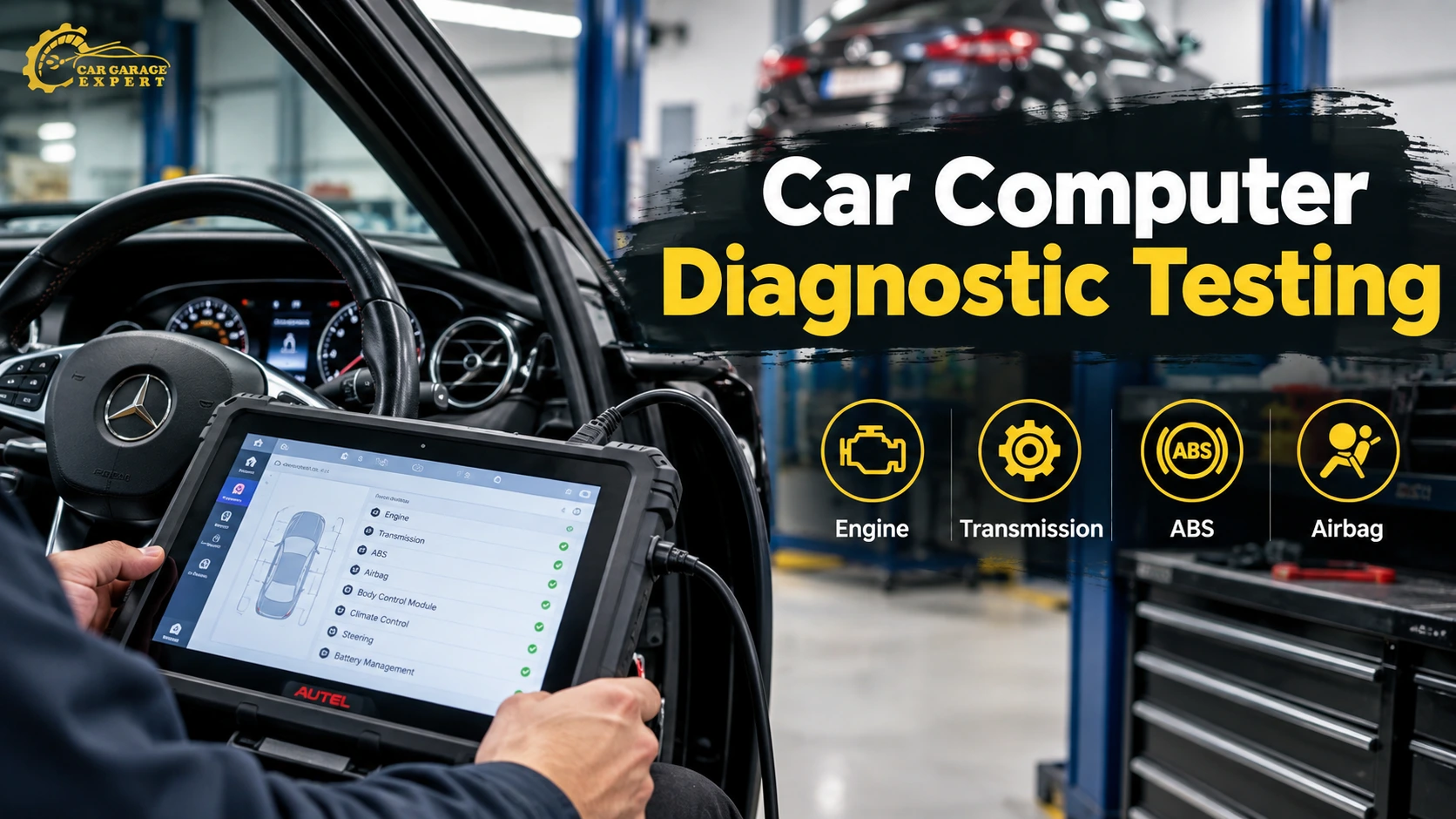
A VCDS scan across all control units should be included in every VW car service as standard — not a separate charged diagnostic. Fault codes developing in Climatronic, body control, chassis management, and comfort systems don’t always trigger warning lights immediately. Finding them during a routine service costs nothing beyond the scan time. Finding them after they cause a breakdown is considerably more expensive.
The scan also reveals adaptation drift — DSG clutch adaptation values outside normal range, throttle body adaptation indicating carbon buildup, injector quantity corrections growing beyond specification. Early indicators of developing issues that haven’t produced symptoms yet.
For VW owners needing support between services, a qualified mobile car mechanic with VAG experience handles battery coding, fault resets, and on-site diagnostics. Proper roadside assistance ensures DSG vehicles are transported correctly when recovery is needed — incorrect towing damages DSG internals. Professional car painting handles paint correction with correct VW colour codes. A qualified car mechanic with VAG platform knowledge handles the full service scope under one roof. For owners in Al Quoz searching for a garage near me that performs VW car service to the correct specification — correct oil approval code, DSG fluid at the right interval, VCDS scan included — the difference from a generic service shows up in the job card and in how the car drives.
FAQ
What is included in a full VW car service in Dubai?
Engine oil with correct VW specification, air and cabin filter inspection, spark plug assessment, DSG fluid service, brake fluid test, battery health check, coolant concentration test, and a full VCDS system scan.
How often should I get a VW car service in Dubai?
Every 10,000 km or six months — Dubai's heat degrades oil faster than Volkswagen's flexible service indicator was calibrated for in European conditions.
Does my VW DSG need a fluid service?
Yes — every 60,000 km in Dubai regardless of the lifetime designation, which doesn't apply in sustained high-temperature operating conditions.
What oil specification does a VW TSI engine need?
VW 504.00 or 507.00 approved full synthetic — the approval code defines the additive package, not just the viscosity grade.
Is a VCDS scan included in a standard VW car service?
It should be — a full system scan catches developing faults in body, chassis, and comfort modules before they trigger warning lights or cause breakdowns.
Conclusion
A proper VW car service in Dubai covers the correct oil specification, DSG fluid at the right interval, Haldex service on 4MOTION models, brake fluid condition testing, and a full VCDS scan as standard — all calibrated to Dubai’s actual operating conditions rather than a European schedule applied unchanged. The owners who get this right spend less over time and keep their Volkswagens performing the way they were built to.
Car Garage Expert in Al Quoz handles VW car service across the full range — Golf, Tiguan, Passat, Polo, and Touareg — with VCDS-compatible diagnostics and correct VW specification fluids. Book your appointment on WhatsApp or find the workshop on Google Maps.