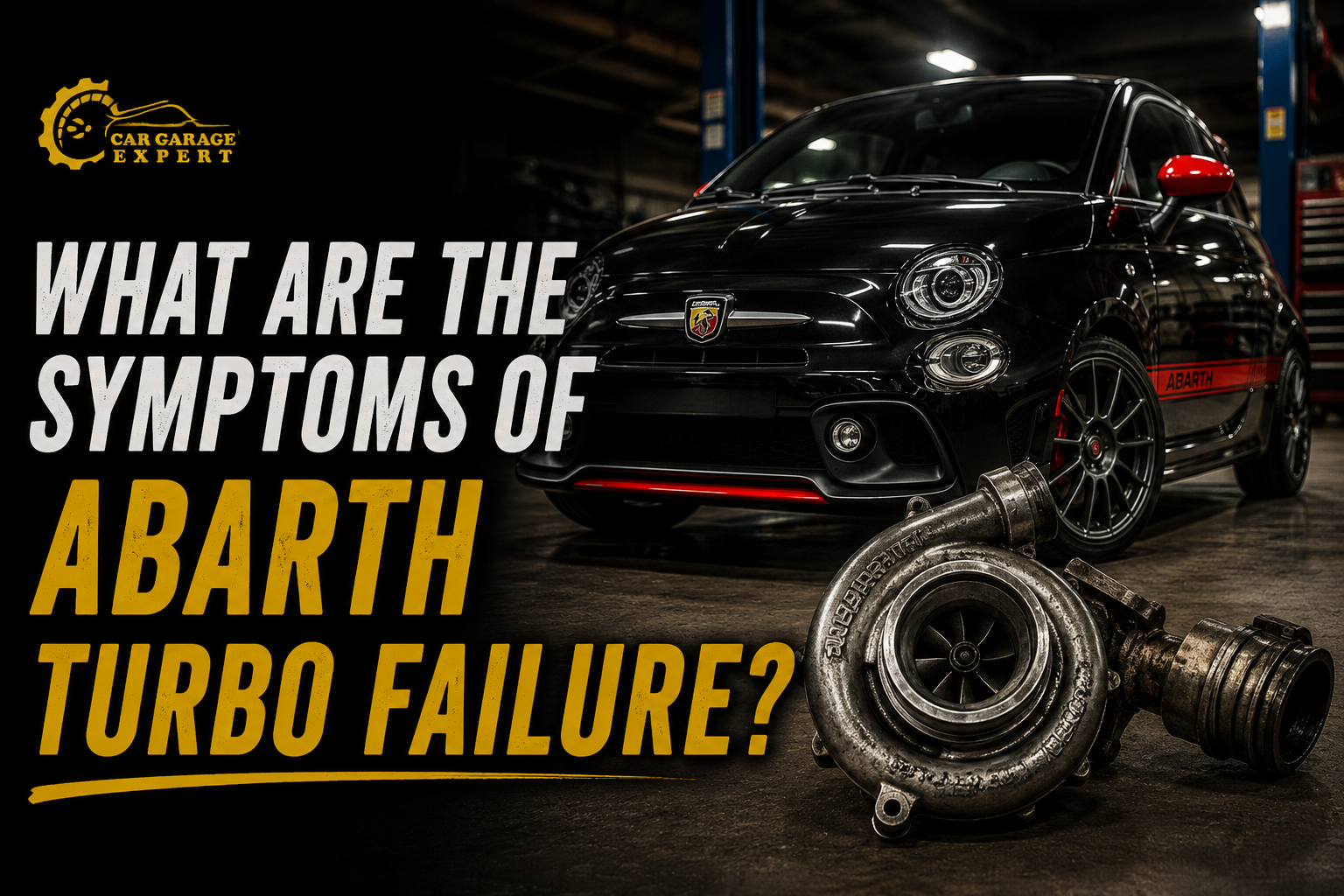
Abarth Turbo Failure usually starts small. You might hear a whining noise. You might notice less power when you accelerate. Blue or grey smoke from the exhaust is another common sign. These are all turbo failure symptoms that point to a problem building up inside the turbocharger. Abarth engines run hot and push a lot of boost for their size. This makes the turbo work harder than in many other small cars. In Dubai’s heat, that stress increases even more. Catching the early signs saves you from a bigger, more costly repair later.
Table of Contents
- Understanding the Problem: What Abarth Turbo Failure Actually Means
- Abarth Turbo Repair vs. Replacement: Comparison Table
- Symptoms of a Failing Abarth Turbo
- Common Causes of Turbocharger Problems in Abarth Cars
- How We Diagnose Abarth Turbo Failure
- The Repair Process Step by Step
- Risks of Ignoring the Warning Signs
- Can You Still Drive With a Damaged Turbo?
- How Long Does Turbo Repair Take?
- What Affects the Cost of Fixing It
- Prevention Tips to Protect Your Turbo
- Dubai-Specific Advice for Abarth Owners
- Why Choose Car Garage Expert for Abarth Repair?
- Frequently Asked Questions
- Related Services
- Final Call-to-Action
What Abarth Turbo Failure Actually Means
The Abarth is a small car with a big personality. Most of that personality comes from the turbo. It’s what gives the engine its punch.
But that same turbo works under a lot of pressure. It spins at extremely high speeds. It also gets very hot. Over time, this wear can lead to a turbo fault or full failure.
Abarth Turbo Failure Doesn’t Happen Overnight. In many cases, it builds up gradually. The little things are the first to show. If you ignore them, the damage only gets worse. Knowing the early indicators matters. It really matters.
Abarth Turbo Repair vs. Replacement: Comparison Table
| Factor | Turbo Repair | Turbo Replacement |
| Damage level | Minor wear, small leaks | Bearing failure, cracked housing |
| Typical cause | Oil contamination, worn seals | Prolonged neglect, major failure |
| Cost | Lower | Higher |
| Repair time | Half a day to one day | One to two days |
| Long-term reliability | Good, if caught early | Very good, fresh unit |
| Best for | Early-stage turbo issues | Severe or complete turbo damage |
Symptoms of a Failing Abarth Turbo
Here are the most common signs of Abarth Turbo Failure to watch for:
- A whining or whistling sound, especially under acceleration.
- Reduced power, even when you push the pedal down fully.
- Blue or grey smoke coming from the exhaust.
- A burning oil smell in the cabin or engine bay.
- The check engine light is turning on.
- Higher oil use than normal.
- A rattling noise from the engine bay at idle.
If you notice more than one of these, it’s a strong sign of an Abarth turbo malfunction. Don’t wait to get it checked.
Common Causes of Turbocharger Problems in Abarth Cars
Oil contamination. Dirty or old oil can clog the tiny oil passages inside the turbo. This starves it of lubrication and causes damage over time.
Worn bearings. The turbo spins fast. Over time, its bearings wear down. This leads to shaft play and eventual failure.
Boost leaks. A cracked hose or loose clamp can leak boost. This puts extra strain on the turbo as it tries to compensate.
Heat soaks. Abarth engines run hot. Shutting the engine off right after hard driving doesn’t let the turbo cool down properly. This is one of the biggest causes of turbo damage on an Abarth.
Poor maintenance history. Skipped oil changes or the wrong oil type are common culprits. This is especially true for used or imported Abarth models.
Carbon buildup. Over time, carbon can build up around the turbo’s moving parts. This restricts its movement and reduces performance.
How We Diagnose Abarth Turbo Failure
We start with a full diagnostic scan. This checks for fault codes linked to boost pressure or turbo performance.
Next, we check the actual boost pressure while the engine runs. Low boost often points straight to turbo issues.
We also inspect the turbo shaft by hand. Excess play here is a clear sign of bearing wear. A visual check of the intake and exhaust sides looks for oil residue or damage to the turbine blades.
If needed, we pressure test the entire boost system. This helps rule out a simple leak before assuming the turbo itself has failed.
The Repair Process Step by Step
- Confirm the diagnosis with proper testing tools.
- Remove the turbo unit from the engine bay.
- Repair or replace the faulty component, depending on the damage
- Clean or replace oil lines feeding the turbo
- Install the repaired or new turbo.
- Refill with fresh oil to avoid contaminating the new unit.
- Test boost pressure and check for leaks
- Take the car for a road test to confirm the fix worked.
Risks of Ignoring the Warning Signs
Ignoring the warning signs of Abarth Turbo Failure rarely ends well. A failing turbo can send small metal pieces into the engine. This can cause damage far beyond the turbo itself.
What starts as a simple turbo fault can turn into a full engine repair. That’s a much bigger job and a much bigger bill.
Can You Still Drive With a Damaged Turbo?
Mild symptoms, like a slight whine, usually allow you to drive to a workshop safely. But don’t wait too long.
If you see thick smoke, hear loud noises, or suddenly lose power, stop driving. Call roadside assistance instead of risking more damage—a full turbo failure while driving can also affect other engine components.
How Long Does Turbo Repair Take?
A straightforward repair usually takes half a day to a full day. This depends on how easy the turbo is to access in your specific Abarth model.
If full replacement is needed, that can take one to two days. This depends on part availability and the extent of the damage.
What Affects the Cost of Fixing It
A few things change the price:
- Repair versus full replacement.
- Genuine parts versus quality aftermarket parts.
- Labor time, based on how hard the turbo is to reach.
- Whether other parts, like hoses or the wastegate, need attention too.
- How much secondary damage has occurred.
Getting a proper diagnosis first helps avoid paying for guesswork.
Prevention Tips to Protect Your Turbo
- Stick to manufacturer oil change intervals. Consider shortening them slightly in Dubai’s heat.
- Let the engine idle for a minute after hard driving before turning it off.
- Use the correct oil type and grade every time.
- Don’t ignore small symptoms like a faint whine.
- Keep up with routine servicing instead of waiting for problems to show up.
Dubai-Specific Advice for Abarth Owners
Turbos are hot-running by their nature. To make matters worse, Dubai’s climate adds even greater heat stress. Ambient temperatures exceeding 45ºC imply your turbo has to work harder to control heat.
This makes oil quality and oil change intervals more crucial here than in cooler places. “Maintenance takes a bit longer in this climate, and a small delay can become a bigger problem quicker.
If you are looking for Abarth repair near me, select a workshop that knows these automobiles. I always keep a reputable garage saved nearby for this type of check, plus a roadside help number for anything unforeseen.
Why Choose Car Garage Expert for Abarth Repair?
Abarth cars need a specific kind of attention. Not every workshop understands how these small turbo engines behave. At Car Garage Expert in Al Quoz, our technicians work with turbocharged engines regularly. We know the specific stress points that lead to Abarth Turbo Failure in this climate.
Car Garage Expert checks boost pressure, oil condition, and turbo shaft play properly before recommending any repair. We don’t guess. We test first.
If your Abarth is showing signs of turbo trouble, Car Garage Expert can help. We recommend booking an inspection early, since early-stage issues are cheaper and faster to fix than full turbo failure.
Frequently Asked Questions
Q1: What’s the first sign of Abarth turbo trouble I should watch for?
A whining or whistling sound under acceleration is usually the earliest sign. It often shows up before power loss or smoke.
Q2: Can a failing turbo damage the rest of my engine?
Yes. If left unaddressed, a failing turbo can send debris into the intake system. This can cause damage well beyond the turbo itself.
Q3: Is turbo repair cheaper than full replacement?
Usually, yes, if you catch the damage early. Once bearings fail badly or the housing cracks, replacement is often the safer and more cost-effective choice.
Q4: How often should I get my Abarth’s turbo checked?
A yearly check as part of routine servicing is a good baseline. If you notice any symptoms, don’t wait for the next scheduled service.
Q5: Does driving style affect turbo life?
Yes. Hard acceleration followed by an immediate shutdown puts extra stress on the turbo. Letting the engine idle briefly before switching off helps it last longer.
Related Services
Beyond Abarth turbo repair, our team also handles car mechanic diagnostics for broader engine troubleshooting, and mobile car mechanic callouts if your car isn’t safe to drive. Need cosmetic work too? Our car painting near me team can help with that. For routine maintenance, check our car service packages in Dubai page, and our car service Dubai page covers everyday servicing needs too.
Get Your Turbo Checked Today
An Abarth Turbo failure doesn’t have to mean a massive repair bill. Early detection makes all the difference. Don’t wait for a small whine to become a big problem.
Bring your car to Car Garage Expert, Al Quoz. Let our professionals properly check your turbo and give you an honest answer.
📍 Find directions on Google Maps.
💬 Message us directly on WhatsApp to book your inspection