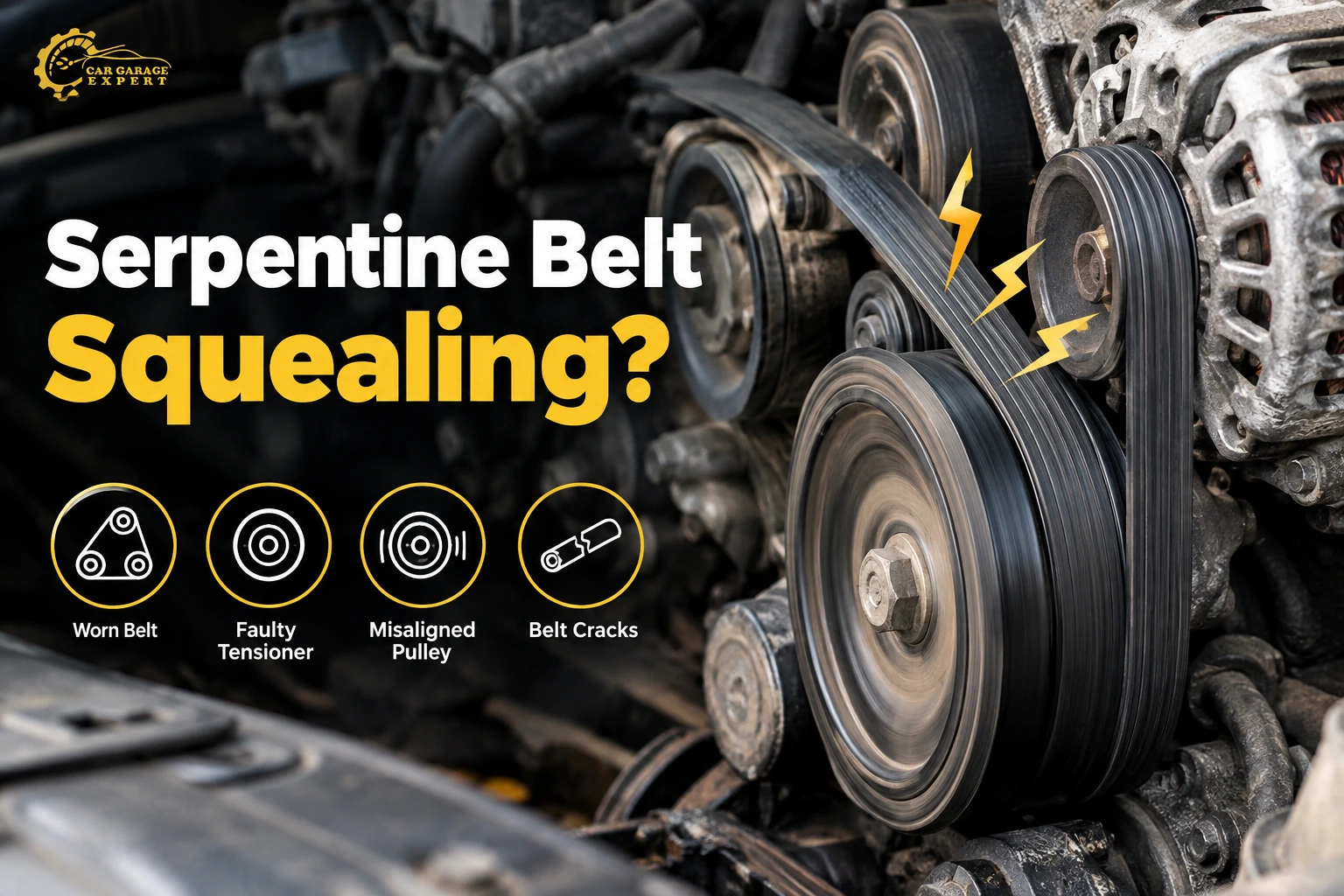
A serpentine belt squealing at start-up usually means it’s slipping on a pulley. Common causes include a worn or glazed belt, a weak tensioner, or a worn idler pulley. A heavy load on the alternator or AC compressor can also cause it. The first few seconds can be noisier on a cold, damp morning. A short, quick ending chirp warns you of what is to come. If the scream lasts more than 10 seconds or happens again while driving, have a certified specialist inspect it. Repeat if you notice a warning light for battery or temperature. A damaged belt may shut out charging, power steering, and engine cooling all at once.
What Causes a Serpentine Belt Squealing When Starting a Car?
The serpentine belt is one long ribbed rubber belt. It runs from the crankshaft pulley to the alternator, AC compressor, power steering pump, and, on many cars, the water pump. A spring-loaded tensioner keeps it tight.
When you start the automobile , the serpentine belt squealing because it is slipping instead of clutching . That high-pitched squeal is rubber on a metal pulley. Anything that adds load or takes grip can do this.
Worn, Cracked, or Glazed Serpentine Belt
Belt wear is the most common cause of serpentine belt squealing. Over time, the ribs lose rubber, and the grooves get deeper. The belt then sits too low in the pulley and slips.
A glazed belt has a shiny, hard surface on the ribs. Heat and slipping polish the rubber until it loses its grip. Older belts also show small cracks across the ribs.
Most modern belts are made of EPDM rubber. They rarely crack, so a belt can look fine and still be worn out. Mechanics use a plastic groove gauge to measure rib depth instead of trusting their eyes.
Loose Belt or Faulty Belt Tensioner
The tensioner keeps the belt tight enough. Its spring gets weaker with age and heat. A weak spring lets the belt slip whenever engine load jumps, such as at startup.
Watch the tensioner arm with the engine running. If it bounces or shakes, the spring or its damper is worn. A tensioner that has hit its end stop also means the belt has stretched too far.
Misaligned or Worn Idler Pulley
Idler pulleys guide the belt around the engine. Each one spins on a sealed bearing. When the bearing wears, the pulley can tilt slightly out of line.
A tilted pulley pushes the belt sideways. The belt rubs on the pulley edge and squeaks or chirps. You may also see frayed edges or rubber dust near that pulley.
Alternator Pulley or Charging System Problems
The alternator works hardest just after you start the car. It has to refill the battery charge used by the starter motor. A weak or old battery makes this load even bigger.
Some cars use an overrunning alternator pulley, often called an OAP or one-way clutch pulley. When it fails, the belt jerks whenever engine speed changes. That jerk causes a chirp at startup and when you switch the engine off.
AC Compressor or Other Accessory Pulley Problems
The AC compressor adds a big load when its clutch engages. Many Dubai drivers leave the AC switched on, so it kicks in the moment the engine starts. A belt that is already weak will slip under that sudden load.
A seized or stiff accessory is worse. A failing compressor, power steering pump, or water pump can drag on the belt. The belt then squeals constantly and wears quickly.
Why Does My Serpentine Belt Squeal for a Few Seconds After Startup?
A short squeal after startup usually comes from a load spike that the belt cannot grip through. At startup, the alternator recharges the battery, the AC clutch may engage, and the engine idles high. All of that hits the belt at once.
A healthy belt and tensioner handle this load quietly. A worn belt slips for a few seconds until the battery settles and the load drops. Then the noise stops.
Short startup squealing is a warning sign. The belt still works today, but its grip margin is gone. The squealing noise on cold start will usually get longer and louder over the next few weeks. If the squealing lasts longer each morning, have it checked soon.
Why Does My Serpentine Belt Squeal More When the Engine Is Cold?
Serpentine belt squealing is often worst on the first start of the day because rubber gets harder when it is cold. A hard belt grips the pulleys less well until engine heat softens it. Even in Dubai, early winter mornings and air-conditioned underground car parks can be cool enough to make a difference.
Moisture adds to it. Dew, humidity, or water from a car wash leaves a thin film on the pulleys. The belt slides on that film until it dries off.
Faulty parts show up more when cold too. A tensioner damper filled with thick, cold fluid reacts slowly. A dry pulley bearing can also squeak until it warms up. If the noise is worse on humid mornings, the belt is often near the end of its life.
How Can I Tell If the Noise Is Coming From the Serpentine Belt?
Engine belt squeaking is easy to confuse with other front-of-engine noises. Serpentine belt squealing noise when starting has a sharp, high pitch that most other faults do not. Listening for the type of sound and when it happens narrows it down quickly.
Serpentine Belt Squealing vs. Belt Tensioner Noise
Serpentine belt squealing is a high, sharp sound that rises with engine speed or load. It often gets louder when you turn the steering wheel or switch on the AC.
Tensioner noise is different. A worn tensioner pulley makes a steady grinding or whirring sound. A worn tensioner spring causes a rhythmic chirp because the belt flutters as the arm bounces.
Serpentine Belt Noise vs. Pulley Bearing Noise
A slipping belt squeals. A failing bearing usually growls, grinds, or rumbles. Bearing noise stays the same whether the AC is on or off.
With the engine off, a mechanic can remove the belt and spin each pulley by hand. A good pulley spins smoothly and quietly. A bad one feels rough, wobbles, or grinds.
Serpentine Belt Squealing Noise Types and Their Likely Causes
The table below matches each type of noise to its most likely cause. Use it to explain the sound clearly when you call a mechanic.
| What you hear | Most likely cause | Usual fix |
| Squeal for 2 to 5 seconds at startup | Worn or glazed belt | Replace the belt |
| Squeal that is worse on cold or humid mornings | Hard, aged rubber or moisture on pulleys | Replace the belt and check tension |
| Squeal when turning the steering wheel | Power steering pump load on a weak belt | Belt and tension check, pump check |
| Squeal when the AC switches on | Compressor load or stiff compressor | Belt check, AC compressor inspection |
| Rhythmic chirp at idle | Misaligned pulley or bouncing tensioner | Align or replace pulley or tensioner |
| Constant grinding or whirring | Worn pulley or tensioner bearing | Replace the noisy pulley |
| Chirp when the engine is switched off | Failed alternator one-way pulley | Replace the alternator pulley |
How Mechanics Inspect the Belt and Accessory Drive System
A full inspection checks the whole accessory drive, not just the belt. A good mechanic will usually follow these steps:
- Listen with the engine running, and switch the AC and steering on and off to see if the noise changes.
- Spray a little water on the ribbed side of the belt. If the noise stops briefly, the belt or alignment is the likely problem. If it gets louder, the tension is too low.
- Measure rib wear with a belt groove gauge.
- Watch the tensioner arm for bounce and check its position against the wear marks.
- Remove the belt and spin each pulley by hand to check the bearings.
- Check alignment with a straight edge or laser alignment tool.
- Test battery health and alternator output to see if charging load is the cause.
Only a trained mechanic should do the water test. Keep hands, sleeves, and tools well away from the moving belt.
Can I Drive My Car With a Squealing Serpentine Belt?
You can usually drive a short distance with a brief squeal at startup. Don’t ignore it for weeks. A slipping belt gets weaker every day and can snap without warning.
When the belt snaps, several systems stop at once:
- Charging: the alternator stops, and the car runs on battery power until it dies.
- Steering: cars with hydraulic power steering become very heavy to steer.
- Cooling: on cars with a belt-driven water pump, coolant stops flowing and the engine overheats within minutes.
- AC: the compressor stops, which is a serious problem in a Dubai summer.
Stop driving and call roadside assistance if the battery or temperature light comes on. Do the same if the steering suddenly gets heavy or you hear a loud slap from the engine bay. Driving an overheating engine can warp the cylinder head and turn a cheap belt job into major engine repair.
Belt Dressing Spray Is Not a Fix
Belt dressing spray is sold in many places as a quick fix. Might silence the sounds for a day or two. Will not fix a damaged belt, weak tensioner, or bad pulley
Many dressings are tacky and gather dust. They weaken the rubber over time and cause the belt to slip more. They also cover the warning sound that indicates the belt is failing. Most belt makers do not recommend these for use on current ribbed belts.
How Much Does Serpentine Belt Replacement Cost in Dubai?
The cost of serpentine belt replacement in Dubai depends on the car and on what else needs replacing. The main factors are:
- Make and model: some engines offer easy access to the belt, while others require removing the wheel arch liner, engine cover, or engine mount.
- Belt quality: OEM belts usually cost more than good aftermarket belts from known brands.
- Belt type: some newer cars use stretch-fit belts with no tensioner, which need a special installation tool.
- Labor time: a simple front-mounted belt is quick, while a tightly packed V6 or V8 takes longer.
- Tensioner and pulleys: if the tensioner or idler pulleys are worn, they add parts and labor to the bill.
- Related faults: a stiff AC compressor, weak alternator or leaking water pump must be fixed too, or the new belt will wear out fast.
Ask for a written quote that lists the belt, tensioner, pulleys, and labor separately. If you compare prices with another garage near me, check that both quotes include the same parts.
Why Replacing the Belt Alone Often Fails
A new belt on an old tensioner is the most common reason a squeal comes back within weeks. The tensioner and idler pulleys wear at about the same rate as the belt. On cars above about 100,000 km, ask the mechanic to check them before fitting the new belt. For this reason, many mechanics replace the belt and tensioner together on high-mileage cars.
How Can You Prevent Serpentine Belt Squealing?
You can prevent most belt noise with simple checks at each service. Catching wear early is cheaper than dealing with a snapped belt at the roadside.
Inspect the Belt for Wear and Damage
Ask for a belt check at every service. The mechanic should look for cracks, glazing, frayed edges, and missing ribs, and measure the grooves with a gauge. Oil or coolant on the belt also needs attention, because it softens the rubber. Fix the leak behind it, not just the belt.
Check Belt Tension and Pulley Alignment
If the belt is too loose it slips, and if it’s too tight it wears out bearings. Automatic tensioners have wear marks that indicate whether the belt has stretched too much. Check alignment while replacing a pulley, alternator or compressor. A slightly misaligned pulley can shred a new belt.
Follow Your Vehicle Manufacturer’s Maintenance Schedule
Most car makers suggest replacing the serpentine belt at around 80,000 to 160,000 km. Check your owner’s manual for the exact interval. A regular car service package is the easiest way to keep belt checks on schedule.
Dubai Conditions That Wear Belts Faster
Dubai’s heat bakes the rubber under the bonnet. Engine bay temperatures in summer can stay very high, even after the car is parked. Fine sand and dust also get into the belt grooves and wear the ribs. Long idling with the AC on puts a steady load on the belt. Drivers in Dubai should ask for a belt and tensioner check at every service, not just when the manual says so.
Why Car Garage Expert Is a Smart Choice for Serpentine Belt Squealing in Dubai
For car belt squealing on startup, Car Garage Expert in Al Quoz is a practical place to get the belt checked and repaired. The reasons below match what this repair needs.
Belt Problems Can Be Checked at Home or Work First
A startup squeal often happens only in the morning. The garage offers mobile car mechanic service, so you can hear the noise at home or the office when it happens. That makes diagnosis faster and more accurate.
Send a Video of the Noise on WhatsApp
Belt noises are hard to describe over the phone. Drivers can record a short video of the engine bay at startup and send it on WhatsApp before booking. A mechanic can often tell a belt squeal from a bearing growl just by listening.
Roadside Help If the Belt Snaps
A snapped belt can leave you stranded with no charging and no cooling. The garage also runs a recovery and roadside service in Dubai. The same team can recover the car and repair it at the Al Quoz workshop.
The Whole Drive System Gets Checked, Not Just the Belt
The same sounds can return a month later after fast fixes that only replace the belt. A proper repair comprises the tensioner, idler pulleys, alignment, and charging load. When you book a belt replacement, ask for this comprehensive check.
Frequently Asked Questions
Q1: Why Does My Serpentine Belt Squealing Then Stop?
The belt slips while the startup load is high and grips again once the load drops. Cold rubber and moisture on the pulleys make this worse. It is an early sign of a worn belt or weak tensioner.
Q2: Can a New Serpentine Belt Still Make Noise?
Yes. A new belt can squeal if the tensioner is weak, a pulley is misaligned, or a bearing is worn. It can also squeal if the belt is the wrong length or was fitted one groove off on a pulley.
Q3: Does a Squealing Serpentine Belt Mean It Needs Replacing?
Not always, but often. A squeal caused by water from a car wash will stop once the belt dries. A squeal that comes back every morning usually means the belt, tensioner, or a pulley needs replacing.
Q4: Can Dubai’s Heat Contribute to Serpentine Belt Wear?
Yes. High engine bay temperatures dry out and harden the rubber over time. Dust and sand also wear the ribs. Belts in Dubai often need checking more often than the manual suggests.
Q5: How Long Does Serpentine Belt Replacement Take?
A belt replacement on most cars takes about 30 minutes to 1 hour. Adding a tensioner or idler pulleys can take 1 to 2 hours. Engines with tight access or stretch-fit belts can take longer.
Related Services for Belt and Engine Noise
A serpentine belt squealing is often linked to other jobs. These services cover the most common ones:
- Car painting if a snapped belt has whipped against panels or the bonnet underside
- Battery and alternator testing to check if a high charging load is causing the slip
- AC compressor inspection if the squeal starts when the AC switches on
Book a Serpentine Belt Inspection in Dubai
Serpentine belt squealing is cheap to fix early and costly to ignore. A full check of the belt, tensioner, and pulleys tells you exactly what needs replacing.
Book a car mechanic for car belt repair in Dubai, a belt inspection, or engine repair at Car Garage Expert. You can also send a video of the noise on WhatsApp or get directions to the Al Quoz workshop.