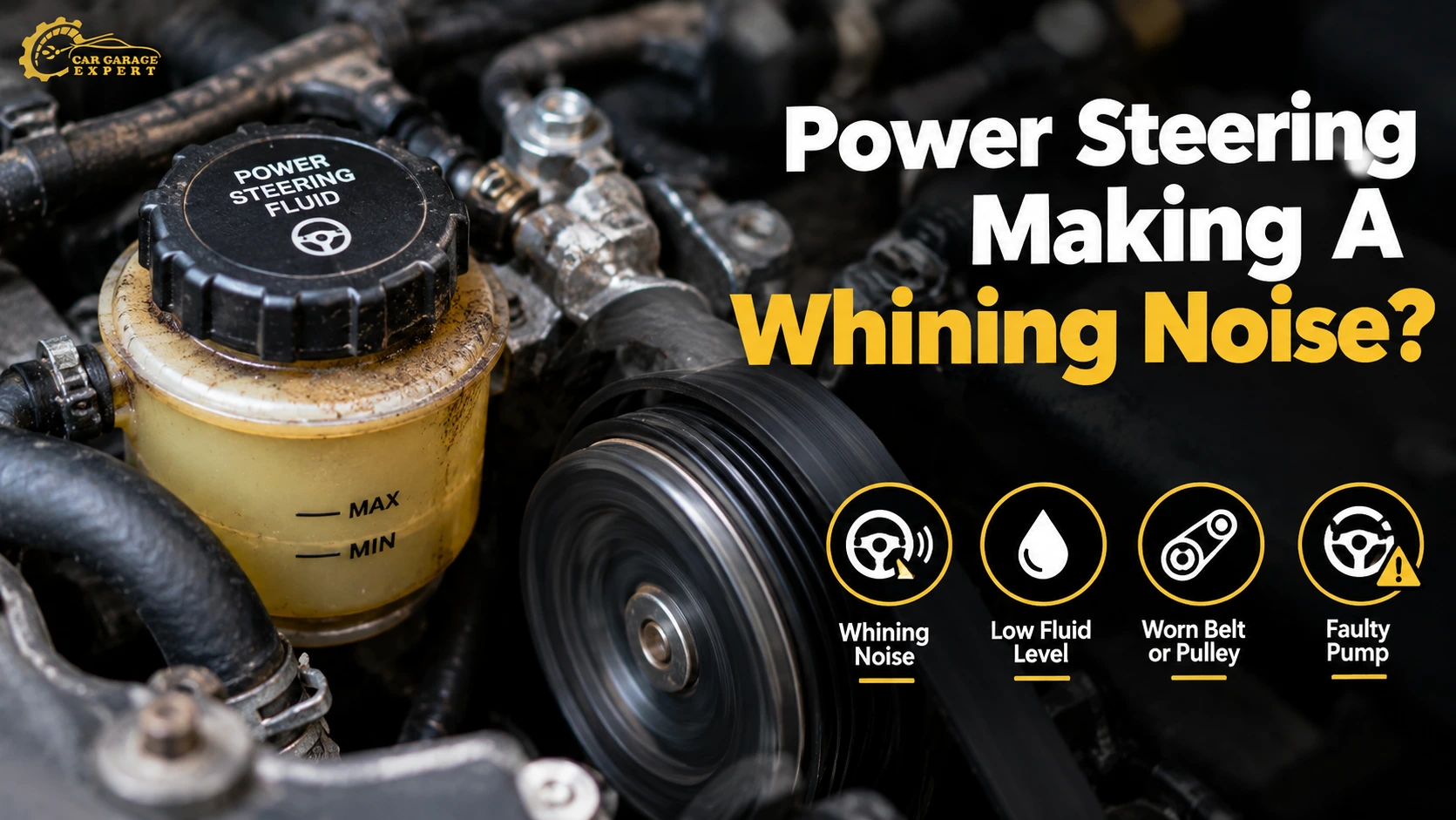
Power steering making a whining noise when you turn usually points to low fluid, air in the system or a worn pump. Leaking hoses, a slipping belt, or a worn steering rack can also cause it. The noise is often loudest at low speed, when parking or when the wheel is turned all the way. Warning signs include heavy steering, foamy or dark fluid, oil spots under the car, and a whine that gets louder each week. Topping up fluid may quieten it for a while, but the leak or fault behind it remains. Book a professional check if the whine keeps coming back or the steering starts to feel stiff.
First, Check Which Type of Power Steering Your Car Has
Most guides skip this step, yet it changes everything. Older cars and many SUVs use hydraulic power steering. It has a pump, hoses, and a fluid reservoir under the bonnet. Many newer cars use electric power steering, which has an electric motor and no fluid.
If your car has electric steering and you hear a whining noise, fluid and pump advice does not apply. A whine there usually comes from the steering motor, the rack, or a front suspension part. Check your owner’s manual or look for a small reservoir cap marked with a steering wheel symbol. Some cars use a mix of both, called electro-hydraulic steering, with an electric pump and fluid.
What Causes a Power Steering Whining Noise When Turning?
A hydraulic system uses a pump to push high-pressure fluid into the steering rack. That pressure helps you turn the wheels. A power steering making a whining noise means the pump is struggling, sucking in air, or working against a restriction.
Low Power Steering Fluid
Low fluid is the most common cause of a power steering making a whining noise. When the level drops, the pump draws in air along with fluid. Air bubbles make the pump whine, especially when you turn the wheel.
Fluid does not get used up like fuel. If the level is low, it is leaking from somewhere.
A Worn or Failing Power Steering Pump
The pump has vanes, a shaft, and bearings that wear over time. Worn parts cannot build pressure quietly. You hear a steady whine that rises with engine speed and gets louder when you turn.
A power steering pump whining noise often starts after the pump has run low on fluid. Running dry, even briefly, wears the pump quickly.
Air Trapped in the Hydraulic Steering System
Air can enter after a hose change, a pump replacement, or a low fluid level. It mixes with the fluid and forms foam. Foamy fluid cannot carry pressure well, so the pump whines and the steering may feel jumpy.
Air can also be sucked in through a loose clamp or a cracked return hose. In those cases, the noise returns even after you bleed the system.
A Leaking Power Steering Hose or Seal
The high-pressure hose carries fluid at very high pressure. Heat and age make the rubber hard and cracked. The ends can also leak where the hose is crimped to its metal fitting.
Seals inside the pump and rack can leak too. Look for oily patches near the front wheels, on the engine undertray, or on the ground where you park.
A Slipping Serpentine Belt or Faulty Tensioner
On most hydraulic systems, the serpentine belt drives the pump. Turning the wheel adds load to the pump, and a worn belt slips under that load. A slipping belt makes a high, sharp squeal rather than a low whine.
A weak tensioner lets the belt slip even when it looks fine. Many drivers mistake belt squeal for pump whine, so check both.
Steering Rack or Other Steering Component Problems
The steering rack turns the pump pressure into wheel movement. Worn seals inside the rack let fluid bypass, and the pump works harder to keep up. A worn rack can whine, groan, or knock when turning.
Other parts can make noise too. Dry ball joints, worn tie rod ends, or a damaged strut top mount can also cause trouble. They often creak or groan when the car is turning at low speed.
Why Does My Steering Make a Whining Noise at Low Speeds?
If power steering making a whining noise at low speeds is normal to some degree, but a loud whine is not. At low speed, the tires grip the road hard, so turning them takes the most force. The pump has to deliver its highest pressure.
Parking, U-turns and tight turns in car parks all ask the pump for full effort. That is when most drivers first notice their power steering making a whining noise. A healthy pump handles this with a faint hum. A worn pump, low fluid, or air in the system turns that hum into a clear whine.
At motorway speed, you barely turn the wheel, so the pump works lightly. That is why many drivers only hear the noise while parking.
Why Does My Power Steering Whine More When Turning the Wheel Fully?
Turning the wheel all the way to its stop pushes system pressure to the maximum. A relief valve inside the pump opens to protect the hoses and seals. Fluid then rushes through that valve, which makes a loud whine.
It’s not rare for even healthy cars to make a slight whining noise when you turn the steering wheel to full lock. The problem is holding the wheel against the stop for more than a few seconds. It rapidly heats the fluid, stresses the pump, and damages the seals.
Turn the wheel until you feel it halt, then back off a little. That small habit reduces wear on the pump and adds years to its life.
Can Low Power Steering Fluid Cause a Whining Noise?
Yes, and it is the first thing a mechanic checks. Low fluid lets air into the pump, and air turns into foam. Foam squeezes under pressure, so the pump whines and steering assist becomes weak or uneven.
Check the level with the engine off and the car on flat ground. Most reservoirs have hot and cold marks. If the fluid looks foamy or milky, air is getting in. If it looks dark brown or smells burnt, it has overheated and needs replacement.
Why the Right Fluid Matters
Using the wrong fluid is a common and expensive mistake. Some cars need automatic gearbox fluid, some need a particular power steering fluid, and many European cars need a green mineral or synthetic fluid. The improper types can bloat seals or wear out the pump.
Check the cap or owner’s handbook before adding more. When in doubt, have a technician check it before you add anything.
Stop Leak Additives Are a Short-Term Patch
Stop leak products work by swelling the rubber seals. They may slow a small leak for a while. They also soften seals over time and can clog the small passages in the steering rack. A real repair fixes the leaking hose or seal instead.
How Can I Tell If the Noise Comes From the Power Steering Pump or Serpentine Belt?
If you hear your power steering making a whining noise, the type of sound and when it happens can tell you a lot. A whine is usually the pump. A squeal is usually the belt.
Symptoms of a Failing Power Steering Pump
A failing pump makes a steady whine or groan that rises with engine speed. It gets louder as you turn the wheel and may continue even when driving straight. Other signs include heavy steering at low speed, jerky steering, and fluid that turns dark quickly.
Signs of a Slipping or Worn Serpentine Belt
A slipping belt makes a sharp, high squeal. It is often worst on cold mornings or right after start-up. The squeal may also appear when the AC switches on. Look for cracks, a shiny glazed surface, or frayed edges on the belt.
When the Noise May Come From Another Steering Component
Some noises are not from the pump or belt at all. A creak or groan when turning at low speed often comes from strut top mounts or ball joints. A clunk usually means worn tie rod ends or rack bushes. A steering wheel whining noise on cars with electric steering usually comes from the steering motor or rack.
Power Steering Making a Whining Noise: Sound vs Likely Cause
The table below matches each sound to its most likely cause and fix. It helps you describe the problem clearly when you call a mechanic.
| What you hear or feel | Most likely cause | Usual fix |
| Whine when turning, fluid level low | Leak in a hose, pump or rack seal | Find and fix the leak, refill |
| Whine with foamy fluid | Air in the system | Fix air entry point, bleed system |
| Constant whine that rises with revs | Worn pump | Replace pump, flush fluid |
| Loud whine only at full lock | Relief valve working hard | Avoid holding the wheel at the stop |
| Sharp squeal when turning or at start-up | Slipping belt or weak tensioner | Replace belt or tensioner |
| Groan or creak at low speed | Strut mount or ball joint | Replace worn suspension part |
| Whine on a car with no fluid reservoir | Electric steering motor or rack | Scan and test electric steering |
How Do Mechanics Diagnose Power Steering Whining Noise?
A proper diagnosis checks the fluid, the drive belt, and the steering parts in order. Each step rules something out before replacing any part.
Checking Fluid Level and Condition
The mechanic checks the level against the hot and cold marks. They look at the color, smell, and any signs of foam or metal particles. Burnt fluid or fine metal flakes point to pump wear.
They also check that the fluid type matches the manufacturer’s spec. Wrong fluid may explain early seal leaks.
Inspecting Hoses, Belts, and Pulleys
Next, the mechanic inspects the pressure and returns hoses for cracks, wet spots, and loose clamps. The mechanic often raises the car to check the rack boots and underside. Mechanics can add UV dye to the fluid to trace slow leaks.
Mechanics check the belt for wear, glazing, and correct tension. Check the pump pulley for wobble, because a bent pulley can damage the belt and pump bearings.
Testing the Pump and Steering System Where Applicable
On hydraulic systems, a pressure gauge can be fitted between the pump and the rack. It shows whether the pump builds enough pressure and whether the relief valve works correctly. Low pressure means a worn pump. Good pump pressure with weak steering points to the rack.
On electric and electro-hydraulic systems, the mechanic uses a scan tool. It reads steering fault codes, motor current, and sensor data. Some cars need the steering angle sensor reset after repairs.
Is It Safe to Drive With a Whining Power Steering System?
A whining power steering noise with normal steering feel is not an emergency. You can usually drive carefully to a workshop. The risk is that the fault gets worse without warning.
A pump running low on fluid can fail within days. A cracked pressure hose can burst and dump all the fluid at once. Hot fluid sprayed on the exhaust can also cause a fire. Once the assist goes, the steering becomes very heavy, which is dangerous in traffic or at roundabouts.
Pull over safely and switch off the engine if any of the following happens:
- The steering suddenly becomes heavy or jerky.
- You see fluid pouring out or smell burning fluid.
- A steering warning light comes on.
- The car does not respond normally when you turn.
Call roadside assistance instead of driving on. A car without steering assist can still be steered, but it takes far more effort and control suffers.
How Much Does Power Steering Repair Cost in Dubai?
The cost of power steering repair in Dubai depends on what has failed. The main factors are:
- Fluid leaks: a loose clamp or a hose replacement is usually the cheapest fix.
- Pump replacement: the price varies by car and whether you choose OEM, aftermarket, or remanufactured parts.
- Belt or tensioner repairs: these are often lower-cost jobs, but worth doing at the same time as pump work.
- Steering rack work: rack seal repair or rack replacement is usually the largest job, and it needs an alignment afterward.
- Fluid flush: flush old, burnt fluid after any pump or rack repair.
- Electric steering faults: these may need a motor, sensor or module, plus diagnostic scan time.
- Make and model: European and luxury cars often cost more in parts and labor.
Ask for a written quote that splits parts, labor, and fluid. If you are comparing a garage near me with other workshops, make sure each quote covers the same parts.
Why Fixing the Leak Comes Before Replacing the Pump
A new pump fitted to a leaking system will fail again quickly. Leaks let the pump run low, and low fluid damages it. Always ask whether the leak source has been found and fixed before approving a new pump. Ask for the old fluid to be flushed, because metal particles from a worn pump can damage the new one.
How to Prevent Power Steering Whining Noise
Most power steering whining starts with neglected fluid or a small leak. Simple habits keep the system quiet for longer.
- Check the fluid level monthly on hydraulic systems.
- Use only the fluid type listed in your owner’s manual.
- Place a piece of cardboard under the front of the car overnight to spot slow leaks early.
- Don’t hold the wheel against full lock for more than a few seconds.
- Ask for a belt and hose check at each service.
- Ask for a power steering fluid flush around every 80,000 to 100,000 km, or as your manual advises.
A regular car service package makes it easier to keep these checks on schedule.
Dubai Conditions That Strain Power Steering Systems
Dubai’s summer heat also raises engine bay temperatures, and hot fluid thins and breaks down faster. Rubber hoses also age and shatter faster. Tight parking in malls and underground vehicle parks requires many full-lock turns a day. Sand and dust can get within rack boots and wear on the seals. “Drivers in Dubai should be checking fluid more often and requesting the rack boots to be checked at each service in summer.
Why Car Garage Expert Is a Good Choice for Power Steering Whining Noise in Dubai
If you hear your power steering making a whining noise in Dubai, Car Garage Expert in Al Quoz is a practical choice. It handles both diagnosis and steering repair. The reasons below match what this job needs.
Steering Faults Can Be Checked Where the Car Is
A whining pump can get worse on the drive to a workshop. The garage offers mobile car mechanic service so that they can check fluid levels, leaks, and belt condition at your home or office first.
Recovery If the Steering Gets Heavy
Heavy steering makes driving in Dubai traffic unsafe. The garage also offers roadside recovery, so you can bring the car to the Al Quoz workshop instead of driving it there.
Share a Video of the Noise on WhatsApp
Steering noises are hard to describe. Drivers can record a short video of the noise while turning the wheel in a car park and send it on WhatsApp. That helps the mechanic tell a pump whine from a belt squeal before you arrive.
The Leak Gets Fixed, Not Just Topped Up
A proper repair finds where the fluid is going. The full system should be checked, including hoses, pump, rack, and belt, before any part is replaced. Ask for this full check when you book.
Frequently Asked Questions
Q1: Why Does My Power Steering Whine but Still Work Normally?
The pump can still build enough pressure while it is starting to wear or sucking in a little air. The whine is an early warning. Check the fluid level and book an inspection before the assist starts to fade.
Q2: Will Adding Power Steering Fluid Stop the Whining?
It may, if low fluid is the only cause. The noise usually returns because the fluid is leaking somewhere. If the whine returns within days, you need to fix the leak.
Q3: Why Does My Car Whine Only When Turning Left or Right?
A whine in one direction often points to a worn seal inside the steering rack. It can also come from a hose that kinks when the wheels turn one way. A wheel bearing or strut mount on one side can also make noise in only one direction.
Q4: Can a Bad Power Steering Pump Make the Steering Wheel Hard to Turn?
Yes. A worn pump cannot build full pressure, so the steering feels heavy, especially at low speed. The steering may also feel jerky or get heavier as the engine warms up.
Q5: Can Dubai’s Heat Contribute to Power Steering Problems?
Yes. High temperatures break down the fluid and harden rubber hoses and seals faster. This can lead to leaks, low fluid, and pump wear. Checking fluid more often in summer helps catch problems early.
Related Services for Steering and Engine Bay Problems
A power steering problem is often linked to other repairs. These services cover the most common ones:
- Serpentine belt and tensioner replacement if the belt is slipping or glazed
- Wheel alignment after any steering rack or tie rod work
- Suspension repair for worn ball joints, strut mounts and tie rod ends.
- Car painting if leaking fluid has marked or damaged paint under the bonnet edge or wheel arches
Book a Power Steering Inspection in Dubai
A power steering making a whining noise is a warning you can act on before the steering gets heavy. A full check of the fluid, hoses, pump, belt and rack shows exactly what needs fixing.
Book a car mechanic for power steering pump repair in Dubai, rack checks, or full steering repair at Car Garage Expert. You can also send a video of the noise on WhatsApp or get directions to the Al Quoz workshop.