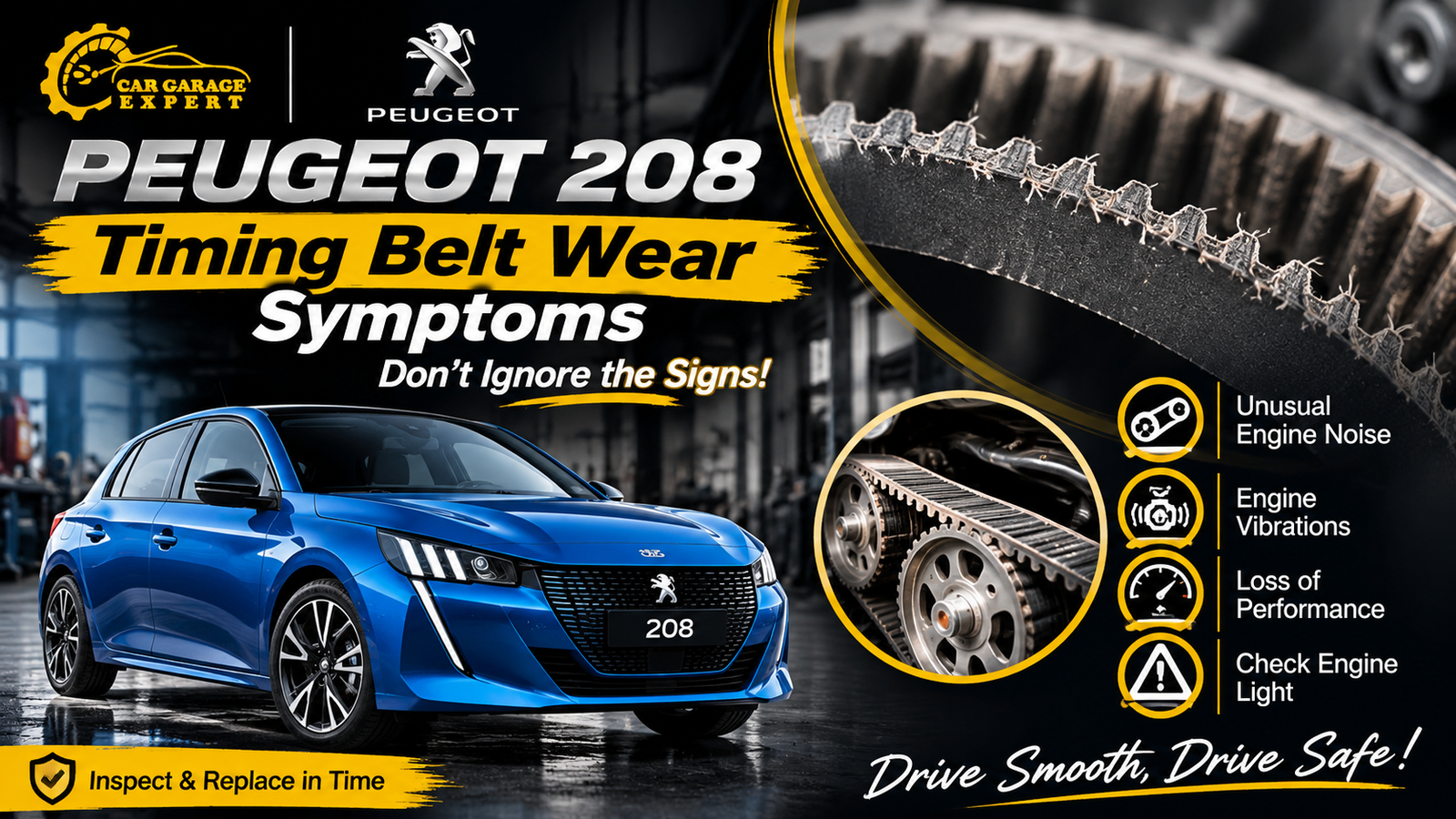
The Peugeot 208 is a popular compact car known for its stylish appearance, comfortable driving experience, and efficient engine performance. However, like any vehicle, it requires regular maintenance to keep its engine operating reliably. One important component that deserves particular attention is the timing belt. Understanding the Peugeot 208 timing belt wear symptoms can help you identify potential problems before they develop into expensive engine repairs.
The timing belt plays a critical role in synchronising the crankshaft and camshaft, ensuring that the engine’s valves open and close at precisely the correct time. When this belt becomes worn, stretched, cracked, or damaged, engine performance can deteriorate. In severe cases, a broken timing belt can cause significant internal engine damage.
For drivers in Dubai, regular timing belt inspections are especially important. High ambient temperatures, heavy traffic, frequent stop-and-go driving, and demanding operating conditions can place additional stress on engine components. If you own a Peugeot 208 and notice unusual engine behaviour, checking the timing belt system should be part of your maintenance considerations.
In this guide, Car Garage Expert explains the most common warning signs, possible causes, inspection methods, and replacement considerations to help you protect your Peugeot 208.
Understanding the Peugeot 208 Timing Belt System
Before discussing the warning signs, it is important to understand how the timing belt works.
The timing belt is a reinforced rubber belt responsible for synchronising the rotation of the crankshaft and camshaft. This coordination ensures that the engine’s intake and exhaust valves operate in harmony with the movement of the pistons.
Some Peugeot 208 models equipped with 1.2 PureTech petrol engines use a wet timing belt, which operates inside the engine and is exposed to engine oil. This design has specific maintenance requirements because the condition of the engine oil can influence belt durability.
Other Peugeot 208 engine versions may use different timing system designs. Certain newer hybrid versions also have different engine configurations, while the fully electric e-208 does not have a conventional engine timing belt.
Therefore, identifying your vehicle’s exact engine type, manufacturing year, and engine code is essential before arranging any timing belt service.
7 Common Peugeot 208 Timing Belt Wear Symptoms
Recognising early warning signs can help prevent unexpected breakdowns and costly mechanical damage. Below are seven symptoms Peugeot 208 owners should understand.
1. Unusual Engine Noises
One possible indication of a timing system problem is unusual noise coming from the engine compartment.
A damaged belt, worn tensioner, or failing timing system component may produce abnormal mechanical sounds. Depending on the underlying issue, you might notice rattling, ticking, or whining noises while the engine is running.
These sounds should not automatically be blamed on the timing belt. Other components, including pulleys, bearings, and auxiliary belts, can create similar noises.
However, if your Peugeot 208 develops unfamiliar engine noises, particularly alongside other performance issues, arrange a professional inspection.
Ignoring unusual mechanical sounds can allow an underlying fault to become more serious.
2. Engine Warning Light Appears on the Dashboard
Another possible Peugeot 208 timing belt wear symptom is an illuminated engine warning light.
When timing belt deterioration affects engine synchronisation or contributes to lubrication problems, the vehicle’s electronic control system may detect abnormal operating conditions.
You might notice:
- An illuminated check engine light.
- Engine management warnings.
- Variable valve timing-related fault codes.
- Reduced engine performance.
- Irregular engine operation.
It is important to understand that an engine warning light does not necessarily indicate a faulty timing belt. Sensors, ignition components, fuel delivery problems, and other engine faults can trigger similar warnings.
A professional diagnostic scan can help identify the underlying problem and determine whether the timing system requires further investigation.
3. Reduced Engine Performance and Acceleration
Does your Peugeot 208 feel less responsive than usual?
A worn or damaged timing belt can affect engine timing, especially if the belt has stretched, deteriorated, or moved out of its correct position.
When valve timing becomes incorrect, the engine may not operate as efficiently as intended. This can result in reduced acceleration, sluggish performance, and inconsistent power delivery.
You may experience:
- Slower acceleration.
- Reduced engine responsiveness.
- Difficulty maintaining normal driving performance.
- Unusual hesitation when pressing the accelerator.
- Poor overall engine efficiency.
These symptoms can also be associated with fuel system, ignition, or air intake problems.
If your Peugeot 208 suddenly loses power, have it inspected instead of continuing to drive and potentially worsening the mechanical issue.
4. Engine Misfires or Rough Idling
A healthy Peugeot 208 engine should operate smoothly, including when the vehicle is stationary.
If the timing belt becomes significantly worn or its timing position changes, the engine’s valve operation may become inconsistent. This can contribute to rough idling, misfires, and irregular combustion.
Common signs include:
- Noticeable engine vibration.
- Uneven idling.
- Occasional engine hesitation.
- Unusual shaking while stationary.
- Difficulty maintaining consistent engine speed.
Although spark plugs, ignition coils, injectors, and other components can cause similar problems, timing system deterioration should not be overlooked.
A qualified technician can perform diagnostic checks to establish whether the issue is related to engine timing or another mechanical fault.
5. Oil Pressure Warning Light
For Peugeot 208 models equipped with affected 1.2 PureTech wet-belt engines, an oil pressure warning is particularly important.
As the belt deteriorates, small rubber particles can separate from its surface and circulate through the engine lubrication system. These particles may restrict the oil pump pickup strainer and other oil passages.
This can interfere with proper oil circulation and cause reduced engine oil pressure.
Warning signs may include:
- An illuminated oil pressure warning light.
- Unusual mechanical noises.
- Poor engine lubrication.
- Engine overheating caused by an associated mechanical problem.
- Increased risk of serious internal engine damage.
Important: If the red oil pressure warning appears while driving, stop safely as soon as possible, switch off the engine, and arrange professional assistance. Do not continue driving in the hope that the warning will disappear.
Low oil pressure is an urgent warning that requires immediate attention.
6. Visible Timing Belt Deterioration
In some Peugeot 208 engines, timing belt deterioration can be identified during a proper mechanical inspection.
Possible signs include:
- Cracking along the belt surface.
- Frayed belt edges.
- Abnormal swelling.
- Missing or damaged belt material.
- Surface deterioration.
- Changes in belt width.
Wet timing belts require particular attention because prolonged exposure to unsuitable or degraded engine oil can contribute to material deterioration.
A technician can use the appropriate inspection equipment to assess belt width and condition. For applicable PureTech engines, a dedicated measuring gauge is used rather than relying exclusively on a casual visual inspection.
Do not assume that a timing belt is healthy simply because there are no visible external cracks. Some forms of deterioration are not easily detected without the correct inspection procedure.
7. Difficulty Starting or Sudden Engine Stalling
Difficulty starting your Peugeot 208 can sometimes indicate an engine timing problem.
If the timing belt becomes excessively worn or jumps position, the engine’s valve timing may be disrupted. This can affect combustion and prevent the engine from operating correctly.
Potential warning signs include:
- Extended cranking before the engine starts.
- Repeated starting difficulties.
- Unexpected engine stalling.
- Severe engine vibration.
- Complete engine failure following a timing belt breakage.
These symptoms can also result from battery problems, fuel delivery faults, ignition failures, or sensor malfunctions.
If your vehicle suddenly stalls or experiences severe mechanical symptoms, avoid repeatedly attempting to restart it. A professional inspection is the safest next step.
Why Does the Peugeot 208 Timing Belt Wear Out?
Several factors can contribute to premature timing belt deterioration.
Understanding these causes can help you maintain your Peugeot 208 more effectively.
1. Engine Oil Quality
Oil quality is especially important for Peugeot 208 models equipped with wet timing belts.
Because the belt operates in engine oil, using an incorrect lubricant or allowing the oil to deteriorate can affect the belt material.
Always use engine oil that meets the exact specifications approved for your vehicle’s engine.
2. High Temperatures in Dubai
Dubai’s climate can create demanding operating conditions for vehicles.
High ambient temperatures increase the workload on cooling and lubrication systems. Repeated exposure to demanding temperatures can contribute to the ageing of engine components.
Peugeot also recognises climate as a factor that can contribute to premature timing belt wear.
Regular maintenance and timely inspections are therefore important for vehicles operating in the UAE.
3. Delayed Oil Changes
Postponing oil changes can negatively affect engine lubrication.
For wet-belt engines, degraded or contaminated oil can contribute to premature belt deterioration. Following the correct oil replacement schedule is particularly important.
Short journeys and repeated stop-and-go driving can also make engine operating conditions more demanding.
4. Excessive Mileage and Age
Timing belts naturally deteriorate over time, even when a vehicle is not driven frequently.
Both mileage and age should be considered when determining replacement requirements.
A Peugeot 208 with relatively low mileage may still require a timing belt replacement if it has reached the manufacturer’s specified age limit.
5. Coolant Leaks and Water Pump Problems
Coolant leaks can affect the condition and service life of timing system components.
Peugeot’s maintenance guidance specifically highlights water pump leakage and coolant loss as factors that can shorten timing belt life.
For this reason, the water pump and surrounding components should be checked during a timing belt service.
How to Prevent Peugeot 208 Timing Belt Problems
Preventive maintenance is generally more affordable than repairing major engine damage.
Here are practical steps Peugeot 208 owners in Dubai should follow.
Follow the Manufacturer’s Maintenance Schedule
Always check the service booklet for the correct timing belt replacement interval.
There is no single replacement mileage or age that applies to every Peugeot 208 engine. Requirements depend on the engine type, production year, operating conditions, and applicable manufacturer updates.
If your vehicle has an affected PureTech engine, ask your technician to check the latest applicable inspection and replacement recommendations.
Change Engine Oil on Time
Never underestimate the importance of regular oil changes.
Use the correct manufacturer-approved oil specification and replace the oil filter according to the recommended maintenance schedule.
For wet timing belt engines, maintaining the correct oil quality is particularly important.
Arrange Regular Timing Belt Inspections
Do not wait for a warning light or unusual engine noise before checking the timing belt.
Ask your garage to inspect the timing belt using the correct procedures and equipment for your engine.
This is especially important when purchasing a used Peugeot 208 without a complete maintenance history.
Check the Cooling System
Inspect the water pump, coolant hoses, and cooling system for leakage.
If coolant levels continue to decrease, have the vehicle checked promptly. An unresolved coolant leak can contribute to additional mechanical problems.
Avoid Ignoring Warning Signs
Oil pressure warnings, unusual engine sounds, rough idling, and unexpected performance changes should always be investigated.
Early diagnosis can help prevent a relatively manageable repair from becoming a major engine replacement.
Peugeot 208 Timing Belt Replacement: What Does the Service Include?
When a timing belt reaches its recommended replacement limit or shows signs of deterioration, arranging a professional replacement is essential.
A proper timing belt service should involve more than simply fitting a new belt.
Depending on the engine configuration and condition, the work may include:
- Initial engine inspection: The technician checks the engine and identifies the timing system configuration.
- Timing belt assessment: The existing belt is inspected for deterioration, swelling, wear, and other damage.
- Component inspection: Tensioners, idlers, pulleys, and the water pump are checked.
- Timing belt replacement: The correct replacement belt or complete kit is installed.
- Lubrication system inspection: Applicable wet-belt engines may require additional checks of the oil pump pickup strainer and lubrication system.
- Engine timing verification: The technician ensures that the crankshaft and camshaft are correctly synchronised.
- Final testing: The engine is checked for abnormal noises, warning lights, leaks, and correct operation.
Replacing the water pump at the same time is worth considering when it is driven by the timing belt or when its condition and the manufacturer’s procedures justify replacement. This can help avoid repeating labour later.
For affected wet-belt engines, simply installing a new belt without addressing oil contamination or restricted oil passages may leave the original problem unresolved.
Where Can You Get Peugeot 208 Timing Belt Inspection in Dubai?
Finding an experienced garage is important when dealing with timing belt problems.
At Car Garage Expert, Peugeot owners can seek professional assistance with engine inspections, timing belt concerns, and general vehicle maintenance.
If you notice unusual engine noises, reduced acceleration, an oil pressure warning, or other possible timing belt wear symptoms, arranging an inspection promptly is a sensible decision.
A professional workshop can assess your Peugeot 208’s engine configuration, inspect the timing system, identify associated faults, and recommend suitable repairs.
When selecting a garage in Dubai, look for technicians familiar with Peugeot engines, appropriate diagnostic equipment, manufacturer-approved replacement parts, and transparent repair recommendations.
Do not choose a timing belt replacement service based on price alone. Correct installation and proper inspection of associated engine components are essential for reliable results.
Frequently Asked Questions (FAQs)
1. What are the most common Peugeot 208 timing belt wear symptoms?
Common warning signs include unusual engine noises, reduced acceleration, rough idling, engine warning lights, and oil pressure problems. However, timing belt deterioration does not always produce noticeable symptoms, making scheduled inspections important.
2. How often should I replace my Peugeot 208 timing belt?
The replacement interval depends on your Peugeot 208’s engine type, manufacturing year, and service requirements. Always follow the maintenance schedule specified for your particular engine. Do not rely on a universal mileage recommendation.
3. Can I drive my Peugeot 208 with a worn timing belt?
Driving with a suspected damaged timing belt is not recommended. If the belt fails or slips, the engine can suffer severe internal damage. If you notice an oil pressure warning or serious mechanical symptoms, stop driving and arrange professional assistance.
4. Why is the Peugeot 208 1.2 PureTech timing belt a concern?
Certain 1.2 PureTech engines use a wet timing belt that operates in engine oil. Premature belt deterioration can release rubber particles into the lubrication system, potentially restricting oil flow and causing engine damage. Correct oil specifications and regular belt inspections are important.
5. Where can I get Peugeot 208 timing belt replacement in Dubai?
You should choose a professional garage experienced in Peugeot engine maintenance. Car Garage Expert can be contacted for assistance with timing belt inspections, engine diagnostics, and vehicle maintenance in Dubai.
Conclusion
Recognising the Peugeot 208 timing belt wear symptoms is essential for maintaining engine performance and avoiding unexpected repair expenses. Warning signs such as unusual engine noises, reduced acceleration, rough idling, dashboard warnings, and oil pressure problems should never be ignored.
Visit us in our Al Quoz, Dubai branch or visit Car Garage Expert
For Dubai drivers, regular servicing is particularly important because demanding temperatures and driving conditions can place additional stress on vehicle components.
Remember that not every Peugeot 208 uses the same timing system, and some timing belt problems may develop without obvious symptoms. Therefore, checking your vehicle’s exact engine specifications and following the correct maintenance schedule is essential.
If you suspect timing belt deterioration, contact Car Garage Expert to arrange a professional inspection. Taking preventive action today can help protect your engine, improve reliability, and keep your Peugeot 208 running smoothly on Dubai roads.