Rear differential leaking problems can affect your vehicle’s performance, safety anddriving comfort. Many drivers notice oil spots under their cars but do not know where the leak comes from. Understanding the warning signs and common causes can help you take action early. Whether you drive a sedan, SUV or luxury vehicle in Dubai, regular differential inspections can help prevent costly repairs.
Quick Answer: What Does Rear Differential Leaking Mean?
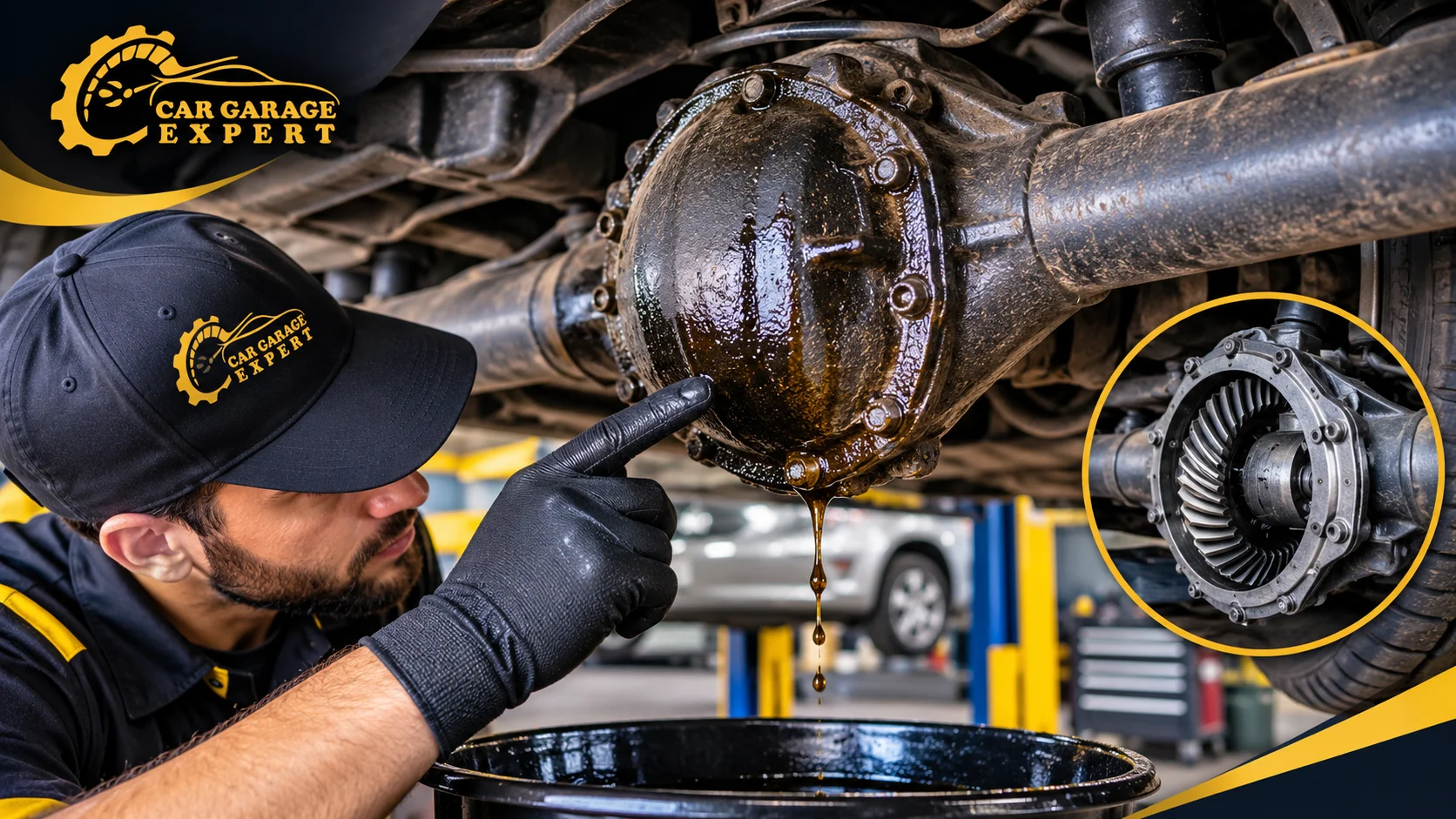
A rear differential leaking happens when gear oil escapes from the differential housing, seals, gasket or drain plug. You may notice dark oil under the rear of your vehicle, a burning smell, whining noises or unusual vibrations. Common causes include worn pinion seals, damaged axle seals, loose bolts andcracked housings. Low differential oil can increase friction and damage internal gears. If you notice a leak, arrange an inspection as soon as possible. Dubai’s hot weather and heavy traffic can also put extra stress on vehicle components. A professional garage can find the leak and recommend the right repair.
Table of Contents
- Common Signs Your Rear Differential Is Leaking
- What Causes a Rear Differential Oil Leak?
- How Dangerous Is Driving With a Differential Leak?
- How Mechanics Diagnose Differential Oil Leaks
- Rear Differential Leak Repair Process
- Repair Types and Estimated Time
- How Much Does Differential Leak Repair Cost?
- How to Prevent Future Differential Leaks
- Why Choose Car Garage Expert for Differential Repairs?
- Frequently Asked Questions
Common Signs Your Rear Differential Is Leaking
A differential helps your rear wheels rotate at different speeds when turning. It needs the correct amount of gear oil to protect its internal parts.
When you notice a rear differential leaking, check for these common warning signs:
- Oil spots under the vehicle: Dark or thick oil may collect near the rear axle.
- Burning oil smell: Leaking gear oil can reach hot vehicle parts.
- Whining noise: Low oil can cause extra friction between the gears.
- Vibrations: Worn or poorly lubricated parts may cause unusual vibrations.
- Grinding sounds: Internal gears may produce noise when lubrication becomes low.
- Oil around the differential: Wet areas near the seals or housing can indicate a leak.
Do not ignore these signs. A small leak can become a serious mechanical problem.
What Causes a Rear Differential Oil Leak?
Several parts can allow gear oil to escape. Some problems need a simple seal replacement, while others require more extensive repairs.
Here are the most common causes.
Worn Pinion Seal
The pinion seal prevents oil from escaping where the driveshaft connects to the differential.
Over time, heat, age andnormal wear can damage this seal. You may notice oil around the front section of the differential.
Damaged Axle Seals
Axle seals keep differential oil inside the housing.
These seals can become hard, cracked or damaged. When this happens, oil may leak near the rear wheels.
Damaged Differential Gasket
The differential cover uses a gasket or sealant to prevent oil from escaping.
Old gaskets can lose their sealing ability. Loose bolts or incorrect installation can also cause leaks.
Loose Drain or Fill Plug
The drain and fill plugs help mechanics service differential oil.
If a plug becomes loose or its washer gets damaged, oil can escape slowly.
Cracked Differential Housing
A damaged housing can cause serious oil loss.
Road impacts, accidents andphysical damage may create cracks in the metal casing. This problem may require professional repair or housing replacement.
Excessive Internal Pressure
A blocked differential breather can trap pressure inside the housing.
This pressure may force oil past otherwise healthy seals. A mechanic should check the breather before replacing seals.
How Dangerous Is Driving With a Differential Leak?
Yes, driving with a differential oil leak can become dangerous.
The differential needs enough oil to reduce friction and control heat. When the oil level drops, internal gears and bearings may wear faster.
If you continue driving with a rear differential leaking, you may face:
- Excessive heat inside the differential.
- Damaged gears and bearings.
- Loud whining or grinding noises.
- Poor power delivery to the rear wheels.
- Expensive differential replacement.
When should you stop driving?
Stop safely if you notice heavy oil loss, loud grinding, strong vibrations or unusual noises from the rear axle.
Do not continue driving if you suspect serious internal damage. Arrange professional roadside assistance to move your vehicle safely.
How Mechanics Diagnose Differential Oil Leaks
A proper inspection helps identify the exact source of the problem. Replacing the wrong seal will not fix an ongoing leak.
Here is how a professional mechanic checks the system.
Visual Inspection
The mechanic checks the differential housing, axle seals, pinion seal andsurrounding components.
They look for wet oil marks, cracks anddamaged sealing surfaces.
Differential Oil Level Check
The mechanic checks whether the differential has enough gear oil.
Low oil levels can indicate an active leak or previous poor maintenance.
Seal and Gasket Inspection
The mechanic checks each seal and gasket for cracks, wear andimproper fit.
This step helps identify the part that needs replacement.
Breather Inspection
The mechanic checks the differential breather for blockage.
A blocked breather can create pressure and push oil through the seals.
Road Test
If the vehicle is safe to drive, the mechanic may perform a short road test.
They listen for whining, grinding andvibration that could indicate internal damage.
Rear Differential Leak Repair Process
The correct repair depends on the source and severity of the leak.
If your vehicle has a rear differential leaking, a professional garage should follow these steps:
- Identify the leak: Inspect the housing, seals, gaskets andplugs.
- Clean the affected area: Remove old oil and dirt to locate the leak accurately.
- Remove damaged parts: Remove the worn seal, gasket or faulty component.
- Install replacement parts: Fit suitable parts according to vehicle specifications.
- Refill differential oil: Use the correct gear oil and quantity.
- Check for further leaks: Inspect the repaired area after filling.
- Perform a final test: Confirm that the differential works correctly.
Some repairs take only a few hours. Major internal damage may take longer.
Repair Types and Estimated Time
Repair time depends on your vehicle model, damage andparts availability.
|
Repair type |
Estimated repair time |
|---|---|
|
Differential inspection |
30 minutes–1 hour |
|
Drain or fill plug replacement |
30 minutes–1 hour |
|
Differential gasket replacement |
2–4 hours |
|
Pinion seal replacement |
2–5 hours |
|
Axle seal replacement |
2–5 hours |
|
Differential breather cleaning |
30 minutes–1 hour |
|
Differential housing replacement |
1–3 days or longer |
|
Internal gear or bearing repair |
1–3 days or longer |
These are general estimates. Your mechanic can provide a more accurate timeline after inspection.
How Much Does Differential Leak Repair Cost?
The cost depends on the damaged component and the vehicle model.
A minor seal or gasket repair usually costs less than replacing the differential housing or internal gears.
Here are the main factors that affect the repair price:
|
Repair factor |
How it affects cost |
|---|---|
|
Type of leak |
Minor leaks often require fewer parts and less labour. |
|
Vehicle model |
Luxury and performance cars may need special parts. |
|
Seal replacement |
Replacement parts and labour affect the final price. |
|
Differential oil |
Oil type and quantity can change the cost. |
|
Housing damage |
Major damage may require differential housing replacement. |
|
Internal gear damage |
Additional mechanical repairs increase the total cost. |
|
Labour time |
Complex repairs require more workshop time. |
If you notice rear differential leaking, arrange an inspection before the oil level drops too far. Early repairs can help prevent expensive damage.
How to Prevent Future Differential Leaks
Regular maintenance can help protect your differential and reduce the risk of rear differential leaking.
Follow these simple tips:
- Check differential oil during scheduled servicing.
- Replace gear oil according to manufacturer recommendations.
- Inspect seals for cracks and signs of wear.
- Check for oil spots under your parked vehicle.
- Avoid driving over deep potholes and road obstacles.
- Ask your mechanic to inspect the differential breather.
- Repair small leaks before they become serious.
Dubai-specific maintenance advice
Dubai’s hot weather can increase operating temperatures in vehicle components. Long drives, heavy traffic andfrequent stop-and-go driving can also place extra stress on the drivetrain.
Ask your mechanic to inspect the differential during routine servicing, especially before long-distance trips.
Why Choose Car Garage Expert for Differential Repairs?
Finding the right garage is important when your vehicle develops a drivetrain problem.
Car Garage Expert provides professional vehicle inspection and repair services for drivers in Dubai. Our team can help identify oil leaks or rear differential leaking and recommend suitable repairs based on your vehicle’s condition.
Here is why you should consider Car Garage Expert:
- Professional inspection: Identify the source of differential oil leaks.
- Experienced mechanics: Check seals, gaskets anddifferential components.
- Quality replacement parts: Use suitable parts for your vehicle.
- Complete repair support: Address minor leaks and more serious mechanical problems.
- Maintenance guidance: Get advice to help prevent future problems.
If you notice a rear differential leaking, do not wait for the problem to worsen. Visit Car Garage Expert for a professional inspection.
If your vehicle develops a serious leak or becomes unsafe to drive, arrange roadside assistance rather than risking further damage.
Frequently Asked Questions
What Does Differential Oil Look Like?
Differential oil is usually thick and ranges from amber to dark brown. Old oil may look almost black.
Can A Differential Leak Cause Noise?
Yes. Low differential oil can increase friction and cause whining, grinding or humming noises.
Is A Small Differential Leak Serious?
Yes. Even a small leak can lower the oil level over time and damage internal gears.
How Long Does Seal Replacement Take?
Most seal replacements take around two to five hours, depending on the vehicle and seal location.
Will A Differential Leak Stop By Itself?
No. A damaged seal, gasket or housing will not repair itself. You need to identify and fix the source.
Final Call-to-Action:
A differential oil leak may look like a small problem, but ignoring it can lead to serious drivetrain damage.
Check for oil spots, unusual noises andburning smells. Arrange an inspection as soon as you notice these warning signs.
For professional vehicle inspection and repair, consider Car Garage Expert in Dubai. Get the problem checked early and help keep your vehicle safe and reliable.
Location – Car Garage Expert, Dubai on Google Maps