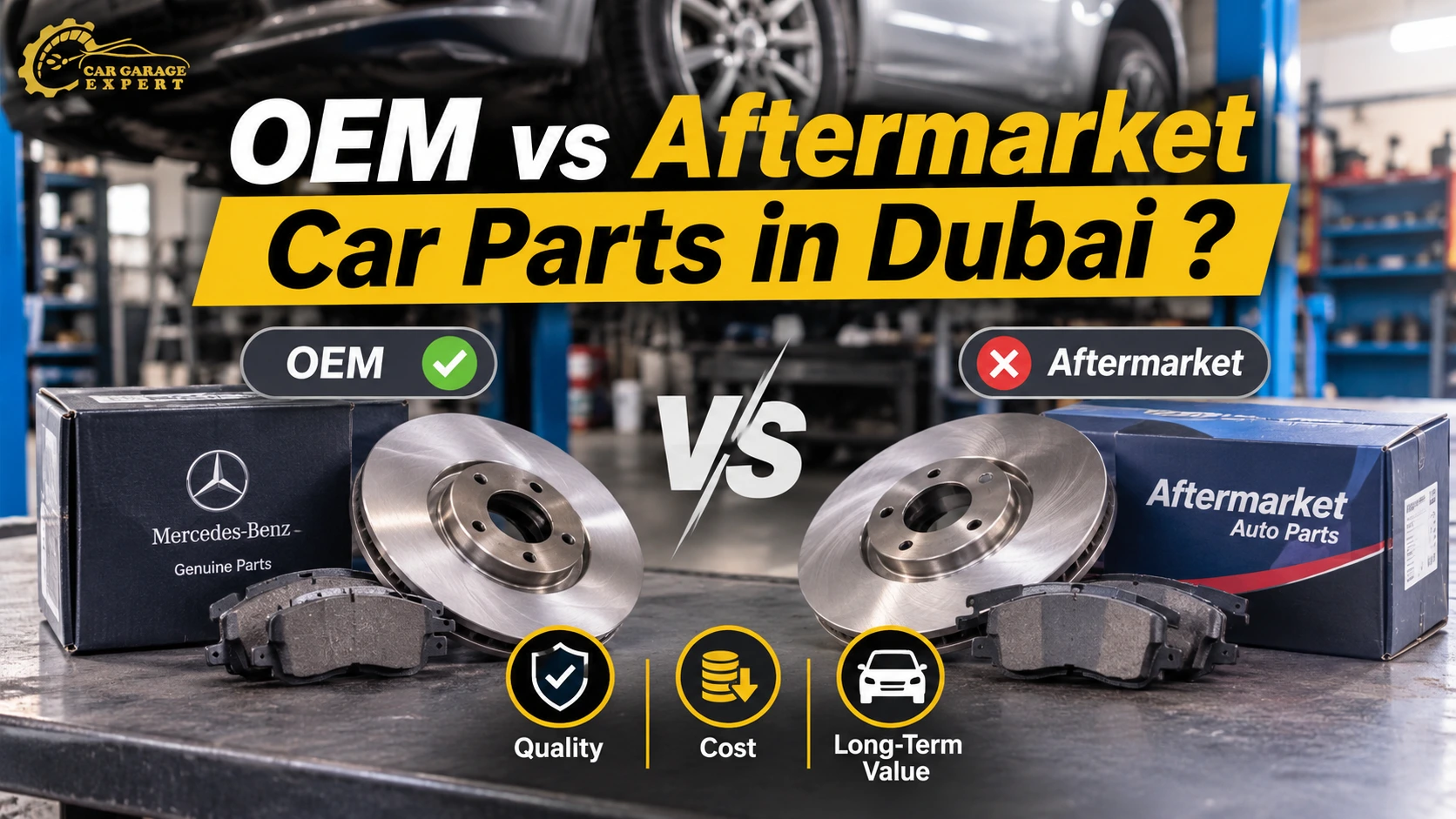
Your mechanic hands you a quote with two prices for the same brake pads. One says OEM. The other is half the price. You pick the cheap one, and three months later the brakes squeal and the pads are gone.
This happens to Dubai drivers every week. The problem is rarely the choice itself. It is not knowing which parts are safe to buy cheaper and which ones are not. This guide to OEM vs aftermarket car parts clears that up, with real price gaps in AED and a part-by-part list.
OEM vs Aftermarket Car Parts: Quick Answer
In the OEM vs aftermarket car parts debate, neither side wins every time. OEM parts are made by or for your car’s maker, so they fit exactly and match the original quality, but they cost more. Other companies make aftermarket parts and are often 20 to 60 percent cheaper. Good aftermarket brands work well for filters, wipers, bulbs, and many brake parts. Sensors, timing parts, airbags, and electronics are safer as OEM. In Dubai, heat and fake parts make the brand you buy matter more than the label. A good workshop shows you both options and explains the difference before fitting anything.
What OEM, Genuine and Aftermarket Parts Really Mean
The genuine vs. aftermarket car parts question can be confusing because shops use these labels loosely. There are four types you will come across in Dubai.
Genuine Parts
Genuine parts come in the carmaker’s own box, like a Toyota or Nissan box. Dealers sell them. They are the most expensive choice and carry the carmaker’s parts warranty.
OEM Parts
OEM stands for original equipment manufacturer parts. These are made by the same company that supplies the carmaker, such as Bosch, Denso, Aisin, or NGK. The part is often identical to the genuine one, but it comes in the supplier’s box and costs less. This is the best value most drivers never hear about.
Aftermarket Parts
Other companies make aftermarket automotive parts to fit your car. Quality ranges from excellent to poor. Some aftermarket brands even beat the original, while others cut corners on rubber, metal, and testing.
Counterfeit Parts
Fake parts are copies made to look like genuine or OEM parts. They use the same logos and box designs but cheap materials. Fakes are a known problem across the region, and they are the real danger behind most “cheap part” horror stories.
OEM vs Aftermarket Car Parts Side by Side
This car spare parts comparison pits OEM car parts against aftermarket parts on the points that matter most.
| Factor | OEM / Genuine | Aftermarket |
| Price | Highest | Often 20 to 60 percent less |
| Fit | Exact match | Usually good, sometimes needs adjusting |
| Quality | Same every time | Depends on the brand |
| Choice | One option | Many brands and grades |
| Warranty | Carmaker or supplier warranty | Varies by brand and seller |
OEM parts advantages and disadvantages come down to exact fit versus higher price. Aftermarket parts pros and cons run the other way, with more choice and savings but quality that depends on the brand. If you are unsure, judge the brand before the label. A top aftermarket brand can outlast a poor part sold with an OEM sticker.
Signs You Were Given a Poor or Fake Part
A bad part usually shows itself within weeks. Watch for these signs after any repair.
A Warning Light Soon After the Repair
A check engine or ABS light that appears days after a sensor change often points to a low-quality sensor. The car’s computer reads its signal as wrong.
New Noises or Vibration
Squealing brakes, a knocking suspension, or a whining pump right after a repair can mean the part does not match the original spec.
The Part Wears Out Too Fast
Brake pads that last 8,000 km instead of 30,000 km, or a battery that dies in one summer, are clear signs of poor material.
Poor Fit or Visible Gaps
Body panels, lights, and bumpers from cheap makers often leave uneven gaps. Clips may not line up, so the mechanic has to force them.
Packaging That Looks Wrong
Blurry printing, spelling mistakes, no batch number, or a price far below the market rate are the classic signs of a fake.
Why Cheap Parts Fail Early on Dubai Cars
The biggest difference in quality between OEM and aftermarket parts can be seen in Dubai. What makes the difference between OEM and aftermarket car parts? How well each brand handles heat and dust determines how reliable aftermarket parts are.
Heat Breaks Down Cheap Rubber and Plastic
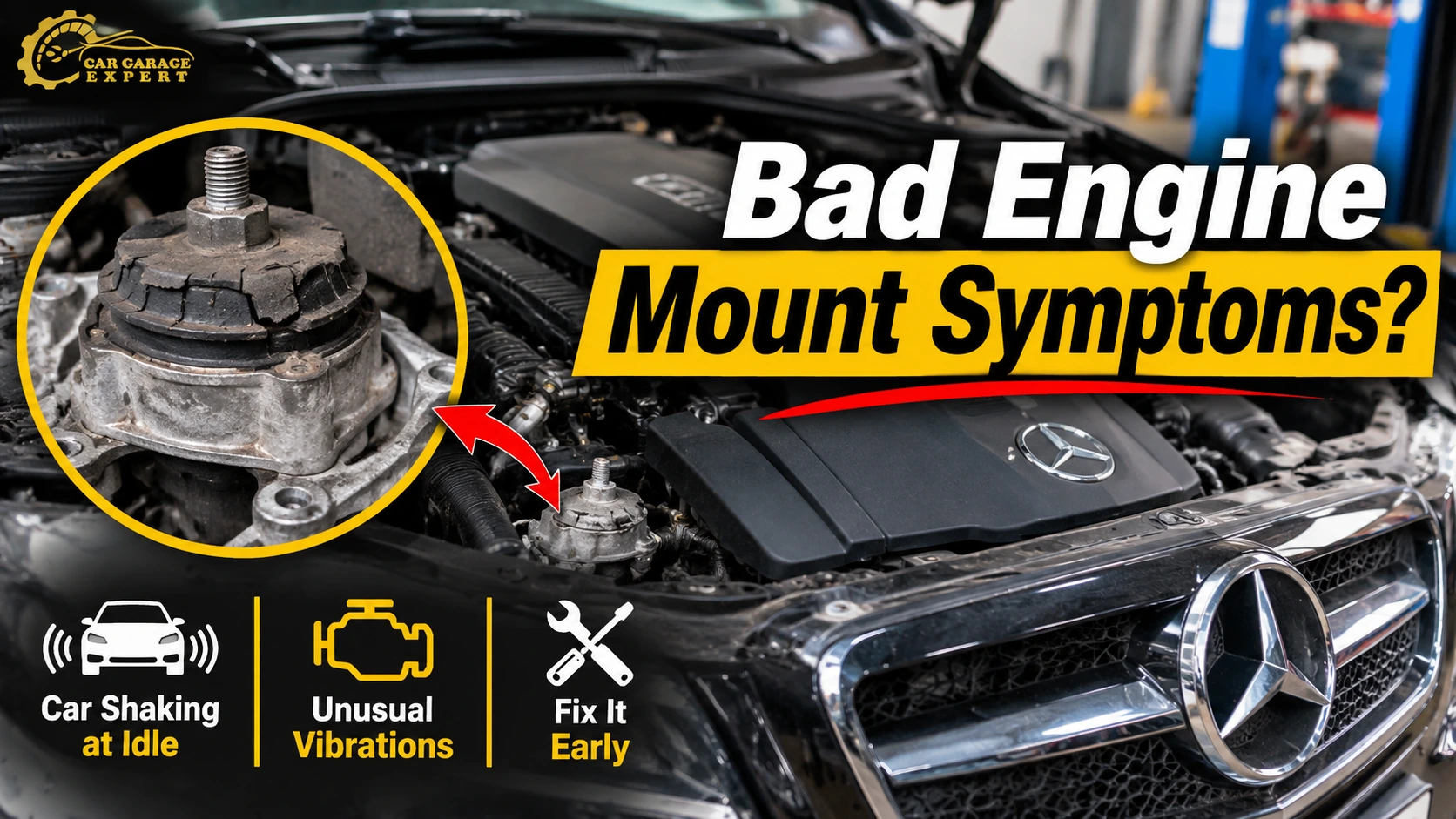
When it’s hot outside, engine bays get very hot. Cheap hoses, belts, mounts, and plastic housings take much longer to harden and crack than good ones.
Brake Pads Fade in High Heat
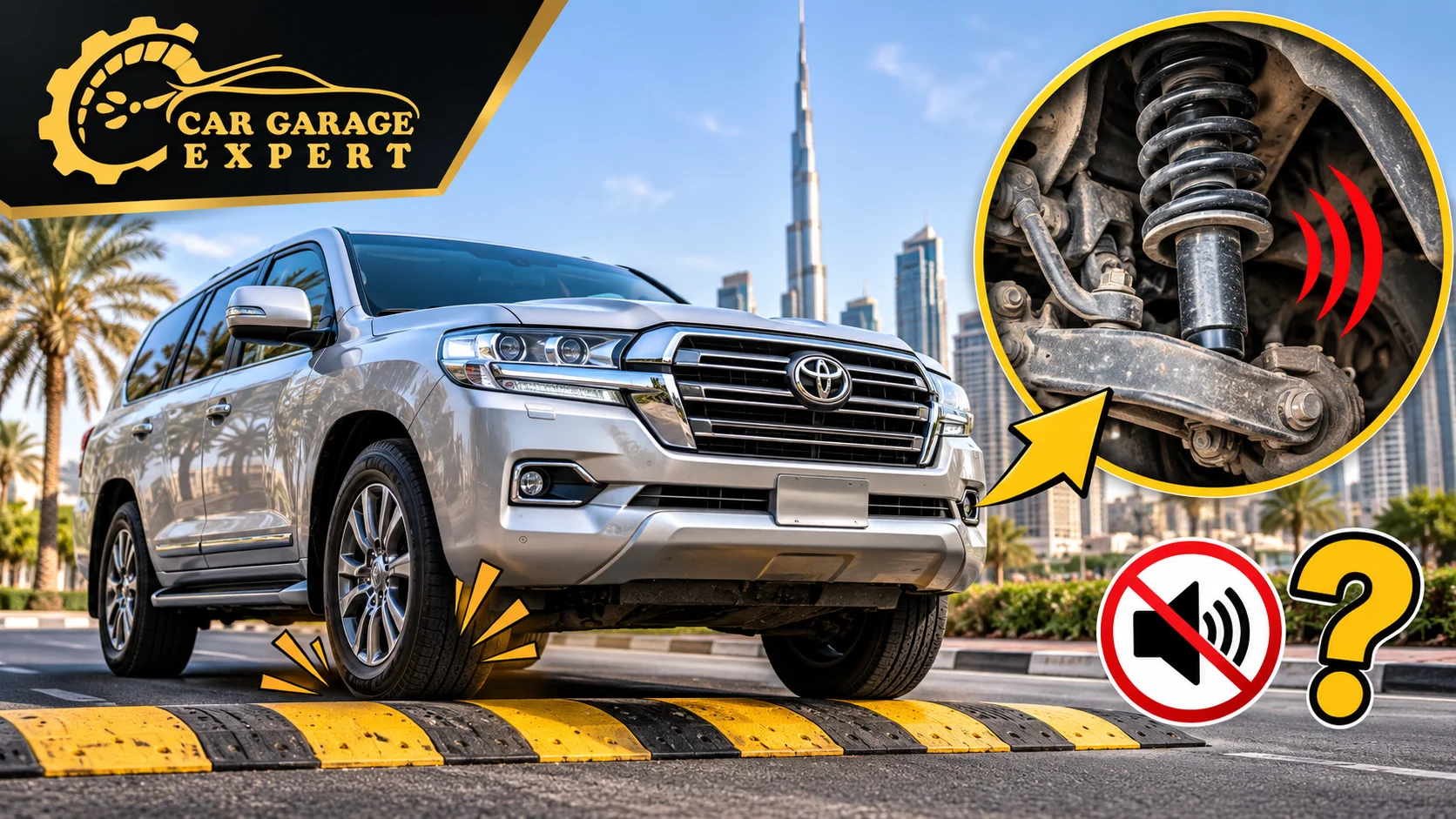
Low-cost pads use compounds that lose grip when hot. On a long downhill run, like the road down from Jebel Jais, they can fade badly.
Batteries Lose Life in Summer
Heat speeds up the chemical wear inside a battery. A cheap battery that might last three years in Europe can fail after one Dubai summer.
Dust Clogs Weak Filters
Fine sand in Dubai air passes through thin, poorly made air and cabin filters. The engine and AC then breathe dirtier air.
How a Mechanic Checks If a Part Is Right
A good workshop does not just fit whatever arrives. Car Garage Expert is a smart place to get this checked, because each part is matched to your car before it goes on.
Part Number Match
The mechanic checks the part number against your car’s VIN. This confirms the right part for your exact model, year, and engine.
Brand and Batch Check
The box, batch code, and hologram are checked against the supplier’s real packaging. This catches most fakes before fitting.
Side-by-Side Comparison
The new part is held next to the old one. Size, mounting points, and connectors must match.
Scan After Fitting
For sensors and electrical parts, a scan tool checks live readings once the part is fitted. Wrong readings show up right away.
Road Test
A short drive confirms no new noise, vibration, or warning light before the car is handed back.
Which Parts Should Be OEM and Which Can Be Aftermarket
This is where most of the savings, and most of the risk, sit. Use the list below when weighing OEM vs aftermarket car parts on each job, and to see when OEM replacement parts are worth paying for.
| Part | Better choice | Reason |
| Oil, air and cabin filters | Quality aftermarket | Big savings, same filtering from good brands |
| Wiper blades and bulbs | Aftermarket | Low risk and easy to replace |
| Brake pads and discs | OEM or top aftermarket brand | Cheap pads fade in heat |
| Batteries | OEM or known battery brand | Cheap ones fail in summer |
| Sensors (ABS, oxygen, crankshaft) | OEM | Cheap sensors cause warning lights |
| Timing belt or chain kit | OEM | Failure can wreck the engine |
| Airbags and seatbelt parts | Genuine only | Safety critical |
| Body panels and headlights | OEM for newer cars | Better fit and finish |
How a Good Workshop Handles Parts on Your Repair
Ask your workshop to follow these steps on any parts job.
- Diagnose the fault and confirm which part has failed.
- Look up the correct part number using your VIN.
- Quote both OEM and a trusted aftermarket option, with brand names.
- Let you choose before ordering.
- Check the part on arrival for brand, batch, and fit.
- Fit it, scan it if needed, and road test the car.
- Give you the old part back if you ask, plus a note of the brand fitted.
What Happens When the Wrong Part Is Fitted
Choosing the wrong part can cost more than the money you saved.
- A failed timing part can bend valves and require an engine rebuild.
- Weak brake parts lengthen stopping distance.
- Poor sensors cause rough running and higher fuel use.
- A badly fitted panel can let water and dust inside.
- You pay for the same job twice when the part fails early.
Can You Keep Driving on a Cheap Part?
For low-risk parts like wipers, bulbs, or a filter, yes. Replace them at your next service if they disappoint.
For brakes, steering, suspension and engine timing parts, do not wait. If a cheap part starts to squeal, knock, or trigger a warning, get it checked. If the car feels unsafe on the road, call roadside assistance rather than driving it to a workshop.
How Long Parts Take to Arrive in Dubai
Popular aftermarket parts for Toyota, Nissan and Hyundai models are usually in stock the same day. OEM parts from supplier brands often arrive within one or two days.
Genuine dealer parts for less common or European cars can take three to seven days. For rare models, a week or more is normal.
OEM vs Aftermarket Parts Price: What You Really Pay
OEM vs aftermarket parts prices depend on your car’s brand, the part type, where it is bought, and how many are in stock. The figures below are rough parts-only prices for a mid-size sedan in Dubai.
| Part | OEM / Genuine (AED) | Quality aftermarket (AED) |
| Front brake pads | 350 to 600 | 150 to 350 |
| Oil filter | 40 to 80 | 20 to 50 |
| Spark plugs (set of 4) | 200 to 400 | 100 to 220 |
| Battery | 450 to 800 | 300 to 600 |
| AC compressor | 2,500 to 5,000 | 1,200 to 2,800 |
Labor usually stays the same whichever part you pick. That means a part that fails early costs you the labor twice. When you compare quotes from a garage near me, check that both prices name the brand and include the same labor.
How to Avoid Buying Bad Parts
A few simple habits protect you from fakes and make OEM vs aftermarket car parts decisions easier.
- Buy from your workshop or a known supplier, not random online listings.
- Ask for the brand name on every quote.
- Be wary of prices far below the market.
- Keep receipts and part boxes for warranty claims.
- Stick to OEM for safety and engine timing parts.
Following a regular car service package also helps, because quality filters and fluids are replaced on time.
Dubai Advice: Warranty, Insurance and Resale
These points rarely appear in other guides, but they matter for genuine car spare parts in Dubai.
Dealer Warranty
If your car is still under dealer warranty, read the terms before using aftermarket parts on covered systems. Many UAE dealer warranties require approved parts for covered repairs.
Agency Repair Insurance
Many UAE insurance policies offer agency repair for newer cars. Under that cover, accident repairs use genuine parts. If you pay for agency repair, make sure the workshop fits what you paid for.
Resale Value
Buyers in Dubai often ask for service history. A record showing OEM parts on key systems can help you sell faster and for a better price.
Accident Repairs
After a crash, OEM body panels and lights fit better. That also helps the car paint match the rest of the car.
Why Choose Car Garage Expert for OEM vs Aftermarket Car Parts Advice
For drivers stuck between OEM vs aftermarket car parts, Car Garage Expert in Al Quoz is a strong choice because the workshop quotes both options and lets you decide.
Two Prices on Every Quote
Most jobs come with an OEM price and a quality aftermarket price, with brand names. You see the gap before agreeing.
Honest Advice on Where to Save
The team points out which parts are fine to buy cheaper and which should stay OEM for safety.
Parts Checked Before Fitting
Part numbers, packaging, and fit are checked on arrival, which helps keep fakes out of your car.
One Visit for Diagnosis and Repair
An experienced car mechanic finds the fault, sources the part, and fits it in one place.
Frequently Asked Questions
Q1: Is OEM better than aftermarket parts?
For safety, engine timing, and electronic parts, yes. For filters, wipers, bulbs, and many suspension parts, a good aftermarket brand works just as well for less money.
Q2: What is the difference between genuine and OEM?
Genuine parts come in the carmaker’s box. OEM parts are often the same part from the same factory, sold in the supplier’s box for less.
Q3: Is it safe to use aftermarket parts?
Parts from known brands are safe for most jobs. Unbranded or very cheap parts are where the risk lies.
Q4: Will aftermarket parts void my warranty?
It depends on your dealer’s terms. Check your warranty booklet before using aftermarket parts on covered systems.
Q5: How can I spot fake car parts?
Look for poor printing, missing batch codes, odd weight, and a price far below normal. Buying through a trusted workshop is the safest route.
Q6: Why are OEM parts so expensive?
You pay for the carmaker’s brand, testing, and dealer supply chain. OE-supplier parts often give the same quality at a lower price.
Related Services That Use These Parts
The OEM vs aftermarket car parts choice comes up on many common jobs. These include brake pad replacement, battery replacement, AC compressor repair, suspension repair, and timing belt replacement. A mobile car mechanic can also handle simple parts like batteries and wipers at your location.
Get a Two-Option Quote for Your Car
If you are unsure about OEM vs aftermarket car parts for your next repair, ask for a quote that shows both prices side by side. Visit Car Garage Expert online, send your car’s details and the part you need on WhatsApp, or get directions on Google Maps to the Al Quoz workshop.