Leather seats in Dubai age differently than almost anywhere else. The combination of intense UV exposure, sustained cabin temperatures that can exceed 70°C when parked, and constant AC-to-heat cycling puts leather through stress that European or American climates simply don’t produce.
A leather restoration service in Dubai addresses damage that’s specific to this environment — cracking from UV and heat, fading from sun exposure through windows, and the drying out of natural oils that keep leather supple.
The good news is that most leather damage that looks severe is genuinely restorable. A proper leather restoration service can bring seats that look beyond saving back to a condition that’s both functional and presentable — often at a fraction of replacement cost.
Leather Restoration Service Dubai — Why Cars Age Faster Here
UV Damage Through Glass
Dubai’s UV index is among the highest globally. Even with tinted windows, UV radiation passes through glass and breaks down the protective coatings on leather over time.
The result is fading on sun-facing surfaces — typically the driver’s seat bolster and the top of the dashboard-adjacent door panels. A leather restoration service addresses this with proper colour matching and UV-resistant finishing.
Heat-Induced Cracking
Parked cabin temperatures in Dubai summer regularly exceed 70°C. Leather that isn’t properly conditioned dries out under this heat, and the surface coating develops micro-cracks that deepen over time.
Cracking typically starts on the seat bolsters and the steering wheel — areas with the most contact and the most direct sun exposure. Once cracking starts, it accelerates without intervention.
Sweat, Oils, and Sunscreen Contamination
Dubai’s heat means more sweat contact with leather surfaces. Sunscreen and body oils transfer onto seats and steering wheels, breaking down leather finishes faster than in cooler climates where these contaminants are less constant.
A proper leather restoration service includes deep cleaning that removes this contamination before any repair or recolouring begins — skipping this step means new finish applied over contaminated leather fails faster.
What a Leather Restoration Service Covers
Deep Cleaning and Conditioning
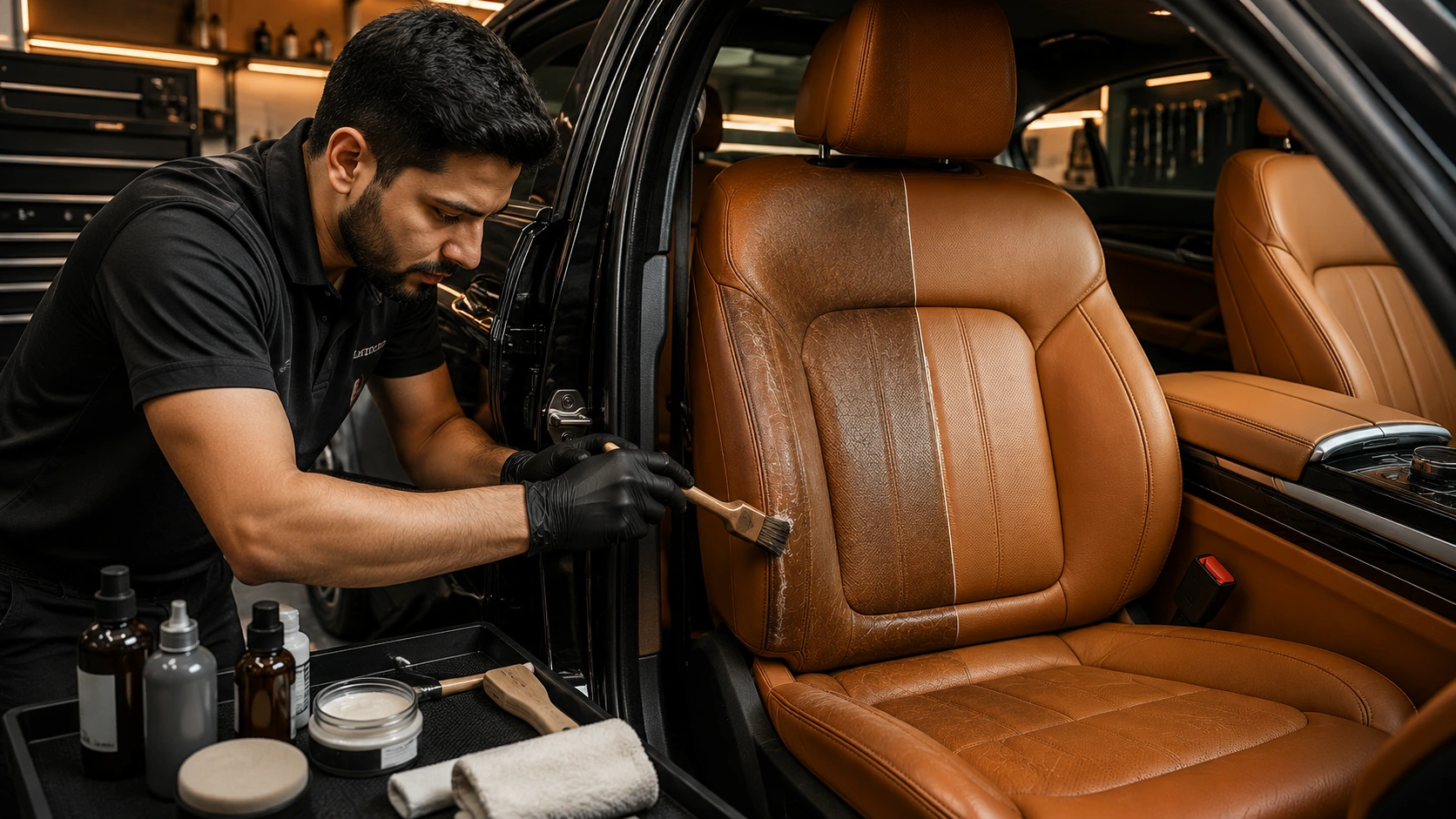
The first stage of any leather restoration service is removing accumulated dirt, oils, and old finish residue. This uses leather-specific cleaners — not generic upholstery cleaners that can strip or damage the leather surface further.
Conditioning follows cleaning, restoring some flexibility to leather that’s become dry and brittle. This step alone often improves the feel of seats significantly before any cosmetic work begins.
Crack Repair and Filling
Cracks in leather are filled using flexible leather filler compounds that move with the material rather than creating a rigid patch that cracks again under use.
For seat bolsters with significant cracking, this is often the most labour-intensive part of a leather restoration service — each crack needs individual attention before the surface can be levelled and refinished.
Colour Matching and Recolouring
Faded leather is recoloured using the vehicle’s original colour code where available. For two-tone interiors or vehicles with custom leather colours, colour matching requires more careful work to blend correctly with unfaded areas.
The recolouring process involves multiple thin coats rather than one heavy application — this is what makes the difference between a finish that looks correct and one that looks like paint on leather.
Stitching Repair
Worn or torn stitching on seat bolsters and steering wheels is repaired or replaced as part of a complete leather restoration service. Matching thread colour and stitch pattern to the original is important for a result that doesn’t look obviously repaired.
Steering Wheel Restoration
Steering wheels take more direct contact than any other leather surface in the car. Shine from worn finish, cracking at the grip points, and discolouration from hand contact are all addressed through the same cleaning, filling, and recolouring process used on seats.
What Leather Restoration Cannot Fix
Severe Structural Damage
If the leather has torn through completely — not just cracked but split with the foam underneath visible — restoration can repair the surface but won’t restore structural integrity in that area. Significant tears may need partial re-upholstery rather than restoration alone.
Foam Degradation Underneath
Restoration addresses the leather surface, not the foam padding beneath it. If seats feel collapsed or lumpy, that’s a foam issue that restoration won’t resolve — though it can still be combined with foam replacement during the same service.
Leather Restoration vs Full Re-Upholstery
A leather restoration service costs considerably less than full re-upholstery and is the right choice for the majority of Dubai vehicles showing UV and heat damage rather than structural failure.
Full re-upholstery makes sense when the leather has torn extensively, when the owner wants a different colour entirely, or when the seat structure itself needs attention beyond the leather surface.
For most cars with cracking, fading, and wear from Dubai’s climate, restoration produces a result that’s visually very close to new at a fraction of the cost — and the same workshop can assess which approach fits your specific car.
Combining Leather Restoration with Other Services
A leather restoration service is often booked alongside other maintenance — making efficient use of the time the car is at the workshop.
While the interior work is underway, a full car service covers the mechanical side — oil, filters, and the inspection items that matter for Dubai’s climate. A qualified car mechanic can assess both interior and mechanical condition in the same visit.
For exterior condition alongside interior restoration, professional car painting addresses UV fading, stone chips, or parking damage — bringing the whole car back to a consistent standard rather than just the parts that show the most.
If the car needs to be collected or dropped off, a mobile car mechanic can handle basic checks at your location beforehand. And for owners dealing with a breakdown unrelated to interior condition, proper roadside assistance ensures the car reaches the workshop safely.
For owners in Al Quoz and surrounding areas looking for a garage near me that handles both interior restoration and full mechanical service under one roof — combining these visits saves time without compromising on either.
FAQ
How long does a leather restoration service take?
Most seat restorations take one to two days depending on the extent of cracking and recolouring required across the interior.
Can cracked leather seats really be restored to look new?
In most cases, yes — flexible filler compounds and proper recolouring techniques restore both appearance and feel even on significantly cracked leather.
Will the restored colour match the rest of the interior?
A proper leather restoration service uses the vehicle’s original colour code where available, blending new finish with unfaded areas for a consistent result.
How often does leather need restoration in Dubai’s climate?
Most vehicles benefit from restoration every 2–3 years depending on parking conditions — covered parking significantly extends the interval.
Is leather restoration cheaper than replacing the seats entirely?
Significantly — restoration typically costs a fraction of reupholstery or seat replacement while addressing the same visible damage.
Conclusion
Dubai’s heat and UV exposure age leather faster than almost anywhere else, but most of that damage is genuinely restorable. A proper leather restoration service brings cracked, faded seats and worn steering wheels back to a condition that looks and feels right — without the cost of full replacement.
Car Garage Expert in Al Quoz offers leather restoration alongside full servicing and repairs for all makes. Book your appointment on WhatsApp or find the workshop on Google Maps.