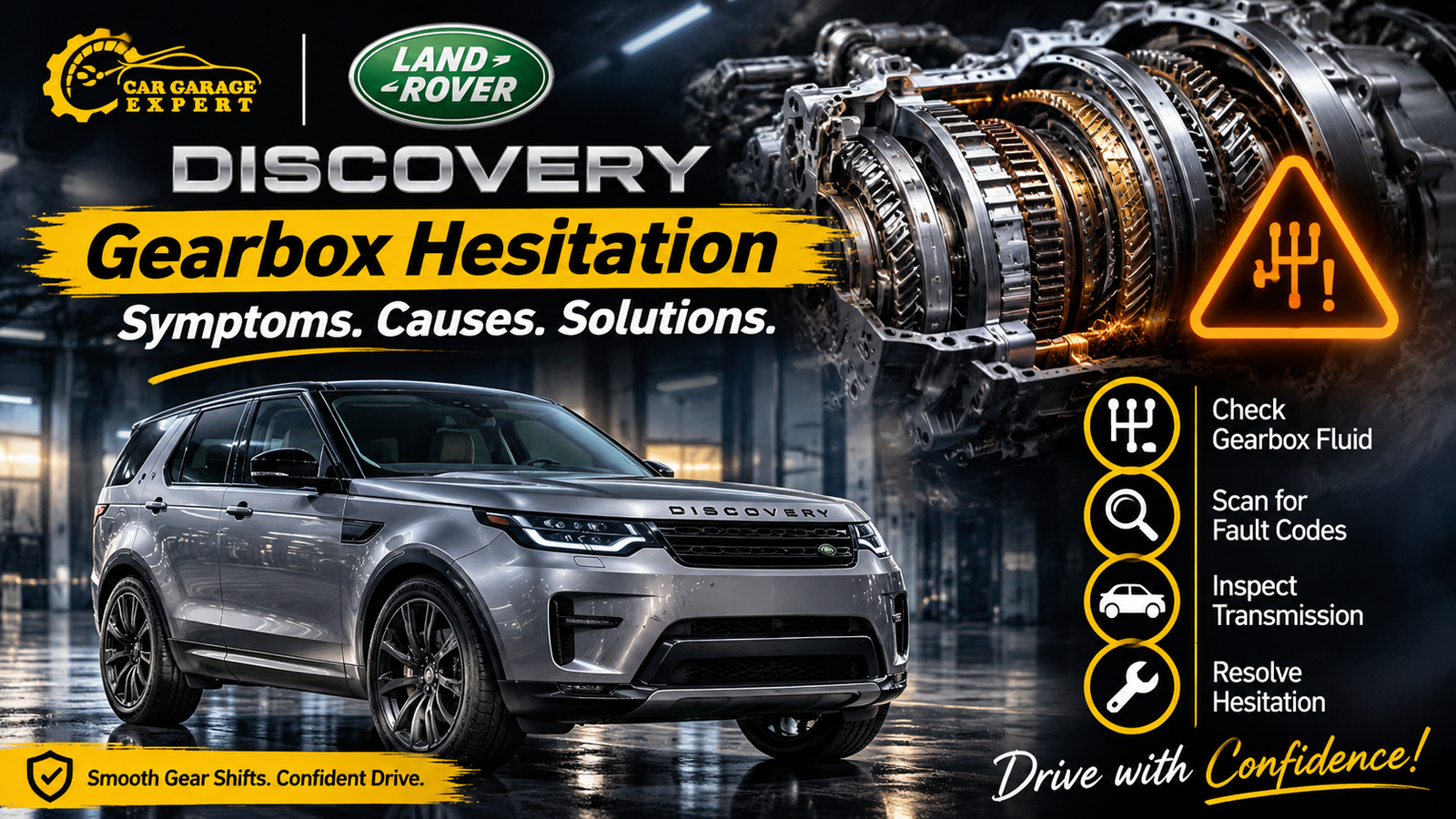
The Land Rover Discovery is well known for its impressive off-road capabilities, refined driving experience, advanced technology, and powerful performance. Whether navigating busy city roads or travelling across the UAE’s highways, this premium SUV offers a comfortable and confident driving experience. However, like other sophisticated vehicles, the Discovery can develop mechanical and transmission-related problems over time. One issue that drivers should never ignore is Land Rover Discovery gearbox hesitation.
Gearbox hesitation occurs when the vehicle takes longer than expected to respond after pressing the accelerator or when the transmission delays shifting between gears. You may notice a pause when moving from Park to Drive, a sudden loss of acceleration, delayed downshifting, or uncomfortable jerking during gear changes. These symptoms can make driving frustrating and may indicate an underlying transmission problem.
In Dubai, where vehicles regularly experience high temperatures, heavy traffic, frequent stop-and-go driving, and extended journeys, maintaining the transmission system is particularly important. Ignoring early warning signs can allow a relatively minor issue to develop into a more expensive repair.
At Car Garage Expert, understanding the possible causes of transmission hesitation is the first step towards finding the right repair solution. This guide explains why your Land Rover Discovery may hesitate, the symptoms to watch for, how professional technicians diagnose the issue, and when to seek specialist gearbox repair in Dubai.
What Is Land Rover Discovery Gearbox Hesitation?
Gearbox hesitation refers to a noticeable delay between the driver’s input and the transmission’s response. In an automatic Land Rover Discovery, the gearbox is designed to select the appropriate gear smoothly according to vehicle speed, engine load, throttle position, and driving conditions.
When everything operates correctly, gear changes should feel controlled and consistent. However, when a transmission component, hydraulic system, electronic control unit, or related engine system develops a fault, the gearbox may struggle to respond at the correct time.
For example, you might press the accelerator to overtake another vehicle, but your Discovery takes several moments to downshift and deliver the expected acceleration. Similarly, selecting Drive may produce a noticeable delay before the vehicle begins moving.
This behaviour should not automatically be considered normal, particularly when it happens repeatedly.
The exact cause depends on your Discovery’s model year, engine, transmission type, maintenance history, and driving conditions. Therefore, an accurate diagnosis is essential before replacing any gearbox components.
Common Causes of Land Rover Discovery Gearbox Hesitation
Several mechanical and electronic problems can contribute to transmission hesitation. Understanding these potential causes helps vehicle owners recognise why professional inspection is important.
1. Low or Degraded Transmission Fluid
Transmission fluid plays an essential role in automatic gearbox operation. It lubricates internal components, helps manage operating temperatures, and provides the hydraulic pressure needed for smooth gear engagement.
When the transmission fluid becomes contaminated, deteriorates, or falls below the correct level, the gearbox may not operate as efficiently as intended.
Common symptoms include:
- Delayed gear engagement.
- Rough or inconsistent gear changes.
- Transmission slipping during acceleration.
- Unusual whining or humming noises.
- Increased transmission operating temperatures.
Dubai’s hot climate makes proper vehicle cooling and maintenance especially important. However, high temperatures alone do not confirm that transmission fluid is responsible for hesitation.
A qualified technician should inspect the fluid condition, check for leaks, and verify the correct fluid level using the manufacturer’s specified procedure.
Using incorrect transmission fluid or following an unsuitable servicing procedure can create additional problems. Always use the specification appropriate for your particular Discovery.
2. Faulty Transmission Control Module (TCM)
Modern Land Rover Discovery models rely on electronic control systems to manage transmission performance. The Transmission Control Module (TCM) communicates with other vehicle systems and helps determine when and how the gearbox changes gears.
If the module receives incorrect information, develops an electrical fault, or operates with outdated or unsuitable software, the transmission may respond unpredictably.
You may experience delayed acceleration, inconsistent shifting, harsh gear engagement, or a gearbox warning message on the dashboard.
In some cases, the problem may involve wiring, connectors, sensors, or communication between control modules rather than the TCM itself.
Professional diagnostic equipment is required to identify relevant fault codes and determine whether software updates, electrical repairs, or component replacement are necessary.
3. Worn Transmission Clutch Packs
Automatic transmissions contain internal clutch assemblies that engage and disengage to provide different gear ratios. These components experience friction during normal operation.
Over time, wear, overheating, poor lubrication, or internal transmission problems can affect clutch performance.
When the clutch packs cannot engage correctly, your Land Rover Discovery may experience:
- Delayed acceleration.
- Engine RPM increasing without proportional vehicle speed.
- Gear slipping.
- Jerking during gear changes.
- Difficulty maintaining smooth acceleration.
Clutch-related problems can become progressively worse if ignored. A transmission specialist may need to perform additional pressure tests, inspect transmission operation, and determine whether internal repairs are required.
4. Faulty Valve Body or Solenoids
The transmission valve body is responsible for directing hydraulic fluid through different passages within the gearbox. It works with electronically controlled solenoids to regulate hydraulic pressure and manage gear changes.
A malfunctioning solenoid, restricted hydraulic passage, or worn valve body can interfere with the timing and pressure required for smooth shifting.
This may result in hesitation when accelerating, delayed gear engagement, rough downshifting, or inconsistent transmission behaviour.
Because these components work together, replacing a solenoid without identifying the actual cause may not resolve the issue.
A professional gearbox inspection can help determine whether the problem originates from an individual solenoid, the valve body, hydraulic pressure, or another transmission component.
5. Torque Converter Problems
The torque converter transfers engine power to the automatic transmission and helps deliver smooth acceleration.
If its internal components or lock-up clutch develop a fault, the driver may notice vibration, shuddering, slipping, or inconsistent acceleration.
Some Land Rover Discovery owners may describe these symptoms as hesitation because the vehicle does not respond smoothly to accelerator input.
A technician should evaluate the torque converter’s operation alongside transmission data, engine performance, and fluid condition before recommending repairs.
6. Software and Transmission Adaptation Issues
Modern automatic transmissions use electronic strategies and learned adaptation values to manage gear engagement and compensate for normal component characteristics.
If the transmission control software is outdated, incorrect, or affected by a relevant fault, shifting behaviour may become inconsistent.
Similarly, adaptation-related issues can sometimes affect shift quality following specific repairs or component replacements.
However, resetting transmission adaptations is not a universal solution. Land Rover service information explains that adaptation procedures should be carried out under appropriate diagnostic conditions rather than performed unnecessarily.
A specialist should first check the applicable fault codes, software information, and transmission condition before deciding whether an update or adaptation procedure is required.
Common Symptoms of Land Rover Discovery Gearbox Hesitation
Recognising early symptoms can help prevent further transmission damage. Although gearbox hesitation does not always indicate a major mechanical failure, repeated changes in driving behaviour deserve attention.
Here are some common warning signs:
Delayed Acceleration
You press the accelerator, but your Discovery takes longer than usual to increase speed. This may indicate delayed downshifting, transmission slipping, an electronic control issue, or an engine-related performance problem.
Jerking During Gear Changes
If the vehicle suddenly jerks when shifting between gears, it may indicate inconsistent hydraulic pressure, worn transmission components, or control system problems.
Delayed Engagement When Selecting Drive or Reverse
A noticeable pause after selecting Drive or Reverse can indicate problems with hydraulic pressure, transmission fluid, internal clutch operation, or electronic controls.
Unexpected Engine RPM Changes
If engine RPM rises without a corresponding increase in vehicle speed, transmission slipping may be occurring. This symptom requires prompt inspection.
Dashboard Transmission Warning
A gearbox fault warning, flashing gear indicator, or other transmission-related message should never be ignored. Some faults may affect driving performance even when a warning light is not continuously displayed.
Unusual Noises or Vibrations
Whining, humming, clunking, and vibration may accompany gearbox hesitation. These symptoms can originate from the transmission or related drivetrain components and should be investigated.
How Dubai’s Driving Conditions Can Affect Land Rover Discovery Gearbox Performance
Dubai offers excellent road infrastructure, but local driving conditions can place additional demands on vehicle systems.
Understanding these environmental factors helps explain why regular transmission maintenance is important for Land Rover owners.
Extreme Summer Temperatures
During Dubai’s summer months, outside temperatures can become extremely high. The transmission cooling system must help maintain suitable operating temperatures while the vehicle is driven.
A malfunctioning cooler, restricted cooling passage, leaking hose, or other cooling-related issue may contribute to excessive transmission temperatures.
Heat should not automatically be blamed for gearbox hesitation, but checking the transmission cooling system is an important part of investigating temperature-related concerns.
Heavy Traffic and Stop-and-Go Driving
Busy roads in areas such as Sheikh Zayed Road, Business Bay, Deira, and Al Barsha can involve frequent acceleration and braking.
Repeated low-speed driving places different demands on the transmission compared with steady highway cruising. Over time, neglected maintenance or existing mechanical problems may become more noticeable under these conditions.
Long-Distance Highway Driving
Regular journeys between Dubai, Abu Dhabi, Sharjah, and other UAE destinations can expose vehicles to extended operating periods.
A transmission that already has fluid, cooling, or internal mechanical problems may show more noticeable symptoms during longer drives.
Off-Road and Desert Driving
The Land Rover Discovery is designed for demanding driving environments. However, frequent sand driving, steep inclines, and challenging terrain can increase drivetrain demands.
Using appropriate driving modes and maintaining the vehicle according to its manufacturer’s requirements can help protect the transmission and related components.
How Professionals Diagnose Land Rover Discovery Gearbox Hesitation
Accurate diagnosis is essential because several different faults can produce similar transmission symptoms.
At Car Garage Expert, a systematic inspection approach is important for identifying the source of gearbox hesitation and avoiding unnecessary component replacements.
1. Initial Vehicle Inspection
The technician begins by discussing the symptoms with the owner.
Important questions include:
- When does the hesitation occur?
- Does it happen when the engine is cold or fully warmed up?
- Is the problem more noticeable during acceleration?
- Does the gearbox hesitate when selecting Drive or Reverse?
- Have any transmission warning messages appeared?
The vehicle is then inspected for visible leaks, damaged components, and other obvious concerns.
2. Computerised Diagnostic Scanning
Professional diagnostic equipment can communicate with the vehicle’s electronic control systems and retrieve stored diagnostic trouble codes.
Technicians examine relevant information from the transmission and associated powertrain systems.
This helps identify possible sensor faults, communication problems, software-related issues, and other recorded abnormalities.
A fault code is a diagnostic clue, not automatic proof that a particular component needs replacement.
3. Transmission Fluid Inspection
The technician checks for fluid leaks and assesses transmission fluid condition and level according to the correct manufacturer procedure.
Low fluid levels, contamination, or signs of overheating can help narrow down the possible cause.
4. Electrical and Sensor Testing
Modern Land Rover transmissions depend on multiple electronic inputs.
Technicians may inspect wiring harnesses, electrical connectors, sensors, power supplies, and control module communication to identify intermittent or permanent electrical faults.
5. Road Testing and Performance Evaluation
A controlled road test allows the technician to reproduce the customer’s complaint under suitable conditions.
The vehicle’s acceleration, gear selection, shift timing, and transmission behaviour can then be assessed.
Combining road-test observations with diagnostic data provides a clearer understanding of the underlying issue.
Best Repair Solutions for Land Rover Discovery Gearbox Hesitation
The correct repair depends on the actual cause of the problem. Replacing the complete transmission is not always necessary, as some hesitation issues can be resolved through targeted repairs.
Transmission Fluid Service
If the problem is related to fluid deterioration or an incorrect fluid level, the technician may recommend a suitable transmission fluid service.
This may involve repairing leaks, replacing specified filters or seals where applicable, and filling the transmission with the correct approved fluid.
Solenoid or Valve Body Repair
When testing identifies a faulty solenoid or valve body problem, the affected component may require repair or replacement.
This can help restore correct hydraulic pressure and improve gear-shifting behaviour.
TCM Software Diagnosis and Repair
If an applicable software issue or electrical fault is identified, technicians may recommend the appropriate software update, wiring repair, or control module replacement.
Any programming or configuration procedure should follow the manufacturer’s requirements.
Torque Converter Repair
If testing confirms torque converter problems, the technician may recommend a suitable repair or replacement based on the extent of the damage.
Internal Gearbox Repair
When internal clutch packs, bearings, or other mechanical components are worn or damaged, more extensive transmission work may be required.
The gearbox may need to be removed and inspected to establish the extent of the damage and determine the most appropriate repair.
Why Choose Car Garage Expert for Land Rover Discovery Gearbox Hesitation in Dubai?
Choosing an experienced garage is essential when dealing with a sophisticated vehicle like the Land Rover Discovery.
Transmission systems combine mechanical, hydraulic, and electronic components, so identifying the actual fault requires a systematic approach.
Car Garage Expert focuses on helping Dubai motorists understand their vehicle problems and make informed repair decisions.
When investigating Land Rover Discovery gearbox hesitation, important service considerations include:
- Professional Diagnostics: Identifying transmission-related fault codes and evaluating associated vehicle systems.
- Experienced Technicians: Understanding the mechanical and electronic systems used in modern Land Rover vehicles.
- Accurate Fault Identification: Investigating the underlying reason for hesitation instead of relying on guesswork.
- Appropriate Repair Solutions: Recommending repairs based on inspection results and the vehicle’s condition.
- Preventive Maintenance Guidance: Helping owners understand the maintenance requirements of their specific Discovery model.
Whether your Discovery experiences delayed acceleration, rough gear changes, or unusual transmission behaviour, arranging an inspection early can help you avoid unnecessary complications.
How Much Does Land Rover Discovery Gearbox Repair Cost in Dubai?
The cost of repairing gearbox hesitation depends on several factors, including the model year, transmission type, fault severity, replacement parts, and labour requirements.
For example, a transmission fluid leak or electrical connection problem may require a relatively straightforward repair. In contrast, damaged clutch packs, a faulty torque converter, or extensive internal gearbox damage may require more time and specialised components.
The following factors can influence the final repair estimate:
- Vehicle model year and engine configuration.
- Type of automatic transmission installed.
- Condition of transmission fluid.
- Availability and cost of replacement components.
- Whether the gearbox requires removal or internal rebuilding.
- Additional electrical or software-related repairs.
It is best to obtain a proper diagnostic assessment before accepting a repair quotation.
A reliable garage should explain the identified fault, recommended repair, replacement parts, and expected labour costs before starting major transmission work.
Preventive Maintenance Tips to Avoid Gearbox Hesitation
Preventive maintenance can help reduce the likelihood of unexpected transmission problems and support long-term vehicle reliability.
Consider the following practices:
- Follow the Correct Service Schedule: Maintain your Discovery according to the manufacturer’s requirements for its particular model and transmission.
- Use Approved Transmission Fluid: Always use the correct fluid specification rather than choosing a substitute based only on price.
- Check for Fluid Leaks: Arrange an inspection if you notice fluid underneath the vehicle.
- Maintain the Cooling System: Ensure the transmission cooling components and associated systems are functioning correctly.
- Avoid Ignoring Warning Messages: Have transmission-related dashboard alerts investigated promptly.
- Drive Smoothly: Avoid unnecessary aggressive acceleration, especially when the transmission is showing signs of trouble.
- Arrange Professional Inspections: Have unusual gear changes, vibrations, or delayed engagement checked before they become more serious.
Regular maintenance is particularly valuable for vehicles frequently driven in Dubai’s demanding traffic and temperature conditions.
Conclusion
Experiencing Land Rover Discovery gearbox hesitation can affect driving comfort, acceleration, and overall vehicle reliability. Whether the issue is caused by degraded transmission fluid, a faulty solenoid, electronic control problems, torque converter damage, or worn internal components, identifying the actual cause is essential for an effective repair.
Dubai’s demanding driving environment makes regular vehicle maintenance and timely gearbox inspections especially important. Ignoring delayed gear engagement, rough shifting, slipping, or unusual transmission noises can increase the risk of further damage.
The best approach is to seek professional diagnosis as soon as you notice repeated transmission hesitation. Avoid guessing the cause or replacing expensive components without proper testing.
Car Garage Expert can help you take the right steps towards identifying and resolving your Land Rover Discovery transmission concerns in Dubai. Arrange a professional inspection, understand the condition of your gearbox, and choose a repair solution based on accurate diagnostic findings.
Frequently Asked Questions (FAQs)
1. Why does my Land Rover Discovery hesitate when accelerating?
Land Rover Discovery gearbox hesitation during acceleration can result from low or degraded transmission fluid, faulty solenoids, torque converter problems, worn internal clutch components, or electronic control issues. Engine-related problems can also produce similar symptoms. A professional diagnostic inspection is necessary to identify the exact cause.
2. Is it safe to drive a Land Rover Discovery with gearbox hesitation?
Driving with gearbox hesitation is not recommended if the symptoms are persistent or worsening. Transmission slipping, delayed engagement, overheating, or sudden loss of acceleration can create safety concerns and lead to additional damage. If a transmission warning appears or the vehicle behaves unpredictably, stop safely and arrange professional assistance.
3. Can Dubai’s hot weather cause Land Rover Discovery gearbox problems?
High ambient temperatures can increase the demands on vehicle cooling systems. If the transmission cooler or associated components are not functioning correctly, excessive transmission temperatures may contribute to operational problems. However, gearbox hesitation should not automatically be attributed to Dubai’s climate without proper diagnosis.
4. How much does it cost to fix Land Rover Discovery gearbox hesitation in Dubai?
Repair costs depend on the underlying fault, transmission model, replacement parts, and labour involved. Minor electrical or fluid-related repairs generally involve less work than internal gearbox repairs or transmission replacement. A diagnostic inspection is the best way to obtain an accurate quotation.
5. How can I prevent gearbox hesitation in my Land Rover Discovery?
Follow the correct transmission maintenance schedule, use manufacturer-approved fluid, check for leaks, maintain the cooling system, and investigate unusual shifting behaviour promptly. Professional inspections can help identify developing problems before they become more expensive to repair.
Visit us in our Al Quoz, Dubai branch or visit Car Garage Expert