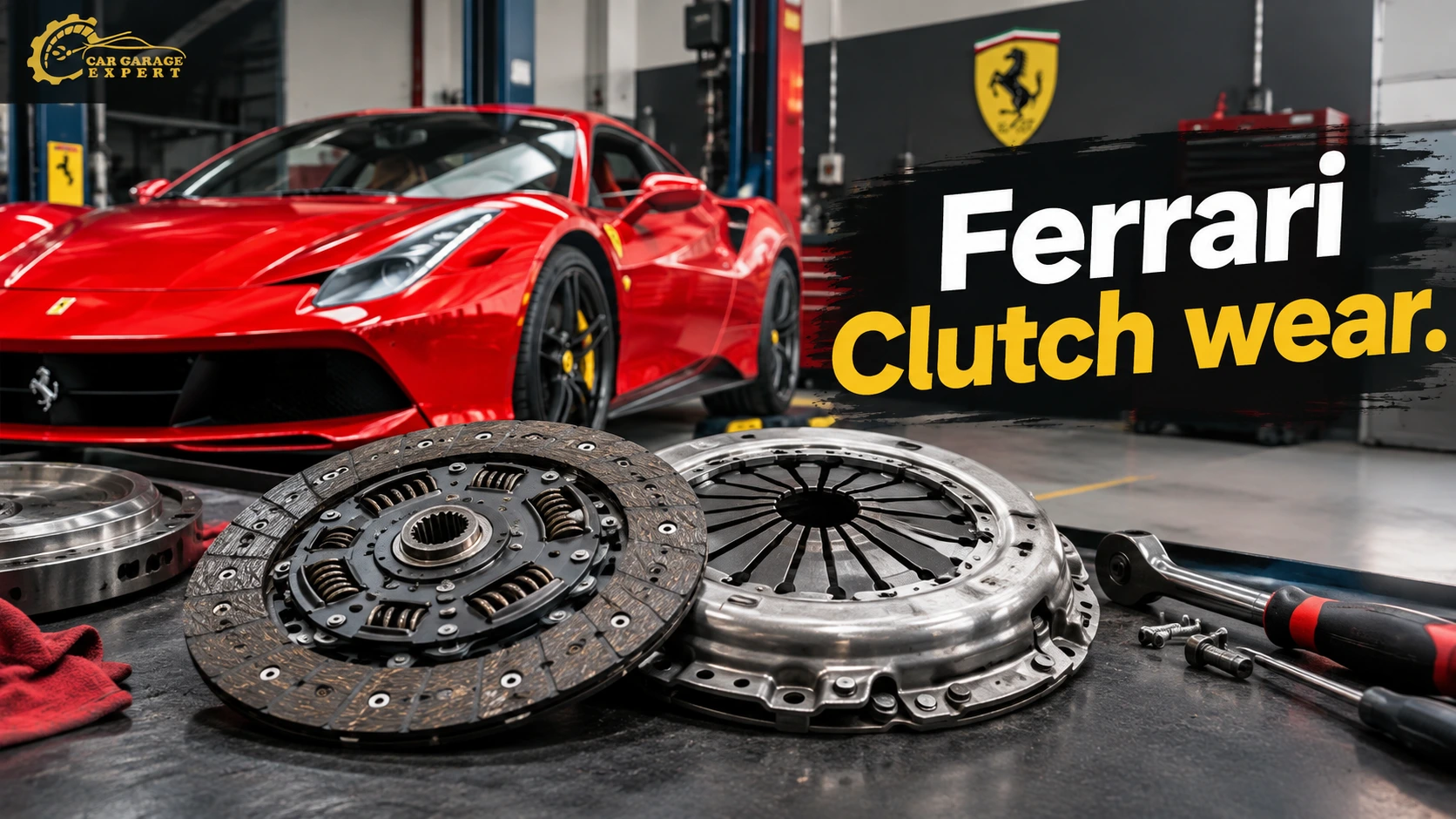
Most Ferrari owners don’t notice clutch trouble the day it starts. It creeps in — a little hesitation pulling away, a faint burning smell after sitting in traffic on Sheikh Zayed Road, revs that climb a touch faster than they should. By the time it’s obvious, the flywheel is often already paying the price too.
This guide walks through the real signs of Ferrari clutch wear, why Dubai driving speeds it up, and how to diagnose it properly instead of guessing.
Ferrari Clutch Wear:
Ferraris wear out their clutch slowly, and then all at once. You will feel slippage when accelerating, judder when pulling away or a burning smell after creeping in traffic. Ferrari’s F1 and dual-clutch systems monitor their own wear and tear through the gearbox control unit; thus, the real diagnosis should begin with a computer read, not a quote over the phone. And if left alone, the slipping clutch will drag the flywheel and gearbox seals into the issue too. At Car Garage Expert in Al Quoz we start by reading the wear values and checking what is really going on underneath and then planning the repair – never the other way around.
What’s Covered in This Guide
- Why Ferrari Clutch Wear the Way They Do
- Warning Signs You’ll Feel Behind the Wheel
- What the Car’s Own Computer Is Telling You
- Signs That Only Show Once the Gearbox Is Off
- Why These Three Sources Sometimes Disagree
- Which Ferrari Models Chew Through Clutches Fastest
- Why Dubai Traffic and Heat Make It Worse
- How a Car Garage Expert Diagnoses and Fixes It
- Habits That Actually Slow Clutch Wear Down
- FAQs About Ferrari Clutch Wear
- Conclusion
Why Ferrari Clutch Wear the Way They Do
A Ferrari clutch doesn’t wear from driving. It wears from slipping—that brief moment when the friction plate is partway between “disengaged” and “fully locked” against the flywheel. Cruising on the highway barely touches it. Launch control, hill starts, and inching forward in traffic do almost all the damage.
This is where most owners mess up. Two identical 458s may be 40,000 miles apart in the clutch condition, because the mileage was never really the number that counted. What matters is how many times the plate has slipped and caught again. An automobile driven lightly on weekends may still be good after 50,000 miles. A car conducting the daily Business Bay crawl can need attention before 15,000 kilometers.
Warning Signs You’ll Feel Behind the Wheel
These are the things owners actually notice — long before a warning light comes on, if one ever does.
Slipping Under Hard Acceleration
The revs climb faster than the road speed does. It’s usually most obvious in third or fourth gear under heavy throttle, because that’s where the clutch is carrying the most torque.
A Judder When You Pull Away
A vibration through the pedal and floor as the car first moves. On F1-equipped cars, it can feel like the whole car is shuddering as it takes up drive. This usually isn’t about a thin plate—it’s more often oil contamination or a warped flywheel face.
Harsh or Hesitant Gear Engagement
Single-clutch F1 cars can feel clunky dropping into first from neutral. Dual-clutch cars tend to get jerky at low speed while staying smooth at higher speeds, which throws a lot of owners off — the car feels fine on the motorway and awful in the car park.
A Burning Smell After Slow Traffic
Sharp and acrid, usually right after a stretch of stop-start driving. This smell tends to show up before you’d notice any real drop in performance, so it’s worth paying attention to.
Rolling Back on an Incline
The car needs more throttle than it used to hold its position, or it creeps backward slightly before catching. Small, but a genuine early sign.
A slipping clutch rarely stays contained. The heat it generates soaks into the bellhousing and speeds up seal wear nearby, so it’s worth having the wider driveline looked at whenever clutch symptoms show up — not just the clutch in isolation.
What the Car’s Own Computer Is Telling You
Here’s something a lot of owners don’t realize: Ferraris measure their own clutch wear. Using factory-level tools like SD3 or Leonardo, a technician can pull numbers that a generic scanner can’t read.
- Clutch wear percentage — the transmission control unit tracks plate position over time and reports it as a remaining-life figure.
- Point of Incipient Sliding (PIS) — the exact point where the clutch begins transmitting drive. As the plate wears thinner, this shifts, and watching it drift over time is one of the most reliable ways to catch wear early on F1 cars.
- Actuator travel — confirms whether the actuator reaches full stroke or falls short.
- Stored overheat events — a log of every time the clutch hit its thermal limit, which tells a technician a lot about how the car has actually been driven.
With this data, a shop has no excuse to guess. Any Ferrari clutch wear diagnosis worth paying for starts with pulling these values, not with a quote based on symptoms alone.
Signs That Only Show Once the Gearbox Is Off
Some evidence isn’t visible until the transmission comes off the back of the engine.
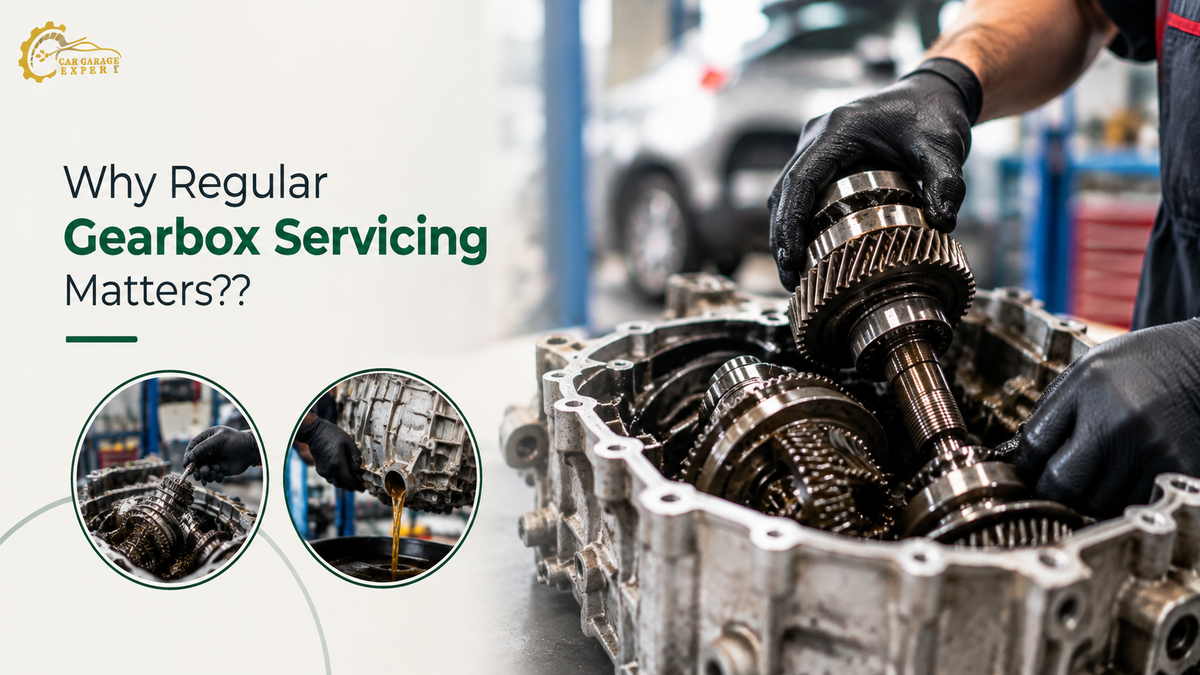
Technicians measure friction material thickness directly against factory tolerances. The flywheel surface gets checked for heat spotting, bluing, or scoring—any of which will cause judder even after a brand-new plate goes in. Technicians also check for oil contamination from a leaking seal, the condition of the release bearing, and, in cars left standing for long stretches, corrosion bonding between the plate and flywheel.
This step is more important than most people think. Early clutch failure almost always has a reason. Put a new plate on without fixing the oil leak that ruined the old one, and you’ll get the same problem all over again.
Why the Three Sets of Signs Often Disagree
When trying to figure out what’s wrong with a Ferrari clutch, the most common mistake is to take any of these pieces of evidence as gospel.
Even if the car’s clutch says it has 60% life left, it will still slip badly because the friction surface is oily and not thin. A car can show that its tires have little life left but still drive perfectly. This is because the wear number is based on a stored calibration that was never reset after a fix. Even if the clutch is almost brand new, the car can judder a lot because the flywheel was used before and not resurfaced.
The right order is to physically check, then read the recorded values to see if they match up. The physical inspection wins when the three of them don’t agree.
The Ferrari Models Hardest on Their Own Clutches.
| Clutch type | Typical models | Wear behaviour |
| Single-plate F1 | 360 F1, F430 F1, 599 F1, 612 F1 | Wears fastest; tracked by diagnostics |
| Dual-clutch (DCT) | 458, California T, F12, FF, 488, F8, Roma, 812 | Lasts longer, but the assembly is expensive |
| Hybrid DCT | SF90, 296 | Electric assist eases low-speed load |
A clutch job on an older 430 is a completely different scope of work from one on an 812 Superfast or an F8 Tributo, so model context matters before anyone quotes a number.
Why Dubai Traffic and Heat Make It Worse
Three things about driving here specifically shorten clutch life.
Traffic density comes first. Stop-start crawling on Sheik Zayed Road multiplies engagement cycles far beyond what these cars were really designed around, and it’s the single biggest reason Ferrari clutch wear shows up early in this city.
Ambient heat is the second factor. A clutch sheds heat into the flywheel and bellhousing, and when that entire area is already sitting at 45°C, every slip event runs hotter and glazes the friction surface faster than it would in a cooler climate.
Storage plays a role too. Cars left parked for months can develop light corrosion between the plate and flywheel, and the first drive after a long rest can tear away friction material that would otherwise have lasted. It’s part of why regular fluid checks through a proper car service package in Dubai matter even on low-mileage cars that barely leave the garage.
How Car Garage Expert Diagnoses and Fixes It
We follow the same order every time, because skipping a step is how a clutch job turns into a comeback.
First, a full diagnostic read and a clutch wear percentage, PIS drift, and any stored faults. Second, confirming the actual cause, since a failing hydraulic pump can mimic clutch slip on a perfectly healthy plate. Third, once the transmission is off, physically inspect the flywheel, seals, and release mechanism. Fourth, replace the clutch assembly and resurface or replace the flywheel as the measurements call for. Fifth, fixing any oil leak feeding into the bellhousing before anything goes back together.
The last step is the one shops skip, and it matters most: running the clutch self-learning and calibration procedure with proper factory-level tooling. Skip it, and the transmission control unit keeps working off old values, which means harsh engagement and a new clutch that can wear out again within months.
If your car needs picking up rather than being driven in on a slipping clutch, our mobile car mechanic service can collect it, and if you’re stuck roadside with a car that won’t engage at all, roadside assistance in Dubai can recover it safely. While the gearbox is out, it’s also a good time to do any bodywork touch-ups through our car painting service, so the car goes back on the road looking as good as it drives.
Habits That Actually Slow Clutch Wear Down
A few small changes make a real difference over the car’s life.
Use the brake to hold position on inclines and in queues, not the clutch. Leave bigger gaps in heavy traffic so the car can fully engage rather than creeping at walking pace. Let engagement finish before adding throttle on pull-away. Go easy on launch control — each launch eats a disproportionate share of clutch life. Drive the car regularly, since monthly use prevents corrosion bonding and keeps seals conditioned. And fix oil leaks the moment they’re spotted, because a rear main seal leak will take out a healthy clutch far sooner than normal wear would.
Get It Checked Before It Gets Expensive
Ferrari clutch wear rarely announces itself with a single dramatic moment. It’s slipping under load, a judder on pull-away, harsh engagement, or a burning smell after traffic — small signs that add up. The difference between a routine repair and an expensive one usually comes down to how early you look at it.
Car Garage Expert runs a fully equipped Ferrari specialist workshop in Al Quoz, Dubai, with the factory-level diagnostic tools this work needs. If any of these signs sound familiar, message us on WhatsApp or find us on Google Maps. You can also book a full inspection directly through Car Garage Expert, or search for a specialist garage near me in Dubai and ask what diagnostic equipment they use before booking in.
FAQs About Ferrari Clutch Wear
Q1: Why does my Ferrari clutch slip?
Slipping usually means the friction plate is thin, oil-contaminated, or the clutch pressure has dropped. A diagnostic read confirms the cause before you replace any parts.
Q2: Is my Ferrari clutch already worn out?
Not necessarily. Slipping, judder, or a burning smell after traffic are early warning signs, but the only way to know for sure is a proper diagnostic read paired with a physical check.
Q3: What causes Ferrari clutch wear in Dubai?
Stop-start traffic, high ambient heat, and long periods of low use all speed up Ferrari clutch wear here far more than they would in a cooler, less congested city.
Q4: Can a worn clutch damage the flywheel?
Yes. Heat spotting, blueing, and scoring on the flywheel are common once a clutch has been slipping for a while, and a scored flywheel causes judder even with a brand-new plate fitted.
Q5: How much does a Ferrari clutch replacement cost?
It depends on the model and clutch type, and whether the flywheel or seals also need attention. A proper quote should always follow a diagnostic inspection, not come before one. Contact our car mechanic team for an accurate estimate for your model.
In conclusion,
One thing about a Ferrari clutch wear is that it rewards the owner who catches it early and punishes the owner who waits. Slipping, judder, burning smell after traffic. None of these repair themselves, and driving through it usually turns a clutch job into a clutch-and-flywheel task.
If any of this seems familiar, take it to people who really expertise in exotics, not a general garage assuming from experience with conventional cars. The Car Garage Expert in Al Quoz has the factory-level diagnostic instruments required for this kind of work so the repair is designed around real data and not assumptions. It’s the smart first call to make for any Ferrari owner in Dubai who wants the job done right the first time.Book your inspection today.