
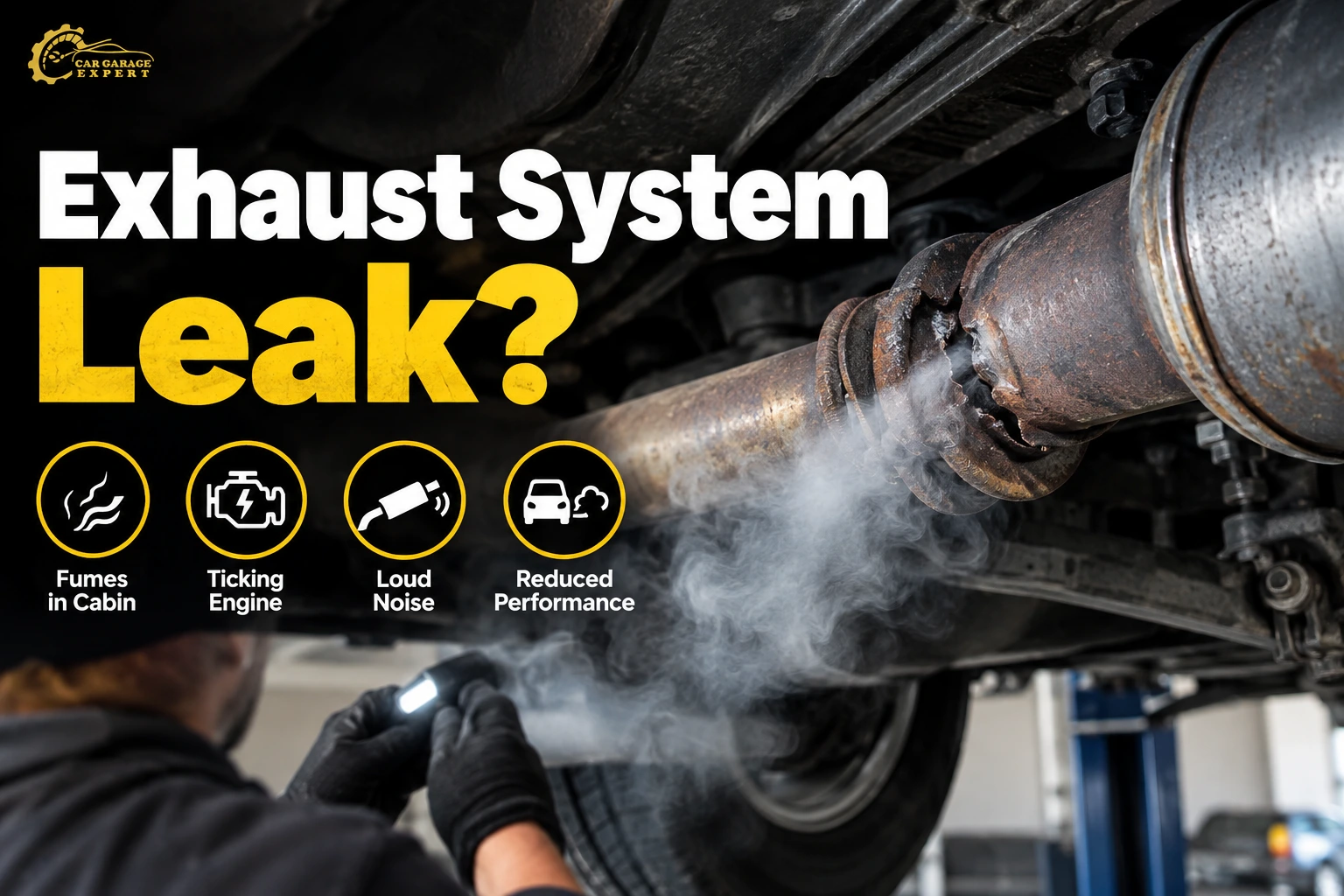
A new noise is often the first sign of an exhaust system leak. When you start the car, you might hear ticking, hissing, or a deep roar that gets louder as you speed up. Other signs include a burning or fuel smell, fumes inside the car, a check engine light, and worse gas mileage. Leaks can start with failing gaskets, rusty lines, or loose clamps. This goes faster because of the heat in Dubai, speed bumps, and parking stairs. Because exhaust gas contains carbon monoxide, fumes inside the car are dangerous. For about AED 250 to 1,500, most small leaks can be fixed in a few hours.
What an Exhaust System Leak Is and Why It Matters
Hot, dangerous engine gases flow out the back of the car through the exhaust. It goes from the engine’s exhaust system to the silencer and tailpipe, going through the catalytic converter and pipes. Gaskets and clamps are used to seal the joints between these parts.
An exhaust system leak is any hole in the system where gas can escape before the tailpipe. It may be loud, hot, and full of carbon monoxide. The most dangerous leak is near the front of the car, where gas can enter the cabin through the AC grille.
Front Leaks and Rear Leaks Are Not the Same
A front leak near the engine can hurt power, sensors, and airflow inside. A rear leak is usually just noise from a leak near the silencer. Both need fixing, but the front leak needs it sooner.
8 Warning Signs Your Exhaust Is Leaking
Most car exhaust system leak signs are things you hear or smell. Note when the sign appears, because that helps find the leak.
Ticking Noise That Fades as the Engine Warms
A ticking sound when the engine is cold is a sure sign of an exhaust pipe leak. When cold metal hits something, it can leave a small hole that is filled with gas every time the engine turns. The ticking stops and the gap closes as the manifold heats up and expands.
Hissing or Puffing From Under the Car
If your exhaust joints hiss, it means that gas is leaking out through a small hole or a worn seal. It sounds worst when the windows are down, and the car is not moving. Underground parking lots are often noisier because sound bounces off the walls.
Loud Roar When You Accelerate
A deep, loud exhaust noise that grows with engine speed points to a bigger hole. It is often a rusted pipe, a broken flex pipe, or a muffler exhaust leak. The car may sound like it has a sports exhaust it never had.
Exhaust Fumes Inside the Car
The worst sign is smelling exhaust fumes inside the car. Let the air out of the car and get it checked out right away. Carbon monoxide can cause headaches, dizziness, or falling asleep while driving.
Burning Smell After Driving
A burning smell from the exhaust area may mean hot exhaust gas is leaking near plastic, wires, or rubber. It might stand out the most when you park after a long drive. Look forLook for melted covers or black plastic near the engine.
Check Engine Light Comes On
A leak before the oxygen sensor lets outside air into the exhaust. The sensor reads too much oxygen, and the engine computer adjusts the fuel. That often turns on the check engine light with lean or sensor codes.
Worse Fuel Economy and Less Power
Wrong sensor readings make the engine run less efficiently. You may notice poor fuel efficiency and reduced engine performance, mostly when overtaking. Turbo cars can lose boost if the leak is near the turbo.
Rattles, Black Soot, or a Hanging Pipe
Check the ground under the car for black soot around the joints. Gas is escaping right where the soot marks are. If your pipe hangs low or rattles over speed bumps, the hanger or pipe may be broken.
Why Exhaust Systems Leak in Dubai
Exhaust leaks have a few common causes. Dubai driving speeds up most of them.
Heat Cycles Crack Manifolds and Gaskets
The exhaust manifold can pass 600°C under load and cool back down when you park. Thousands of heat cycles can crack cast iron and burn out gaskets. In a 45°C summer, parts sit hotter for longer, so this happens sooner. Exhaust gasket failure is one of the most common front-end leaks.
Speed Bumps, Curbs and Steep Ramps
Low cars often scrape the exhaust on speed bumps and car park ramps. Each hit can dent a pipe, crack a weld, or bend a hanger. A bent pipe then pulls on the joints until one opens up.
Rust From Short Trips and Coastal Air
As fuel is burnt, all engines make water. On short trips, the exhaust never gets hot enough to dry out, so water builds up inside the silencer. Hazy, salty air can also get into cars that are parked near the water. The pipes can rust inside and out.
Worn Flex Pipes
Many front-wheel-drive cars use a woven flex pipe to absorb engine movement. Worn engine mounts make the engine rock more, and the flex pipe tears. A torn flex pipe makes a loud rasp and is a very common exhaust leak under the car.
Broken Studs and Loose Clamps
Manifold studs can snap from heat, which leaves the manifold loose on one corner. Clamps also loosen over time. Cheap past repairs with the wrong clamps or no gaskets often leak again within months.
Exhaust Leak Signs Compared: Where It Is and How Urgent
Use this table to match what you notice with the likely location. The last column tells you how fast to act.
| What you notice | Likely leak location | How urgent |
| Ticking on cold start that fades | Exhaust manifold or its gasket | Within 1 to 2 weeks |
| Fumes or smell inside the cabin | Front of the system near the engine | Same day, stop driving if dizzy |
| Hissing at idle | Gasket or small hole at a joint | Within a week |
| Loud roar when accelerating | Flex pipe, rusted pipe or muffler | Within a week |
| Check engine light with lean codes | Leak before the oxygen sensor | Within a week |
| Rattle or hanging pipe | Broken hanger or bracket | Within a few days |
The Cold-Start Listening Test You Can Do at Home
You can narrow down an exhaust leak before you pay for a check. This test uses the fact that metal expands when hot.
Listen at the Bonnet on a Cold Engine
Do this first thing in the morning after the car has sat all night. Open the bonnet and start the engine. A sharp tick near the engine that fades within 5 to 10 minutes usually means a manifold leak.
Walk to the Back of the Car
With the engine idling, walk slowly from the front wheel to the tailpipe on one side. Listen for where a hiss or puff gets loudest. Have someone rev the engine gently to 2,000 rpm while you listen.
Look for Soot With a Torch
Run a torch along the pipes after the car has cooled down. Black soot rings around a joint or clamp show that there is a leak. Rust may have eaten through the silencer if you see white powder.
Keep Your Hands Away From the Exhaust
Never feel for a leak with your hand on a running engine. Exhaust gas and pipes can cause serious burns in seconds. Never run the engine in a closed garage either.
How a Workshop Finds an Exhaust Leak
Since exhaust noise moves, a leak may sound like it is in a different place. Put the car on a lift and check the whole exhaust system. This is the right way to inspect it. A trained car mechanic then uses tests to find the exact spot.
Tests Used to Pinpoint the Leak
Each test confirms a different part of the system.
Visual Inspection on a Lift
The technician checks every pipe, joint, hanger, and heat shield. The technician notes soot marks, rust holes, cracks, and broken studs. Hangers are checked for tears that let the pipe knock against the body.
Smoke Test
A machine pushes harmless smoke into the exhaust with the engine off. Smoke comes out wherever there is a gap. This shows small leaks that are hard to hear.
Fault Code and Sensor Data Scan
A scan tool can read the engine computer. There may be a leak near the front if you see lean codes or strange readings from the oxygen sensor. You can see in real time whether the fuel trims return to normal after the repair.
Cold Engine Listening Check
For manifold leaks, the technician listens to the engine when it’s cold. A mechanic’s stethoscope helps locate the exact cylinder where the ticking starts.
How an Exhaust Leak Is Repaired
The fix depends on where the leak is and how bad the damage is. Exhaust system leak repair usually follows these steps.
- Confirm the leak point. The inspection and tests show which part has failed.
- Free the old parts. Soak and heat rusted bolts and studs so they come out without snapping. Drill out broken studs and replace them.
- Replace gaskets and seals. Fit a new gasket at the manifold, the catalytic converter flange, or any leaking joint.
- Repair or replace the damaged section. Small holes in good pipe can be welded. Cut out and replace badly rusted pipe, torn flex pipe, or a rotted muffler.
- Replace hangers and clamps. New rubber hangers stop the pipe from moving and cracking again.
- Check the sensors. We check oxygen sensors and replace them if heat damage or incorrect readings cause issues.
- Clear codes and test drive. Clear the codes, then test-drive the car to check for noise, smell, and warning lights.
Why Exhaust Paste and Wraps Are Only Temporary
You can temporarily cover a small hole with exhaust paste and bandage wraps. When it gets hot, they break and fall off in a few weeks. They also hide the real issue, which can make the leak worse.
What Happens If You Ignore an Exhaust Leak
An exhaust system leak only gets bigger. Heat and gas keep burning the edges of the gap.
- Carbon monoxide can enter the cabin. It has no smell and can cause headaches, drowsiness, and more serious effects.
- Nearby parts get damaged. Hot gas can melt wiring, plastic covers, and rubber parts.
- The catalytic converter and sensors suffer. Over time, the wrong fuel mixture can damage the converter, a repair that often costs thousands of dirhams.
- Fuel costs rise—a leak before the sensor can make the engine burn more fuel.
- You may fail inspection. A loud or leaking exhaust can fail the vehicle test at registration renewal.
Can You Drive With a Leaking Exhaust?
You can usually drive a short distance with a small leak at the back of the car. Book a repair within a week and keep the windows slightly open. Stop driving if you smell fumes inside the cabin, feel dizzy or sleepy, or the pipe is dragging on the road. In those cases, call roadside assistance instead of continuing to drive. If you are not sure how serious it is, Car Garage Expert can check the system before the leak gets worse.
How Long Exhaust Leak Repair Takes
It takes thirty to sixty minutes to check an exhaust system. Replacing a gasket, clamp, or hanger takes about 1 to 2 hours. Welding a pipe or installing a new silencer or flex pipe usually takes 1 to 3 hours.
Most manifold seal jobs take 3 to 6 hours. V6 and V8 engines and broken studs can take all day. Some parts for European cars may take a day or two to arrive.
What Exhaust Leak Repair Costs in Dubai
Exhaust leak repair cost depends on where the leak is and what part has failed. These are typical Dubai market ranges, including labor.
| Service | Typical Dubai price |
| Exhaust system inspection | AED 100 to 250 |
| Joint gasket or clamp replacement | AED 250 to 700 |
| Pipe welding repair | AED 150 to 500 |
| Flex pipe replacement | AED 300 to 900 |
| Muffler replacement | AED 500 to 1,800 |
| Manifold gasket replacement | AED 500 to 1,500 |
| Cracked manifold replacement | AED 1,200 to 4,000 |
Dubai Advice: RTA Tests, Speed Bumps and Car Park Ramps
Dubai roads and rules bring a few local points to keep in mind.
Fix Leaks Before Your RTA Test
Cars in Dubai need a vehicle test to renew registration once they are a few years old. An exhaust leak can cause emissions or noise failure. Get the exhaust checked a week or two before your test date.
Watch the Underground Ramps
Mall and tower ramps that are too steep often scrape low exhausts. A hard scratch can break a weld or tear a hanger. Move slowly up and down the ramps, and if you hear a loud knock, check under the car.
Do Not Ignore a Loud Exhaust
Dubai Police fine cars that make excessive noise. A leaking exhaust can sound like an illegally modified one. Fixing the leak avoids both the noise and the risk of a fine.
Notice Fumes When You Switch to Fresh Air
Many Dubai drivers keep the AC on recirculate, which can hide a front leak for a while. If you smell fumes after switching to fresh air, the leak is reaching the AC intake. Get it checked the same day.
Why Choose Car Garage Expert for Exhaust System Leak Repair in Dubai
Car Garage Expert is a strong choice for drivers in Dubai who suspect an exhaust system leak. The workshop finds the exact leak point before replacing any parts.
Leak Located With Lift Inspection and Smoke Test
Exhaust noise can travel along the pipes. By lifting the car and using a smoke test, we can find the real source. The driver pays for the part that didn’t work, not a guess.
Repairs Done With Proper Parts, Not Paste
We fix leaks with new gaskets, studs, hangers, and pipe sections. We don’t use temporary paste and wraps as a final repair. That keeps the same leak from coming back after a few weeks.
Sensors and Codes Checked After the Fix
We check oxygen sensor readings and fault codes after the repair. This confirms the engine is running properly and the check engine light stays off.
Easy to Reach in Al Quoz
The workshop sits in Al Quoz, a short drive from Sheik Zayed Road and Al Khail Road. Drivers with a noisy or leaking exhaust can get there without a long trip.
FAQ’s
These are the questions drivers most often search for about exhaust leaks.
Is an exhaust leak dangerous to drive?
It can be. A leak near the front can let carbon monoxide into the cabin. A leak at the back is mostly noise but still needs fixing.
What does an exhaust leak sound like?
It often sounds like ticking, hissing, or puffing. Bigger leaks make a deep roar that gets louder when you speed up.
Can an exhaust leak cause a check engine light?
Yes. A leak before the oxygen sensor lets in extra air and confuses the sensor. That often sets lean or sensor fault codes.
How much is exhaust leak repair in Dubai?
Small gasket and clamp jobs cost about AED 250 to 700. Muffler and manifold work can cost AED 500 to 4,000.
Why does my exhaust tick when cold?
A small crack or gap in the manifold is open when the metal is cold. It closes as the metal heats up, so the ticking fades.
Will an exhaust leak affect fuel economy?
Yes, if the leak is before the oxygen sensor. The engine gets wrong readings and can burn more fuel.
Related Services for Exhaust Problems
Exhaust leaks often come with other engine or underbody issues. These services are commonly booked alongside them:
- Oxygen sensor testing and replacement
- Catalytic converter checks
- Engine mount replacement to stop the exhaust from flexing
- A mobile car mechanic visits to check a loud exhaust before you drive far.
- Car painting for rear bumpers stained or blistered by exhaust heat
Drivers looking for a garage near me in Al Quoz can have all of these handled at one workshop.
Book an Exhaust Check Before the Fumes Reach the Cabin
A small exhaust leak is cheap and quick to fix. Left alone, it can damage sensors and let fumes into the car. If you hear ticking, hissing, or a new roar, book a check this week. Car Garage Expert can inspect the exhaust, show you the leak, and quote the repair before any work starts. Send a message on WhatsApp or get directions on Google Maps.