Most Volkswagen water pump leaks are caused by a cracked plastic pump housing that is cracked, a worn shaft seal, or a gasket that has failed. Many TSI engines use a plastic pump and thermostat module, including those in the Golf, Jetta, Passat, and Tiguan. Heat can warp and crack it, and Dubai summers make it happen faster. Watch for a sweet smell, a green coolant light, and a tank that keeps dropping. The engine could get too hot if you ignore it. Most leaks can be fixed by getting a new pump and thermostat. In Dubai, you can expect to pay between AED 1,200 and AED 3,000.
What a Volkswagen Water Pump Leak Means for Your Engine
The water pump moves coolant through the engine, radiator, and heater. Without it, the engine traps heat. If your Volkswagen’s water pump leaks, coolant leaks from the pump body, cover, or gasket.
It loses fluid and pressure as the coolant drips out. After that, each drive makes the engine hotter. When it’s not busy in the summer, that extra heat adds up quickly.
Which VW Engines Have the Most Pump Leaks
The 1.8 and 2.0 TSI engines (EA888 third generation) are the best known. They sit in the Golf, GTI, Golf R, Jetta GLI, Passat, Tiguan, Arteon, and Audi A3 and A4. Their pump and thermostat share one plastic module that sits low behind the engine. Many start leaking between 60,000 and 120,000 km.
The smaller 1.2 and 1.4 TSI engines drive the pump from the timing belt. A leak there often shows up when the belt is due. Larger models like the Touareg and Teramont use different pumps, but their seals still wear with heat and age.
Signs Your VW Water Pump Is Leaking Coolant
VW water pump leaking symptoms usually start small. Catch them early, and the repair stays simple.
Pink or Purple Crust Near the Engine
Volkswagen uses pink or purple coolant (G12 or G13). When it dries, it leaves a pink or white crust. On EA888 engines, look low at the back of the engine, under the intake, near the gearbox.
Coolant Warning Light That Comes and Goes
Many VW owners see the coolant light flash on and off for weeks. The level drops just below the sensor, then the light goes out after you top it up. That repeat pattern is a classic early sign of Volkswagen coolant loss.
Sweet Smell From the Vents or Engine Bay
Hot exhaust or turbo touches leaking coolant and turns into steam. You can smell it via the AC vents or when you stand near the bonnet. If you come home from a drive and detect a strong odor, the leak is reaching hot sections.
Small Puddle Under the Front of the Car
Check your parking spot in the morning. A pink drip under the front, near the gearbox end of the engine, points to the pump area. Even a coin-sized spot each day adds up.
Temperature Gauge Rising in Traffic
The VW gauge is buffered, so it often stays at 90c until things are already terrible. If you see the needle above 90 in traffic, do it that day. Volkswagen engine overheating can quickly deform the cylinder head.
Whining or Grinding From the Front of the Engine
A worn pump bearing can whine or grind. The noise rises with engine speed. A noisy bearing often comes before a leaking seal.
Why Volkswagen Water Pumps Fail Early in Dubai
Volkswagen water pump failure has a few clear causes. Dubai conditions make most of them happen sooner.
Plastic Housings Warp Under Heat
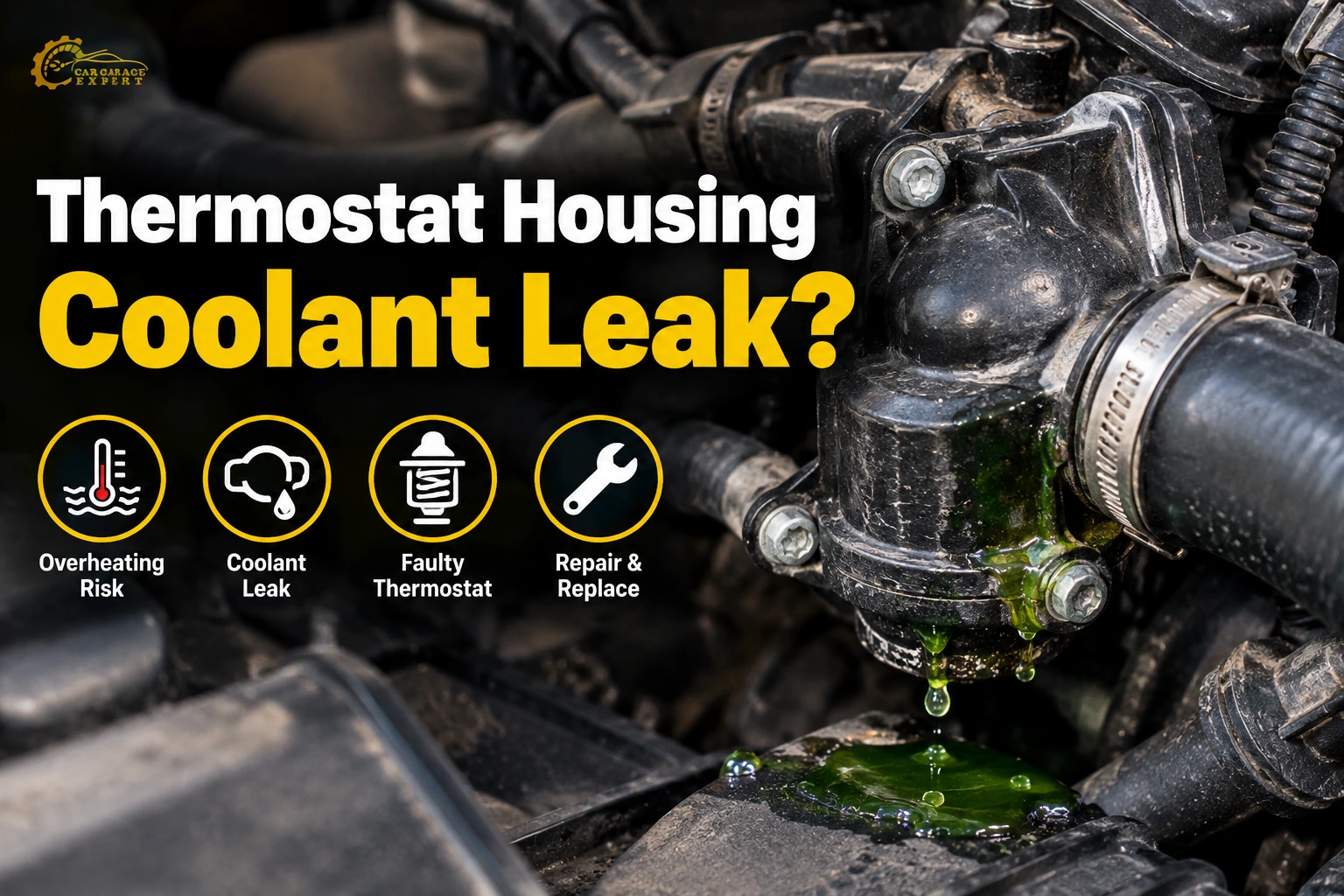
The EA888 pump module is made of plastic to save weight. It heats up and cools down on every drive. In a 45°C summer, those cycles are harder, and the plastic slowly warps. Once it warps, the gasket can no longer seal, and a VW water pump housing leak starts.
Shaft Seals Wear Out
The pump shaft spins thousands of times a minute. A rubber seal keeps coolant inside. Over time, the seal hardens and lets coolant weep out through a small hole called the weep hole.
Wrong Coolant or Tap Water
VW engines require G12 or G13 coolant combined with distilled water. Green coolant or tap water will cause deposits and attack the seals. Certain forms of sludge can also wear out the pump faster.
Long Idling With the AC On
Dubai drivers often sit in traffic or idle in car parks with the AC running. The engine stays hot while less air flows through the radiator. That keeps the pump and its seals hot for longer.
Cheap Replacement Pumps
Some low-cost pumps use weaker plastic or seals. They may fit fine but leak again within a year. A past cheap repair is a common reason for a second leak.
VW Leak Signs Compared: Likely Cause and How Fast to Act
Use this table to match what you see with the most likely fault. The last column shows how quickly to get it checked.
| What you notice | Most likely cause | How fast to act |
| Pink crust near the gearbox side | Warped pump housing or gasket | Within a week |
| Coolant light flashing on and off | Slow leak dropping the level | Within a few days |
| Drip from the weep hole | Worn shaft seal | Within a week |
| Whining that rises with revs | Worn pump bearing | Within a week |
| Steam or strong smell after a drive | Leak reaching the turbo or exhaust | Same day |
| Gauge above 90°C in traffic | Low coolant or pump failing | Stop driving now |
Where to Look for a Leak on Your Volkswagen Engine
Most guides tell you to look for a puddle. On a VW, the pump often hides behind the engine, so you need to know where to look. You can do these checks yourself with a torch and a cold engine.
Check the Coolant Tank Against the Marks
Open the bonnet with the engine cold. The tank has MIN and MAX marks. Mark the level with tape and check it again after three days of normal driving.
Shine a Torch Under the Intake on EA888 Engines
On the 1.8 and 2.0 TSI, the pump sits at the back of the engine, under the intake. Shine a torch down between the engine and the gearbox. Pink crust or wet patches on the module or on the gearbox below mean the pump is leaking.
Look Under the Engine Cover From Below
Some VWs have a plastic tray under the engine. Coolant collects on it before it reaches the ground. Pink streaks on the tray are often the first sign you will notice.
Never Open the Cap When Hot
Hot coolant is under pressure and can burn you. Wait at least 30 minutes after driving. Open the cap slowly with a cloth over it.
How a Workshop Confirms a VW Water Pump Leak
Coolant can run along the engine and drip far from where it started. A Volkswagen engine has several parts that can leak, so a good car mechanic checks each one before replacing anything.
Tests Used on a Volkswagen Cooling System
These tests separate a pump leak from a hose, radiator, or head gasket problem.
Fault Code Scan With VW Software
A scan tool reads codes from the engine computer. Codes for low coolant, the coolant temperature sensor, or the thermostat can point to the module. Live data shows the real engine temperature, not the buffered gauge.
Cooling System Pressure Test
A hand pump fits on the coolant tank and raises pressure to the cap level. If the gauge drops within 10 to 15 minutes, there is a leak. Coolant often drips from the pump area during the test.
UV Dye Test for Hidden Leaks
The technician adds a small amount of UV dye to the coolant. After a short drive, a UV lamp makes the leak glow. This helps on EA888 engines where the pump is hard to see.
Bearing and Belt Check
The technician checks the pump pulley for play and listens for bearing noise. On belt-driven pumps, the technician checks the belt for coolant damage and wear.
Head Gasket Block Test
If coolant is lost with no visible leak, a block test checks for exhaust gas in the coolant. This rules the head gasket in or out before replacing the pump.
How a Volkswagen Water Pump Is Replaced
Water pump replacement on a VW follows a clear order. Rushing any step can cause air locks and overheating straight after the repair.
- Drain the coolant. Cool the engine, then drain the coolant into a clean tray.
- Remove parts for access. On EA888 engines, the intake, heat shields, or turbo pipes may come off first. On belt-driven pumps, remove the timing belt.
- Remove the old pump. The pump and, on EA888 engines, the thermostat module come off together.
- Clean the sealing faces. Scrape off the old gasket and crust so the new seal sits flat.
- Fit the new pump. Most workshops fit the latest updated pump with new seals and tighten the bolts to factory torque. On belt-driven engines, fit a new timing belt and tensioner at the same time.
- Refill with G12 or G13 coolant. Mix the correct coolant with distilled water at the right ratio.
- Bleed the system. Use the engine and heater, or a vacuum filler, to push out air.
- Pressure test and road test. A final test confirms no leaks, and a drive checks the temperature in traffic.
Why the Thermostat Should Be Replaced at the Same Time
On EA888 engines, the thermostat sits in the same module as the pump. Replacing them together costs little extra in parts. It also saves paying the same labor twice later.
What Happens If You Ignore a Leaking VW Water Pump
A Volkswagen water pump leak never fixes itself. It usually gets worse, and the repair grows with it.
- The engine overheats. Low coolant lets the engine run past its safe temperature, mostly in summer traffic.
- The head gasket can fail. Overheating can warp the head and blow the gasket, a repair that often costs AED 4,000 to 10,000 on a TSI engine.
- The turbo can be damaged. The same coolant cools many VW turbos.
- The timing belt can fail. On belt-driven pumps, coolant soaks the belt, and it can snap, which can wreck the engine.
- Coolant damages nearby parts. Sensors, wiring plugs, and engine mounts under the leak wear out faster.
Can You Drive a VW With a Leaking Water Pump?
A short, gentle drive is usually fine if the leak is slow and the temperature stays at 90°C. Top up with the correct VW coolant and book a repair within a few days. Stop driving if the coolant light stays on after a top-up, you see steam, or the gauge climbs. Then call roadside assistance instead of risking the engine. If you are unsure, Car Garage Expert is a safe place to start with a leak check.
How Long Volkswagen Water Pump Replacement Takes
A pressure test and leak check is about 30-60 minutes. On most EA288 TSI engines, replacing the water pump takes roughly 3 to 5 hours. On the 1.2 and 1.4 TSI, belt-driven pumps take roughly 3 to 4 hours with a new timing belt.
For larger engines like the Touareg or Teramont, it can take a whole day. The most common VW pumps are available in Dubai. Some parts for older or rarer models may take a day or two to reach us.
Volkswagen Water Pump Replacement Cost in Dubai
Volkswagen water pump replacement cost depends on the engine and the parts used. These are typical Dubai market ranges, including labor.
| Service | Typical Dubai price |
| Cooling system pressure test | AED 100 to 250 |
| Pump and thermostat module, 1.8 or 2.0 TSI | AED 1,200 to 2,800 |
| Pump with timing belt kit, 1.2 or 1.4 TSI | AED 1,500 to 3,000 |
| Pump on Touareg or Teramont | AED 2,000 to 4,500 |
| G12 or G13 coolant refill | AED 250 to 500 |
What Pushes the Price Up or Down
The engine type matters most. Pumps behind the intake, or those that require removing the timing belt, take more labor. OEM pumps cost more than aftermarket ones, but they usually come with the latest updates.
Extra parts also change the bill. A thermostat, timing belt kit, or new hoses add cost. Fixing them during the same visit is cheaper than paying for labor again later.
How to Make Your New VW Water Pump Last Longer
A new pump can last many years if you look after the cooling system.
- Use only G12 or G13 coolant, never green coolant or tap water.
- Replace the coolant as your VW service schedule says.
- Check the coolant tank once a month with a cold engine.
- Replace the timing belt and pump together on belt-driven engines.
- Fix any coolant warning light the same week it appears.
- Ask for a cooling system check during each car service package, mostly before summer.
Dubai Advice for Volkswagen Cooling Systems
Dubai puts more strain on VW cooling systems than most markets.
Get a Pressure Test Before June
Summer is when weak pumps fail. A pressure test in April or May finds slow leaks before the hottest months. It costs far less than an overheated engine.
Keep a Bottle of VW Coolant in the Boot
A small bottle of G13 coolant lets you top up safely if the light comes on. Mixing the wrong coolant in an emergency causes more problems later.
Turn Off the Engine Instead of Long Idling
Idling for a long time with the AC on keeps the engine hot with little airflow. Switch off the engine when you wait in car parks for more than a few minutes.
Check Before Buying a Used VW
Many used Golfs, Jettas and Tiguans in the UAE are past 80,000 km. Ask if the water pump has been replaced. Look for pink crust under the intake before you buy.
Why Choose Car Garage Expert for Volkswagen Water Pump Leak Repair in Dubai
Car Garage Expert is a strong choice for VW owners in Dubai dealing with a Volkswagen water pump leak. The workshop knows where VW pumps hide and how they fail.
VW Fault Codes and Live Data Read Before Repair
The car is scanned with VW-compatible software before work starts. Live coolant temperature data shows how serious the problem is, beyond what the dashboard gauge shows.
Leak Source Confirmed With Pressure and Dye Tests
A VW engine has several parts that can leak coolant. Testing first means the owner pays only for the failed part.
Updated Pumps and the Right G13 Coolant
The workshop fits updated pump parts and refills with the coolant Volkswagen specifies. That cuts the chance of a repeat Volkswagen water pump leak.
Handy Al Quoz Location
The workshop sits in Al Quoz, a short drive from Sheik Zayed Road and Al Khail Road. Owners of leaking cars can reach it without a long drive.
FAQ’s
How long do VW water pumps last?
Many last 60,000 to 120,000 km on EA888 TSI engines. Heat, wrong coolant, and long idling can shorten that.
Why does my VW keep losing coolant?
The most common cause is a leaking water pump or thermostat module. A hose, the radiator, or the head gasket can also cause coolant loss.
Can I drive with the VW coolant light on?
Only to a safe place. Top up with the correct coolant first. If the light stays on or the gauge rises, stop and call for help.
What does a VW water pump cost?
In Dubai, most EA888 jobs cost about AED 1,200 to 2,800 with labor. Larger engines and belt-driven pumps can cost more.
Does a VW water pump leak cause overheating?
Yes. Lost coolant means less heat is carried away, and the engine can overheat in traffic.
Is the water pump changed with the timing belt?
On 1.2 and 1.4 TSI engines, yes. The pump runs off the timing belt, so both are usually replaced together.
Related Services for Volkswagen Cooling Problems
A leaking pump often comes with other cooling or engine issues. These services are commonly booked alongside it:
- Thermostat and coolant temperature sensor replacement
- Radiator, hose and coolant tank checks
- Timing belt and tensioner replacement on belt-driven engines
- A mobile car mechanic visit to check the leak before moving the car.
- Car painting touch-ups where hot coolant has stained the paint
Owners searching for a garage near me in Al Quoz can have all of these done at one workshop.
Book a VW Leak Check Before the Engine Overheats
A pump replacement costs a fraction of a new head gasket or engine. If your VW shows a coolant light, pink crust, or a dropping tank, book a check this week. Car Garage Expert can scan the car, pressure test the system, and quote the Volkswagen water pump leak repair before work starts. Send a message on WhatsApp or get directions on Google Maps.