
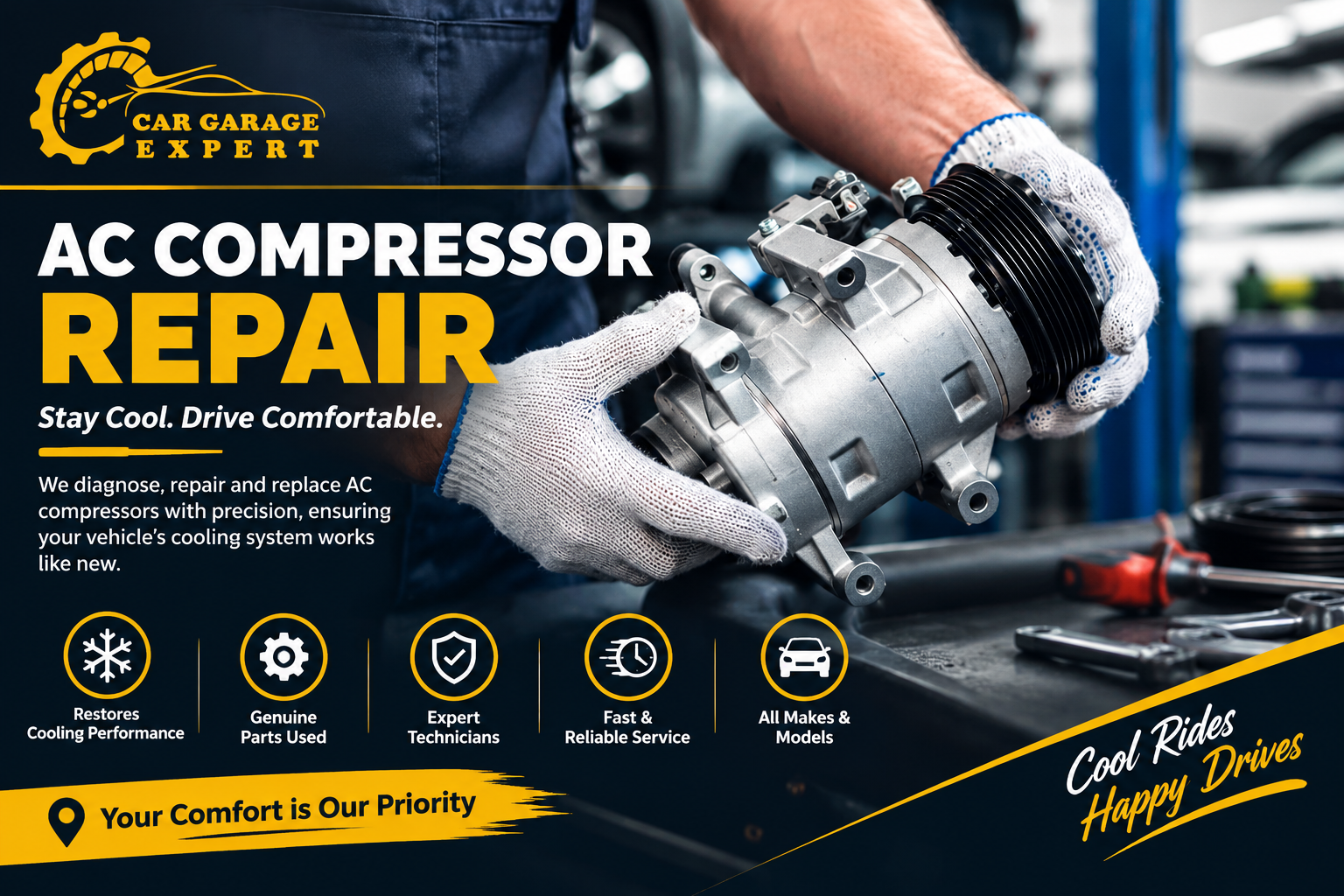
Driving in Dubai without a properly working car air conditioning system can quickly become uncomfortable, especially during the hot summer months. When your AC stops producing cold air, makes unusual noises, or takes too long to cool the cabin, the car aircon compressor may be one of the components that needs attention.
The compressor is an essential part of your vehicle’s air conditioning system. It circulates refrigerant through the system, helping remove heat from the cabin and maintain a comfortable temperature. If it develops a fault, the entire cooling system can become less effective or stop working altogether.
At Car Garage Expert, understanding the cause of an AC problem is the first step towards choosing the right repair. Whether you drive a sedan, SUV, luxury vehicle, or family car, recognising the symptoms of compressor trouble can help you avoid unnecessary repairs and further damage.
This guide explains how a car aircon compressor works, the common signs of failure, the causes of compressor problems, and when to consider repair or replacement in Dubai.
What Is a Car Aircon Compressor?
A car aircon compressor is a mechanical component that pressurises and circulates refrigerant through the vehicle’s air conditioning system. It works alongside other components, including the condenser, expansion valve, evaporator, and refrigerant lines.
When you switch on the AC, the system activates the compressor according to the vehicle’s design and operating conditions. The compressor helps move refrigerant through the cooling cycle so that heat can be removed from the air entering the cabin.
Without a functioning compressor, the air conditioning system may struggle to cool the interior, even if the blower fan continues to operate normally.
Modern vehicles can use different compressor designs, including conventional belt-driven compressors and electronically controlled variable-displacement units. Some hybrid and electric vehicles use electrically driven compressors that require specialised servicing procedures.
For this reason, car aircon compressor diagnosis should always take the vehicle’s make, model, and compressor type into account.
How Does a Car AC Compressor Work?
Understanding the basic cooling process makes it easier to recognise why compressor problems affect the entire AC system.
The air conditioning system works through a continuous refrigerant cycle.
1. Refrigerant Enters the Compressor
Refrigerant returning from the evaporator enters the compressor at low pressure under normal operating conditions. The compressor draws in the refrigerant vapour and raises its pressure.
2. The Compressor Pressurises the Refrigerant
The compressor increases the refrigerant’s pressure and temperature. This allows the refrigerant to release heat efficiently as it moves through the condenser.
3. The Condenser Releases Heat
The hot, high-pressure refrigerant travels to the condenser, which is usually located near the front of the vehicle. Airflow through the condenser helps remove heat from the refrigerant.
4. The Refrigerant Cools and Expands
After passing through the condenser, the refrigerant moves through the system’s metering device, such as an expansion valve. Its pressure drops, preparing it to absorb heat inside the cabin.
5. The Evaporator Cools the Cabin Air
The refrigerant absorbs heat from the air passing over the evaporator. The blower fan then distributes the cooled air through the dashboard vents.
The refrigerant returns to the compressor, and the cycle repeats.
If the compressor cannot circulate refrigerant correctly, the cooling cycle may be disrupted. However, poor cooling can also result from refrigerant leaks, blocked components, electrical faults, or condenser problems.
Common Signs of a Faulty Car Aircon Compressor
A failing compressor does not always stop working completely. In many cases, the system shows warning signs before the component fails entirely.
Recognising these symptoms early can help you arrange an inspection before the problem becomes more expensive.
1. The AC Blows Warm Air
One of the most noticeable signs is warm air coming from the dashboard vents when the AC is switched on.
If the compressor is not engaging or cannot build the required pressure, the system may fail to cool the cabin properly.
However, warm air alone does not confirm compressor failure. Low refrigerant, a faulty pressure sensor, a damaged condenser fan, or an electrical issue can produce similar symptoms.
A professional inspection can identify the actual cause.
2. Unusual Noises When the AC Is Running
Grinding, rattling, squealing, or knocking sounds from the engine bay may indicate a compressor-related problem.
Possible causes include worn internal bearings, a damaged clutch assembly on applicable models, a loose drive belt, or another failing accessory.
If the noise becomes louder when you switch on the AC, arrange an inspection promptly. A severely damaged compressor or seized pulley can affect the drive belt system on some vehicles.
3. The AC Cools Intermittently
Does your car produce cold air for a few minutes before becoming warm again?
Intermittent cooling can be caused by a compressor that is not operating consistently. It may also indicate an overheating condenser, incorrect refrigerant pressure, a faulty sensor, or an electrical connection problem.
In Dubai’s hot weather, these symptoms can become especially noticeable when the vehicle is stationary in traffic.
A technician should check system pressures, cooling fan operation, compressor controls, and relevant fault codes before recommending replacement.
4. Weak Cooling During Dubai’s Summer
A healthy air conditioning system should deliver appropriate cooling for the vehicle and the prevailing conditions.
If your AC takes unusually long to cool the cabin, especially during hot afternoons, the compressor may not be performing efficiently. Nevertheless, cabin filters, condenser airflow, refrigerant charge, and the condition of the evaporator can also influence cooling performance.
A complete AC performance test is more reliable than assuming the compressor is responsible.
5. Refrigerant Leaks or Visible Oil Residue
Refrigerant leaks sometimes occur around compressor seals, connections, or damaged refrigerant lines.
Depending on the type of leak, a technician may find compatible leak-detection dye or oily residue around the affected area. Such residue is not conclusive on its own, so proper leak detection is necessary.
Refrigerant should never be released intentionally into the atmosphere. The system must be handled with appropriate recovery and service equipment.
6. The AC Compressor Does Not Engage
On vehicles equipped with an electromagnetic compressor clutch, the clutch may fail to engage when the AC is activated.
Possible causes include low refrigerant pressure, a faulty relay or fuse, damaged wiring, a defective pressure sensor, clutch wear, or compressor failure.
Not every modern compressor uses a conventional clutch. Electronically controlled units may require different diagnostic procedures.
The correct approach is to test the control system and compressor operation before replacing any parts.
What Causes Car Aircon Compressor Failure?
Compressor problems can develop for several reasons. Identifying the underlying cause is important because installing a new compressor without correcting the original issue may lead to another failure.
Refrigerant Leaks and Incorrect Refrigerant Charge
An AC system needs the correct refrigerant type and specified charge. A leak can reduce cooling performance and may cause the system’s pressure controls to prevent compressor operation.
Simply adding refrigerant without locating a leak is not a reliable long-term repair.
The technician should identify the leak, repair it where possible, and recharge the system according to the manufacturer’s specifications.
Poor Lubrication
The compressor requires the correct type and quantity of compatible lubricant. Incorrect oil, insufficient lubrication, or contamination can increase friction and cause internal wear.
Different refrigerants and compressor designs may require different lubricants. Using an unsuitable product can damage the component.
Electrical Problems
A compressor may fail to operate because of a blown fuse, faulty relay, damaged wiring, a defective sensor, or a problem with the vehicle’s control module.
These faults can sometimes be repaired without replacing the compressor itself.
Contaminated AC Components
Internal compressor damage can introduce metal particles or other debris into the air conditioning system. If contamination is not addressed properly, it may damage replacement components.
Depending on the failure and vehicle manufacturer’s procedures, repairs may require cleaning or replacing affected parts, inspecting the expansion valve, and evaluating the condenser and refrigerant lines.
Excessive Heat and Demanding Driving Conditions
Dubai’s high ambient temperatures place considerable demands on vehicle cooling systems. Heavy traffic, prolonged idling, poor condenser airflow, and cooling fan faults can make heat rejection more difficult.
Hot weather alone does not prove that the compressor is defective. However, a system that already has a weak component or an underlying fault may struggle more under demanding conditions.
Normal Wear and Age
Over time, seals, bearings, clutch components, and internal compressor parts can wear out.
The rate of wear depends on the vehicle, maintenance history, operating conditions, and component design. Regular inspections can help identify developing problems before they cause a complete loss of cooling.
Car Aircon Compressor Repair in Dubai
If your vehicle’s AC is not working correctly, professional diagnosis is the best starting point. A technician should determine whether the compressor itself is faulty or whether another component is preventing the system from cooling.
At Car Garage Expert, a thorough car AC inspection should focus on identifying the cause of the problem and recommending an appropriate solution for your vehicle.
Computer and Electrical Diagnosis
The inspection may include checking relevant diagnostic trouble codes, fuses, relays, wiring, pressure sensors, and compressor control signals.
This is particularly important for modern vehicles with electronically controlled air conditioning systems.
Refrigerant Pressure and Performance Testing
A technician can use suitable service equipment to evaluate system pressures and assess cooling performance under the appropriate test conditions.
The results help identify problems associated with refrigerant charge, airflow, compressor operation, or other system components.
Leak Detection
If refrigerant loss is suspected, the system should be checked using an appropriate leak-detection method.
Depending on the vehicle and the suspected leak, the technician may use an electronic detector, approved leak-detection dye, or another manufacturer-compatible procedure.
Compressor Clutch or Control Repair
Where applicable, a damaged clutch, faulty electrical connection, or failed control component may be repairable without replacing the complete compressor.
Whether this option is suitable depends on the compressor design, the availability of parts, and the manufacturer’s repair guidance.
System Cleaning and Component Inspection
If a compressor has suffered internal damage, the technician should evaluate the rest of the AC system for contamination.
A replacement compressor should not simply be installed without considering the condition of the refrigerant circuit and the manufacturer’s required repair procedures.
Car Aircon Compressor Replacement: When Is It Necessary?
Repair is not always the most practical solution. A compressor may need replacement when it has suffered severe internal damage, seized, or developed a fault that cannot be repaired reliably.
Replacement may also be recommended when the component’s condition makes further repair uneconomical.
Before approving the work, ask the garage to explain the diagnosis and identify any additional components that require attention.
A typical compressor replacement process may include:
- Confirming the compressor fault through appropriate diagnostic tests.
- Recovering the refrigerant using approved equipment.
- Removing the defective compressor according to the manufacturer’s procedure.
- Inspecting the system for contamination and related damage.
- Replacing required seals and addressing the underlying cause.
- Installing the correct compressor and using the specified lubricant.
- Evacuating the system and checking for leaks.
- Charging the AC system with the specified type and quantity of refrigerant.
- Testing cooling performance, operating pressures, and compressor controls.
The exact procedure varies according to the vehicle. Some models require additional programming, calibration, or specialised tools.
How Much Does a Car Aircon Compressor Cost in Dubai?
The cost of car aircon compressor repair in Dubai depends on several factors, so there is no single price that applies to every vehicle.
The total estimate may include the compressor, labour, diagnostic testing, refrigerant, seals, and any additional repairs required.
Factors That Affect the Price
Vehicle make and model: Compressors for luxury vehicles and certain European, Japanese, or American models may cost more than standard alternatives.
Compressor type: Conventional belt-driven compressors, variable-displacement units, and electrically driven compressors have different designs and servicing requirements.
Part quality: Genuine manufacturer parts, reputable aftermarket components, and compatible replacement units can have different prices and warranty terms.
Extent of the damage: A straightforward compressor replacement may cost less than a repair involving contamination, damaged lines, or a faulty condenser.
Labour requirements: Some vehicles provide easier access to the compressor, while others require more extensive disassembly.
Additional refrigerant system work: Leak repairs, seals, filters, or other components may increase the final bill when they are necessary.
For an accurate estimate, provide the garage with your vehicle’s make, model, year, and engine details. Request an itemised quotation that explains which parts and services are included.
The cheapest replacement is not necessarily the best value if the part is unsuitable or the underlying cause of failure remains unresolved.
How to Protect Your Car AC Compressor in Dubai
Although compressor faults cannot always be prevented, sensible maintenance can reduce the risk of avoidable problems.
Keep the AC System Properly Maintained
Arrange an inspection if cooling performance changes, unusual noises develop, or the system repeatedly stops working.
Addressing minor faults early may help prevent additional strain on the system.
Check Condenser Airflow
The condenser needs sufficient airflow to release heat. Dirt, debris, physical damage, or a malfunctioning cooling fan can reduce its effectiveness.
A technician can inspect the condenser and fan operation if the AC performs poorly, particularly at low speeds.
Replace the Cabin Air Filter When Required
A clogged cabin air filter can restrict airflow through the vents. Replacing it at the recommended interval may improve cabin airflow, although it will not repair a defective compressor.
Avoid Unnecessary Refrigerant Top-Ups
Refrigerant is not normally consumed in the way engine oil or fuel is. If the system repeatedly needs recharging, investigate the possibility of a leak rather than treating repeated top-ups as a permanent fix.
Use the Correct Refrigerant and Lubricant
Never assume that all vehicles use the same refrigerant or compressor oil. Follow the manufacturer’s specifications to avoid compatibility issues and possible component damage.
Respond to Unusual Noises Promptly
A new squealing, grinding, or rattling sound should not be ignored, particularly if it appears when the AC is switched on.
An early inspection can help distinguish a compressor problem from a belt, pulley, or other accessory fault.
Why Choose Car Garage Expert for Car AC Service in Dubai?
Choosing the right garage involves more than finding someone who can replace a compressor. You need a service provider that can diagnose the problem, explain the available options, and carry out the repair according to the vehicle’s requirements.
When arranging car aircon compressor service with Car Garage Expert, consider the following service standards:
- Accurate diagnosis: Identify the cause of the AC problem before recommending expensive parts.
- Vehicle-specific repairs: Use a compressor and refrigerant specification suitable for your vehicle.
- Transparent estimates: Understand the cost of parts, labour, refrigerant, and any additional work.
- Proper repair procedures: Ensure refrigerant recovery, leak checks, evacuation, and recharging are performed correctly when required.
- Post-repair testing: Confirm that the AC system operates as expected after the repair.
- Clear communication: Ask about parts quality, warranty coverage, and the scope of the work before approving the estimate.
Whether you need help with weak cooling, an AC compressor that will not operate, or a suspected refrigerant leak, a systematic inspection can help you make an informed decision.
Contact Car Garage Expert to discuss your vehicle’s AC symptoms and request an inspection in Dubai.
Frequently Asked Questions
1. How do I know if my car aircon compressor is faulty?
Common symptoms include warm air from the vents, unusual noises when the AC is running, inconsistent cooling, and compressor operation problems. These signs can also result from electrical faults, refrigerant leaks, or other AC components, so professional diagnosis is recommended.
2. Can I drive my car with a faulty AC compressor?
You may be able to drive the vehicle if the fault is limited to the AC system, but it depends on the nature of the problem. A seized compressor or damaged pulley can affect the drive belt on some vehicles. If you hear grinding or loud squealing, stop using the AC and arrange an inspection. Seek professional advice before continuing to drive if the belt system may be affected.
3. How much does car aircon compressor replacement cost in Dubai?
The price depends on the vehicle model, compressor type, replacement part, labour, refrigerant, and any additional repairs. Ask for an itemised quotation based on your vehicle details and the results of a diagnostic inspection.
4. Can a car AC compressor be repaired instead of replaced?
Yes, certain compressor-related problems can be repaired. Depending on the design and diagnosis, the fault may involve a clutch, electrical connection, or control component. Severe internal damage or a seized compressor may require replacement.
5. How can I maintain my car aircon compressor in Dubai’s hot weather?
Maintain the AC system according to the vehicle manufacturer’s recommendations, keep the condenser and cooling fans in good condition, replace the cabin filter when required, and investigate cooling problems promptly. Use only the specified refrigerant and lubricant, and have recurring refrigerant loss checked for leaks.
Conclusion
A properly functioning car aircon compressor is essential for effective vehicle air conditioning, particularly during Dubai’s hot weather. When the AC starts blowing warm air, makes unusual noises, or cools inconsistently, the cause should be investigated before the problem becomes more serious.
Not every AC fault requires a new compressor. Refrigerant leaks, electrical issues, restricted condenser airflow, and other component failures can produce similar symptoms. Accurate diagnosis helps determine whether repair, component replacement, or a complete compressor replacement is the most appropriate option.
Car Garage Expert can be your point of contact for discussing car AC problems and arranging an inspection in Dubai. By identifying the underlying fault, choosing suitable replacement parts, and ensuring the system is tested after servicing, you can make a more informed decision about restoring your vehicle’s cooling performance.
If your car’s AC is no longer keeping the cabin comfortable, arrange a professional assessment and address the problem before the Dubai heat makes every journey more difficult.
Visit us in our Al Quoz, Dubai branch or visit Car Garage Expert