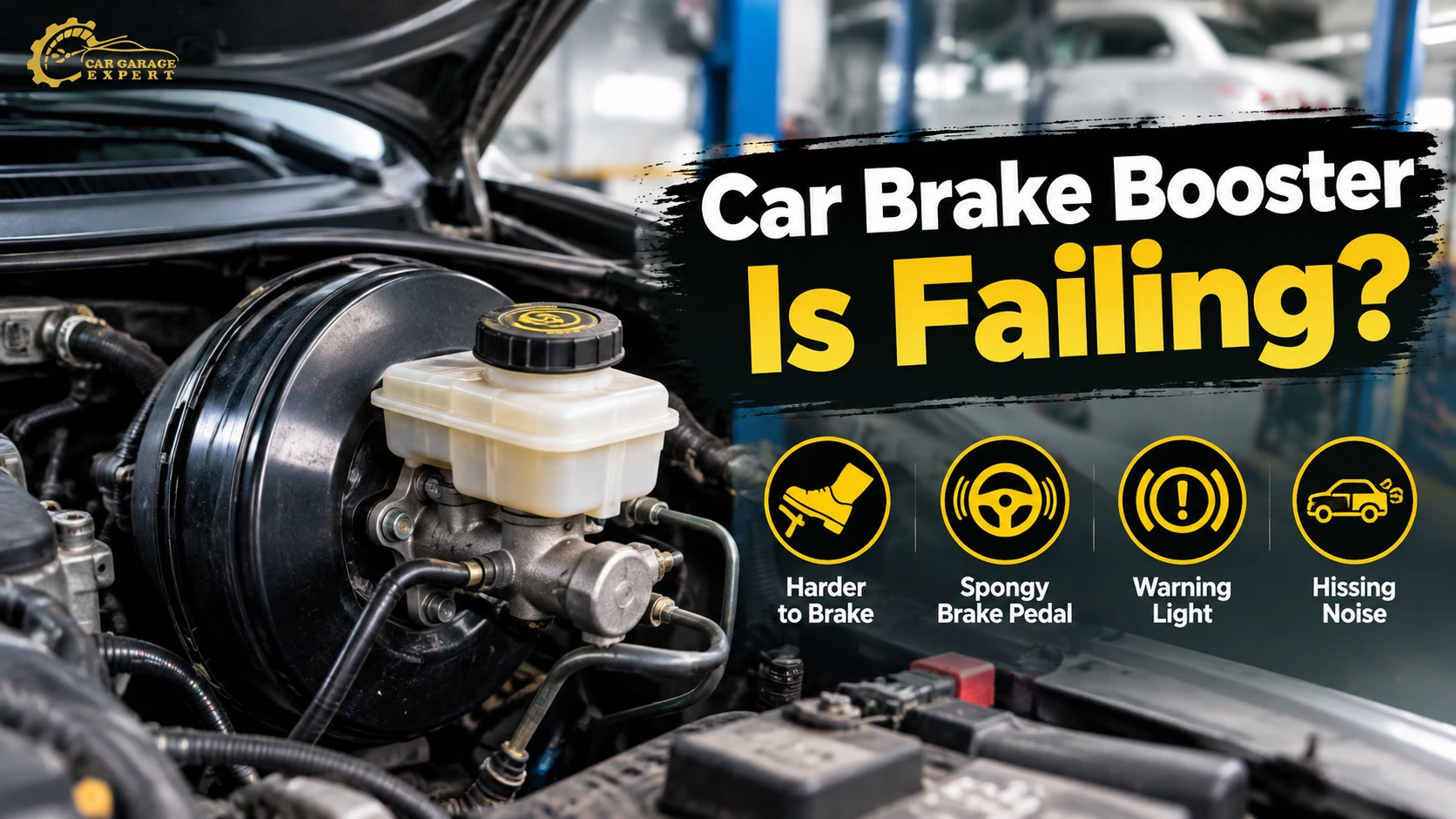
You can tell your car brake booster is failing when the brake pedal feels hard or stiff. The car may also take longer to stop. Some drivers hear a hiss near the pedal. Others notice the engine stalling or idling rough when they brake. Common causes include a torn diaphragm, a leaking vacuum hose, or a stuck check valve—Dubai heat and stop-and-go traffic speed up that wear. A quick engine-off pedal test can help identify the issue. A garage can then confirm the fault and repair or replace the brake booster.
Table of Contents
- Problem Overview: What a Brake Booster Does and Why It Fails
- Symptoms: Warning Signs You Can Feel, Hear, and See
- Common Causes: Why a Brake Booster Goes Bad
- Diagnostic Process: How a Mechanic Tests the Booster
- Repair Process: What Gets Fixed or Replaced
- Risks of Ignoring the Problem: What Can Go Wrong
- Can You Keep Driving With a Weak Brake Booster?
- Repair Time: How Long the Job Takes
- Cost Factors: What Changes the Final Price
- Prevention Tips: How to Protect the Booster
- Dubai-Specific Advice: Heat, Dust, and Stop-and-Go Traffic
- Why Choose Car Garage Expert If Your Car Brake Booster Is Failing in Dubai
- FAQs About Brake Booster Problems
- Related Services for Your Brakes
- Get Your Brakes Checked Before the Pedal Gets Harder
What a Brake Booster Does and Why It Fails
It is on the engine side of the firewall, behind the master cylinder. It looks like a round black jar. It has an easy job. Light pressure on the pedal increases your foot power, which stops the car.
Most petrol cars use a vacuum booster. Many diesel, turbo, and hybrid cars use a separate vacuum pump. A rubber diaphragm splits one cylinder in half inside the booster. Air pressure on the diaphragm helps your foot when you press the pedal.
When the pressure leaks or the diaphragm tears, the brake booster starts to have problems. The help goes away, and the pedal gets heavy. Many people don’t know their car’s brake booster is in bad shape until the pedal stiffens at a red light. That’s a scary moment. You can avoid it with an early check.
Symptoms: Warning Signs You Can Feel, Hear, and See
Brake booster symptoms usually build slowly. Watch for these signs if you think your car brake booster is failing.
A Hard, Stiff Brake Pedal
The pedal feels like stepping on a brick. You must push much harder than normal to slow down.
Longer Stopping Distance
The car needs more road to stop. The brakes still grab, but the booster no longer helps.
A Hissing Sound When You Press the Pedal
A hiss near your feet points to a vacuum leak. It often means a torn diaphragm or a worn seal.
Engine Stalls or Idles Rough When Braking
A leaking booster pulls extra air into the engine. The idle may dip, surge, or stall each time you brake.
A Pedal That Sinks or Feels Odd
A faulty brake booster can make the pedal feel low, high, or slowly sink under steady pressure. A leaking master cylinder can cause the same thing, so get it checked.
Warning Lights on the Dash
Some cars show a brake or check engine light. Many cases of a failing brake booster show no light at all. Do not wait for one.
Common Causes: Why a Brake Booster Goes Bad
Brake booster failure rarely happens overnight. A rubber part ages, or a small leak grows over time. The table below matches what you notice with the most likely reason.
| What You Notice | Likely Reason | What It Means | Usual Fix |
| Hard, stiff pedal | Torn booster diaphragm | The booster cannot build assist | Booster replacement |
| Hissing when you brake | Cracked vacuum hose or worn seal | Air is leaking into the system | Replace the hose or seal |
| Rough idle or stall when braking | Vacuum leak into the engine | The engine loses vacuum at every stop | Fix the leak, retest the booster |
| Pedal gets hard after the car sits | Stuck or weak check valve | Vacuum drains out of the booster | Replace the check valve |
| Hard pedal on a turbo or diesel car | Weak vacuum pump | The booster gets too little vacuum | Repair or replace the pump |
| Brake fluid loss, pedal sinks | Leaking master cylinder seal | Fluid may be reaching the booster | Replace the master cylinder, check the booster |
Why Heat and Age Wear Out the Rubber Parts
The diaphragm, hoses, and seals are all rubber. Heat and age harden and crack rubber. Once it cracks, air leaks in and the assist drops.
How Brake Fluid Can Ruin the Booster
A leaking master cylinder seal can push brake fluid into the booster. The fluid softens the diaphragm. This is why a bad brake booster is often fixed together with the master cylinder.
Why the Check Valve and Vacuum Pump Matter
The check valve traps vacuum in the booster. If it sticks, the assist fades fast after the car sits. Turbo and diesel cars rely on a vacuum pump. A weak pump gives the same hard pedal.
Diagnostic Process: How a Mechanic Tests the Booster
You can run a quick check yourself. Then a mechanic confirms the fault with proper tools.
The Simple Engine-Off Pedal Test
Do this only while parked.
- Turn the engine off and press the brake pedal four or five times.
- Hold the pedal down firmly and start the engine.
- The pedal should sink a little under your foot.
If the pedal stays hard, your car brake booster is failing, or the vacuum supply may be weak.
What a Mechanic Checks at the Workshop
An experienced car mechanic goes much further. A full check includes:
- Vacuum hoses and the check valve
- Vacuum level at idle, using a gauge
- Listening for leaks around the booster
- Brake fluid level and master cylinder condition
- Pads, discs, and brake lines, to rule out other faults
- A scan for stored codes, plus a pump test on turbo or hybrid cars
Repair Process: What Gets Fixed or Replaced
The repair depends on what the tests find. Here is how each fault is handled.
Small Fixes: Hoses, Check Valves, and Seals
If the leak is in a hose or check valve, the fix is small. The mechanic replaces the part and retests the vacuum.
Full Brake Booster Replacement
Boosters are sealed units, so repairing the inside is rare. If the diaphragm is torn or the shell is damaged, the mechanic replaces the whole unit. The mechanic removes the master cylinder, swaps the booster, sets the pushrod, and refits everything.
Master Cylinder Repair and Brake Bleeding
Fluid inside the booster means the master cylinder seal is leaking. Both parts are usually replaced together. Then the system is bled to remove air.
Final Safety Checks After the Repair
The car goes on a road test. The mechanic checks pedal feel, stopping power, and idle quality. A brake fluid flush is done if the fluid is old or dark.
Risks of Ignoring the Problem: What Can Go Wrong
The risk grows fast once your car brake booster is failing. The brakes usually still work, but they need far more leg force. In heavy traffic, that gap can cause a rear-end crash.
Other risks are easy to miss:
- Longer stopping distance at highway speed.
- Sudden hard pedal during an emergency stop
- A vacuum leak that upsets engine idle and fuel use
- Leaking brake fluid that damages more parts
- A small hose fix that turns into a full booster replacement
Can You Keep Driving With a Weak Brake Booster?
No, not for normal driving. Even when your car’s brake booster is failing, the hydraulic brakes usually work. But stopping takes more force and more distance. You may not have either in an emergency.
If you must move the car, go slowly and only a short way. Keep a big gap to the car ahead. Avoid highways. The safer choice is to call roadside assistance and have the car taken to a workshop.
Repair Time: How Long the Job Takes
Time depends on the fault. These are typical ranges:
- Hose or check valve: about 1 to 2 hours
- Booster replacement: usually 3 to 5 hours
- Master cylinder plus brake bleeding: add 1 to 2 hours
Popular models are often done the same day. Some European and luxury models require ordering parts. That can add a day or two. For a first check, a mobile car mechanic can come to you and find the cause. Jobs that need a lift are done at the workshop.
Cost Factors: What Changes the Final Price
The price depends on why your car brake booster is failing. A vacuum hose or check valve costs far less than a full brake booster replacement.
These factors move the final bill:
- Which part failed: hose, valve, pump, or booster
- Your car make and model.
- Genuine or aftermarket parts
- Labor time, since some cars make booster access harder
- Extra work, such as a master cylinder, brake fluid flush, or new pads
Ask for a written quote in AED before any work starts.
Prevention Tips: How to Protect the Booster
You cannot stop rubber from aging. You can catch problems early. These habits help:
- Add a brake and vacuum line check to a regular car service package.
- Change brake fluid every one to two years.
- Fix oil leaks in the engine bay. Oil softens rubber hoses.
- Act on small signs, like a light hiss or a rough idle.
- Park in shade or covered parking when you can.
- Never ignore a brake warning light.
Dubai-Specific Advice: Heat, Dust, and Stop-Start Traffic
Dubai is rough on brakes. In the summer, engine bays get very hot, which makes rubber lines harden and crack more quickly. It’s more stressful to go from hot streets to cooler basement parking. Fine dust also settles around the hose joints and rubber boots.
Traffic is also bad for you. When you drive stop-and-go on busy roads, you have to press the brakes hundreds of times each trip. Speed bumps mean even more hard stops. In July, the pedal will quickly let you know if your car brake booster is failing or broken.
Before summer starts, get your brakes and booster checked. Look for a car garage near me that does more than just change pads.
Why Choose Car Garage Expert If Your Car Brake Booster Is Failing in Dubai
Brake work needs a workshop that finds the real cause. If your car brake booster is failing call Car Garage Expert for car brake repair in Dubai. The Al Quoz team checks the whole brake system, not just the booster. That means they check the vacuum lines, check valve, master cylinder, fluid, and pads.
It’s also easy to understand. The team explains what went wrong, why it happened, and what needs to be fixed. If the car isn’t safe to drive, there is close by roadside assistance and mobile support. If you’re looking for a shop near me, this one can do everything from repair to road test.
FAQs
Q1: Can you drive with a bad brake booster?
It is not safe. The brakes may still work, but you need much more force and distance to stop. Get the car checked right away.
Q2: What does a failing brake booster feel like?
The pedal feels hard and stiff. You may also hear a hiss, and the car may stop more slowly than usual.
Q3: How much does brake booster replacement cost?
It depends on your car model and the parts used. A hose or valve fix costs much less. Ask for a written quote first.
Q4: Can a bad brake booster stall the engine?
Yes. A large vacuum leak can cause a rough idle or a stall when you press the brake.
Q5: How long does a brake booster last?
Many last close to ten years. Heat, oil leaks, and brake fluid problems can shorten that.
Q6: Is a hard brake pedal always the booster?
No. A cracked hose, a bad check valve, or a weak vacuum pump can cause it too. A proper test finds the real cause.
Q7: Can roadside assistance help with brake problems?
Yes. If the car feels unsafe, and sudenly your car brake booster is failing, call roadside assistance for a tow instead of driving it.
Related Services for Your Brakes
If your car brake booster is failing, this issue is often comes with other brake needs. These car brake repair services are worth checking at the same visit:
- Brake pad and disc replacement
- Brake fluid flush
- Master cylinder and brake line repair
- Vacuum system and engine idle check
- Full service for a complete safety check
- Car painting and body repair, if a brake fault led to a minor bump
Get Your Brakes Checked Before the Pedal Gets Harder
A stiff pedal is a warning, not a quirk. Do not wait for it to get worse. Book your car brake repair with Car Garage Expert today. Message the team on WhatsApp or find the Al Quoz workshop on Google Maps.