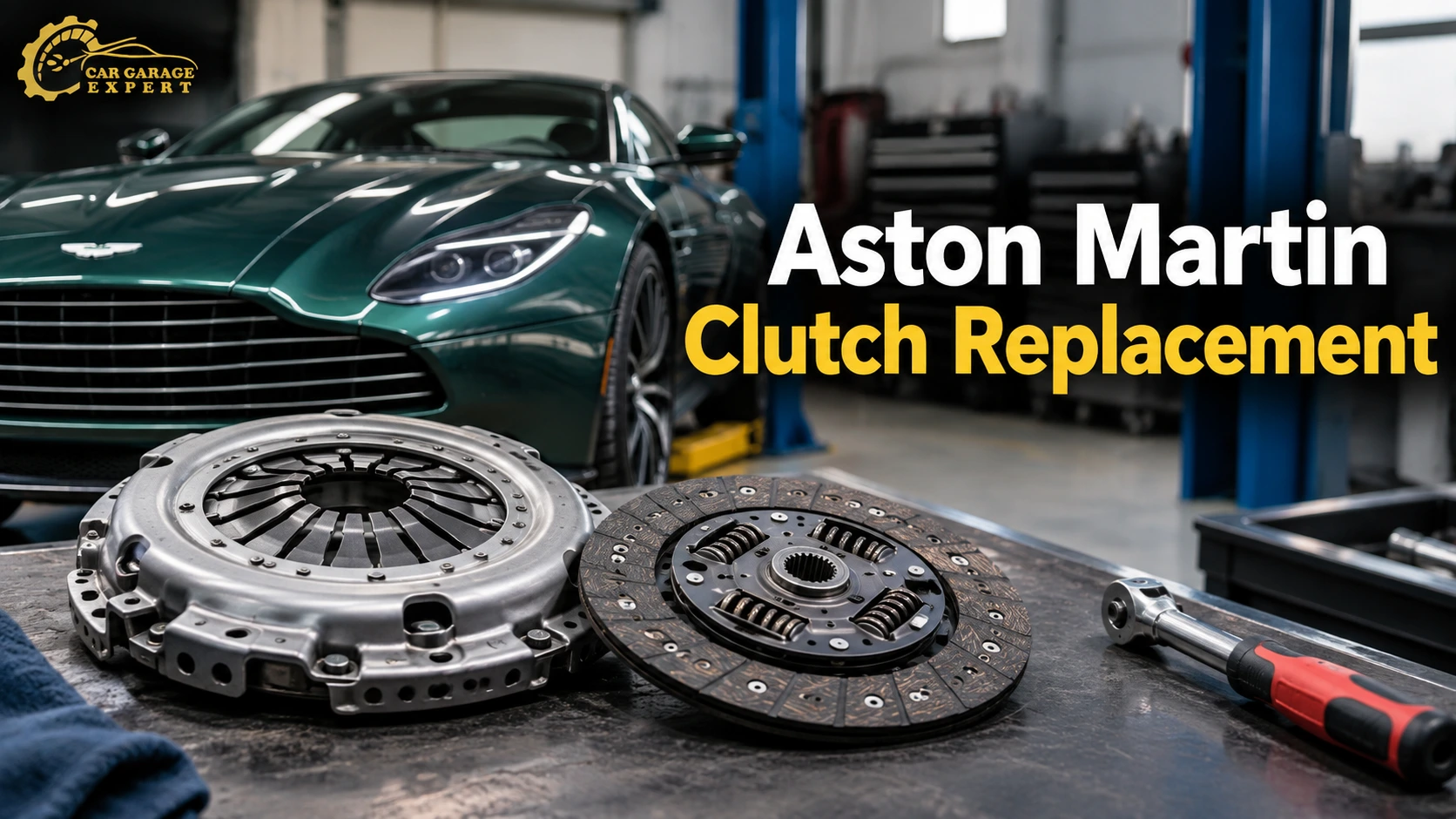
An Aston Martin needs clutch replacement when the single-plate or twin-plate friction disc wears down from slipping, not simply from age or mileage. This applies to the DB9, DBS, V8 Vantage, and V12 Vantage, whether fitted with a true manual gearbox or the automated Sportshift system. Warning signs include judder on pull-away, a high or inconsistent biting point, and slipping under load. Aston Martin clutch replacement is usually needed sooner in Dubai because of stop-start traffic, valet parking, and long periods of standing between drives. A proper diagnostic check on the transmission’s stored clutch data is the only way to confirm the job before booking a replacement.
Table of Contents
- How the Clutch Works on Manual and Sportshift Models
- Signs Your Clutch Is Wearing Out
- Why Aston Martin Clutches Wear Faster in Dubai
- Clutch Symptom vs Likely Cause
- How We Diagnose an Aston Martin Clutch Problem
- How Aston Martin Clutch Replacement Is Done
- What Happens If You Delay the Replacement
- Can You Keep Driving With a Worn Clutch?
- How Long the Replacement Takes
- What Affects Aston Martin Clutch Replacement Cost
- How to Make Your Clutch Last Longer
- Dubai-Specific Advice for Aston Martin Owners
- Why Choose Car Garage Expert for This Job
- FAQs
- Related Services
How the Clutch Works on Manual and Sportshift Models
Gaydon-era Aston Martins use a rear-mounted transaxle gearbox connected to the engine by a torque tube. This covers the DB9, DBS, V8 Vantage, and V12 Vantage. The clutch sits at the back of the car, next to the gearbox, not behind the engine.
Two setups exist on these cars. True manual models use a clutch pedal as normal, with the driver controlling engagement directly. Sportshift models use the same physical clutch, but an electro-hydraulic actuator controls it instead of a pedal. There’s no torque converter and no second clutch pack working in the background.
This single point matters for owners: Sportshift is not a dual-clutch gearbox. It’s a single clutch with automated control, which means wear happens the same way it would in a manual car, just without the driver directly feeling it happen. Aston Martin clutch replacement is specialist work on either version, since the transaxle layout makes access more involved than a front-mounted gearbox.
Signs Your Clutch Is Wearing Out
A worn clutch on these cars builds up gradually, and catching it early keeps Aston Martin clutch replacement simpler and cheaper. Watch for these signs over a few weeks of driving.
- Judder or shaking when pulling away from a stop.
- A biting point that feels higher than usual, or keeps moving.
- Revs rising without matching acceleration, especially under load.
- A burning smell after hill starts or heavy traffic.
- On Sportshift cars, harsher or slower shifts than normal.
- A clutch or transmission warning message on the dash.
None of these confirm wear by themselves. They’re simply signs to consider an Aston Martin clutch replacement and run a proper diagnostic check.
Why Aston Martin Clutches Wear Faster in Dubai
A clutch only wears while it’s slipping, not while it’s fully engaged. That means the driving pattern matters more than kilometers on the odometer.
Stop-start traffic is the biggest factor. Crawling on Sheikh Zayed Road or Al Khail Road means constant low-speed engagement. At low speed, there’s little airflow to cool the clutch.
Hill starts and parking ramps add extra strain. Riding the clutch to hold the car on an incline is one of the most damaging habits for this system. Use the brake instead.
Valet parking adds extra wear, especially on Sportshift cars. Repeated shuffling in tight spaces means more clutch engagements packed into a short amount of driving. The transmission logs each one through its own wear tracking.
Long periods parked also hurt the clutch. Many of these cars are weekend drivers in Dubai that sit for weeks. Standing still can let light surface corrosion build up on the friction faces, which shows up as judder on the first few pull-aways.
Heat speeds up the damage. Slipping a dry clutch generates heat fast. Repeated overheating glazes the friction surface and permanently reduces its grip, so a clutch that’s been ridden hard fails well before it’s actually worn thin.
Clutch Symptom vs Likely Cause
| What You Notice | Possible Cause | How We Confirm It |
| Judder on pull-away | Worn clutch disc or corroded friction face | Clutch inspection and wear data check |
| High or drifting biting point | Worn friction material or cable/actuator wear | Biting point and travel measurement |
| Harsh Sportshift gear changes | Clutch statistics need recalibration | AMDS diagnostic scan |
| Burning smell after hill starts | Clutch riding or holding on an incline | Driving pattern review with owner |
| Slip-like feel under load | Worn pressure plate or weak diaphragm spring | Load test on a lift |
This table matters because several of these symptoms overlap. Sportshift cars in particular can show shift harshness that looks like a clutch fault but is actually a calibration issue, so testing always comes before replacing parts.
How We Diagnose an Aston Martin Clutch Problem
A generic scan tool cannot read everything this transmission stores. Aston Martin clutch replacement decisions rely on the factory-level AMDS diagnostic system, not guesswork.
Clutch wear inspection. On manual cars, we assess pedal feel, travel, and biting point directly, alongside a visual check where possible.
Clutch statistics readout. On Sportshift cars, the AMDS tool reads stored engagement data and bite point history, which shows drift over time far more clearly than driving feel alone.
Flywheel and pressure plate check. We look for heat spotting, scoring, or glazing, since these often explain judder that a new clutch alone won’t fix.
Torque tube and transaxle inspection. We rule out any rattle or play here separately, since it can be mistaken for a clutch issue.
Hydraulic system check. On both manual and Sportshift cars, we check the slave cylinder and actuator system, since a weak component here can feel identical to a worn clutch.
How Aston Martin Clutch Replacement Is Done
The gearbox sits at the rear axle on a torque tube layout. This job needs the car on a lift, with the rear underbody and driveshafts removed to reach the transaxle.
- Access the clutch assembly. Separate the torque tube and support the transaxle to reach the clutch at the back of the car.
- Inspect the flywheel. Check the flywheel face for heat spotting and scoring, since a damaged flywheel causes judder even with a brand-new clutch.
- Fit the new clutch. We fit a genuine single or twin-plate clutch kit, matched to the car’s original specification or an approved upgrade.
- Renew the release bearing and related seals. These wear alongside the clutch and are best replaced at the same time.
- Reset and relearn. On Sportshift cars, erase and relearn clutch statistics through the AMDS system after fitting. Skipping this step leaves the actuator working from outdated data.
A self-adjusting clutch alignment tool keeps the assembly properly centered during fitting. This matters for long-term reliability on this layout.
What Happens If You Delay the Replacement
Putting off Aston Martin clutch replacement rarely saves money in the long run.
- Continued slipping can score or damage the flywheel, adding to the eventual repair cost.
- Heat glazing spreads across more of the friction surface over time.
- On Sportshift cars, worsening clutch statistics can lead to harsher, less predictable shifts.
- A car that judders or slips is more likely to fail an inspection or lose value at resale.
- Related components, like the release bearing or actuator, take on extra strain and can fail too.
Catching wear early, while it’s still a driving habit or a minor symptom, is always the cheaper path.
Can You Keep Driving With a Worn Clutch?
Yes, in most cases, you can keep driving for a while. The car doesn’t stop working the moment wear begins.
That said, every slip under load adds heat and wear that doesn’t reverse. If you notice judder, a drifting biting point, or a burning smell, book a diagnostic check soon rather than waiting for it to get worse.
How Long the Replacement Takes
Aston Martin clutch replacement on these transaxle-equipped models typically takes 8 to 14 hours of labor. That’s usually spread across one to two working days.
- Diagnostic check and confirmation: 1-2 hours.
- Rear underbody and torque tube access: 3-4 hours.
- Clutch and flywheel fitting: 2-4 hours.
- Reassembly, hydraulic bleed and relearn: 2-4 hours.
We’ll confirm the exact schedule once the diagnostic is complete, since access time varies by model.
What Affects Aston Martin Clutch Replacement Cost
A few things move the price up or down:
- Single-plate vs twin-plate clutch. A twin-plate kit costs more upfront but generally lasts longer under Dubai driving conditions.
- Flywheel condition. A scored or heat-damaged flywheel adds resurfacing or replacement to the job.
- Sportshift vs manual. Sportshift cars need the extra AMDS relearn step, which adds a small amount of diagnostic time.
- Genuine vs aftermarket parts. Genuine or OEM-spec clutch kits cost more than generic alternatives, but they carry less risk on a car like this.
- What else is found open. Release bearing, hydraulic, or torque tube issues found during the work add to the total.
Indicative Dubai pricing for a full clutch replacement generally falls between AED 12,000 and AED 25,000 at a specialist independent, depending on the factors above. We always confirm an exact quote after inspection.
How to Make Your Clutch Last Longer
- Never hold the car on an incline using the clutch or throttle. Use the brake instead.
- Avoid repeated short shuffling in car parks. Plan your entry so you maneuver only once.
- In heavy traffic, leave a bigger gap and move in fewer, longer pulls instead of constant creeping.
- Drive the car regularly enough to keep the friction faces clean and dry.
- On Sportshift cars, avoid holding position at traffic lights with the brake and throttle together.
- Have clutch condition and biting point checked at every service so any trend shows up early.
Dubai-Specific Advice for Aston Martin Owners
Weekend driving patterns and Dubai’s parking culture both work against this clutch system. These wear patterns don’t apply in the same way in milder climates or on daily-driven cars.
- Book a diagnostic check at every service, even without symptoms, since Sportshift clutch statistics are available before you’d ever feel a problem.
- If your car sits for weeks between drives, expect some judder on the first few pull-aways. It usually settles once surface corrosion wears off, but have it checked if it doesn’t.
- Avoid valet parking where possible, or ask attendants to limit repeated shuffling.
- Have the hydraulic and actuator system checked alongside the clutch, since both wear together on this layout.
Why Choose Car Garage Expert for Aston Martin Clutch Replacement
Car Garage Expert works on both manual and Sportshift Aston Martin transmissions at our Al Quoz workshop. We use AMDS-level diagnostic equipment for the clutch statistics reset that these cars need after any clutch work. We check biting point and wear data before recommending any repair, so you’re never paying to replace a clutch that still has life left.
We recommend a clutch and hydraulic check at every service for DB9, DBS, and Vantage owners, since driving pattern affects this system more than mileage does. Our technicians also run the full relearn procedure on Sportshift cars after every replacement, which some general workshops skip.
If you’ve noticed judder, a drifting biting point, or a burning smell, book a proper diagnostic with Car Garage Expert before assuming the worst.
Related Services Worth Knowing About
Clutch issues on these models often surface alongside other transaxle work. Our car mechanic team runs the full diagnostic check needed to separate a real clutch fault from a hydraulic or actuator issue. Our car service packages in Dubai also keep transaxle fluid and general maintenance on schedule.
Need help getting the car to us? Our roadside assistance team can reach you if the car won’t move safely. Our mobile car mechanic service can also handle some checks without a tow. Looking for a specialist garage near me in Dubai for British sports cars? We’re set up for exactly this kind of work.
If your Aston Martin also needs cosmetic attention, our car painting service covers touch-ups and full respray jobs too.
FAQs
Q1: How much does Aston Martin clutch replacement cost?
Aston Martin clutch replacement typically costs between AED 12,000 and AED 25,000 at a specialist independent workshop, depending on parts and what else is found during the job.
Q2: Why do Aston Martin clutches wear out faster in Dubai?
Clutches wear from slipping during engagement, not mileage alone. Stop-start traffic, hill starts, and long periods parked all speed up this wear in Dubai.
Q3: Can I still drive with a slipping clutch?
Yes, in most cases you can keep driving for a while. Even so, it’s worth booking a diagnostic check soon, since continued slipping adds wear that can’t be reversed.
Q4: How long does clutch replacement take?
Most Aston Martin clutch replacements take 8 to 14 hours of labor, usually spread across one to two working days.
Q5: Does Sportshift have a dual-clutch gearbox?
No, Sportshift uses a single clutch controlled by an electro-hydraulic actuator instead of a pedal. It is not a dual-clutch transmission.
Q6: What causes harsh shifts on a Sportshift Aston Martin?
Harsh shifts often come from outdated clutch statistics stored in the transmission control unit, which need recalibration with an AMDS diagnostic scan.
Book Your Aston Martin Clutch Diagnostic
A worn clutch on these cars is a real bill, but catching it early keeps costs and damage down. Car Garage Expert diagnoses and carries out Aston Martin clutch replacement at our Al Quoz workshop, with the correct tools for both manual and Sportshift transmissions. Book a diagnostic check with Car Garage Expert and find out exactly where your clutch stands.