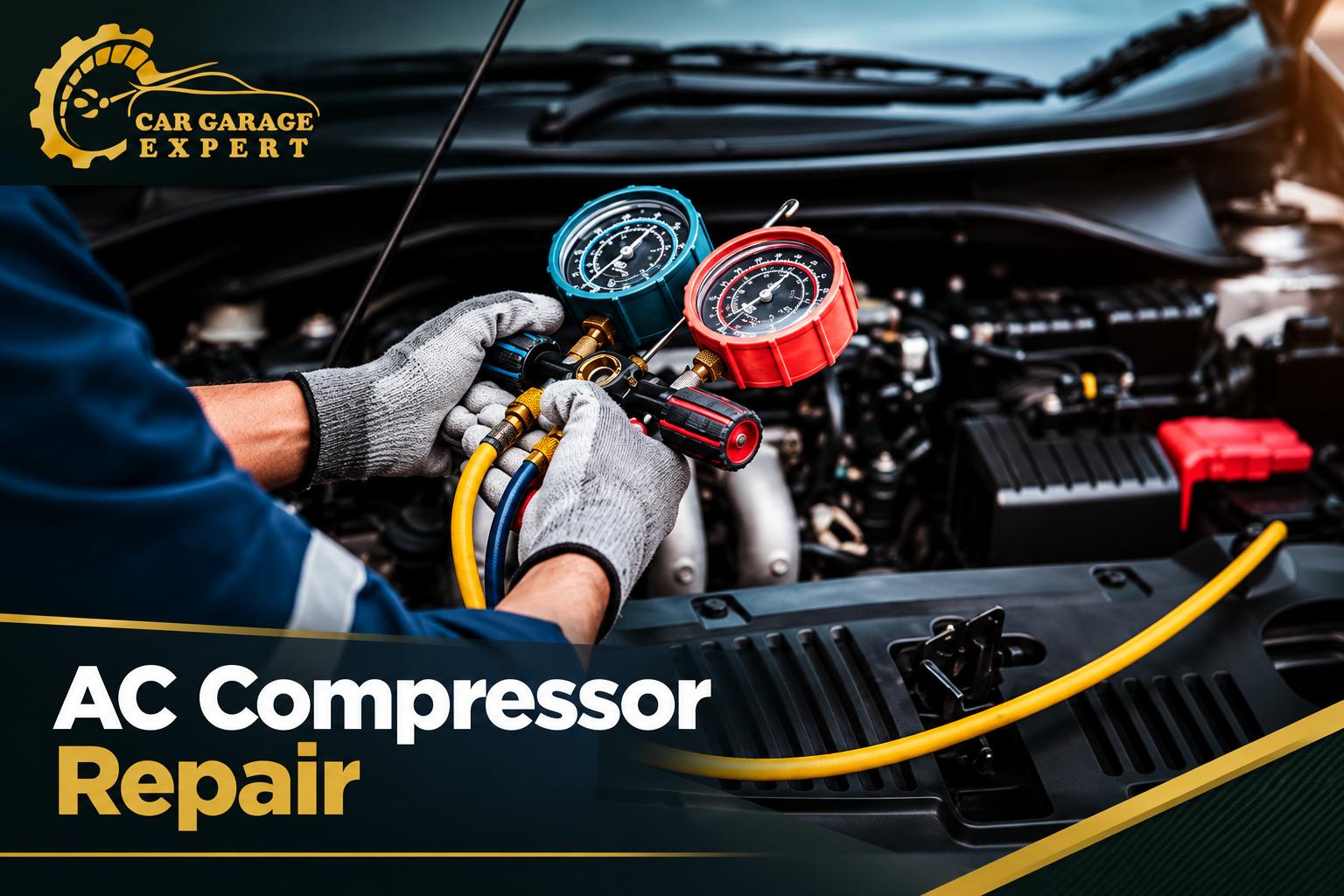
Driving in Dubai means dealing with high temperatures, intense sunlight, and long periods of air conditioning use. Whether you are commuting to work, traveling along Sheik Zayed Road, or driving across the city, a properly functioning car AC system is essential for comfort. If the air conditioning starts blowing warm air, makes unusual noises, or stops cooling altogether, the compressor may be to blame.
At Car Garage Expert, we understand how frustrating it is to drive with an unreliable air conditioning system, especially in the summer. Professional AC compressor repair helps identify the cause of cooling problems, restore system performance, and prevent avoidable damage to other AC components.
The compressor is one of the most important parts of your vehicle’s air conditioning system. It circulates refrigerant through the system, allowing the evaporator to absorb heat from the cabin and helping deliver cool air through the vents. When the compressor fails, it can affect the entire cooling process.
In this guide, we explain the common signs of compressor failure, why it happens, how professionals repair it, and when replacement may be a better option for your vehicle in Dubai.
What Is a Car AC Compressor and How Does It Work?
The car AC compressor compresses and circulates refrigerant throughout the air conditioning system. It receives low-pressure refrigerant gas from the evaporator, compresses it, and sends it to the condenser. This process transfers heat from inside the vehicle to the outside environment.
The compressor runs with the help of the engine or an electric system, depending on the vehicle’s design. In many conventional petrol and diesel vehicles, an engine belt drives it. Hybrid and electric vehicles may use electrically driven compressors that require specialized diagnostic procedures.
A typical automotive AC system includes several connected components:
- AC compressor: Circulates and compresses refrigerant.
- Condenser: Releases heat from the refrigerant.
- Evaporator: Absorbs heat from the cabin air.
- Expansion valve: Regulates refrigerant flow into the evaporator.
- Refrigerant: Transfers heat through the system.
- Sensors and controls: Help regulate pressure and cooling performance.
Because these components work together, a cooling problem doesn’t always mean the compressor has failed. Accurate diagnosis matters before you decide on any repair or replacement.
Common Signs You Need AC Compressor Repair
Recognizing compressor problems early can help prevent additional damage and reduce the risk of an unexpected breakdown in cooling performance.
1. Your Car AC Is Blowing Warm Air
One of the most noticeable symptoms is warm or insufficiently cool air coming from the vents. If the AC runs but the cabin doesn’t reach a comfortable temperature, the compressor may not be circulating refrigerant properly.
However, low refrigerant levels, a blocked condenser, faulty cooling fans, or electrical problems can cause similar symptoms. A professional inspection can identify the actual source of the issue.
2. Unusual Noises When the AC Is Switched On
Grinding, rattling, squealing, or knocking sounds may indicate a problem with the compressor, its internal components, the pulley, or the drive belt.
If a new noise appears when you activate the air conditioning, avoid repeatedly switching the system on to test it. Inspect severe mechanical noise promptly because a failing compressor or belt-related fault may cause further damage.
3. AC Cooling Is Intermittent
Your car may initially produce cold air before gradually becoming warm. In some cases, the system may cool properly while driving but perform poorly when the vehicle is stationary.
These symptoms can indicate compressor control issues, abnormal refrigerant pressure, a failing cooling fan, or an overheating system. Proper diagnostic testing helps distinguish between these possibilities.
4. Refrigerant Leaks Around Compressor Connections
Oil residue around compressor seals, refrigerant connections, or nearby AC pipes can indicate a leak. Automotive refrigerant can escape through damaged seals, hoses, service ports, or other system components.
Although a leak may affect compressor performance, adding more refrigerant without fixing it is not a permanent solution. Inspect the system, locate the leak, and complete the necessary repairs before recharging it.
5. The AC Compressor Clutch Does Not Engage
Many conventional car AC compressors use an electromagnetic clutch that connects the compressor to the engine-driven pulley when cooling is requested.
If the clutch doesn’t engage, possible causes include a faulty relay, damaged wiring, a failed clutch coil, low refrigerant pressure, or a compressor-related mechanical problem. Some modern systems use variable-displacement compressors or different control arrangements, so the correct diagnostic method depends on the vehicle.
6. The Engine Belt Squeals or Shows Damage
A worn belt, damaged pulley, or seized compressor can create squealing noises or visible belt deterioration. Since the same belt may operate other engine accessories, ignoring the issue could affect additional systems.
If you notice a burning smell, smoke, or a severely damaged belt, stop driving when it is safe and arrange a professional inspection.
What Causes Car AC Compressor Problems in Dubai?
Dubai’s climate places considerable demands on automotive air conditioning systems. High outdoor temperatures, heavy traffic, and frequent use can expose existing weaknesses in the compressor and other cooling components.
Extreme Heat and Heavy AC Usage
During hot weather, your car’s air conditioning system must remove substantial heat from the cabin. The compressor may run for extended periods, making proper lubrication, the correct refrigerant charge, and efficient heat dissipation more important.
Heat alone doesn’t mean the compressor will fail, but prolonged operation under demanding conditions can make existing faults more noticeable.
Low or Incorrect Refrigerant Levels
The refrigerant charge must match the vehicle manufacturer’s specifications. An undercharged system may provide poor cooling and trigger protective controls that prevent the compressor from operating.
Overcharging can also cause abnormal pressures and reduce system performance. Never add refrigerant based on guesswork; use the correct type and specified quantity.
Poor Maintenance and Contamination
Moisture, dirt, metal particles, and degraded lubricant can affect AC system operation. Contamination may result from an internal compressor failure, an incorrectly performed repair, or inadequate component replacement after a previous breakdown.
If a compressor fails internally, simply installing a new unit without addressing contamination may lead to another failure. The technician must assess whether flushing is appropriate and whether components such as the receiver-drier, accumulator, or expansion device require attention.
Electrical and Sensor Faults
Modern vehicles depend on pressure sensors, temperature sensors, relays, control modules, and wiring to regulate air conditioning performance. A problem in any of these areas may prevent the compressor from operating correctly.
Electrical diagnosis is especially important when the compressor appears mechanically sound but doesn’t activate consistently.
Normal Wear and Component Age
Over time, compressor bearings, seals, valves, clutch components, and other internal parts can wear out. The risk varies by vehicle model, driving conditions, maintenance history, and previous repairs.
Regular inspections can help identify developing problems before they significantly affect cooling performance.
Our AC Compressor Repair Process at Car Garage Expert
Effective repairs begin with identifying the actual fault rather than replacing parts unnecessarily. At Car Garage Expert, the right repair process depends on the vehicle, its AC system design, and the driver’s reported symptoms.
Step 1: Initial Inspection and Symptom Assessment
The inspection begins with an assessment of the AC system’s performance. The technician considers when the problem occurs, whether cooling is intermittent, whether unusual noises are present, and whether the system has been repaired previously.
The compressor, belt, pulley, visible connections, condenser area, and relevant electrical components may be inspected.
Step 2: Diagnostic Testing
Diagnostic checks help determine whether the issue originates in the compressor or another component. Depending on the vehicle, these checks may include refrigerant pressure measurements, temperature readings, electrical testing, fault-code scanning, and compressor control checks.
Pressure readings must be interpreted according to operating conditions and manufacturer specifications. A single pressure reading is not enough to confirm compressor failure.
Step 3: Leak Detection and Refrigerant Assessment
If a refrigerant leak is suspected, technicians use suitable leak-detection methods to locate the source. The technician also checks whether the refrigerant type and charge are correct for the vehicle.
Repair any confirmed leak before recharging the system. Recover and handle refrigerant with appropriate equipment; do not release it into the atmosphere.
Step 4: Compressor Repair or Replacement Recommendation
After diagnosis, the technician determines the most appropriate solution. Depending on the fault and the availability of suitable parts, the repair may involve addressing an electrical problem, replacing a seal or clutch component, correcting a refrigerant issue, or installing a replacement compressor.
Internal compressor damage may make replacement more practical than repair. The recommendation should consider reliability, compatibility, repair cost, and the condition of the remaining AC system.
Step 5: Installation and System Preparation
If replacement is necessary, the correct compressor must be selected for the vehicle. The technician follows the manufacturer’s procedures for installation, lubricant quantity, refrigerant specification, and system preparation.
If the old compressor has failed internally, the technician must assess possible contamination and replace or service the affected components as required. Simply fitting another compressor without addressing the cause of failure may compromise the repair.
Step 6: Refrigerant Charging and Performance Testing
Once the necessary work is complete, the technician charges the system with the specified refrigerant quantity. The technician then checks cooling performance, operating pressures, system controls, and any repaired connections.
The final inspection helps confirm that the air conditioning system operates as intended under suitable test conditions.
Car AC Compressor Repair vs Replacement: Which Is Better?
Choosing between repair and replacement depends on the specific fault, the compressor’s condition, and the overall state of the air conditioning system.
Repair may be suitable when:
- The fault involves a serviceable clutch, electrical connection, or related external component.
- A repairable seal or connection is responsible for a refrigerant leak.
- The compressor itself remains mechanically sound.
- The required repair is technically appropriate for the vehicle.
Replacement may be necessary when:
- Internal compressor components are severely damaged.
- The compressor has seized or cannot operate correctly.
- Internal contamination makes continued use unreliable.
- Repair is not practical or would offer poor long-term value.
Don’t automatically replace the compressor whenever the AC stops cooling. A faulty relay, sensor, cooling fan, or refrigerant leak may produce similar symptoms. Professional diagnosis helps avoid unnecessary expenditure.
How Much Does AC Compressor Repair Cost in Dubai?
The cost of AC compressor repair in Dubai varies by vehicle make and model, compressor type, fault severity, and required parts.
A minor electrical repair or replacement of a serviceable external component may cost considerably less than replacing a damaged compressor. The total cost may also include refrigerant recovery and recharging, diagnostic labor, seals, lubricant, and other components required to complete the job correctly.
Luxury vehicles, hybrid cars, electric vehicles, and models with specialized AC systems may require additional diagnostic expertise or more expensive parts.
Before approving the repair, ask for a clear explanation of the fault, the recommended solution, the parts and labor involved, and any applicable warranty. Car Garage Expert can assess your vehicle’s specific symptoms and help determine the appropriate repair requirements.
An accurate quotation should be based on the actual vehicle and inspection findings rather than a generic price that may not apply to your car.
Why Timely AC Compressor Repair Matters in Dubai
Delaying a compressor-related repair can affect more than cabin comfort. If a compressor develops severe internal damage, it may release debris into the AC system. That contamination can damage replacement components or require additional cleaning and parts replacement.
A failing pulley or belt can also create mechanical problems beyond the air conditioning system. Meanwhile, an unresolved refrigerant leak can reduce cooling performance and lead to repeated servicing without a lasting solution.
Timely diagnosis offers several benefits:
- More reliable cooling: Helps restore comfortable cabin temperatures.
- Reduced risk of further damage: Identifies developing mechanical or electrical problems.
- Better repair decisions: Helps distinguish compressor faults from other AC issues.
- Potential long-term savings: Avoids repeated refrigerant top-ups or unnecessary part replacement.
- Improved driving comfort: Makes daily travel more manageable during Dubai’s hot weather.
Addressing symptoms early doesn’t guarantee a compressor can be repaired, but it can help prevent a minor fault from becoming a more complicated problem.
Tips to Maintain Your Car AC Compressor
Regular maintenance can help keep your car’s air conditioning system running efficiently, especially in Dubai’s demanding weather.
Use the AC System Regularly
Operating the air conditioning periodically can help keep its components in use. However, if the system makes unusual noises or produces a burning smell, have it inspected instead of continuing to operate it.
Keep the Condenser Clean
Dust and debris can restrict airflow through the condenser, reducing the system’s ability to release heat. Have the condenser inspected and cleaned using a suitable method when necessary.
Check Cooling Performance Early
If the AC takes longer than usual to cool the cabin or the airflow becomes inconsistent, arrange an inspection. These symptoms may indicate a developing issue with the refrigerant charge, compressor, fan, or another component.
Avoid Unnecessary Refrigerant Top-Ups
Refrigerant is not normally consumed like engine oil. If the charge is low, a leak or a previous servicing issue may be to blame. Investigate the source instead of repeatedly adding refrigerant.
Follow Manufacturer Maintenance Recommendations
Use the refrigerant type, lubricant specification, and service procedures specified for your vehicle. This is especially important for newer vehicles, hybrids, and electric cars, where the wrong lubricant or service procedure can damage specialized components.
Respond to Unusual Sounds Immediately
Don’t ignore grinding, persistent squealing, or sudden changes in AC operation. An early inspection can help identify whether the compressor, drive belt, pulley, or another component is the cause.
Book AC Compressor Repair in Dubai with Car Garage Expert
A properly functioning car AC system is essential for comfortable driving in Dubai. If your vehicle blows warm air, makes unusual noises, cools inconsistently, or shows other signs of compressor trouble, a professional inspection is a sensible next step.
Car Garage Expert can help assess your vehicle’s air conditioning problem, identify the likely cause, and recommend an appropriate repair or replacement solution based on the inspection findings.
Instead of repeated refrigerant top-ups or replacing parts without diagnosis, choose a repair approach that fixes the underlying issue. Proper testing, quality replacement parts, and proper system preparation can restore dependable cooling and reduce the risk of recurring faults.
Contact Car Garage Expert to arrange a car AC inspection in Dubai. Get your compressor problem assessed and find the right solution for your vehicle before the next hot journey.
Frequently Asked Questions ac compressor repair
1. How do I know if my car AC compressor needs repair?
Common warning signs include warm air from the vents, unusual grinding or squealing noises, intermittent cooling, refrigerant leaks near the compressor connections, and problems activating the compressor. These symptoms can also result from other AC faults, so professional diagnosis is recommended.
2. Can a car AC compressor be repaired instead of replaced?
Yes, depending on the fault. Some external components, electrical issues, seals, and clutch-related problems may be repairable. However, severe internal damage, seizure, or contamination may make replacement the better option.
3. How long does car AC compressor repair take in Dubai?
Repair time depends on the vehicle, the cause of the problem, parts availability, and whether other AC components need servicing. A straightforward repair may take less time than a full compressor replacement, including system cleaning and testing. We can provide a reliable estimate after inspection.
4. Is it safe to drive with a faulty car AC compressor?
It depends on the type of fault. A compressor that has stopped working may leave you without cooling, while a seized compressor, damaged pulley, or failing drive belt could create a more serious mechanical problem. If you notice loud noises, smoke, or a burning smell, stop safely and seek professional help.
5. Why does my car AC stop cooling in Dubai’s summer?
Several issues can cause poor cooling, including low refrigerant, a refrigerant leak, a faulty compressor, a blocked condenser, an inoperative cooling fan, or an electrical control problem. High outdoor temperatures can make these issues more noticeable. A complete system inspection helps identify the correct solution.
Conclusion ac compressor repair
Car AC compressor problems can make driving uncomfortable and may lead to further mechanical or air conditioning system damage if left unresolved. In Dubai’s hot climate, recognizing warning signs and arranging timely diagnosis are particularly important.
Professional AC compressor repair involves more than simply adding refrigerant or replacing a component. It requires identifying the underlying fault, checking related AC components, following the correct repair procedures, and testing the system after the work is complete.
Visit us in our Al Quoz, Dubai branch or visit Car Garage Expert
Car Garage Expert can help you determine whether your vehicle needs a compressor repair, a replacement, or attention to another part of the cooling system. Arrange an inspection today to work towards reliable air conditioning performance and more comfortable journeys throughout Dubai.