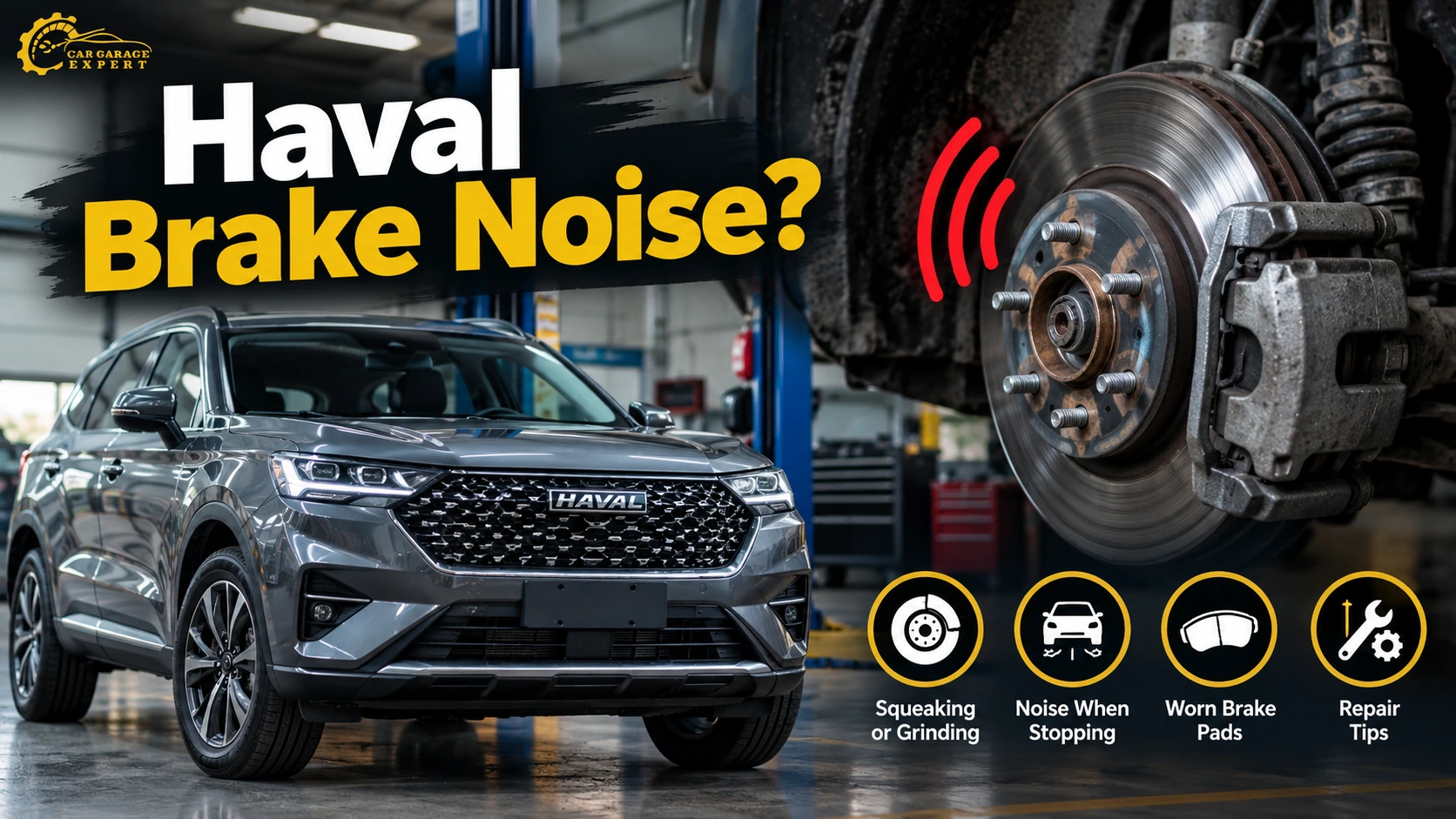
You press the brake at a red light on Al Khail Road, and your Haval lets out a sharp squeal. Or worse, it makes a metal-grinding sound. It is easy to ignore at first. But brake sounds are your car’s way of telling you something has changed.
What Causes Haval Brake Noise When Braking?
Often, Haval brake noise comes from worn pads, damaged discs, dust and sand, glazed pads, calipers that won’t move, or hardware that isn’t tight enough. The sound type tells us what caused it. Often, a squeak means dust, glass, or a worn pad sensor. When you grind, the pads typically get worn down to metal. You can find loose pads or clips by clicking them. Most of the time, a rattle is caused by missing anti-rattle clips. Dubai’s fine sand and stop-and-go traffic can wear down brakes faster thin an many other places. Before a small fix turns into new discs and calipers, we check the brakes to find out what’s really wrong.
Why Is My Haval Making Noise When I Apply the Brakes?
Your Haval makes noise when braking because something in the brake system has changed. The pads may be thin, the discs may be scored, or dust may be trapped between the parts. Brakes work by pressing pads against a spinning disc. When that contact isn’t smooth and even, it makes noise.
Most Haval models sold in the UAE, such as the Jolion, H6, Dargo, and H9, use disc brakes on all four wheels. That means four sets of pads, discs, and calipers, each of which can make noise.
Is Haval Brake Noise Normal or a Sign of a Problem?
Some brake sounds are normal. A light squeak on the first few stops of the morning or after a car wash often fades in a minute. That is moisture or a thin layer of rust on the disc being wiped away.
Noise that stays, gets louder, or changes into grinding is not normal. Neither is noise that comes with vibration, a pull to one side, or a soft pedal. Those signs mean a part is worn or not working the way it should.
How Can You Identify Different Haval Brake Noises?
Pay attention to three things: the sound itself, when it happens, and which corner it comes from. A grind at every stop is not the same as a squeak at low speed. A sound that happens only when the brakes are hot is different from a sound that happens only when the car is in reverse. Sharing these details with your mechanic ahead of time will save time in the shop. Pay attention to three things: the sound itself, when it happens, and which corner it comes from. A grind at every stop is not the same as a squeak at low speed. A sound that happens only when the brakes are hot is different from a sound that happens only when the car is in reverse. Sharing these details with your mechanic ahead of time will save time in the shop.
Squeak, Grind or Click? Matching the Sound to the Cause
This table matches the sound you hear to its most likely cause and how soon you need to check it.
| Sound | Most Likely Cause | How Soon to Check |
| High-pitched squeak | Dust, glazed pads or the pad wear sensor | Within a week or two |
| Metal grinding | Pads worn to the backing plate | Today, drive gently |
| Click when stopping | Pads shifting in the caliper bracket | Within a week |
| Rattle over bumps | Loose or missing anti-rattle clips | Within a week |
| Squeal at low speed only | Pad vibration or uneven pad surface | At your next service |
| Pulsing with vibration | Uneven or warped discs | Within a few days |
What Are the Most Common Causes of Haval Brake Noise?
Seven causes explain most Haval brake sounds. Each has its own sound and fix.
1. Worn Haval Brake Pads
Worn pads are the most common cause. Many pads have a small metal tab called a wear indicator. When the pad gets thin, the tab touches the disc and squeals on purpose. It is a warning, not a fault.
If you ignore the warning, the pad material wears away, and the metal backing plate grinds on the disc. A mechanic measures pad thickness through the wheel or after removing it. The fix is new pads. If grinding went on for a while, the discs usually need replacing too.
2. Damaged or Uneven Brake Discs
Discs can develop deep grooves, a raised edge, or uneven thickness. Grinding or scrapes are what grooves sound like. When you press down on the brake pedal, uneven discs make the wheel shake and the pedal pulse.
The mechanic inspects the disc’s surface and uses a micrometer to measure its thickness. If it’s still thick enough, a lathe can skim the disc smooth. If the thickness is less than what’s written on the disc, you need to replace it.
3. Brake Dust and Sand Build-Up
Brake dust mixes with fine sand and gets stuck between the pad and disc. The result is a squeak or mild scraping noise, usually louder after a desert trip or a dusty day.
A mechanic pulls off the wheels and searches for dust caked around the pads and caliper. The fix is a clean brake. Remove the pads, clean all the parts, oil the contact points with brake grease, and refit.
4. Glazed Brake Pads or Discs
Glazing happens when pads get very hot, and their surface turns hard and shiny. Glazed pads do not grip well and often squeal. You may also notice the car needs more pedal pressure to stop.
Glazing is common after heavy braking down long ramps or in hot traffic. The mechanic looks for a shiny, smooth pad surface and blue marks on the disc. Light glazing can sometimes be sanded off. In most cases, new pads and a disc skim give the best result.
5. Sticking Brake Calipers or Slider Pins
The caliper contains the pads and has to glide freely on two pins. If the pin is dry or rusty, the caliper will stick. One pad may lightly contact the disc and wear quickly. You may hear a continual rub, smell hot brakes, or feel the car pull to one side.
The mechanic checks if each wheel spins freely and compares pad wear on both sides. Uneven wear is a clear sign. The fix is to clean and grease the pins, replace their rubber boots, or replace the caliper if the piston is seized.
6. Loose Brake Hardware or Anti-Rattle Clips
Pads sit in metal clips that hold them firmly in place. If the clips are missing, bent, or reused from old pads, the pads can move. That causes clicks when you start braking and rattles over bumps.
The mechanic checks that every clip, shim, and bolt is fitted and tight. The fix is a new hardware kit, which usually includes good-quality pads.
7. Moisture and Surface Rust on Brake Discs
A thin layer of rust can form on the discs overnight, after rain, or after washing the car. It causes a scraping or squeak on the first few stops. This is normal and wipes off quickly.
If the car sits for weeks, rust can get deeper and leave rough patches on the disc. That can cause noise that doesn’t go away. A mechanic can check the disc surface and may skim it or replace it.
What Do Different Haval Brake Noises Mean?
Each sound points to a different part of the brake system. Here is what the most common ones mean.
Why Do Haval Brakes Make a Squeaking Noise?
A squeaking sound from Haval brakes usually means dust, a pad wear sensor, or glazed pads. A squeak that comes and goes is often dust or moisture. A steady squeak on every stop often means the pads are getting low.
Haval rear brake squeaking is common because rear pads collect more dust and get less cooling air. Rear pads also wear more slowly, so people often forget them at service time.
Why Does My Haval Make a Grinding Noise When Braking?
A Haval grinding sound when stopping usually means metal is touching metal. The pads are worn through, and the backing plate is cutting into the disc. Haval front brake grinding is more common because the front brakes do most of the stopping work.
Grinding can also come from a small stone stuck between the disc and its dust shield. That makes a constant scraping sound even when you are not braking. Either way, you should check for grinding the same day.
Why Do My Haval Brakes Click When I Stop?
A Haval clicking noise when braking usually comes from the pads moving slightly in the caliper bracket. When you press the pedal, the pad shifts and hits the bracket. Missing clips, worn bracket surfaces, or the wrong pads are the usual reasons. A click once per stop is mostly a hardware issue, not a safety emergency, but it should be fixed.
Why Do Haval Brakes Squeal at Low Speeds?
Haval brakes squealing at low speeds usually come from vibration between the pad and disc. At slow speeds with light pedal pressure, the pad can vibrate at a frequency you hear as a squeal. Missing shims, no brake grease on the pad backs, or hard pads can cause it. Stop-and-go traffic makes it more noticeable.
Why Do My Haval Brakes Make Noise When Reversing?
Haval brake noise in reverse often happens because the pads shift direction in the caliper bracket. When you brake going backward, the pads move to the other side of the bracket and click or groan. Surface rust on the discs after the car sits overnight can also cause a groan in reverse when you leave the parking spot. If the noise stays after a few stops, check the clips and bracket.
Brake Sounds That Are Normal on a Newer Haval
Not every wheel sound is a fault. Newer Haval models have electronic systems that make their own noises. Knowing these can save you a trip to the workshop.
- A short motor whirr from the rear wheels when you park or pull away. Many newer Haval models use an electric parking brake, and this is its motor.
- A soft click or hiss when Auto Hold lets go at a traffic light.
- A short buzz or light pulse in the pedal just after you start driving, while the ABS runs its self-test.
- Fast pulsing in the pedal with a buzzing sound during hard braking on sand or gravel. That is the ABS doing its job.
If any of these sounds come with a warning light on the dashboard, they need a diagnostic check.
Why Is My Haval Making Brake Noise After Brake Pad Replacement?
Haval brake noise after replacement is a common complaint. Sometimes it is normal and short-lived. Other times, it means the job wasn’t done right.
Can New Brake Pads Cause Temporary Squeaking?
Yes. New pads need to bed in. That means a thin layer of pad material must transfer onto the disc so the two surfaces match. Until that happens, a light squeak is normal. It usually settles within the first 200 to 300 km of normal driving.
Can Incorrect Brake Pad Installation Cause Noise?
Yes. Noise after a pad change is often caused by the fitting, not the pads. Common mistakes include:
- Reusing old, worn anti-rattle clips
- Leaving out shims or brake grease on the pad backs
- Not cleaning rust from the caliper bracket.
- Fitting pads made for a different model or trim
What Happens If You Install New Brake Pads on Worn Discs?
New pads on grooved or uneven discs will not sit flat. Only part of the pad touches the disc. That causes noise, weak braking, and fast pad wear. The new pads may also wear into the old grooves and need replacing early. A good brake job always checks disc thickness and surface before installing new pads.
Can Dubai’s Weather and Road Conditions Cause Haval Brake Noise?
Dubai conditions can make brake problems more likely, but they are not always the cause. Always check the car before blaming the weather.
Can Sand and Dust Cause Haval Brake Squeaking?
Yes. Fine sand gets into the gap between pads and discs. It is worse after desert drives or dusty days in areas like Al Quoz and Jebel Ali. Sand acts like sandpaper. It causes squeaks and can score the disc surface over time.
Does Dubai’s Extreme Heat Affect Brake Performance?
Heat adds to the temperature brakes already make. On a 45°C summer day, brakes in slow traffic on Sheik Zayed Road have less chance to cool down. Hot brakes can glaze pads and break down old brake fluid. Brake fluid absorbs water over time, and old fluid can boil under heavy braking. That leads to a soft pedal.
Can Humidity Cause Temporary Brake Disc Rust?
Yes. Humid summer nights, especially near the coast in Dubai Marina and JBR, leave moisture on the discs. A thin rust layer forms by morning. It causes a brief scraping sound on the first few stops, then clears. If the noise does not clear, it is something else.
How Do Mechanics Diagnose Haval Brake Noise?
A proper diagnosis follows a set order. It starts with what you tell the mechanic and ends with a road test to confirm the fix.
Visual Inspection of Haval Brake Pads and Discs
The mechanic lifts the car and removes the wheels. The mechanic measures pad thickness on every wheel, inner and outer. The mechanic checks discs for grooves, a raised edge lip, blue heat marks, and rust. The mechanic measures disc thickness and compares it with the minimum stamped on the disc.
Checking Brake Calipers, Slider Pins and Hardware
Check each caliper for leaks and free movement. Pull out slider pins, clean them, and check for rust or dry grease. Mechanics check clips, shims, and bolts for wear and tightness. Uneven wear between the inner and outer pad strongly indicates a sticking caliper.
Inspecting Brake Fluid and Hydraulic Components
Mechanics test brake fluid for water content with a simple tester. Mechanics check hoses for cracks and bulges. The mechanic also looks for leaks at each wheel and at the master cylinder—a soft or sinking pedal points to a hydraulic problem, not just worn pads.
Road Testing to Identify Brake Noise
The mechanic drives the car in the conditions where you hear the noise. That might be slow traffic, hard stops, or reversing out of a parking spot. A road test also checks for Haval brake pedal vibration and Haval steering wheel vibration when braking. A steering wheel shake usually means the front discs are uneven. A pulse felt in the seat often points to the rear.
Checking ABS Warning Lights and Diagnostic Fault Codes
A scan tool reads stored fault codes from the ABS and brake system. A faulty wheel speed sensor or a damaged ABS ring can cause warning lights and odd behavior during braking. On models with an electric parking brake, the scan also checks the rear caliper motors.
How Can You Fix Haval Brake Noise When Braking?
The fix depends on what the diagnosis finds. Here are the main brake services and when you need each one.
When Should Haval Brake Pads Be Replaced?
Replace pads when they reach about 3 mm of friction material, or sooner if the wear sensor squeals. Many workshops recommend checking them every 10,000 km. Front pads often wear about twice as fast as rear pads. In Dubai traffic, front pads may need changing every 25,000 to 40,000 km, depending on how and where you drive.
When Is Haval Brake Disc Replacement Necessary?
Replace discs when they are below minimum thickness, deeply grooved, cracked, or badly warped. A disc that is still thick enough but slightly uneven can be skimmed on a lathe. Discs and pads should always be changed in pairs on the same axle, left and right together.
Can Brake Cleaning and Caliper Servicing Stop Squeaking?
Often, yes. If the pads and discs are in good shape, a brake service can fix the noise. That service includes:
- Removing and cleaning the pads, clips, and caliper bracket
- Cleaning rust and dust from the disc edges and hub face
- Cleaning and greasing the slider pins
- Adding high-temperature brake grease to the pad backs and contact points
- Refitting everything and road testing
A brake service is a good first step when the only sign is a squeak, and the pads still have life left.
Why Is Correct Brake Pad Installation Important?
A pad change looks simple, but small steps decide whether the brakes stay quiet. New clips, clean brackets, grease in the right spots, and correct bolt torque all matter. You should also bed in the new pads with a series of moderate stops. Skipping these steps is the main reason brakes squeak after a pad change. A good car mechanic will also check the discs before fitting new pads.
Some owners ask to have the calipers painted while the wheels are off. That is cosmetic only, and it is done as part of car painting work, not the brake repair itself.
What Happens If You Ignore Brake Noise on Your Haval?
A small brake noise can turn into a big bill. Here is how it usually goes:
- A squeaking wear sensor turns into grinding once the pad is gone.
- Grinding cuts grooves into the discs, so you need to replace both the pads and discs.
- A sticking caliper overheats the pad and disc and can damage the wheel bearing.
- Worn pads and hot brakes mean longer stopping distances.
- Brake failure can cause an accident and cause your car to fail its RTA test.
Catching the problem at the squeak stage usually means a pad change. Waiting until it grinds usually means pads and discs.
Is It Safe to Drive a Haval With Noisy Brakes?
It depends on the sound and how the car stops.
When Is Haval Brake Squeaking Harmless?
A light squeak in the morning or after rain that fades after a few stops is usually harmless. So is a short squeak in the first few hundred kilometers after new pads. If the car stops straight and the pedal feels firm, you can keep driving and book a check.
When Does Grinding Brake Noise Require Immediate Attention?
Grinding means metal is touching metal. Each stop damages the discs more, and the car takes longer to stop. Drive gently to a workshop the same day, or arrange recovery if it is far.
What If Brake Noise Comes With Vibration or Reduced Braking Performance?
Stop driving if the pedal feels soft or sinks, or the brake warning light comes on. Do the same if the car pulls hard to one side or takes much longer to stop. Pull over safely and call roadside assistance instead of pushing on. If the car is safe to move short distances, a mobile car mechanic can check it where it is parked.
How Long Does Haval Brake Repair Take?
Most Haval brake jobs are done the same day. A typical time guide:
- Brake inspection: 30 to 45 minutes
- Front or rear pad replacement: about 1 hour per axle
- Pads and discs on one axle: about 1.5 to 2 hours
- Brake clean and caliper service: about 1 to 1.5 hours.
- Brake fluid change: about 45 minutes
- Caliper replacement: 1.5 to 3 hours, depending on parts
Parts for popular models like the Jolion and H6 are usually easy to find in Dubai. Rarer trims may need a day for parts to arrive.
How Can You Prevent Haval Brake Noise?
A few habits keep your brakes quiet for longer and cut repair costs.
How Often Should Haval Brake Pads and Discs Be Inspected?
Have the brakes checked every 10,000 km or at every service. Change brake fluid every two years, or as your Haval service schedule says. Booking regular car service packages that include a brake check helps you catch problems early.
Can Regular Brake Cleaning Reduce Squeaking?
Yes. In Dubai, a brake clean once a year or after heavy desert driving removes sand and dust before it damages the pads and discs. Rinsing the wheels after a desert trip also helps. Avoid pointing a pressure washer straight into the calipers for long, since it can push water into the seals.
How Does Driving Style Affect Haval Brake Wear?
Hard, late braking heats the pads and wears them fast. Leaving more space in traffic lets you brake earlier and more gently. On long downhill car park ramps, go slowly and brake lightly instead of riding the pedal. These habits reduce glazing and help both pads and discs last longer.
Why Car Garage Expert Is a Smart Choice for Haval Brake Repair in Dubai
For noisy Haval brakes in Dubai, Car Garage Expert in Al Quoz is a strong place to start. The reasons below come down to how easy it is to get the problem found and fixed.
Send a Recording of the Noise Before You Book
Brake sounds often stop the moment you reach a workshop. Car Garage Expert takes inquiries on WhatsApp so that you can send a short video of the noise from inside the car. Record it with the window down when it happens. A clip like that helps the team judge how urgent it is before you drive in.
Help Determine Whether the Car Can Be Driven or Not
Brake problems don’t all show up the same way. Some cars can be driven in. Some are safer to check where they are parked. Some should not move at all. The workshop offers in-house repair, mobile mechanic visits, and roadside help. One team can handle the job from the first call to the final road test.
A Central Al Quoz Location
Al Quoz sits between Sheik Zayed Road and Al Khail Road. That makes it a short drive from Business Bay, Al Barsha, JLT, and Downtown. A shorter trip matters when your brakes are making noise, since less driving means less wear on a damaged disc.
Brakes, Suspension and Servicing Under One Workshop
Brake noise isn’t always a brake problem. A worn wheel bearing, a loose suspension part, or a stone in the dust shield can sound like brakes. A full workshop can check all of these in the same visit. If you are looking for a garage near me for Haval brake repair, that wider check saves a second trip.
Frequently Asked Questions About Haval Brake Noise
Why are my Haval brakes squeaking when braking?
The most common reasons are dust or sand in the brakes, glazed pads, or the pad wear sensor touching the disc. If a squeak stays after a few stops, you need a brake check.
Is Haval brake noise normal at low speeds?
A light squeal at low speed can be normal, especially in the morning or after rain. If it happens on every stop or gets louder, you should have the pads, shims, or clips checked.
Why do my Haval brakes make a grinding noise?
Grinding usually means the pads are worn down to the metal backing plate. A stone can also get trapped behind the disc. Get it checked the same day.
Can worn brake pads cause Haval brake noise?
Yes. Worn pads are the most common cause. The wear sensor squeals first, and grinding follows if you don’t replace the pads.
Why is my Haval making brake noise after replacing the pads?
New pads squeak a little until they bed in over the first 200 to 300 km. Noise that lasts longer usually comes from reused clips, missing grease, or worn discs.
Can sand and dust cause Haval brake squeaking in Dubai?
Yes. Fine sand gets between the pads and discs and causes squeaks. A brake clean removes it, and regular cleaning helps stop it coming back.
Why do my Haval brakes squeak when reversing?
The pads shift in the caliper bracket when you brake in reverse. Overnight rust on the discs can also cause a short groan. If it does not stop, check the clips and bracket.
When should I replace my Haval brake pads?
Replace them when you have about 3 mm of pad material left or when the wear sensor squeals. Check them every 10,000 km, more often in heavy Dubai traffic.
Related Services
These services are often linked to brake noise on a Haval:
- Brake pad and disc replacement
- Brake caliper repair and servicing
- Brake fluid change
- Suspension and steering repair
- Wheel bearing replacement
- Wheel alignment and balancing
- ABS diagnostics
- Car service packages
- Mobile car mechanic
- Roadside assistance and recovery
Get Professional Haval Brake Noise Diagnosis and Repair in Dubai
Brake noise rarely fixes itself. Waiting often turns a pad change into a pad and disc job. Book a brake check with Car Garage Expert in Al Quoz and find out exactly what the sound means.
- WhatsApp: Send a video of the noise
- Location: Find the workshop on Google Maps
Tell the team your Haval model, the type of sound, and when you hear it. They can then tell you what to expect before you arrive.