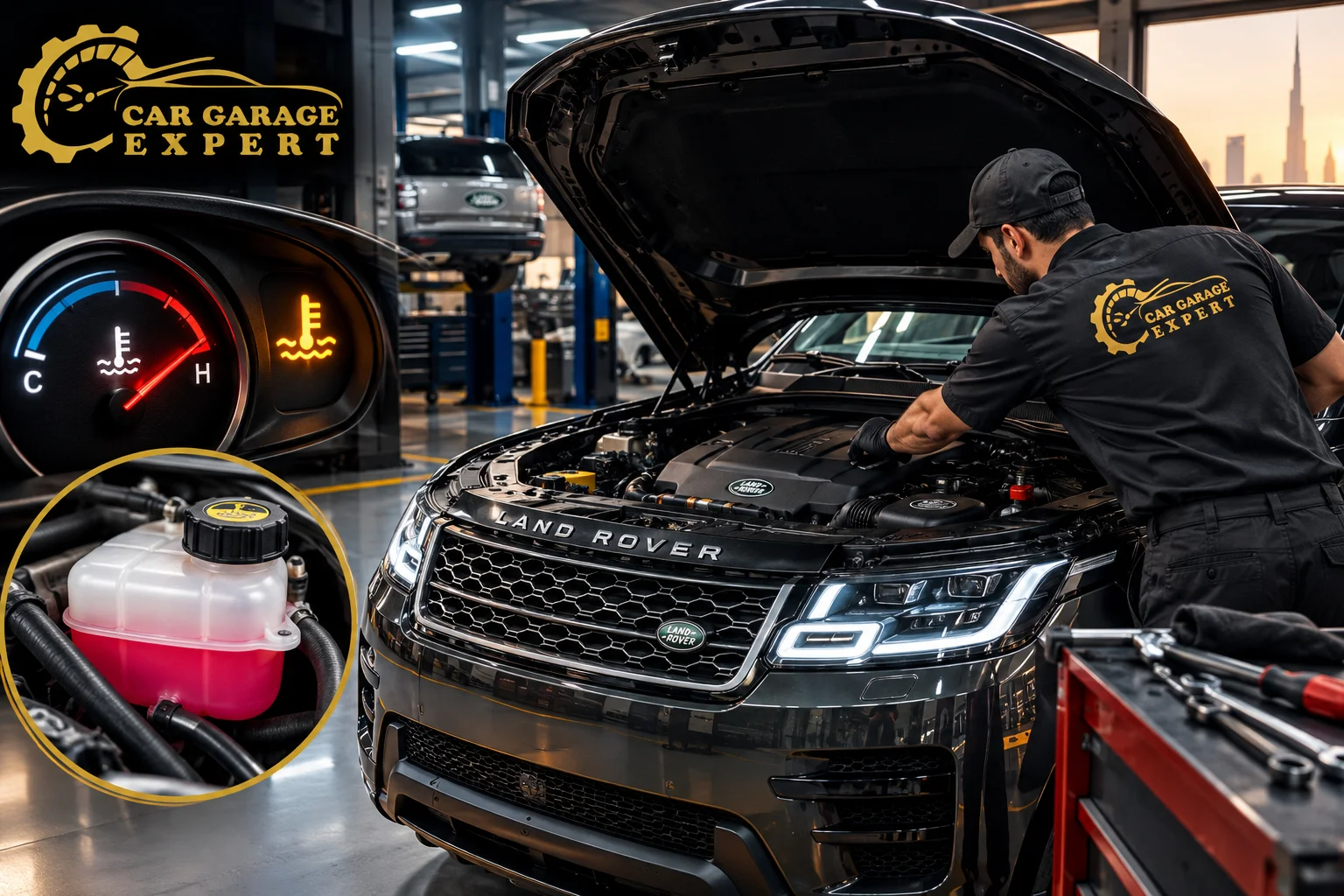
Land Rover engine overheating can happen because of low coolant, a coolant leak, a faulty thermostat, a damaged water pump or a blocked radiator. Dubai’s hot weather can make these problems worse, especially during heavy traffic. You may notice the temperature gauge rising, steam from the bonnet or a warning message on the dashboard. If engine gets too hot, pull over safely and switch it off. Do not keep driving, as this can cause serious engine damage. An expert inspection can help find the cause and prevent costly repairs.
Table of Contents
- Problem Overview: Why Does a Land Rover Engine Overheating?
- Symptoms: Warning Signs Your Land Rover Engine Overheating
- Common Causes: What Makes a Land Rover Engine Overheating?
- Diagnostic Process: How Mechanics Find the Fault
- Repair Process: How to Fix an Overheating Engine
- Risks of Ignoring Land Rover Engine Overheating
- Can You Continue Driving While Land Rover Engine Overheating?
- Repair Time: How Long Does the Job Take?
- Cost Factors: What Affects the Repair Price?
- Prevention Tips for Land Rover Owners
- Dubai-Specific Advice for Hot Weather Driving
- Why Choose Car Garage Expert for Land Rover Engine Repair?
- Frequently Asked Questions
- Related Services
- Final Call-to-Action
Problem Overview: Why Does a Land Rover Engine Overheating?
Land Rover vehicles are built for comfort, power and demanding road conditions. However, like any vehicle, they can develop cooling system problems. When the engine cannot release enough heat, its temperature starts to rise.
Land Rover engine overheating is a problem you should never ignore. It may start with a small coolant leak or a faulty thermostat. If left unchecked, it can lead to serious engine damage.
Your cooling system keeps the engine within a safe temperature range. It uses coolant, a radiator, a water pump and other parts to control heat. If one part fails, the whole system may struggle.
For Dubai drivers, this issue needs extra attention. High outdoor temperatures, long traffic delays and frequent air conditioning use can put more pressure on the cooling system.
If your temperature gauge keeps rising, arrange a professional inspection. Car Garage Expert can help identify engine and cooling system faults before they become more expensive to repair.
Symptoms: Warning Signs Your Land Rover Engine Overheating
Your Land Rover may show several signs before the engine overheats badly. Learning these signs can help you act early.
1. Rising Temperature Gauge
The temperature gauge may move above its normal position. It may rise further when you drive in slow traffic or climb a hill.
Do not wait for the gauge to reach the red zone. If the temperature keeps rising, pull over safely.
2. Coolant Warning Message
Some Land Rover models display a low coolant or high engine temperature warning. Treat these messages seriously.
Low coolant can reduce the system’s ability to remove heat. Check the coolant level only after the engine has cooled fully.
3. Steam Coming From the Bonnet
Steam may appear when coolant escapes from a hot engine. A damaged hose, radiator leak or other cooling system fault could be responsible.
Safely pull over and switch off engine. Never open the coolant cap while the engine is hot.
4. Sweet Smell From the Engine Bay
Coolant can smell sweet when it leaks onto hot engine parts. You may also notice wet patches under the vehicle.
Do not touch leaking fluid or hot engine components. Let a qualified mechanic inspect the vehicle.
5. Reduced Engine Power
An overheating engine may lose power or enter a protective mode. You might notice slow acceleration or unusual engine behavior.
Stop driving if the temperature warning appears and you lose power. Continuing could make the damage worse.
Common Causes: What Makes a Land Rover Engine Overheating?
Several faults can cause Land Rover engine overheating. The correct repair depends on the source of the problem.
Low Coolant Level
Coolant absorbs heat from engine and carries it to the radiator. If the level drops, the system may not cool the engine properly.
Coolant can drop due to a leak or an unresolved cooling system fault. Simply adding more coolant may not solve the problem.
Coolant Leaks
A leak may develop in a radiator, hose, coolant reservoir, water pump or connection. Small leaks can be difficult to spot.
A mechanic should locate the leak and repair the damaged part. The system may then need refilling and testing.
Faulty Thermostat
The thermostat controls coolant flow as the engine warms up. If it sticks closed, coolant may not circulate through the radiator as needed.
This can cause engine temperature to rise quickly. A mechanic can test the thermostat and replace it if necessary.
Damaged Water Pump
The water pump moves coolant around the engine. If it fails, coolant circulation may become weak or stop.
You may notice overheating, coolant leaks or unusual noises. The mechanic should inspect the pump and related components.
Blocked or Damaged Radiator
The radiator releases heat from the coolant. Dirt, internal blockages or physical damage can reduce its cooling ability.
Dust and road debris can also affect airflow through the radiator. This matters in Dubai, where dusty conditions are common.
Cooling Fan Problems
The cooling fan helps move air through the radiator, especially when car is stationary or moving slowly.
If the fan motor, relay, wiring or control system fails, the engine may overheat in traffic. The fault may be less noticeable at higher speeds.
Head Gasket Damage
A damaged head gasket can allow coolant or engine gases to mix or escape. This may cause repeated overheating and other serious symptoms.
Possible warning signs include persistent coolant loss, white exhaust smoke or milky engine oil. These signs do not confirm a failed head gasket on their own. Proper testing is needed.
Diagnostic Process: How Mechanics Find the Fault
Finding the real cause is important. Replacing parts without testing can waste money and leave the problem unresolved.
During an inspection, a mechanic may:
- Check coolant level and look for visible leaks.
- Inspect hoses, the radiator and the coolant reservoir.
- Test the cooling system for pressure loss.
- Check the thermostat and water pump.
- Test the cooling fan and its electrical controls.
- Scan the vehicle for stored fault codes.
- Look for signs of a head gasket failure or internal engine damage.
These checks help narrow down the cause. The mechanic can then explain which repairs your Land Rover needs.
If you are searching for a garage near me in Dubai, choose a workshop that understands Land Rover cooling systems and uses suitable diagnostic tools.
Repair Process: How to Fix an Overheating Engine
The repair depends on the fault. A proper diagnosis should come before replacing any parts.
Step 1: Inspect the Cooling System
The mechanic checks coolant levels, hoses, the radiator and other key components. Pressure testing may help reveal hidden leaks.
Step 2: Identify the Failed Part
The mechanic tests the thermostat, water pump, cooling fan and related components as needed. Further tests may be required if the engine shows signs of internal damage.
Step 3: Repair or Replace Damaged Components
A leaking hose may need replacement. A faulty thermostat, damaged water pump or blocked radiator may also require repair or replacement.
If the head gasket has failed, the repair will be more complex.
Step 4: Refill and Bleed the Cooling System
After the repair, the mechanic uses the correct coolant for your Land Rover. The mechanic removes air from the system where required.
Step 5: Test the Vehicle
The mechanic checks coolant circulation, fan operation and engine temperature. The mechanic should also check for leaks and warning messages before the vehicle returns to the road.
Risks of Ignoring Land Rover Engine Overheating
Ignoring a rising engine temperature can turn a small fault into a major repair.
Here are some possible risks:
- Cylinder head damage: Excess heat can warp metal parts.
- Head gasket failure: High temperatures can damage the seal between engine block and cylinder head.
- Engine oil breakdown: Excess heat can reduce the oil’s ability to protect moving parts.
- Internal engine damage: Severe overheating can damage pistons and other components.
- Complete engine failure: Extreme heat may cause damage that requires a major rebuild or engine replacement.
The longer you drive with an overheating engine, the greater the risk. Stopping early may help prevent further damage.
Can You Continue Driving With an Overheating Land Rover?
No. If the temperature gauge enters the danger zone or you receive a high engine temperature warning, stop driving as soon as it is safe to do so.
Follow these steps:
- Move away from moving traffic and stop in a safe place.
- Switch off the engine.
- Keep clear of steam or escaping coolant.
- Do not open the coolant cap while the engine is hot.
- Arrange roadside assistance if you cannot drive the vehicle safely.
Do not restart the engine to see whether the warning disappears. If the problem returns or the engine has overheated severely, arrange professional help.
Roadside assistance is often the safer option than driving to a workshop with a serious cooling system fault.
Repair Time: How Long Does a Land Rover Engine Overheating Repair Take?
Repair time depends on the cause, model and engine condition.
A simple inspection or minor hose repair may take a few hours. A water pump or radiator replacement may take longer, depending on access and parts availability.
A head gasket repair can take several days because it involves more work and careful testing.
These are general estimates, not guaranteed completion times. Your mechanic can give you a more accurate timeframe after inspecting the vehicle.
Cost Factors: What Affects the Repair Price?
There is no single price for fixing an overheating Land Rover. The final cost depends on the fault and the work required.
Key factors include:
- Vehicle model: Repair procedures vary by Land Rover model and engine.
- Type of fault: A small coolant leak usually costs less to fix than internal engine damage.
- Parts required: The price of a hose, thermostat, radiator or water pump can vary.
- Labor time: Some components are harder to reach than others.
- Diagnostic tests: Pressure tests and further engine checks may add to the bill.
- Damage severity: Driving for too long while overheating may increase the repair cost.
Ask for a clear estimate before approving the repair. Fixing the original problem early is often less expensive than dealing with major engine damage later.
Prevention Tips for Land Rover Owners
Regular care can reduce the risk of engine overheating and help keep your Land Rover reliable.
Check Coolant Levels Regularly
Check the coolant reservoir when engine is completely cold. Follow the correct process in your owner’s manual.
If the level keeps dropping, have a mechanic check the system for leaks.
Service the Cooling System on Time
Follow the maintenance schedule for your specific model. Use the correct coolant and service parts recommended for your vehicle.
Do not mix coolant types unless the manufacturer confirms they are compatible.
Inspect Hoses and Connections
Look for cracks, swelling, leaks or loose connections during routine maintenance. Replace damaged parts before they fail.
Keep the Radiator Clear
Dust and debris can reduce airflow. Have the radiator and cooling fan inspected and cleaned when needed.
Watch the Temperature Gauge
Pay attention to how your vehicle behaves during daily driving. If the temperature rises above normal, do not ignore it.
Arrange Repairs Early
A small leak or a weak cooling fan can become a bigger problem. Prompt inspection can help protect the engine and reduce unexpected breakdowns.
Dubai-Specific Advice: Protect Your Land Rover From Extreme Heat
Dubai’s hot climate can put extra pressure on your vehicle’s cooling system. Long traffic queues, high outdoor temperatures and dusty roads can make an existing fault more serious.
Keep these local driving tips in mind:
- Check coolant levels before long journeys, but only when the engine is cold.
- Watch for temperature changes in slow-moving traffic.
- Make sure the cooling fan and air conditioning system work correctly.
- Arrange regular inspections before long summer drives.
- Do not ignore coolant smells or small leaks after parking.
- Keep a reliable roadside assistance option available for unexpected breakdowns.
Using air conditioning does not automatically mean your engine will overheat. However, a weak cooling system may struggle under heavy loads and high temperatures.
If your Land Rover repeatedly gets hot in Dubai traffic, book an inspection instead of relying on temporary fixes.
Why Choose Car Garage Expert for Land Rover Engine Repair?
Land Rover cooling system problems need careful inspection. Replacing a part without finding the original fault may not solve the issue.
Car Garage Expert can be your point of contact for vehicle inspection and repair support in Dubai. A proper assessment helps identify the cause and determine the right next step.
Here is what to look for when choosing a workshop:
- Experience with Land Rover engine and cooling system faults.
- Clear explanations of the problem and proposed repair.
- Appropriate diagnostic testing before replacing parts.
- An estimate that explains parts and labor.
- Final checks to confirm the cooling system works correctly.
If your vehicle overheats on the road, ask about roadside assistance. Arrange recovery if the engine is too hot to drive safely.
Car Garage Expert can help you plan the next step towards a reliable repair and safer driving.
Frequently Asked Questions
1. Why does my Land Rover overheat in traffic?
A faulty cooling fan, low coolant, a blocked radiator or a weak water pump may cause overheating in traffic. At low speeds, less air flows through the radiator, so a working fan is especially important.
2. Can low coolant cause Land Rover engine overheating?
Yes. Low coolant can reduce the system’s ability to remove heat from the engine. If the level keeps falling, the system may have a leak or another fault that needs repair.
3. Is it safe to drive my Land Rover if the temperature warning comes on?
No. Stop in a safe place and switch off the engine. Do not open the coolant cap while the engine is hot. Arrange roadside assistance if you can’t drive the vehicle safely.
4. How much does it cost to repair an overheating Land Rover in Dubai?
The cost depends on the model and the failed component. A minor coolant leak may be relatively simple to repair, while a damaged head gasket can require extensive work. Ask for an inspection and estimate before approving repairs.
5. How can I prevent my Land Rover from overheating in Dubai?
Check coolant levels when engine is cold, service the cooling system on time, inspect for leaks and keep the radiator clear. If the temperature rises above normal, stop driving and arrange an inspection.
Related Services
If your Land Rover has an engine temperature problem, these services may also help:
- Land Rover engine diagnostics
- Cooling system inspection and repair
- Radiator repair and replacement
- Water pump replacement
- Thermostat repair and replacement
- Coolant leak detection
- Engine oil and filter service
- Head gasket inspection
- Car recovery and roadside assistance
Choose the service based on the actual fault, not on replacing parts without testing.
Final Call-to-Action: Get Your Land Rover Checked Before the Damage Gets Worse
An overheating engine is a warning you should never ignore. Even if your Land Rover cools down after you stop, the original fault may still be present.
Arrange an inspection as soon as possible. Early diagnosis can help prevent further damage, reduce repair costs and keep your vehicle ready for Dubai’s demanding road conditions.
Contact Car Garage Expert to discuss your Land Rover’s symptoms and arrange the appropriate inspection. If the temperature warning appears while driving, stop safely and request roadside assistance rather than risking further engine damage.
Car Garage Expert Location: https://maps.app.goo.gl/2TkrA5b3pRk8e3sQA