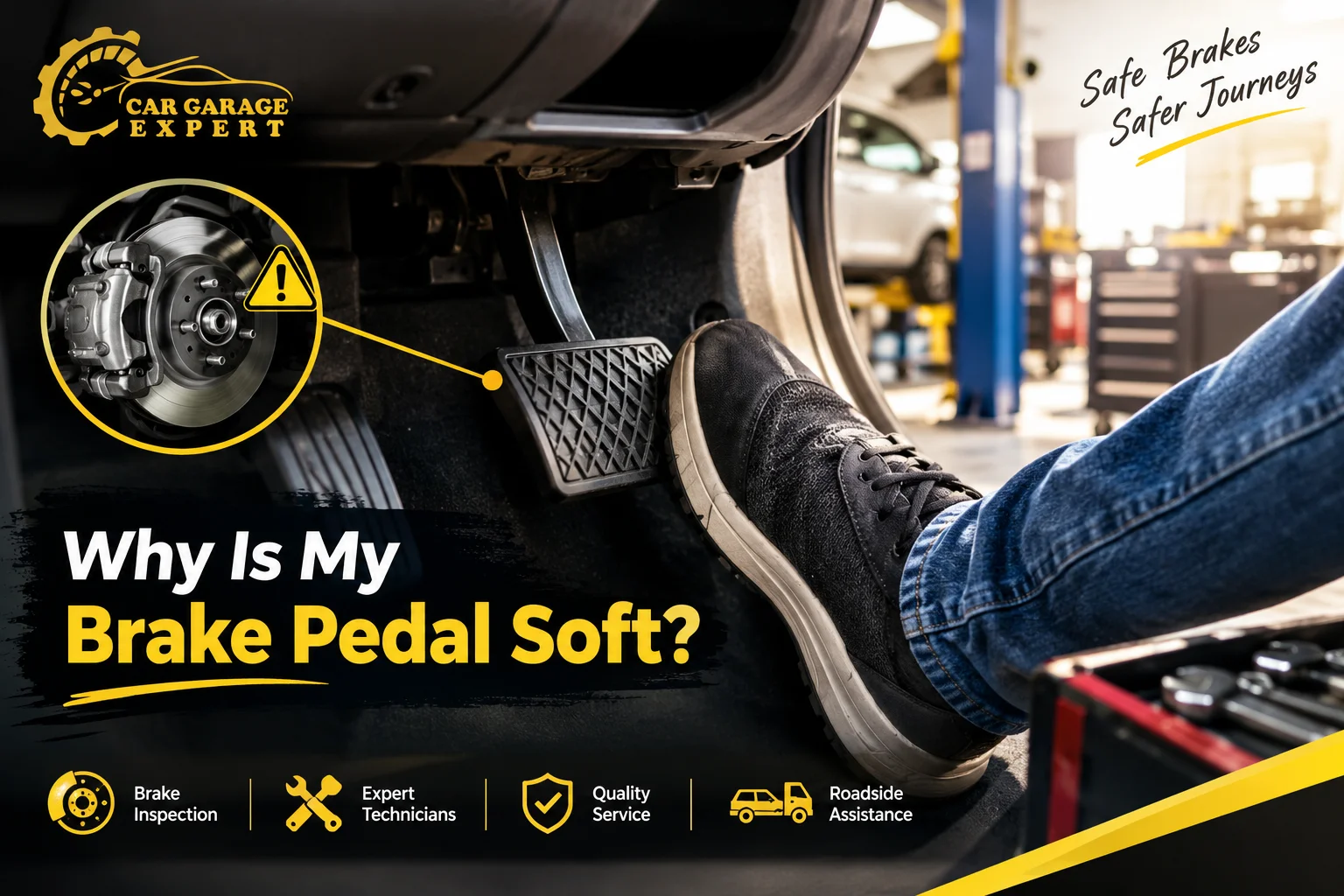
A Brake Pedal Soft problem usually means the pedal feels spongy, sinks farther than normal or needs extra pressure to stop the car. Common causes include Air in the brake lines, low brake fluid, worn brake pads, a leaking brake system or a failing master cylinder. Don’t ignore a soft pedal, as it can increase your stopping distance. If the problem appears suddenly, avoid driving unless you need to reach a safe place. Our professional inspection can find the exact cause. For Dubai drivers, getting the brakes checked quickly matters because heat and heavy traffic can put extra stress on the braking system.
Table of Contents
- Problem Overview: Understanding a Soft Brake Pedal
- Symptoms to Watch For
- Common Causes of a Soft Brake Pedal
- Diagnostic Process
- Repair Process
- Risks of Ignoring the Problem
- Can You Continue Driving?
- Repair Time
- Cost Factors
- Prevention Tips
- Dubai-Specific Advice
- Why Choose Car Garage expert for roadside assistance?
- Frequently Asked Questions
- Related Services
- Final Call-to-Action
Problem Overview: Understanding a Brake Pedal Soft
A Brake Pedal Soft issue can feel very different from normal brake pedal movement.
The pedal may feel spongy when you press it. It may also travel closer to the floor before the car begins to slow down.
Some drivers notice the problem slowly. Others feel it suddenly while driving.
A healthy brake system should give you a firm and predictable pedal. If the pedal feels different, have a mechanic check the braking system.
Symptoms to Watch For Before Brake Pedal Soft
Watch for these warning signs:
- The pedal feels soft or spongy.
- The pedal travels farther than usual.
- The pedal slowly sinks while you hold pressure.
- The car takes longer to stop.
- Brake fluid appears under the vehicle.
- The brake warning light comes on.
- The car pulls to one side while braking.
- You need to press the pedal harder than before.
If you notice more than one of these symptoms, arrange a brake inspection soon.
Common Causes of a Brake Pedal Soft Problem
Several problems can cause a Brake Pedal Soft condition.
| Possible Cause | What Happens | Typical Repair |
|---|---|---|
| Air in brake lines | Air makes the pedal feel spongy | Brake bleeding |
| Low brake fluid | Hydraulic pressure can be reduced | Find leak and refill fluid |
| Brake fluid leak | Fluid loss affects brake pressure | Repair leaking component |
| Worn brake pads | Extra pedal travel may occur | Replace brake pads |
| Damaged brake hose | Hose may expand under pressure | Replace hose |
| Faulty master cylinder | Pressure may not stay stable | Repair or replace cylinder |
| Caliper problem | Brake pressure may be uneven | Inspect or repair caliper |
A visual check can help, but the exact cause often requires a proper brake inspection.
Diagnostic Process: How Technicians Find the Cause
When a Brake Pedal Soft complaint comes in, a technician should not replace parts right away.
The first step is usually a visual inspection.
The technician checks the brake fluid level and looks for leaks around the master cylinder, brake lines, hoses, calipers and wheels.
The technician also tests the brake pedal for travel and firmness.
If needed, the technician bleeds the brake system to check for trapped Air. Technicians may also test other components to identify hydraulic or mechanical problems.
A diagnostic scan may also be useful on modern vehicles with electronic brake systems.
Repair Process: Fixing the Brake System Safely
The Repair depends on the cause.
If Air has entered the brake lines, the system may need bleeding. This removes trapped Air and restores proper hydraulic pressure.
If the brake fluid is low, the technician should find out why before simply adding more fluid.
A leak may require a new hose, line, caliper, wheel cylinder or another component.
Worn brake pads and damaged rotors may also need attention.
If the master cylinder cannot maintain pressure, you may need to replace it.
After repairs, test the brakes carefully before returning to normal driving.
Risks of Ignoring a Soft Brake Pedal
Ignoring a Brake Pedal Soft warning can create a serious safety problem.
A weak pedal may reduce braking performance. Your stopping distance can become longer.
A small fluid leak can worsen. In some cases, continued fluid loss can cause a major loss of braking pressure.
The risk is higher in heavy traffic, at high speeds or when driving downhill.
Do not wait for the brakes to fail before getting them inspected.
Can You Continue Driving With a Soft Brake Pedal?
If the pedal suddenly becomes very soft or nearly reaches the floor, stop driving when it is safe to do so.
Do not take chances with a serious brake problem.
If the vehicle still has some braking ability but the pedal feels different, drive only if it is safe and only for the shortest practical distance to a repair facility.
If the car cannot be driven safely, roadside assistance can help move it without adding risk.
You can also consider Car Garage Expert when you need professional brake inspection and roadside support in Dubai.
Repair Time: How Long Can Brake Repairs Take?
The time depends on the cause of the Brake Pedal Soft problem.
| Repair or Inspection | Approximate Time |
|---|---|
| Brake fluid inspection | 15–30 minutes |
| Brake system inspection | 30–60 minutes |
| Brake fluid replacement | 30–60 minutes |
| Brake bleeding | 45–90 minutes |
| Brake hose replacement | 1–2 hours |
| Brake pad replacement | 1–2 hours |
| Master cylinder replacement | 2–4 hours |
| Complex brake system repair | 3–5+ hours |
These are general estimates. Vehicle design and the condition of the braking system can change the repair time.
Cost Factors: What Can Affect the Final Repair Price?
The cost of fixing a Brake Pedal Soft problem varies between vehicles.
| Cost Factor | Why It Matters |
|---|---|
| Vehicle make and model | Brake parts and labor can vary |
| Cause of the problem | Simple bleeding costs less than major repairs |
| Brake fluid | Different vehicles require different fluids |
| Brake pads | Pad type and brand affect price |
| Brake hoses | Damaged hoses may need replacement |
| Calipers | A faulty caliper can increase repair costs |
| Master cylinder | Replacement can be more expensive |
| Labor time | Difficult access can increase labor charges |
| Additional damage | Related brake problems can raise the total cost |
A proper inspection is the best way to understand the Repair needed.
Prevention Tips for Better Brake Performance
You can reduce brake problems with regular care.
- Check brake fluid during routine service.
- Follow the vehicle manufacturer’s brake service schedule.
- Replace worn brake pads on time.
- Never ignore a brake warning light.
- Check for fluid leaks.
- Watch for changes in pedal feel.
- Have unusual brake noises inspected.
- Avoid delaying repairs after a brake inspection.
Small brake problems can sometimes be fixed before they become larger and more expensive.
Dubai-Specific Advice for Car Owners
Dubai driving can put extra demands on a vehicle’s braking system.
Heavy traffic often means repeated braking. High temperatures can also affect fluids, rubber parts and other components over time.
Long periods of stop-and-go driving can increase brake heat.
If you regularly drive around busy areas such as Al Quoz, Sheik Zayed Road or Downtown Dubai, watch for changes in brake performance.
If you search for a garage near me, choose a workshop that can properly inspect the full braking system rather than simply replacing one part.
Why Choose Car Garage Expert for Roadside Assistance?
When a Brake Pedal Soft problem appears unexpectedly, getting professional help can save time and reduce driving risk.
Car Garage Expert provides automotive support for drivers who need inspection, Repair or roadside assistance.
A professional technician can assess the braking system and help determine whether the vehicle is safe to drive.
If the car cannot be driven safely, roadside assistance can provide a practical way to get it to a suitable repair location.
For Dubai drivers looking for roadside assistance, Car Garage Expert can be a useful option for brake-related service and roadside support.
Frequently Asked Questions
1. Why does my brake pedal feel soft?
Air in the brake lines, low brake fluid, a leak, worn components or a faulty master cylinder can cause a soft pedal.
2. Is a soft brake pedal dangerous?
It can be. A soft pedal may reduce braking performance and increase stopping distance. Inspect it as soon as possible.
3. Can low brake fluid cause a soft pedal?
Yes. Low fluid can reduce hydraulic pressure. It can also indicate a leak or another brake system problem.
4. Can I drive with a soft brake pedal?
If the pedal is very soft or reaches the floor, avoid driving. Instead, arrange professional help or roadside assistance.
5. How long does it take to fix a soft brake pedal?
Simple repairs such as brake bleeding may take less than two hours. More complex repairs can take several hours.
Related Services
If you need brake-related help, related services may include:
- Brake inspection
- Brake pad replacement
- Brake disc replacement
- Brake fluid replacement
- Brake bleeding
- Brake caliper repair
- Master cylinder replacement
- Car diagnostic service
- Roadside assistance
- Mobile mechanic service
Final Call-to-Action
Do not ignore changes in your brake pedal. A Brake Pedal Soft condition can point to a small issue, but it can also indicate a serious brake system fault.
If your brakes feel weak, spongy or different from normal, arrange an inspection before the problem gets worse.
For Dubai car owners, Car Garage Expert can help with brake inspection, Repair and roadside assistance when you need professional support.
Get your braking system checked and drive with greater confidence.
Location: Car Garage Expert – Dubai location