
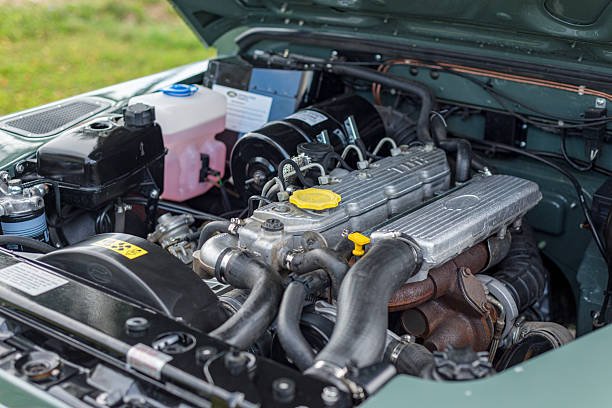
A Land Rover should feel refined and stable when it is stationary. If the steering wheel, seat, dashboard, or entire cabin starts shaking while the engine idles, something may need attention. Some vibrations come from relatively simple issues such as worn engine mounts, while others can point to ignition, fuel, air intake, sensor, or mechanical problems.
For drivers in Dubai, diagnosing Land Rover engine vibration at idle promptly matters because vehicles regularly operate in hot weather, heavy traffic, frequent air-conditioning use, and dusty conditions. The UAE National Centre of Meteorology regularly records very high summer temperatures, making preventive vehicle maintenance especially valuable in this environment.
Land Rover engine vibration
Why does Land Rover engine vibration happen at idle? Common causes include worn engine or transmission mounts, ignition misfires, defective spark plugs or coils, dirty throttle components, air-intake leaks, fuel injector problems, sensor faults, accessory loads, and internal engine issues. If the RPM remains stable but the cabin shakes, engine mounts may be responsible. If the RPM fluctuates or the engine sounds uneven, the problem may involve combustion, fuel, or airflow. A professional diagnostic inspection is the safest way to identify the exact cause before replacing components unnecessarily.
Problem Overview
A small amount of engine movement is normal because an internal combustion engine naturally creates pulses while running. The engine mounting system is designed to isolate much of this movement from the vehicle body. Excessive vibration, however, can indicate that the engine is no longer running smoothly or that vibration is being transferred into the cabin instead of being absorbed.
Engine mounts are specifically designed to isolate vibration between the powertrain and the vehicle structure. Vibration-control manufacturers use elastic and hydraulic mounting systems for exactly this purpose.
The vibration pattern can provide useful diagnostic clues.
For example, a Land Rover that vibrates strongly in Drive but becomes smoother in Park or Neutral may have worn engine or transmission mounts. A vehicle with unstable RPM, hesitation, or an uneven exhaust note may have a combustion-related problem instead.
Similarly, vibration that increases when the AC is switched on may be connected to the additional accessory load, a weak mounting system, compressor operation, or an engine-management issue that prevents the idle speed from compensating correctly.
Because several faults can create similar symptoms, proper testing is more reliable than replacing parts based only on the vibration itself.
Symptoms of Land Rover Engine Vibration at Idle
Idle vibration can appear differently depending on the Land Rover model, engine type, mileage, and underlying fault.
Common symptoms include:
- Shaking through the steering wheel
- Vibration through the driver or passenger seat
- Dashboard or centre-console vibration
- Rough or uneven engine sound
- RPM moving up and down while stationary
- Stronger vibration when the transmission is shifted into Drive or Reverse
- Vibration becoming worse when the AC is running.
- Hesitation when accelerating from a stop
- Reduced engine performance
- Increased fuel consumption
- Check Engine warning appearing.
- Engine vibration that is worse during cold starts
- Engine vibration that gets stronger once the engine warms up
- Unusual rattling or knocking noises at idle
The combination of symptoms often matters more than vibration alone. For example, vibration with a steady RPM can suggest a different problem from vibration accompanied by misfiring, hesitation, or RPM fluctuations.
Common Causes of Land Rover Engine Vibration at Idle
1. Worn Engine Mounts
Engine mounts are among the first components worth checking when vibration is clearly being transferred into the cabin.
Mounts support the engine while helping isolate its normal movement from the chassis. As rubber or hydraulic components deteriorate, more vibration can reach the steering wheel, dashboard, seats, and floor.
A common clue is stronger vibration while the vehicle is stationary in Drive, especially if the vibration reduces noticeably after shifting into Neutral or Park.
2. Worn Transmission Mount
The transmission mounting system works with the engine mounts to stabilise the powertrain.
A damaged transmission mount can allow excessive movement or vibration, particularly when selecting Drive or Reverse. In some cases, inspect both engine and transmission mounts because one failed mount can place additional stress on the others.
3. Spark Plug Problems
On petrol-powered Land Rover models, worn, contaminated, incorrectly gapped, or damaged spark plugs can cause incomplete combustion.
At higher engine speeds, a minor ignition problem may be less noticeable. At idle, however, each cylinder needs to contribute smoothly, so a weak combustion event can produce a noticeable shake.
4. Ignition Coil Failure
Modern Land Rover petrol engines use ignition coils to supply the voltage needed to generate a spark.
If one coil becomes weak or fails, the affected cylinder may misfire. Symptoms can include rough idle, shaking, hesitation, reduced power, poor acceleration, or an illuminated engine warning.
Replacing an ignition coil without testing it first is not always advisable because similar symptoms can also come from injectors, spark plugs, compression problems, wiring faults, or air leaks.
5. Dirty Throttle Body
Deposits around the throttle body can affect airflow at low engine speed.
Because the engine needs only a relatively small amount of air at idle, contamination that has little effect during acceleration can become more noticeable at idle.
Cleaning may solve the problem in certain cases, although some vehicles may also require adaptation or recalibration procedures afterwards.
6. Vacuum or Intake Air Leak
Petrol engines depend on accurately controlled airflow.
A split hose, loose connection, intake gasket leak, or other unmetered-air problem can disturb the air-fuel mixture and cause rough idling.
Technicians may perform a smoke test or inspect fuel-trim data to help identify leaks that are difficult to see during a simple visual inspection.
7. Fuel Injector Problems
Fuel injectors must deliver the correct amount of fuel to each cylinder.
Deposits, electrical faults, restricted flow, or mechanical injector problems can create inconsistent combustion. This can cause vibration, hesitation, difficult starting, poor performance, or increased fuel consumption.
Diesel injector faults can also contribute to uneven combustion and noticeable engine shake.
8. Airflow or Engine Sensor Faults
The engine-management system relies on several sensors to determine how much fuel, air, ignition timing, and other adjustments are required.
Incorrect information from an airflow, pressure, oxygen, temperature, crankshaft, or related sensor can affect idle quality.
That is why diagnostic trouble codes and live sensor readings are useful before replacing parts.
9. EGR or Diesel System Problems
Diesel Land Rover and Range Rover models use emissions-control systems that can influence airflow and combustion.
Depending on the engine design, carbon accumulation, EGR-related faults, injector imbalance, or other diesel-system problems may contribute to a rough idle.
The correct diagnosis should be based on the specific engine and stored diagnostic data rather than assuming every diesel vibration is caused by one component.
10. AC Compressor or Accessory Load
If the vibration appears mainly when the air conditioning is on, test the engine with the AC operating and then with it off.
The compressor adds load to the engine. A healthy system should compensate appropriately, but worn mounts, accessory-drive problems, compressor issues, or idle-control problems can make the added load much more noticeable.
This symptom deserves particular attention in Dubai, where air conditioning is used extensively during hot weather. Current UAE weather bulletins can show coastal summer maximums above 40°C, demonstrating the demanding conditions under which cooling systems operate.
11. Crankshaft Pulley or Harmonic Damper Problems
Depending on the Land Rover engine, a crankshaft pulley or vibration-damping component can deteriorate with age.
If its rubber or damping section fails, the engine may produce unusual vibration, wobbling, or noise around the accessory-drive area.
Because a failing pulley can affect other components, inspect it rather than ignore it.
12. Internal Engine Problems
Less commonly, idle vibration can be linked to mechanical issues such as poor cylinder compression, valve problems, timing irregularities, or internal wear.
These possibilities normally require deeper testing after more common ignition, air, fuel, sensor, and mounting problems have been ruled out.
Diagnostic Process
Correct diagnosis should come before repair.
A professional Land Rover vibration diagnosis may begin with a discussion of when the problem occurs. The technician may ask whether the vibration happens during cold starts, after warming up, with the AC running, in Drive, in Neutral, or at all times.
The technician can then inspect the vehicle systematically.
Step 1: Scan the Vehicle
Connect a diagnostic scanner to retrieve stored or pending fault codes and review relevant engine-management data.
A fault code should usually be treated as a diagnostic clue rather than automatic proof that a particular component needs replacement.
Step 2: Check Idle Quality
The technician observes engine RPM and determines whether the engine itself is running unevenly or whether a normally running engine is simply transmitting excessive vibration to the body.
This distinction can immediately narrow the search.
Step 3: Inspect Engine and Transmission Mounts
Check mounts for deterioration, fluid leakage on applicable hydraulic designs, excessive movement, separation, or abnormal powertrain movement.
Step 4: Evaluate Ignition Performance
For petrol engines, technicians may inspect spark plugs, ignition coils, wiring, and misfire data.
A misfire concentrated on one cylinder points in a different diagnostic direction than vibration affecting the entire engine evenly.
Step 5: Check Air and Fuel Systems
Technicians may examine intake hoses, throttle components, fuel delivery, injectors, fuel trims, and relevant sensors.
Where an air leak is suspected, additional leak-testing procedures may be required.
Step 6: Inspect Accessories and Mechanical Components
Inspect the accessory drive, pulleys, AC system, crankshaft damper, and related components for abnormal movement or noise.
Step 7: Perform Advanced Mechanical Tests if Necessary
If electronic, fuel, ignition, airflow, and mounting checks do not identify the issue, you may perform compression or other mechanical tests.
This structured approach helps reduce unnecessary parts replacement.
Repair Process
The correct repair depends entirely on what the diagnosis reveals.
If worn engine mounts are responsible, you may need to replace the damaged mount or mounts. If the engine is misfiring because of spark plugs or ignition coils, repair the affected ignition components based on the vehicle’s condition and the manufacturer’s requirements.
- Throttle or intake contamination may require professional cleaning, while air leaks require repair of the failed hose, gasket, seal, or connection.
- Injector problems require proper testing because cleaning, electrical repair, or replacement may be appropriate depending on the fault.
- Sensor-related problems may require a wiring inspection before replacing the sensor itself.
- Where software or adaptation values are involved, the vehicle may need an appropriate reset, relearn, or calibration procedure after repair.
- After the work is completed, technicians should confirm that the engine idles smoothly and that no relevant fault codes or abnormal readings remain.
Risks of Ignoring the Problem
An occasional light vibration does not automatically mean catastrophic engine damage, but persistent or worsening shaking should not be treated as normal.
Depending on the cause, continuing to drive could lead to:
- Additional stress on engine or transmission mounts
- Damage to exhaust or connected components from excessive movement
- Reduced fuel efficiency
- Poor acceleration
- Increased emissions
- More severe ignition or fuel-system faults
- Reliability problems
- A breakdown if the underlying fault becomes worse
A persistent combustion misfire deserves particular attention because the original fault can lead to secondary problems if left unresolved.
Early diagnosis is generally simpler than waiting until the vibration becomes severe.
Can You Continue Driving?
Whether you can continue driving depends on the severity and accompanying symptoms.
If the vibration is mild, the engine runs normally, there are no warning messages, temperatures remain normal, and there are no unusual noises or smells, you may be able to drive cautiously to a workshop for inspection.
However, you should avoid unnecessary driving and arrange immediate assistance if the vehicle develops severe shaking, significant power loss, overheating, smoke, strong fuel smells, loud mechanical noises, or other signs of a potentially serious fault.
Land Rover itself recommends consulting the relevant owner’s information for model-specific warnings and operating guidance because vehicle systems and specifications vary between models.
When you’re unsure, having the vehicle inspected or transported is safer than continuing to drive and hoping the vibration disappears.
Repair Time
There is no single repair time for Land Rover engine vibration at idle because the vibration is a symptom, not a single specific failure.
- Straightforward diagnostic checks or replacing an accessible ignition component can sometimes be completed relatively quickly.
- Engine or transmission mount replacement can take more workshop time because technicians may need to support the powertrain while removing components.
- Injector, intake, electrical, diesel-system, pulley, or internal engine problems can take longer because they may require additional testing or disassembly.
- Parts availability also affects turnaround time, especially when a particular Land Rover or Range Rover component needs to be sourced.
- A proper diagnosis should therefore be completed before promising an accurate repair timeline.
Cost Factors
The cost of fixing Land Rover engine vibration in Dubai depends primarily on the root cause.
Important pricing factors include:
- Land Rover or Range Rover model
- Model year
- Petrol, diesel, mild-hybrid, or other powertrain configuration
- Engine design
- Diagnostic time required
- Number of failed components
- Parts availability
- Original-equipment or approved replacement-part choice
- Accessibility of the faulty component
- Labour required for installation
- Additional damage caused by delaying repair
- Calibration or programming requirements after repair
Replacing a spark plug or individual ignition component is very different from replacing multiple hydraulic engine mounts or repairing an internal mechanical fault.
For this reason, requesting an inspection and itemised estimate is more useful than relying on a generic online repair price.
Prevention Tips
You cannot prevent every mechanical failure, but regular maintenance can reduce the likelihood of many rough-idle problems.
Follow the correct maintenance schedule for your particular Land Rover and use engine oil, filters, spark plugs, fluids, and other service parts that meet the appropriate specifications.
- Do not ignore an engine warning light simply because the vehicle still drives normally.
- If you notice a gradual increase in cabin vibration, arrange an inspection before the movement becomes severe.
- Keep the air-intake system properly maintained, especially when the vehicle regularly operates in dusty conditions.
- Have unusual noises from the accessory drive or engine bay checked promptly.
If your Land Rover begins idling differently after recent repairs, battery disconnection, cleaning, or component replacement, tell the technician exactly when the change started. That information can shorten the diagnostic process considerably.
Dubai-Specific Advice for Land Rover Owners
Dubai creates a demanding operating environment for luxury SUVs
Hot weather, extended air-conditioning use, stop-and-go traffic, dusty roads, and long periods of idling can make good maintenance practices especially important. Official UAE weather data confirms that summer temperatures can reach demanding levels across coastal and inland areas.
If your Land Rover vibrates mainly while waiting at traffic lights with the AC operating, mention this exact condition to your technician.
Likewise, if the problem appears only after the vehicle has been driven for 30 minutes or more, explain that the issue is temperature-dependent.
Dubai owners should also pay attention to the air filter condition. AA vehicle regularly exposed to dust needs inspection based on its actual operating environment, not just mileage.Avoid repeatedly revving an engine to hide a rough idle. The temporary RPM increase may reduce the sensation without addressing the underlying fault.
For Range Rover, Defender, Discovery, Discovery Sport, Range Rover Sport, Range Rover Velar, or Range Rover Evoque owners, providing the exact model, model year, engine type, and symptoms when booking a diagnostic inspection can help the workshop prepare correctly.
Why Choose Car Garage Expert for Land Rover Repair in Dubai?
When a premium vehicle develops unexplained vibration, accurate diagnosis matters more than replacing parts until the symptom disappears.
Car Garage Expert currently advertises dedicated Land Rover repair and maintenance in Dubai, including routine servicing and complex engine diagnostics. Its broader workshop services include engine repair, transmission repair, brake services, AC repair, electrical and battery work, and roadside assistance.
For a Land Rover with a rough idle or engine vibration, this approach treats the issue as a complete powertrain diagnostic problem rather than assuming one component is responsible.
Car Garage Expert also advertises service booking through its website and lists +971 55 579 7960 as its contact number. Its website also states that roadside assistance is available in Dubai.
Whether your Land Rover needs an engine-mount inspection, ignition diagnosis, air-intake check, fuel-system testing, electrical diagnosis, or deeper engine investigation, identifying the actual cause first helps prevent unnecessary repairs.
FAQs
1. Why does my Land Rover vibrate at idle but drive smoothly?
If your Land Rover vibrates mainly while stationary but runs smoother once you accelerate, worn engine or transmission mounts may be the cause. At higher RPM, the vibration frequency changes and may become less noticeable. However, minor ignition, injector, airflow, or sensor issues can behave similarly, so diagnose the vehicle before replacing mounts.
2. Why does my Range Rover vibrate more in Drive than in Park?
When the transmission is placed in Drive, additional load is applied to the powertrain while the vehicle remains stationary. Weak engine or transmission mounts can make vibration much more noticeable under this condition. If the RPM also becomes unstable, the technician should investigate engine-management and combustion issues as well.
3. Can bad spark plugs cause Land Rover vibration at idle?
Yes. On petrol Land Rover engines, worn or damaged spark plugs can contribute to incomplete combustion or misfiring. The engine may shake, hesitate, lose power, or illuminate the Check Engine warning. Spark plugs are only one possible cause, so coils, injectors, air leaks, sensors, and mechanical condition may also need inspection.
4. Why does my Land Rover shake when the AC is on?
The AC compressor adds load to the engine. If the vibration gets much stronger when the AC is on, possible causes include worn engine mounts, compressor or accessory-drive problems, or an idle-control issue. Since air conditioning is heavily used in Dubai’s hot climate, testing the vehicle with the AC both on and off can provide an important diagnostic clue.
5. How do I fix Land Rover engine vibration at idle in Dubai?
Start with a professional diagnostic inspection rather than replacing components based on guesswork. The technician should check fault codes, live engine data, mounts, ignition components, intake airflow, fuel delivery, sensors, accessories, and mechanical condition as necessary. Once the technician identifies the source of the vibration, they can repair or replace the faulty component correctly.
Conclusion
So, why does Land Rover engine vibration happen at idle? There is no single answer.
Worn engine mounts are a common possibility, but vibration can also result from ignition misfires, spark plugs, ignition coils, fuel injectors, intake leaks, throttle contamination, sensors, diesel-system problems, accessories, crankshaft damping components, or internal engine faults.
The way the vibration behaves provides valuable clues. A steady RPM with strong cabin vibration may point toward mounting problems, while fluctuating RPM and an uneven exhaust note may suggest a combustion or engine-management issue. Vibration that appears when the AC is running or when the transmission is in Drive provides additional diagnostic information.
The most important step is identifying the cause before replacing parts.
Dubai’s demanding temperatures, traffic conditions, dust, and heavy air-conditioning use make timely maintenance particularly important. If the vibration is persistent, becoming stronger, or accompanied by warning lights, reduced power, unusual noises, smoke, overheating, or other symptoms, arrange an inspection promptly.
Visit us in our Al Quoz, Dubai branch or visit Car Garage Expert
Stop the Vibration Book Your Land Rover Diagnostic Inspection Today
Is your Land Rover shaking at idle, vibrating in Drive, running rough with the AC on, or showing an engine warning light?
Don’t wait for a minor vibration to become a more complicated repair.
Contact Car Garage Expert in Dubai for professional Land Rover diagnostics and repair. Their current website advertises Land Rover-specific servicing, engine diagnostics, general engine repair, and roadside assistance across Dubai.
Book your Land Rover inspection today and get the actual cause diagnosed before replacing unnecessary parts.