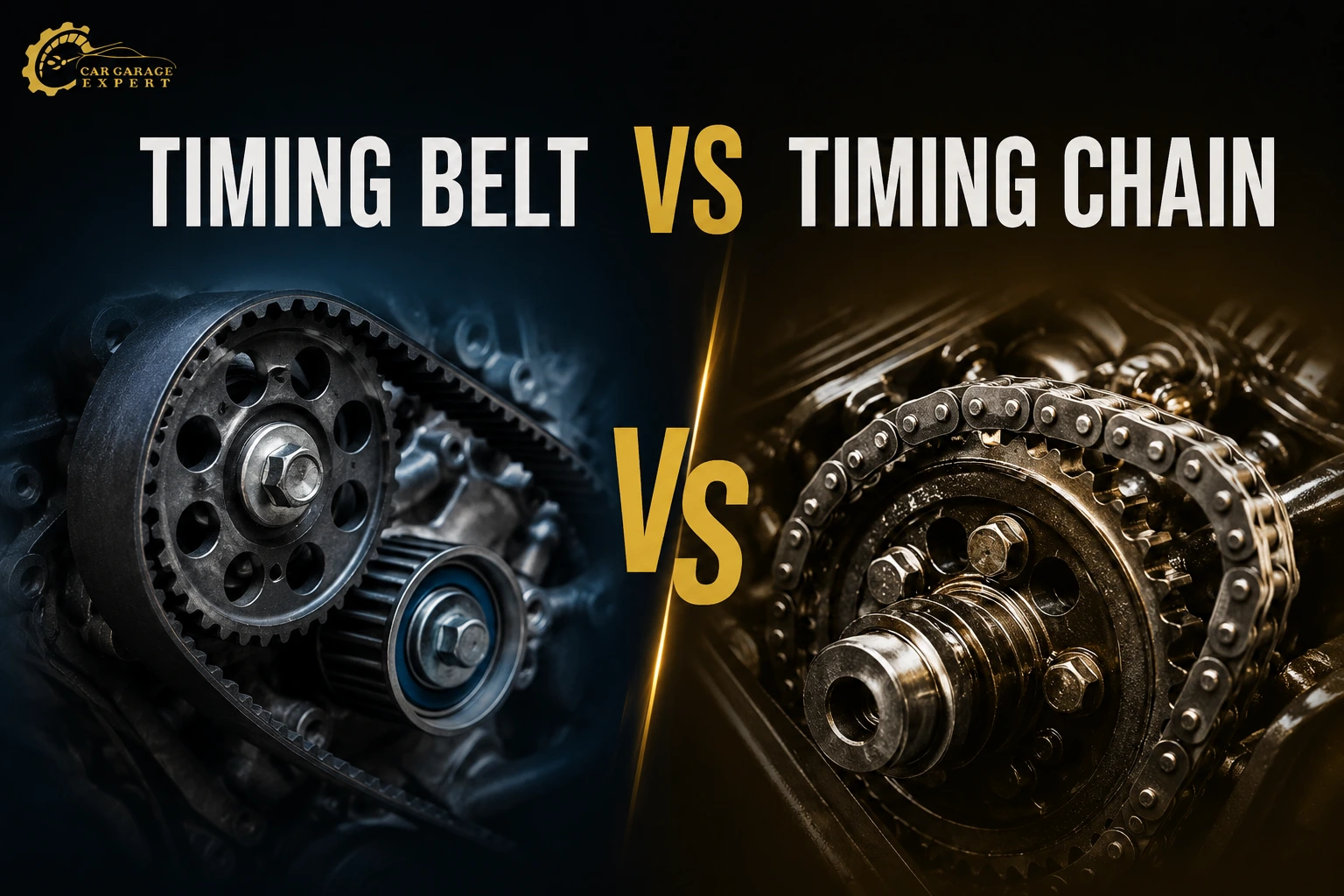
A timing chain usually lasts longer than a timing belt. It often runs for the life of the engine. A timing belt is different. It’s quieter. It’s cheaper to make. But it wears out faster. It needs regular replacement. In the Timing Belt vs Timing Chain debate, the choice depends on your car’s design. It’s not about preference. Most engines come with one or the other. You can’t swap between them. Know which one your car has. Then follow the replacement schedule. Skipping a worn belt or chain can damage your engine. Not sure which system you have? A quick check at a trusted garage near me can clear it up fast.
Table of Contents
- Timing Belt vs Timing Chain: What’s the Real Difference?
- Signs Your Timing Belt or Chain Is Wearing Out
- Common Causes of Timing Belt and Chain Failure
- How We Diagnose Timing Belt or Chain Problems
- Replacement and Service Process
- Risks of Ignoring a Worn Belt or Chain
- Can You Keep Driving With a Failing Timing Belt or Chain?
- How Long Does Replacement Take?
- What Affects the Cost of Replacement?
- Prevention Tips for Dubai Drivers
- Dubai-Specific Advice for Timing System Care
- Why Choose Us for Engine Repair?
- Frequently Asked Questions
- Related Services
- Final CTA
Timing Belt vs Timing Chain: What’s the Real Difference?
They both do the same job. They keep all the valves and pistons in your engine operating in harmony. Without it, your engine will not run.
The timing belt is composed of reinforced rubber. It is quiet and cheaper to make, but it will stretch and crack over time. A timing chain is metal links , like a bicycle chain . It is designed to withstand more stress and generally has to be replaced less often.
The Timing Belt vs Timing Chain comparison table below breaks down the key differences side by side.
| Feature | Timing Belt | Timing Chain |
| Material | Reinforced rubber | Metal links |
| Typical lifespan | 60,000–100,000 km | 150,000–250,000 km or life of engine |
| Noise level | Quiet | Slightly louder |
| Maintenance | Scheduled replacement required | Usually low, but not zero |
| Repair cost if it fails | Moderate to high (can bend valves) | Higher (harder to access) |
| Common failure sign | Cracking, fraying | Rattling, stretching |
If you’re weighing a timing belt or timing chain for a car you’re buying or maintaining, this table gives you a quick side-by-side view before you decide on a repair plan.
Signs Your Timing Belt or Chain Is Wearing Out
Watch for these warning signs, no matter which system your car has:
- A rattling or ticking noise from the front of the engine
- The engine misfiring or running rough
- Trouble starting the car
- The check engine light is turning on.
- Oil leaking near the timing cover.
- Visible wear, cracks, or metal shavings during an inspection
Catching these early can save you from a much bigger engine repair bill later.
Common Causes of Timing Belt and Chain Failure
A few things speed up wear on both systems in the Timing Belt vs Timing Chain comparison. Regular heat cycles in Dubai’s climate are a big factor, since high temperatures dry out rubber belts faster than normal.
Another common culprit is low or dirty engine oil, especially for timing chains that rely on oil pressure for lubrication. The primary cause overall is lack of periodic maintenance. Most makers provide a replacement interval, and ignoring it invites trouble.
A stretched chain guide or worn tensioner can also interfere with timing before the chain itself fails. This is one reason a complete inspection matters more than looking at the belt or chain alone.
How We Diagnose Timing Belt or Chain Problems
Diagnosing a timing belt vs timing chain issue starts with a visual inspection. We check for cracks, fraying, or looseness, along with any unusual noise coming from the engine bay.
Next, we check engine codes using a diagnostic scanner. Timing problems often trigger specific fault codes tied to camshaft or crankshaft position sensors. We also check oil condition, since dirty oil commonly causes chain stretch.
If the issue isn’t clear from the outside, our team can remove the timing cover for a closer look. This step confirms what needs attention before we order any parts.
Replacement and Service Process
Replacing a timing belt or chain is a detailed job. The engine’s front cover needs to come off, and the crankshaft and camshaft timing marks must line up exactly.
If you’re replacing a timing belt, we often recommend replacing the water pump, tensioner, and idler pulleys at the same time. These parts wear down together, so replacing them at the same time saves labor costs down the line. If it’s a timing chain, we will inspect the guides, the tensioner, and the chain’s tension to see whether you need a full replacement.
If you can’t bring your car in, our mobile mechanic service can also perform inspections and smaller timing-related repairs on-site.
Risks of Ignoring a Worn Belt or Chain
This is one repair you don’t want to delay. If a timing belt snaps while driving, the pistons can hit the valves. That kind of damage often means a full engine rebuild.
A stretched or broken timing chain causes similar problems, though it usually gives more warning signs first, like a rattling noise. Still, waiting too long risks the same kind of expensive damage.
Beyond the mechanical risk, a sudden engine failure on the road isn’t safe. It can leave you stranded in traffic or in Dubai’s summer heat.
Can You Keep Driving With a Failing Timing Belt or Chain?
We don’t recommend it. Unlike other repairs that can wait, timing system failure can happen without much warning, especially with belts. If you notice rattling, misfiring, or a warning light, get it checked right away.
If your car breaks down suddenly, our roadside assistance team can help get you off the road safely and tow the car in for repair.
How Long Does Replacement Take?
A timing belt replacement usually takes 3 to 5 hours, depending on the engine layout. A timing chain replacement can take longer, often a full day, since chains sit deeper in the engine and require more disassembly.
We’ll confirm the exact time after a full inspection, since access can vary by car model.
What Affects the Cost of Replacement?
Several factors affect timing belt vs timing chain replacement price: the engine type, whether related parts need replacing too, and labor time. A transverse engine with easy access costs less to work on than one that has to be partly removed.
Using original parts instead of aftermarket parts also drives the price up, but for a part this vital, it is typically worth it. We’ll always explain your alternatives and charges up front, before any work begins.
Prevention Tips for Dubai Drivers
A little care goes a long way with your car’s Timing Belt vs timing chain system, whichever one it has:
- Follow your manufacturer’s replacement schedule, even if nothing feels wrong.
- Keep up with regular oil changes to protect the timing chain.
- Listen for new noises from the engine bay and get them checked early.
- Avoid long idling in extreme heat, which adds extra strain on rubber parts.
- Book a full service package that includes a timing system check.
Dubai-Specific Advice for Timing System Care
Dubai’s heat and stop-start traffic add extra stress to both timing belts and chains. Rubber belts dry out faster in high temperatures, and long idling in traffic raises engine temperatures more than steady highway driving.
We recommend an extra inspection every 20,000 km if you drive mostly in city traffic. This catches early wear before it becomes a bigger problem. If you’re looking for a reliable garage near me for this kind of check, our Al Quoz location is easy to reach.
Why Choose Car Garage Expert for Engine Repair?
Our technicians have years of experience with both sides of the Timing Belt vs Timing Chain question across popular makes and models in Dubai. We use proper diagnostic tools, not guesswork, to confirm exactly what your engine needs.
We also use quality parts and back our work with a service warranty, so you won’t be left guessing after the repair. Our Al Quoz shop makes it easy to drop in for an inspection or a full replacement.
If your car shows signs of timing trouble, we recommend booking a check with Car Garage Expert before it becomes a bigger repair. We also recommend our team for general engine diagnostics beyond timing issues.
Frequently Asked Questions
Q1: Which lasts longer, a timing belt or a timing chain?
A timing chain generally lasts longer, often the life of the engine, while a timing belt needs replacement every 60,000 to 100,000 km.
Q2: Is a timing chain better than a timing belt?
Chains need less frequent replacement, but belts are quieter and cheaper to produce. Neither is “better” overall since it depends on the engine’s design.
Q3: What happens if a timing belt breaks while driving?
On many engines, this causes the pistons to hit the valves, leading to serious engine damage. This is why timely replacement matters so much.
Q4: How do I know if my car has a belt or a chain?
Your owner’s manual will list this, or a mechanic can check quickly during an inspection. Some engines even show a visible cover marked “timing chain” or “timing belt.”
Q5: Can a timing chain fail without warning?
It’s less common than a belt snapping, but a stretched or worn chain can still fail if ignored for too long. A rattling noise is usually the first warning sign.
Related Services
Beyond timing belt and chain work, we also offer general car servicing and car painting for a wide range of makes across Dubai.
Concluion
If you’re dealing with engine noise, warning lights, or you’re still unsure about the Timing Belt vs Timing Chain in your car, don’t wait to find out the hard way. Book a check with Car Garage Expert today. Message us on WhatsApp at or visit our Al Quoz garage for fast, reliable engine repair.