Common symptoms of a bad thermostat include engine overheating, a temperature gauge that stays too low, slow engine warm-up and a heater that blows cold air. You may also notice changing engine temperatures, poor fuel economy or coolant leaks near the thermostat housing. These problems often occur when the thermostat gets stuck open or closed. A faulty thermostat can affect engine performance and cause serious damage if you ignore it. If your car displays signs of overheating, come to a safe stop and turn off the engine. Contact a trusted garage in Dubai for proper inspection and repair.
Table of Contents
- Problem Overview: What Does a Car Thermostat Do?
- Symptoms of a Bad Thermostat: Warning Signs to Watch For
- Common Causes of Thermostat Failure
- Diagnostic Process: How Do Mechanics Check a Faulty Thermostat?
- Repair Process: How Is a Bad Thermostat Fixed?
- Risks of Ignoring a Faulty Thermostat
- Can You Continue Driving With a Bad Thermostat?
- How Long Does Thermostat Replacement Take?
- Cost Factors for Thermostat Repair in Dubai
- Prevention Tips for a Healthy Cooling System
- Dubai-Specific Advice for Car Owners
- Why Choose Car Garage Expert for Roadside Assistance?
- Frequently Asked Questions
- Related Services
- Final Call-to-Action
Problem Overview: What Does a Car Thermostat Do?
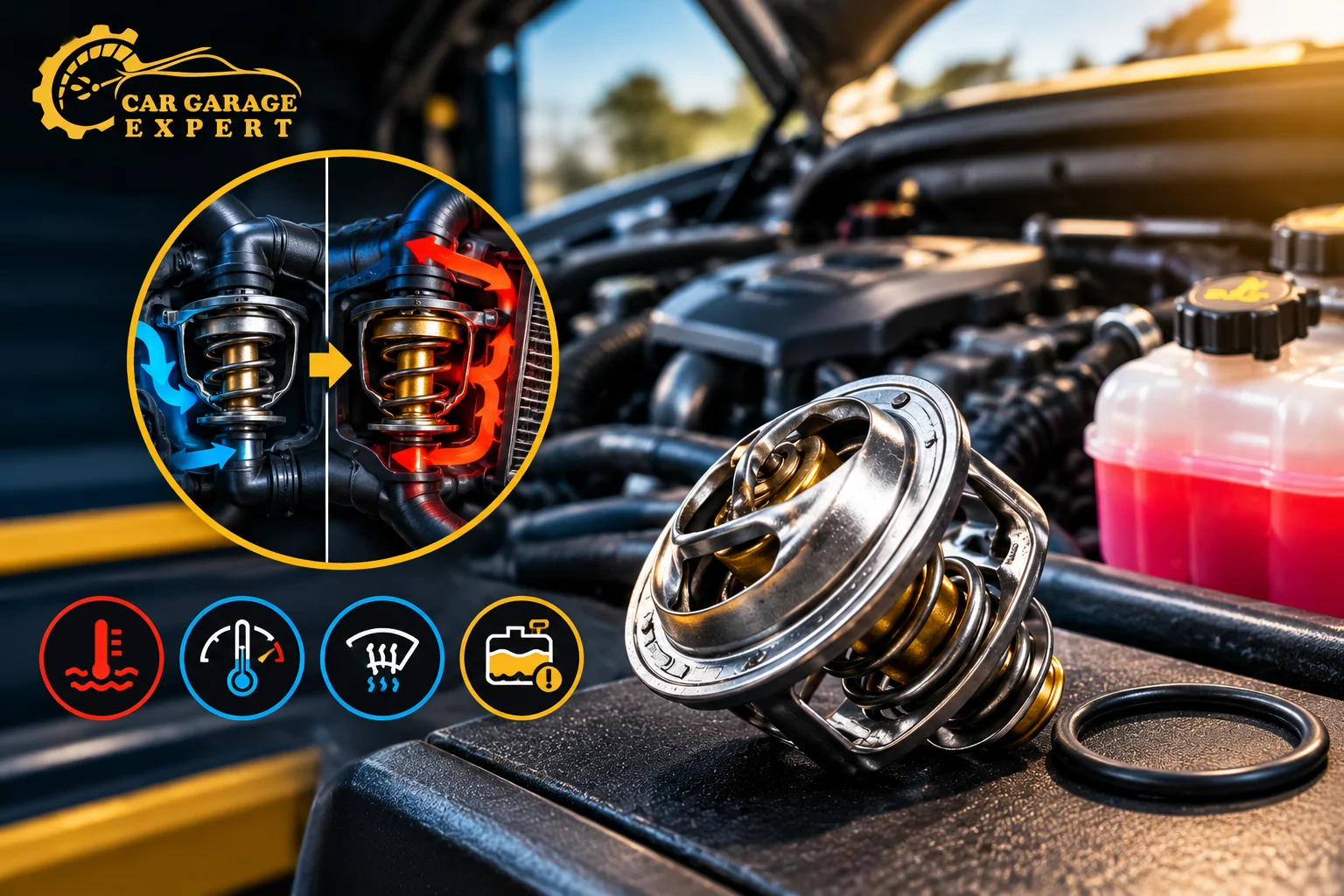
Your car’s thermostat is a small but important part of the engine cooling system. It controls the flow of coolant between the engine and the radiator. This helps the engine reach its usual operating temperature while remaining within a safe range.
When the engine is cold, the thermostat remains closed to allow it to warm up. As the engine heats up, the thermostat opens and coolant flows through the radiator.
Problems begin when the thermostat fails to open or close at the right time. This can affect engine temperature, fuel use and overall performance.
The Symptoms of a Bad Thermostat may look similar to other cooling system problems. A faulty radiator fan, low coolant level, damaged water pump or faulty temperature sensor can cause similar signs. That is why proper testing matters before replacing any parts.
Symptoms of a Bad Thermostat: Warning Signs to Watch For
Symptoms of a Bad Thermostat can affect your car in several ways. Some signs appear slowly, while others need immediate attention.
Engine Temperature Rises Above Normal
One of the clearest warning signs is an engine temperature gauge that moves into the red zone. This can happen when the thermostat stays closed and blocks coolant flow to the radiator.
You may also see a temperature warning light on the dashboard. If this happens, pull over somewhere safe and turn off the engine. Do not continue driving while overheating engine.
The Temperature Gauge Stays Too Low
A thermostat stuck open allows coolant to flow through the radiator before the engine reaches its normal temperature. As a result, the gauge may take too long to rise or remain below its usual position.
The engine may also use more fuel because it cannot warm up properly. However, a faulty sensor can cause similar readings.
The Car Heater Blows Cold Air
If your cabin heater produces little heat, the engine may not be reaching the correct temperature. A thermostat stuck open can cause this issue, especially during cooler mornings.
Low coolant, trapped air or a blocked heater core can also reduce cabin heat. A mechanic should check the full cooling system before deciding on a repair.
Engine Temperature Keeps Changing
Does your temperature gauge rise and fall while driving? A faulty thermostat may open and close incorrectly, causing unstable engine temperatures.
Air trapped in the cooling system or a failing water pump can produce similar symptoms. Do not ignore repeated temperature changes, especially if the gauge moves toward the red zone.
The Engine Takes Too Long to Warm Up
A healthy engine usually reaches its normal operating temperature within a reasonable time. If yours takes much longer than usual, the thermostat may be stuck open.
Long warm-up times can affect fuel efficiency and engine performance. The problem may become more noticeable during short trips.
Coolant Leaks Near the Thermostat Housing
A damaged thermostat housing or worn gasket may allow coolant to escape. You might notice coloured fluid under the car or wet areas around the housing.
A coolant leak does not always mean the thermostat itself has failed. Hoses, seals and other cooling system parts can also leak and need inspection.
Poor Fuel Economy or Rough Engine Performance
An engine that stays too cold may use more fuel than normal. You might also notice slower warm-up, uneven performance or a check engine light.
These issues have many possible causes. A mechanic should check the engine control system and cooling components before confirming the fault.
Symptoms of a Bad Thermostat: What Happens When It Gets Stuck?
The way a thermostat fails can help explain what your car is doing.
|
Thermostat Condition |
Common Signs |
Main Concern |
|---|---|---|
|
Stuck closed |
Engine overheating and rising temperature gauge |
Serious engine damage |
|
Stuck open |
Slow engine warm-up, low temperature reading and weak cabin heat |
Poor fuel efficiency |
|
Opens or closes incorrectly |
Engine temperature changes while driving |
Unstable engine temperature |
|
Damaged housing or gasket |
Coolant leaking near the thermostat |
Coolant loss and engine overheating |
These Symptoms of a Bad Thermostat can point to a thermostat problem, but they do not confirm it on their own. Proper diagnosis helps avoid unnecessary parts replacement.
Common Causes of Thermostat Failure
A car thermostat works through repeated heating and cooling cycles. Over time, wear and cooling system problems can affect its operation.
Common causes include:
- Age and wear: Internal parts can weaken after years of use.
- Corrosion: Contaminated or old coolant can damage cooling system components.
- Poor coolant maintenance: Incorrect coolant or neglected coolant changes can affect system performance.
- Sludge and deposits: Dirt and deposits may interfere with thermostat movement.
- Overheating: Excessive heat can damage the thermostat or its housing.
- Incorrect installation: A poorly fitted thermostat or gasket may cause leaks or improper operation.
- Faulty replacement parts: Low-quality or incorrect parts may not operate at the required temperature.
Regular servicing helps keep the cooling system in good condition. If the engine overheats repeatedly, the mechanic should also look for the original cause rather than replacing the thermostat alone.
Diagnostic Process: How Do Mechanics Check a Faulty Thermostat?
A professional inspection helps identify the real cause of a temperature problem. Mechanics should check thermostat symptoms alongside other cooling system signs.
A mechanic may follow these steps:
- Check the dashboard warnings: Review the temperature gauge and any engine warning lights.
- Inspect the coolant level: Check for low coolant, visible leaks and signs of contamination. Let the system cool before opening the reservoir or radiator cap.
- Scan for fault codes: Use a diagnostic scanner to check for relevant engine codes, including P0128 where applicable.
- Compare temperature readings: Check live engine temperature data and compare it with expected operating behavior.
- Inspect cooling components: Examine the radiator fan, hoses, water pump, thermostat housing and related parts.
- Test the thermostat: Where needed, test its opening behavior using an appropriate workshop procedure.
The mechanic should explain the findings before recommending replacement. This reduces the risk of spending money on a part that is not causing the problem.
Repair Process: How Is a Bad Thermostat Fixed?
If testing confirms a faulty thermostat, replacement is often the main solution. The exact process depends on the car’s make, model and engine design.
A typical repair includes:
- Allowing the engine to cool completely.
- Draining the required amount of coolant.
- Removing the thermostat housing.
- Checking the thermostat, gasket and housing for damage.
- Fitting the correct replacement part and seal.
- Refilling the system with the correct coolant.
- Removing trapped air according to the manufacturer’s procedure.
- Checking for leaks and confirming that the engine reaches its normal temperature.
If you notice any Symptoms of a Bad Thermostat and also find a leak, a damaged hose or a water pump issue, you may need additional repairs.
Car Garage Expert can help Dubai drivers arrange cooling system inspections and related repair services. A proper check can help prevent a small fault from becoming a costly engine problem.
Risks of Ignoring a Faulty Thermostat
Ignoring the Symptoms of a Bad Thermostat can lead to more than poor heating or a slow warm-up. The risks depend on how the thermostat has failed.
A thermostat stuck closed can cause severe overheating. Continuing to drive may damage the cylinder head gasket, warp engine parts or cause major engine failure.
A thermostat stuck open may not cause immediate overheating, but it can keep the engine below its ideal operating temperature. This may increase fuel use and affect emissions.
Other possible risks include:
- Reduced engine performance.
- Repeated dashboard warning lights.
- Coolant loss if the housing or gasket leaks.
- Unexpected breakdowns during a journey.
- Higher repair bills if the underlying problem gets worse.
If the temperature warning light comes on or the gauge enters the red zone, stop in a safe place and switch off the engine. Do not remove a hot radiator cap or coolant reservoir cap.
Can You Continue Driving With a Bad Thermostat?
It depends on the symptoms, but continuing to drive is not worth the risk when engine temperature is abnormal.
If the engine is overheating, stop as soon as it is safe. Turn off the engine and call a professional. Do not try to reach a garage by driving an overheating car.
If the engine stays unusually cold but shows no other warning signs, the short-term risk may be lower. However, you should still arrange an inspection soon and avoid unnecessary journeys.
Use roadside assistance if the car overheats, loses coolant rapidly, produces steam or cannot be driven safely. A professional can help arrange recovery to a suitable workshop.
How Long Does Thermostat Replacement Take?
The repair time depends on the vehicle design and the condition of the cooling system. Some thermostats are easy to reach, while others sit behind several engine components.
|
Service or Repair |
Estimated Time |
|---|---|
|
Initial cooling system inspection |
30–60 minutes |
|
Diagnostic scan and temperature checks |
30–60 minutes |
|
Straightforward thermostat replacement |
1–2 hours |
|
Thermostat replacement with difficult access |
2–4 hours or more |
|
Coolant leak repair or additional cooling system work |
Depends on the fault |
These are general estimates, not fixed service times. Parts availability, engine design and extra repairs can change the total time.
Cost Factors for Thermostat Repair in Dubai
The cost of repairing a thermostat problem depends on the vehicle and the work required. A simple replacement usually costs less than a repair involving hard-to-reach parts or additional cooling system damage.
The main cost factors include:
|
Cost Factor |
Why It Matters |
|---|---|
|
Vehicle make and model |
Parts and access requirements vary between cars. |
|
Thermostat quality |
Genuine and aftermarket parts have different prices. |
|
Labour time |
Difficult access can increase workshop labour costs. |
|
Coolant replacement |
Fresh coolant may be required during the repair. |
|
Housing or gasket damage |
Extra parts may be needed to stop leaks. |
|
Diagnostic testing |
More complex faults may require additional checks. |
Related cooling system faults A damaged hose, radiator, fan or water pump may require separate work.
Ask for a clear estimate that lists parts, labor, coolant and any additional repairs. This helps you understand the total cost before approving the work.
Prevention Tips for a Healthy Cooling System
You cannot prevent every thermostat failure, but regular maintenance can reduce the risk of cooling system trouble.
Follow these simple habits:
- Check coolant levels according to the vehicle handbook.
- Use the correct coolant for your car.
- Replace coolant at the recommended service interval.
- Watch for changes in the temperature gauge.
- Arrange an inspection if the heater suddenly blows cold air.
- Fix coolant leaks as soon as possible.
- Keep radiator openings clear of dirt and debris.
- Have repeated overheating checked instead of repeatedly topping up coolant.
- Use suitable replacement parts and follow the manufacturer’s fitting instructions.
Never open the cooling system while it is hot. Pressurized coolant can cause serious burns.
Dubai-Specific Advice for Car Owners
Dubai’s hot weather places extra demands on the engine cooling system. Long traffic queues, slow-moving roads and extended air conditioning use can make cooling system problems more noticeable.
A faulty thermostat can make it harder for the engine to maintain the correct temperature. However, overheating in Dubai can also result from a weak radiator fan, blocked radiator, low coolant or a failing water pump.
Keep these local driving tips in mind:
- Check your coolant level when the engine is completely cold.
- Watch for temperature changes in heavy traffic.
- Have the radiator, cooling fan and hoses inspected during routine servicing.
- Do not ignore warning lights before a long journey.
- Arrange recovery if your car overheats rather than driving it through traffic.
If you notice the Symptoms of a Bad Thermostat, arrange a cooling system check before the problem affects your daily driving. Car Garage Expert can help you explore suitable inspection and repair options in Dubai.
Why Choose Car Garage Expert for Roadside Assistance?
A cooling system fault can leave you stranded, especially if the engine overheats during a busy journey. In that situation, roadside assistance can help you get the right support without risking further engine damage.
Car Garage Expert can be a useful contact for drivers seeking Symptoms of a Bad Thermostat or any automotive repair support in Dubai. Depending on your location and service availability, you can enquire about assistance and the next steps for getting your car inspected.
Reasons to contact a professional service include:
- Safer recovery options: An overheating car may need to be transported rather than driven.
- Proper fault checks: A mechanic can investigate the thermostat and related cooling system parts.
- Clear repair advice: Inspection findings help you understand what needs attention.
- Support with related problems: Coolant leaks, radiator issues and other engine cooling faults may also need repair.
If your vehicle shows serious signs of overheating, move it safely away from traffic and arrange professional help. Confirm the service, location coverage and charges when contacting a provider.
Frequently Asked Questions
1. What are the first signs of a bad car thermostat?
Common early signs include slow engine warm-up, a temperature gauge that stays too low, changing temperature readings or a heater that blows cold air. Overheating can also occur.
2. Can a bad thermostat cause engine overheating?
Yes. If the thermostat gets stuck closed, coolant may not flow through the radiator as needed. This can cause the engine become overheat and may lead to serious damage.
3. How much does it cost to replace a car thermostat in Dubai?
The price depends on the car model, thermostat type, labor, coolant and any extra repairs. Ask a local garage for a quote based on your vehicle and the inspection results.
4. Can I drive my car if the thermostat is faulty?
If the engine overheats, stop safely and switch it off. Do not continue driving. If the engine runs too cold, arrange an inspection soon and avoid unnecessary trips until the problem is checked.
5. Does a bad thermostat turn on the check engine light?
It can. Some thermostat-related faults may trigger code P0128 and turn on the check engine light. A diagnostic scan is needed to confirm the cause.
Related Services
If your car has cooling system problems, these services may also be useful:
- Engine diagnostics: Identify temperature-related warning lights and engine faults.
- Radiator repair: Check for leaks, blockages or poor cooling performance.
- Coolant leak inspection: Find leaks in hoses, seals or other cooling system components.
- Water pump inspection: Check whether coolant is circulating correctly.
- Car AC repair: Investigate air conditioning problems and related cooling concerns.
- Roadside assistance: Arrange help if a breakdown leaves your car unsafe to drive.
The right service depends on the fault found during inspection. Replacing the thermostat alone will not solve a problem caused by another cooling system component.
Final Call-to-Action: Get Your Car’s Cooling System Checked
Symptoms of a Bad Thermostat may seem like a small problem, but ignoring it can put your engine at risk. Watch for unusual temperature readings, slow warm-up, cold cabin air and signs of coolant leaks.
If you notice the Symptoms of a Bad Thermostat, arrange a professional inspection before the problem becomes more serious. If your engine overheats, stop driving and seek recovery rather than risking further damage.
Contact Car Garage Expert to enquire about car diagnostics, thermostat replacement and cooling system repairs in Dubai. Early checks can help you understand the problem and make an informed repair decision.
Find Car Garage Expert on Google Maps: