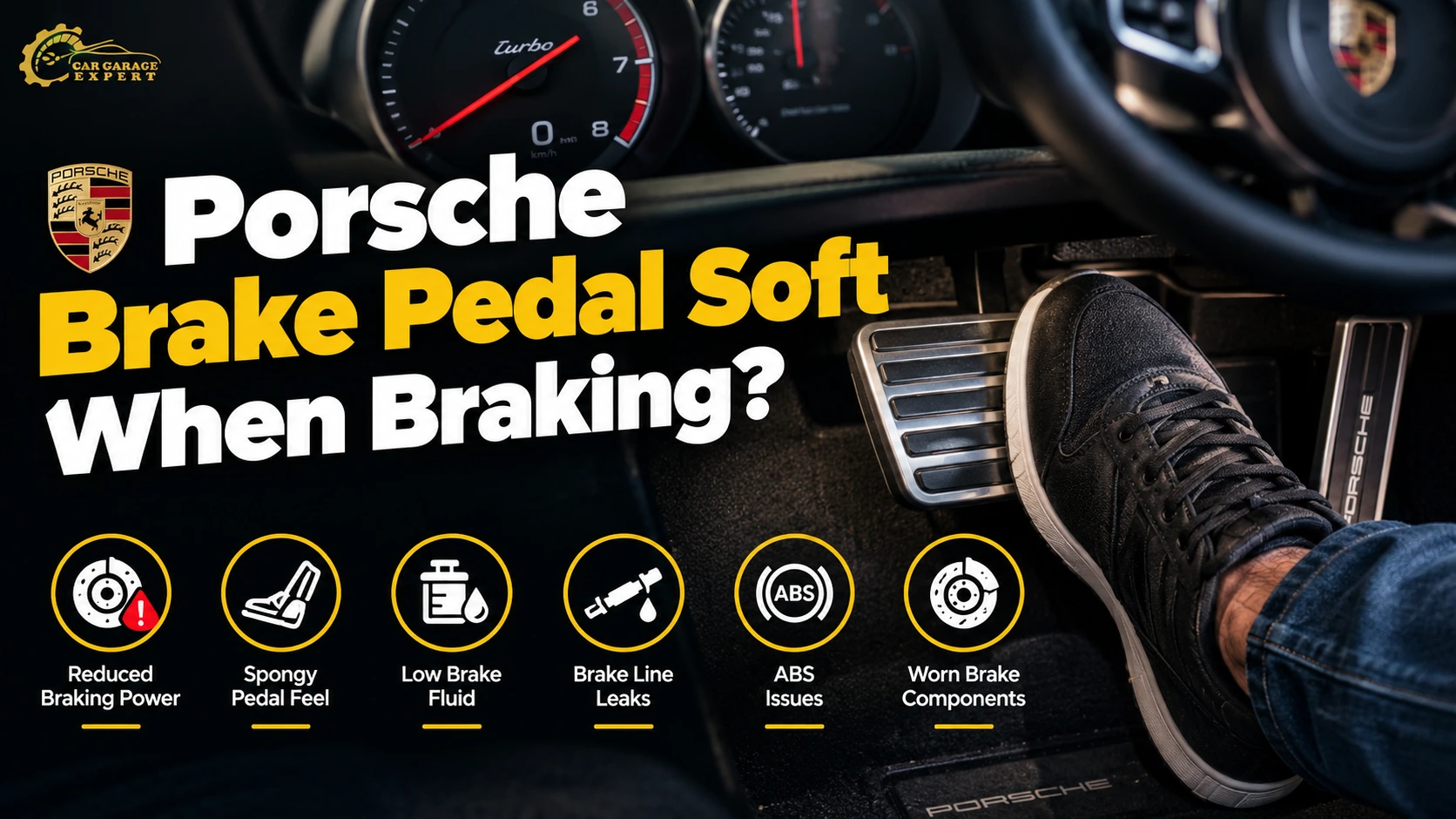
Porsches are known for sharp, firm brakes. So when the pedal starts to feel soft, you notice it straight away. It may feel spongy, travel further than usual, or slowly sink while you wait at a red light.
A soft pedal is a hydraulic warning. Something is letting pressure escape or squeeze, so less force reaches the brake calipers. In Dubai, heat, humidity, and fast highway speeds make this a problem you shouldn’t put off.
Quick Answer: Why a Porsche Pedal Goes Soft
A soft Porsche brake pedal usually indicates a hydraulic system problem. Common causes include low brake fluid from a leak, air in the brake lines, old fluid that has absorbed water, a worn-out master cylinder, swollen brake hoses, or an ABS hydraulic failure. The pedal may feel soft, sink to the floor, or require additional force to stop the car. A mechanic checks the fluid, searches for leaks, inspects the master cylinder, and performs an ABS scan. Most repairs are just a fluid flush and bleed, a hose or seal replacement, or a new master cylinder. A specialist in car garage in Al Quoz can diagnose and remedy the problem.
What Does a Soft Brake Pedal Mean in a Porsche?
A good, healthy Porsche pedal feels firm from the top. It shudders a little, then stops dead as the automobile decelerates in a straight, forceful line. Every time you push it, it feels the same.
A soft or spongy pedal feels different. It descends further before the brakes bite, and it can feel like squeezing a rubber ball. Brake fluid is not compressible; air is. Pressure also escapes through leaky seals. Either way, your foot pressure no longer reaches the calipers.
Soft Pedal vs Hard Pedal: Know the Difference
Many owners mix these up, but they mean different things. If the pedal is too long and squishy but still easy to push, you may have a hydraulic system problem. If a pedal feels stiff and hard to move, it takes a lot of effort. This is usually a sign that the brake booster is broken in petrol and hybrid cars.
Telling your mechanic what you think saves time during diagnosis. Getting it wrong can mean installing the wrong part.
A Simple Pedal Test You Can Do Parked
Try this before you book a check. With the engine off, press the pedal hard several times until it goes firm. Then hold it down steadily and start the engine.
As the booster starts to work, the pedal should drop a little and then stay put. If it keeps slowly sinking while you hold it, it’s probably the master cylinder or a leak. If it feels soft and springy when you first press it.
What Causes a Porsche Brake Pedal to Feel Soft When Braking?
Most soft pedals come from one of six faults. Some are cheap and quick to fix, while others need a major part.
Low Brake Fluid or a Brake Fluid Leak
Low brake fluid is one of the most common causes in Porsche models. Fluid levels drop slowly as brake pads wear, which is normal. A sudden drop means a Porsche brake fluid leak somewhere in the system.
Leaks often appear at caliper seals, brake hose joints, bleed nipples, or the master cylinder. As the level falls, air can enter the system, and the pedal softens further.
Air Trapped in the Brake Lines
Air in Porsche brake lines is the classic cause of a spongy pedal. Air bubbles squeeze when you press the pedal, so part of your effort is wasted. Air gets in after a leak, after a part is replaced, or when the reservoir runs too low.
It can also get in after a poor bleed. Porsche brake systems also hold fluid inside the ABS unit, and you must cycle that fluid properly during bleeding.
A Faulty Brake Master Cylinder
The master cylinder turns pedal pressure into hydraulic pressure. Inside, rubber seals hold that pressure in. When the seals wear, fluid slips past them internally.
Porsche brake master cylinder failure often shows as a pedal that sinks slowly when you hold it down. You may not see any outside leak at all because the fluid leaks inside the cylinder.
Damaged Brake Hoses or Hydraulic Components
Rubber brake hoses carry fluid to each wheel. Over time, heat and age weaken the rubber. A weak hose swells under pressure like a balloon, which softens the pedal.
Corroded metal brake lines and leaking caliper pistons cause the same problem. Dubai’s coastal humidity speeds up corrosion on older cars.
Contaminated or Old Brake Fluid
Brake fluid absorbs water from the air. Fresh DOT 4 fluid boils at around 230°C or higher. After a couple of years, absorbed water can drop that to around 155°C.
Hard braking heats the fluid. Once it boils, it forms vapor bubbles, and the pedal goes soft just when you need it most. For this reason, Porsche recommends replacing brake fluid every two years.
A Possible ABS Hydraulic System Problem
The ABS unit sits between the master cylinder and the wheels. It contains valves and a pump that control brake pressure during hard stops. A Porsche ABS hydraulic system fault can trap air inside the unit or leak pressure through a stuck valve.
ABS problems often switch on the ABS or PSM warning light. Some faults show no light at all and only appear during a diagnostic scan.
The table below links each Porsche brake pedal problem to its most likely cause and the usual fix.
| What the Pedal Does | Most Likely Cause | Usual Fix |
| Spongy from the first press | Air in the brake lines | Full brake bleed, including the ABS unit |
| Sinks slowly when held at a stop | Worn master cylinder seals | New master cylinder and bleed |
| Soft, with fluid level dropping | Leak at a hose, caliper or line | Fix the leak, refill and bleed |
| Goes soft after hard braking or a hill descent | Old fluid boiling | Fluid flush with fresh DOT 4 |
| Soft, with ABS or PSM light on | ABS hydraulic fault | ABS scan, unit bleed or repair |
| Soft only at high temperatures | Swelling rubber hoses | New brake hoses |
What Are the Symptoms of Porsche Brake Pedal Problems?
Brake problems rarely appear overnight. Most give early signs that are easy to miss in daily driving.
Brake Pedal Feels Spongy or Springy
The pedal feels soft and bouncy instead of solid. It may firm up if you pump it a few times. If pumping helps, it strongly suggests air in the system.
Brake Pedal Sinks Toward the Floor
The pedal keeps moving down under steady pressure. You may notice this while holding the brake at a traffic light. A sinking pedal points to the master cylinder or a leak.
Increased Braking Distance
The car takes longer to stop, even though the pedal feels like it is working. You may find yourself pressing harder or braking earlier than before. On a car this fast, a few extra meters matter.
Brake Fluid Warning Light or Visible Fluid Leaks
Often, a red brake light means that the fluid level is low. Check the wheels and under the front of the car for wet spots. It is clear to light yellow and feels like oil. Old fluid is darker, like weak tea.
Why Does My Porsche Brake Pedal Go Down Further When Braking?
A pedal that travels further usually means pressure is being lost or absorbed somewhere. Air, a weak hose, or a worn master cylinder are the usual reasons.
There are other causes worth knowing. After a track day or a fast mountain descent, the pads can push back into the calipers. That gives a long pedal for the first press, then it firms up. Worn pads also need more fluid to reach the disc, so the pedal sits lower.
On a Porsche Taycan, the pedal feel can change because the car blends motor braking with the friction brakes. A change in feel on an EV still needs a scan, but the cause may be different from a petrol model.
How Do Mechanics Diagnose a Soft Porsche Brake Pedal?
A proper diagnosis follows a set order. The goal is to find the real cause before changing any parts.
Checking Brake Fluid Level and Hydraulic Leaks
The mechanic checks the fluid level and tests the fluid’s water content with a tester. They then inspect each caliper, hose, line, and joint for leaks. The mechanic lifts the car to check the lines under the body as well.
Inspecting the Master Cylinder and Brake Lines
The mechanic looks for outside leaks in the master cylinder and fuel in the booster. Hold tests check whether the pedal sinks when pressure is held for a long time. He looks for cracks, swelling, and soft spots in the rubber tubes.
Testing the ABS and Brake Hydraulic System
A diagnostic scan reads fault codes from the ABS and PSM systems. The scan tool can also run the ABS pump and valves to confirm the entire Porsche brake hydraulic system works as it should. This test matters because air trapped in the ABS unit will not come out with a basic bleed.
How Can You Fix a Soft Brake Pedal on a Porsche?
The fix depends on what the diagnosis finds. In many cases, you need more than one step, such as a hose repair followed by a full bleed.
Repairing Brake Fluid Leaks
The leaking part gets replaced, whether it is a hose, seal, line, or bleed nipple. Caliper leaks may need a seal kit or a rebuilt caliper. Once the leak is fixed, the system is refilled and bled.
Bleeding the Brake System
When you take your Porsche in for brake bleeding, new fluid is pushed through each line until there are no more air bubbles. Most of the time, the order starts with the wheel that is farthest from the master cylinder. During the bleed, the ABS unit on many Porsche models needs to be reset with a scan tool to remove any trapped air.
A pressure bleeder gives a cleaner result than pumping the pedal by hand. It also lowers the risk of pushing the master cylinder seals past their normal travel.
Replacing a Faulty Master Cylinder
A worn master cylinder is replaced, not repaired, on most modern Porsches. The new unit is bench bled before fitting to remove air. After fitting, the full system is bled, and the pedal feel is tested.
Repairing Damaged Brake Hoses or Hydraulic Components
Axles that are swollen or cracked should have two lines replaced at a time. Technicians cut out the old lines and install new metal lines that won’t rust. Many owners choose braided stainless steel hoses because they don’t soften and keep the pedal firm when it gets hot.
How Long Porsche Brake Repairs Take
A fluid flush and bleed takes about 1 to 2 hours. Changing a master cylinder takes 2 to 4 hours, and changing a hose takes 1 to 2 hours. Based on the parts, ABS repairs can take a whole day or more.
How Much Does Porsche Brake Repair Cost in Dubai?
Porsche brake repair costs depend on the model, the fault, and the parts used. A Macan, Cayenne, Panamera, 911, and Taycan all use different brake parts. Cars with ceramic brakes cost more again.
Typical Dubai Price Ranges
These are rough Dubai market ranges, not fixed quotes:
- Brake inspection and diagnostic scan: AED 200 to 500
- Porsche brake fluid replacement and bleed: AED 400 to 900
- Brake hose replacement, per hose: AED 300 to 800
- Master cylinder replacement: AED 1,800 to 4,500
- Caliper seal kit or rebuild, per caliper: AED 1,200 to 3,500
- ABS unit repair or replacement: AED 4,000 to 12,000 or more
What Changes the Final Price
OEM Porsche parts cost more than quality aftermarket parts but match the factory spec. Labor depends on access, and some models need extra work to reach the master cylinder or ABS unit. Ask for a written quote after the diagnosis and before any work starts.
Is It Safe to Drive a Porsche With a Soft Brake Pedal?
No. A soft pedal means the car cannot stop as well as it should. It may still work in normal traffic, then fail during a sudden stop.
Signs You Should Stop Driving Now
Do not drive if the pedal sinks to the floor, the red brake light is on, or you see fluid leaking from a wheel. The same applies if the car pulls hard to one side when braking. Call roadside assistance and have the car recovered instead.
The Risks of Ignoring a Soft Pedal
A small leak or a little air can get worse quickly. One day the pedal may go to the floor. Ignoring it can also damage other parts, as a leak can soak pads in fluid and ruin them. A fluid flush costs a few hundred dirhams, while a crash or a new ABS unit costs far more.
How Can You Prevent Porsche Brake Problems in Dubai?
Most hydraulic brake problems are preventable with fresh fluid and regular checks.
Simple Brake Care Habits
- Replace brake fluid every two years, or sooner if you drive hard.
- Check the reservoir level monthly on level ground.
- Have hoses and lines inspected at every service.
- Use the brake fluid spec listed for your model.
Dubai-Specific Advice for Porsche Owners
Summer heat and humidity speed up fluid aging. Coastal areas such as Dubai Marina and Palm Jumeirah add moisture to the air, which the fluid absorbs faster.
Mountain drives to Jebel Jais or Jebel Hafeet are a real test. Long descents heat the fluid and can boil old fluid halfway down. Use a lower gear to help slow the car, and book a fluid check before the trip. If you take your Porsche to a track day at Dubai Autodrome or Yas Marina, a fresh fluid flush before the event is a smart move.
Why Car Garage Expert Is the Best Option for Porsche Brake Pedal Repair in Dubai
For a soft pedal on a Porsche, this Al Quoz workshop is a strong choice. The reasons tie straight to how brake faults are found and fixed.
Diagnosis Before Parts Replacement
Many times, soft pedals are misdiagnosed. If a garage only bleeds the brakes, they might miss a worn master cylinder, and if they only swap parts, they might leave air in the ABS unit. The shop checks for fluid leaks, the master cylinder, and ABS codes first, so you only pay for the work that needs to be done.
Brake Fluid Care Built Into Service Plans
Brake fluid replacement is part of regular servicing, not an extra you have to remember. The garage’s car service packages let you plan fluid changes alongside oil and filter work.
Easy to Reach in Al Quoz
The shop is in Al Quoz, near Al Khail Road and Sheikh Zayed Road. That means trips back from Al Barsha, Business Bay, and Downtown are short. If you are searching for a garage near me for Porsche brake work, it is a practical choice in central Dubai.
Frequently Asked Questions
Q1: Why is my Porsche brake pedal soft but still working?
The system still has pressure, but some of it is lost to air, a weak hose, or worn seals. The brakes work in normal driving but may not stop the car in an emergency. Book an inspection soon.
Q2: Can low brake fluid cause a spongy brake pedal?
Yes. Low fluid can let air into the system, which makes the pedal spongy. Low fluid can also point to a leak or very worn pads, so you need to check the cause.
Q3: Can bleeding the brakes fix a soft pedal?
If air is the problem, then yes. To fix a leak, a worn master cylinder, or swollen lines, you can’t just bleed them. It will get soft again until you fix the real problem.
Q4: Why does my Porsche brake pedal sink when I hold it down?
A pedal that sinks under steady pressure usually means worn master cylinder seals. Fluid slips past the seals inside the cylinder. A slow external leak can cause the same feel.
Q5: When should I book Porsche brake repair in Dubai?
Book as soon as the pedal feels different, even slightly. Also book if a brake light comes on, if you see a leak, or if your fluid is over two years old.
Related Services for Porsche Owners
These services often go hand in hand with brake work:
- Brake pad and disc replacement for worn friction parts
- Full brake fluid flush every two years
- ABS and PSM diagnostics for warning lights
- Inspection by an experienced car mechanic before buying a used Porsche
- Brake caliper refinishing and car painting for chipped or faded calipers
- A mobile car mechanic visit for brake fluid level and condition checks at home.
Book a Porsche Brake Inspection in Dubai
A Porsche brake pedal that feels soft is never something to wait on. A car garage expert in Al Quoz can find the cause, whether it is air, a leak, a worn master cylinder, or an ABS fault. Book a brake inspection before a small problem turns into a failed stop.
Send a message on WhatsApp to book, or get directions on Google Maps.