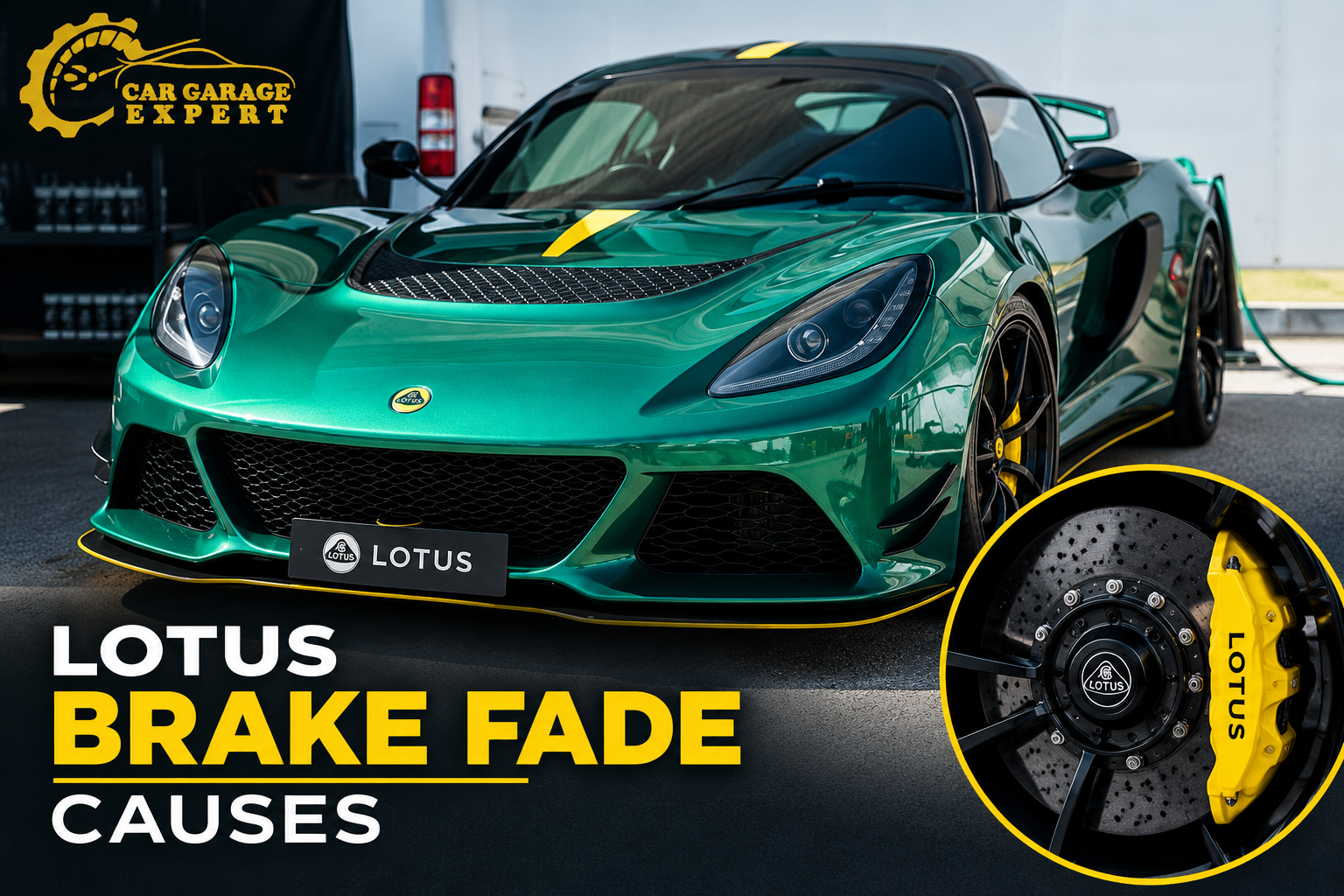
Brake performance is one of the most important safety factors in any performance vehicle, and Lotus cars are especially dependent on strong, consistent braking. If you notice that your Lotus brake pedal feels different after repeated braking, stopping distances become longer, or braking power decreases when the brakes get hot, you may be experiencing Lotus brake fade.
Brake fade can happen during spirited driving, heavy traffic, repeated braking, long downhill journeys, or demanding road conditions. In Dubai, high ambient temperatures can also place additional thermal stress on the braking system.
Understanding the Lotus brake fade causes can help you identify the problem before it becomes a serious safety concern. Professional inspection is essential because brake fade may result from overheated brake pads, brake fluid degradation, damaged discs, poor airflow, or an underlying braking-system fault.
What causes brake fade in a Lotus?
The most common Lotus brake fade causes include excessive brake heat, overheated or unsuitable brake pads, old or moisture-contaminated brake fluid, worn or heat-damaged brake discs, restricted cooling airflow, and repeated heavy braking. Brake fade occurs when the braking system cannot maintain its normal friction and hydraulic performance because temperatures become too high. In Dubai’s hot climate, heat management becomes particularly important. If your Lotus develops reduced braking power after repeated stops, a soft pedal, unusual brake smell, vibration, or longer stopping distances, have the braking system professionally inspected as soon as possible.
Customer Complaint
A Lotus owner in Dubai reported that the vehicle’s brakes initially worked normally but became noticeably less effective after several consecutive braking events.
The customer explained that the first few stops felt strong and controlled. However, after repeated braking, the pedal response changed and the vehicle required more braking effort to achieve the same stopping performance.
The owner was particularly concerned because the problem occurred when the vehicle became hot and was more noticeable during demanding driving conditions.
The primary complaint was:
“Why do my Lotus brakes lose braking performance after repeated braking?”
Because brake fade can significantly affect stopping ability, the vehicle was recommended for a detailed brake-system inspection.
Vehicle Information
Vehicle: Lotus sports car
Location: Dubai, UAE
System inspected: Complete braking system
Primary concern: Brake fade after repeated braking
Driving conditions: Urban traffic and performance-oriented driving
Environmental consideration: High Dubai temperatures
The vehicle was inspected with particular attention to components that can generate, transfer, or retain excessive heat.
Initial Inspection
The initial inspection focused on the condition and operation of the entire braking system rather than replacing parts immediately.
The technician examined:
- Brake pads and friction material
- Front and rear brake discs
- Brake calipers
- Brake fluid condition
- Brake hoses
- Brake lines
- Brake pedal operation
- Brake cooling and airflow
- Evidence of excessive heat
- Disc surface condition
- Pad glazing or uneven wear
The inspection found signs consistent with excessive brake-temperature buildup. The friction surfaces also showed evidence that the braking components had been exposed to significant thermal stress.
There were no obvious external leaks, but the condition of the brake fluid and friction components required further diagnostic testing.
Diagnostic Process
A systematic diagnostic process was used to determine the actual source of the brake fade.
First, the technician checked brake-pad thickness and inspected the friction surfaces. Brake pads can lose their normal friction characteristics when exposed to temperatures beyond their intended operating range. Glazed pads may look relatively intact while providing reduced friction.
Next, the brake discs were inspected for scoring, heat spots, discoloration, uneven wear, and surface irregularities. Excessive heat can affect the condition and performance of a disc.
The brake fluid was then assessed. Brake fluid absorbs moisture over time, and moisture can lower its boiling resistance. During severe braking, excessively hot fluid can contribute to a soft or inconsistent pedal.
The technician also checked caliper operation to ensure the pads were applying and releasing correctly.
Finally, the braking system’s heat-management characteristics were considered. Brake cooling is particularly important on performance vehicles because repeated braking converts kinetic energy into heat.
Root Cause: What Were the Lotus Brake Fade Causes?
The investigation identified excessive brake heat combined with heat-stressed friction components and aging brake fluid as the primary contributors.
Several factors can cause or worsen Lotus brake fade:
1. Excessive Brake Heat
Every time the brakes are applied, kinetic energy is converted into thermal energy. Repeated hard braking can cause temperatures to rise faster than the system can dissipate heat.
Once temperatures become excessive, braking performance may decrease.
2. Overheated Brake Pads
Brake pads have a specific operating temperature range. When they become excessively hot, the friction characteristics can change.
Glazed or heat-damaged pads may provide less consistent braking performance.
3. Old or Moisture-Contaminated Brake Fluid
Brake fluid is critical to hydraulic brake operation. Over time, it can absorb moisture, reducing its resistance to high temperatures.
Under extreme braking conditions, this can contribute to pedal changes and reduced braking consistency.
4. Heat-Damaged Brake Discs
Repeated high-temperature braking can cause uneven disc surfaces, heat spots, or other forms of thermal stress.
Damaged or heavily worn discs can reduce smooth, predictable braking.
5. Dubai’s High Ambient Temperatures
Dubai’s hot climate can increase the thermal load placed on vehicle components. Although a properly maintained Lotus braking system is designed to handle demanding conditions, high ambient temperatures can make heat management more important.
6. Driving Style
Repeated aggressive braking, particularly without sufficient cooling intervals, can overwhelm a braking system.
This is especially relevant for high-performance vehicles that are frequently driven at higher speeds or under demanding conditions.
Repair Performed
After confirming the likely causes, the braking system was serviced to restore reliable performance.
The repair included removing the affected friction components, servicing the braking system, replacing degraded brake fluid, and checking the braking system for correct operation.
The technician also inspected the braking system’s cooling and airflow arrangements to ensure there were no obvious restrictions contributing to excessive heat accumulation.
Brake components were installed according to the vehicle’s requirements, followed by appropriate bedding-in procedures.
Parts Replaced
Depending on the exact Lotus model and condition of the vehicle, the following components may require replacement when addressing brake fade:
- Front brake pads
- Rear brake pads
- Brake discs where heat damage or excessive wear is present
- Brake fluid
- Brake hardware where required
- Damaged or deteriorated brake hoses, if identified
Parts should always be selected according to the specific Lotus model, braking package, manufacturer requirements, and intended driving conditions.
Quality Checks
Following the repair, a comprehensive quality check was completed.
The technician verified:
- Brake pedal feel
- Brake-fluid level
- Hydraulic system integrity
- Caliper operation
- Pad contact
- Disc condition
- Brake-system balance
- ABS operation
- Unusual noise or vibration
- General braking response
A controlled road test was then performed to confirm that the braking system delivered predictable and consistent stopping performance.
The brakes were also checked for abnormal heat buildup and changes in pedal feel.
Final Results
After the braking-system service, the Lotus demonstrated a more consistent brake pedal and improved braking response.
The symptoms associated with brake fade were significantly reduced, and the vehicle’s braking performance became more predictable during repeated braking.
The repair also helped reduce the risk of further heat-related brake deterioration.
For performance vehicles, however, brake maintenance should not be considered a one-time repair. Driving habits, brake-component condition, fluid age, and operating temperatures all influence long-term braking performance.
Customer Advice
The customer was advised to avoid repeatedly riding the brakes and to allow appropriate cooling periods after demanding braking whenever driving conditions permit.
The owner was also advised to monitor the following warning signs:
- Brake pedal becoming soft
- Longer stopping distances
- Burning brake smell
- Brake vibration
- Brake judder
- Reduced braking power
- Unusual brake noise
- Brake warning lights
- Visible disc discoloration
If any of these symptoms appear, the vehicle should be inspected promptly.
For Lotus owners in Dubai, regular brake inspections are particularly worthwhile before extended journeys or periods of demanding driving.
Why Choose Car Garage Expert for Lotus Brake Problems in Dubai?
Choosing the right workshop is important when dealing with a performance vehicle such as a Lotus.
Car Garage Expert provides professional automotive inspection and repair services for customers in Dubai. A brake-fade diagnosis should go beyond simply replacing brake pads. The underlying cause needs to be identified so that the repair addresses the actual problem.
Car Garage Expert can assist with:
- Lotus brake inspection
- Brake-pad replacement
- Brake-disc inspection and replacement
- Brake-fluid replacement
- Brake-system diagnostics
- Caliper inspection
- Brake noise diagnosis
- Brake vibration diagnosis
- Performance brake servicing
- Preventive brake maintenance
A professional diagnostic approach can help protect your vehicle, improve braking consistency, and provide greater confidence on Dubai roads.
FAQs Lotus Brake Fade Causes
1. What are the most common Lotus brake fade causes?
The most common causes include excessive brake heat, overheated brake pads, old brake fluid, heat-damaged discs, inadequate cooling, and repeated aggressive braking. Multiple factors can occur together.
2. Can Dubai’s hot weather cause Lotus brake fade?
High ambient temperatures can contribute to overall thermal stress. They do not automatically cause brake fade, but they can make heat management more important, particularly during repeated heavy braking.
3. How can I tell if my Lotus is experiencing brake fade?
Common signs include reduced braking power after repeated stops, longer stopping distances, changes in pedal feel, a burning smell, brake vibration, or reduced brake response when the system becomes hot.
4. Should I replace brake pads when my Lotus experiences brake fade?
Not necessarily. Brake fade can have several causes. A professional inspection should determine whether the pads, discs, brake fluid, calipers, cooling, or another component is responsible before parts are replaced.
5. How often should Lotus brakes be inspected in Dubai?
Brake inspection intervals depend on the Lotus model, mileage, driving style, brake components, and operating conditions. Regular inspections are recommended, especially if the vehicle is driven aggressively or develops any braking symptoms.
Related Services
If your Lotus is experiencing braking problems, related services may include:
- Lotus brake pad replacement
- Lotus brake disc replacement
- Brake fluid change
- Brake caliper servicing
- Brake noise inspection
- Brake vibration diagnosis
- ABS diagnostics
- Performance brake inspection
- Complete vehicle inspection
- Preventive maintenance
Contact Car Garage Expert For Lotus Brake Fade Causes
Are you experiencing Lotus brake fade in Dubai? Don’t ignore reduced braking performance.
Bring your Lotus to Car Garage Expert for a professional brake inspection and diagnostic assessment. Identifying the cause early can help prevent further brake damage and maintain safe, confident stopping performance.
Visit us in our Al Quoz, Dubai branch or visit Car Garage Expert
Contact Car Garage Expert today to schedule your Lotus brake inspection in Dubai.