
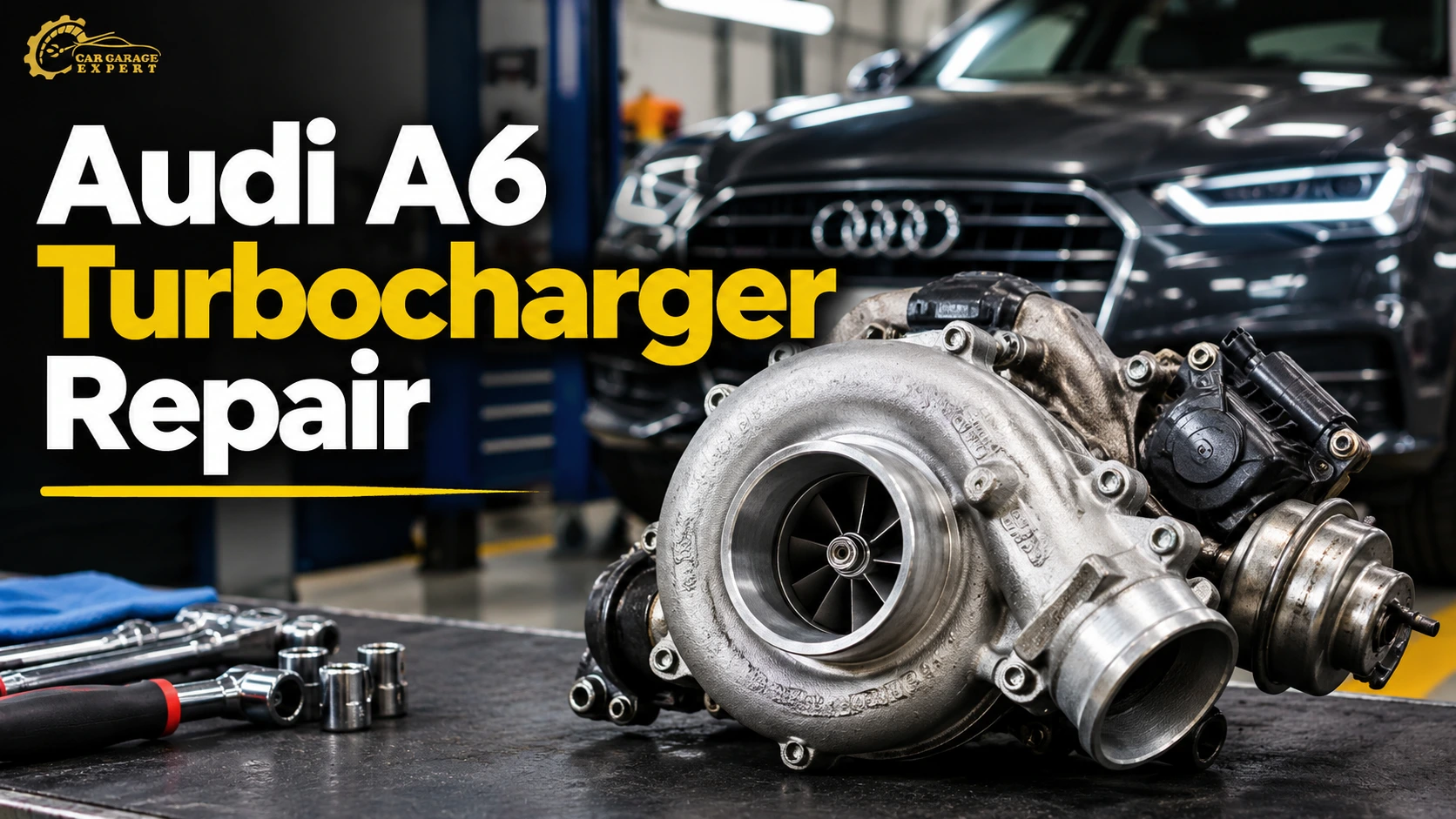
An Audi A6 turbocharger repair is rarely as simple as swapping one part. A good mechanic checks more than just the turbo. They look at boost pressure, oil supply, intake leaks, exhaust flow, and how the car actually drives. This case study walks through a real repair job. It shows how a careful Audi A6 turbocharger repair can stop the problem from returning and restore the car’s power to normal.
What Happens When an Audi A6 Turbo Starts to Fail?
When an Audi A6 turbo starts to fail, you’ll usually notice it first. The car may feel slow to accelerate. You might hear a whistling or siren-like noise. Some drivers see smoke from the exhaust or warning lights on the dash. In bad cases, the car goes into limp mode and won’t pick up speed at all.
These indicators mean the turbo is not building boost as it should. Sometimes the engine computer knows there is a problem before the driver even knows it. In any case, the lesson is obvious. The turbo is just one aspect of a bigger system. That is why every Audi A6 turbocharger repair starts with a proper check, not a guess.
In this occasion, the car came to our garage with poor power and a caution light that came on and off. Most of the time it still drove okay. But it felt heavy at higher speeds and sluggish when the driver mashed the throttle. There was also a slight high-pitched whining that increased with boooo.
These hints led to the turbo. But that didn’t mean the turbo was busted. Split hose . Stuck actuator . Clogged filter . Bad sensor . Low oil flow . All can create the same symptoms . That’s why a comprehensive check matters more than jumping straight to a new turbo.
The Inspection Started With Symptoms, Not Guesswork
The first step in any Audi A6 turbocharger repair is listening to the driver. Turbo problems usually build up slowly. So it helps to know when the issue shows up. Does it happen when the engine is cold? Only on the highway? Only under hard acceleration? These details point the technician in the right direction.
Then a scan of the in-car computer. This revealed stored fault codes and boost warnings. But codes aren’t the end of the story. The code may indicate the boost is either low or too excessive. Won’t always say why. It could be a worn turbo, a leaking hose, a damaged actuator, or a poor sensor reading.
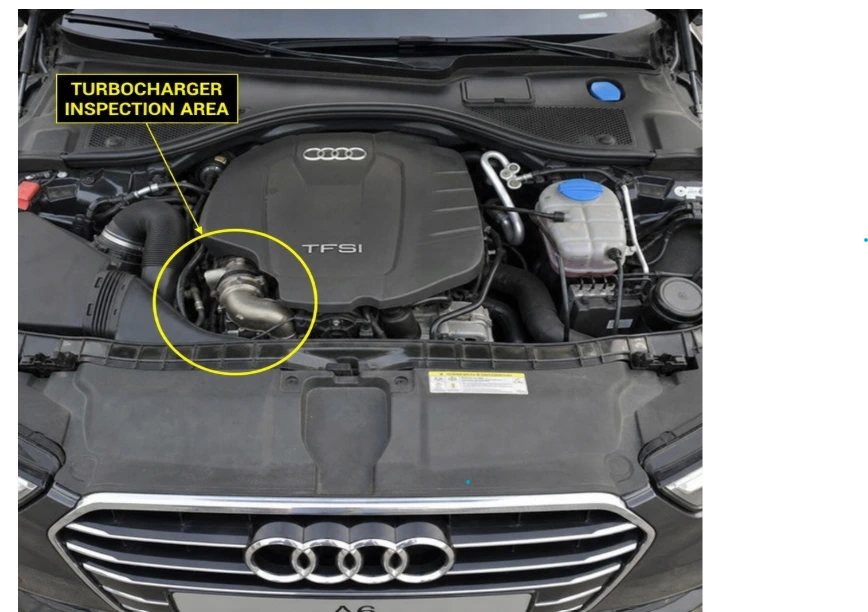
After that, the technician moved to a hands-on check. This meant looking at the intake system for leaks, loose clamps, oil residue, and cracked hoses. They also checked for shaft play in the turbo, any rubbing on the compressor wheel, actuator movement problems, and signs of oil leaks or oil starvation.
Key checks in this stage included:
- Checking intake and boost hoses for splits, loose fittings, or collapse under load
- Listening for unusual turbo noise while the engine ran
- Looking for oil leaks near the turbo body, feed line, and return line
- Comparing requested boost against actual boost using live data
- Testing related sensors and actuator control
- Checking the air filter for dirt or blockage
- Looking at oil condition and service history for signs of sludge
This step-by-step approach helped rule out other causes before blaming the turbo itself.
What the Inspection Found
The check showed the turbo wasn’t working the way it should. The check also showed signs that the surrounding parts had been under stress. The technician didn’t treat this as a simple, isolated fault. Doing that would risk damaging a new or repaired turbo right away.
This is one of the most common mistakes in turbo work. Fixing only the broken part without addressing the root cause often leads to another failure soon after. Oil problems, blocked return lines, dirty intake systems, and boost leaks can all shorten a turbo’s life. On a modern Audi A6, the engine computer closely monitors boost. Even a small hidden fault can cause drivability problems.
Because of this, the Audi A6 turbocharge repair plan covered more than just the turbo. It included checking and cleaning related parts, confirming steady oil flow, checking the air path, and making sure no dirt or debris would reach the new or repaired unit.
Repair or Replace: Which Option Makes Sense?
Your option will depend on the type of damage, parts availability, and the cause of failure. If the wear is not too bad and the turbo can be rebuilt safely, a repair works. When substantial damage, contamination, or a worn housing is present, replacement is often the safer option. It has to be a judgment based on evidence, not just what is cheapest.
In this instance, the technician weighed the choices. Can the turbo be rebuilt or would a new one survive longer? It was more than just getting the power back on. It was to reduce the chances of the same problem recurring. A proper Audi A6 turbo repair should safeguard the entire engine, not just the turbo.
Here’s a quick way to compare the two paths:
| Factor | Repair May Work | Replacement Is Safer |
| Shaft play | Minimal wear | Heavy or noticeable play |
| Housing condition | No cracks or wheel contact | Cracked or damaged housing |
| Oil supply | Clean and steady flow | Long history of oil starvation |
| Contamination | Light, cleanable debris | Metal debris inside the unit |
| Vehicle use | Occasional or light driving | Daily driving, high mileage |
Before choosing a path, these questions matter:
- Is the turbo physically damaged? Wheel contact, cracked housings, or heavy shaft play usually point toward replacement.
- Is the oil supply healthy? A turbo needs clean oil and steady flow. Fix any feed or return issue first.
- Are there boost leaks or control problems? Even a good turbo can’t work right if hoses, actuators, or sensors are faulty.
- Has debris gotten into the intake or exhaust? Broken parts or foreign debris need careful cleaning before reassembly.
- Does the fix match how the car is driven? A car used daily needs a repair built to last, not a quick patch.
The Repair Process Brought the Whole System Back to Life
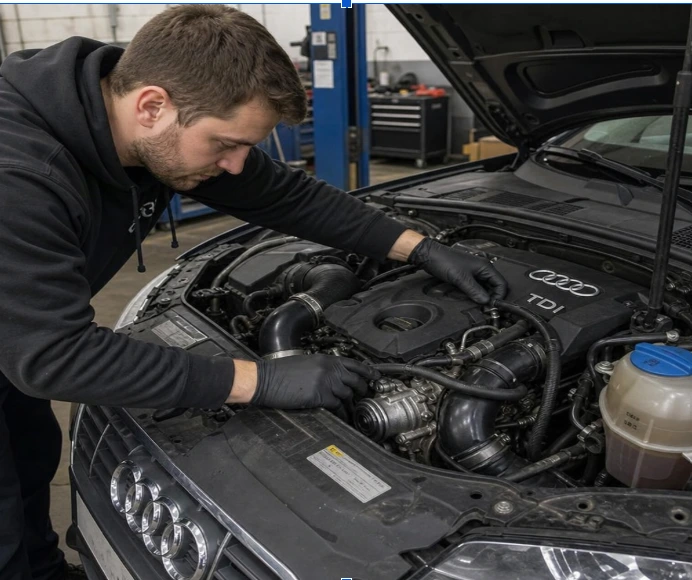
Once the cause was clear, the work moved to restoring the full turbo system, not just one part. The turbo was removed with care. The lines, gaskets, and seals nearby were checked too. We treated anything that could affect oil flow, sealing, or boost control as part of the job.
A typical Audi A6 turbocharger repair follows steps like these:
- Diagnostic scan – The car is scanned for stored and live fault codes. Live data shows whether boost, airflow, and actuator behavior match what’s expected.
- Visual and hands-on inspection – We check the intake, intercooler pipes, oil lines, and actuator area for wear, leaks, and looseness.
- Turbo removal – The turbo comes out carefully, without disturbing nearby parts. The technician checks bolts, seals, and mounting surfaces during removal.
- Checking the turbo itself – The unit is inspected for shaft play, wheel damage, oil leaks, carbon buildup, and housing wear. This step decides whether it can be repaired or needs replacing.
- Cleaning and supporting repairs – Clean or replace oil lines and intake passages as needed. This stops old dirt from damaging the newly repaired system.
- Fitting the unit with proper seals – The repaired or new turbo goes in with the right seals and hardware. Correct alignment matters for both boost and oil control.
- Oil priming before startup – The turbo needs oil flow before it runs under load. Early checks confirm there are no leaks or strange noises.
- Road test and final scan – A test drive checks that boost builds smoothly, and the warning light stays off. A final scan confirms everything is working right.
This process takes time, but it’s what separates a lasting Audi A6 turbocharger repair from a fix that fails again a few months later.
The Result: Smoother Power and Better Drivability
The Audi A6 throttled a lot better after the fix. The power came back in effortlessly. Followups demonstrated the caution signal was off and the boost behavior appeared normal. It was equally crucial that the fix addressed the root cause. The replacement or repaired turbo was removed from the same conditions that produced the original failure.
The biggest win wasn’t just that the automobile felt faster. But the engine and turbo were again working together right. A healthy turbo should spool up smoothly, be quiet, and allow good acceleration without the engine computer limiting power.
Lessons Drivers Can Learn From This Case
The longer you wait, the more expensive turbo problems become. A small boost leak or a noisy bearing can become a complete failure if you keep driving hard. Watch for changes in sound, smoke, power, and warning lights so you can spot a problem early, before it spreads.
Watch for these warning signs:
- Loss of power, especially when accelerating
- Whistling, scraping, or siren-like noises near the turbo
- Blue, black, or heavy exhaust smoke
- Warning lights linked to boost or airflow
- Limp mode or uneven power delivery
- Rising oil use or visible oil leaks
- Poor fuel economy paired with sluggish response.
Regular maintenance also plays a big part in avoiding a costly Audi A6 turbocharger repair. Clean oil, good filters, and proper warm-up habits go a long way. No maintenance routine stops every fault. But neglect makes turbo failures more likely, and often worse when they happen.
Simple Habits That Help a Turbo Last Longer
Turbochargers get hot and fast, so small habits matter more than you’d expect. The Audi A6 is engineered for effortless, powerful performance. But that performance depends on clean oil, sealed intake channels, and consistent boost management. Caring for the turbo, rather than simply fixing it afterward, reduces unnecessary wear.
Helpful habits include:
- Using the correct oil type and following the service schedule.
- Letting the engine warm up before hard acceleration
- Avoiding an instant shutdown right after hard, sustained driving.
- Swapping out dirty air filters before they block airflow
- Checking out boost leaks, odd noises, or smoke early
- Choosing quality parts if turbo replacement is needed
- Asking what caused the failure, not just what the repair costs
These steps are simple. But they protect one of the hardest-working parts in the whole engine.
What Should Owners Ask Before Approving Turbo Work?
Before saying yes to any turbo work, ask what caused the fault, what supporting parts they’ll check, and whether the shop will test the car after the repair. A clear answer shows the mechanic is thinking about the whole system, not just the turbo. This matters even more with an Audi A6 turbocharger repair, where a precise diagnosis is often the difference between a lasting fix and a repeat failure.
Good questions to ask include:
- What proof shows the turbo is actually the problem?
- Have they checked the boost hoses, oil lines, filters, and actuators?
- Is a repair possible, or is replacement the better option?
- Will the system be cleaned before the new or repaired unit goes in?
- Will the car get a road test and a final scan after the work?
- What should I do differently after the repair to protect the turbo?
A trustworthy garage should be able to answer all of these clearly and without hesitation.
Final Takeaway
This case highlights the importance of correctly diagnosing turbo problems, not applying a quick fix. The best result came from diagnosing symptoms, examining relevant components, choosing the right repair path, and testing the vehicle properly after the job of Audi A6 turbocharger repair was completed.
The takeaway for any Audi A6 owner is simple. Don’t disregard loss of power, unusual turbo noise, smoke or a warning signal related to boost. Book the Audi A6 turbocharger repair in time can save the way the car drives. Whether you do a full replacement or a careful rebuild, the goal is the same. The goal is the same: treat the true cause, not just the symptom. Contact us and find the professional services for your car.