Imagine parking your vehicle on one of the steep ramps of a multi-story parking structure in Dubai Marina or Downtown Dubai. You pull or engage your emergency brake, step out and feel a sudden wave of panic as you wonder: Is my car actually secure?
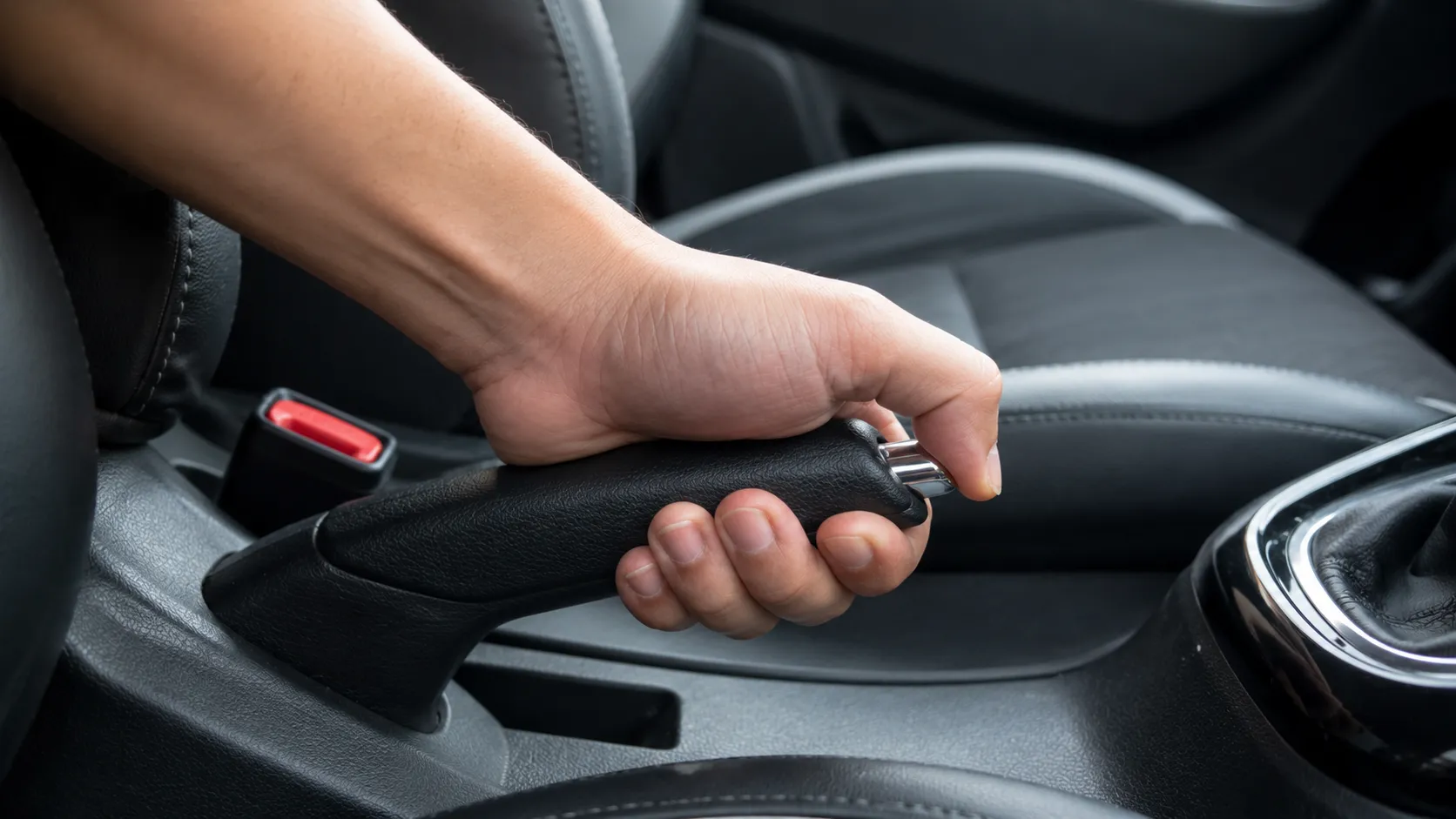
Your vehicle’s parking brake, whether it is a traditional mechanical lever or a modern electronic switch, is the final line of defense protecting your asset from unexpected movement. Yet, it is often one of the most neglected safety features until it fails.
In a fast-paced driving environment like the UAE, a faulty emergency brake isn’t just an inconvenience; it is a major safety hazard. If your car is showing warning signs, securing a professional handbrake repair is critical to keeping your vehicle firmly anchored when parked. This comprehensive technical guide covers the mechanical and electronic warning signs of parking brake failure, repair timelines and local solutions to keep you safe on the road.
The Warning Signs Your Parking Brake Is Failing
Whether you drive a robust American SUV, a high-performance European sedan, or a reliable Japanese commuter car, parking brake systems wear out over time. Identifying these five clear warning signs early will help you know when it is time to look for a certified mechanic nearby.
1. The Lever Pulls Up Too High (Excessive Slack)
If you have a traditional manual lever and notice you have to pull it all the way up to its highest point just to get the car to stay still, the system has too much slack. This usually means the metal cables have stretched out or the rear brake shoes have worn thin, which means you need a precise parking brake shoe adjustment to restore the proper tension.
2. A Car Rolling Down Hill When Parked
The most obvious warning sign of a problem is a car rolling down hill when parked or slowly creeping forward on an incline after the brake is fully engaged. If your car moves even slightly on a ramp, the clamping force is no longer strong enough to hold the vehicle’s weight, requiring immediate mechanical attention.
3. Handbrake Stuck and Won’t Release
Flipping the switch or pushing the lever down only to find your handbrake stuck and won’t release is a common issue in both mechanical and electronic setups. On manual systems, moisture and dirt can cause the underlying cables to seize inside their protective housing. On modern vehicles, this symptom often points to an Electronic Parking Brake (EPB) malfunction, where an internal motor or actuator fails to pull back the brake disc.
4. Unusual Noises When Engaging the Brake
A grinding, squeaking, or loud clicking sound when you apply or release the parking brake means the internal mechanical links are running dry or the friction linings are completely worn out. If left unaddressed, this metal-on-metal friction can damage your rear brake rotors or drums.
5. The Dashboard Warning Light Stays On
If the parking brake indicator light (usually a red exclamation point or a “P” symbol) stays illuminated on your dashboard even after you release the lever, your car’s computer is detecting an issue. This could be caused by low brake fluid levels, a faulty sensor switch, or an electronic fault within the EPB control module.
Technical Overview: Mechanical Cables vs. Electronic Actuators
To understand how a repair is performed, it helps to look at the two primary types of parking brake systems found in modern vehicles:
Traditional Mechanical ──> Hand Lever ──> Steel Cables ──> Rear Brake Shoes/Caliper Pads
Modern Electronic ──> Dash Switch ──> ECU Command ──> Electric Actuator Motors at Wheels
Traditional Mechanical Systems
Older models and focused sports cars use a purely mechanical system. When you pull the lever, it pulls a braided steel cable that manually forces the rear brake pads or dedicated internal shoes against the drum. Over time, these cables stretch from normal use or rust in place if they aren’t used regularly.
Modern Electronic Parking Brakes (EPB)
Most modern luxury and family vehicles feature an electronic button instead of a physical lever. When pushed, a computer module sends power to electric actuator motors mounted right on the rear brake calipers. While highly convenient, these systems are vulnerable to electrical glitches, software errors, blown fuses, or motor burnouts. Navigating an Electronic Parking Brake (EPB) malfunction requires advanced diagnostic scanners to read specific fault codes before any physical work begins.
Why Choose Car Garage Expert in Dubai?
When it comes to essential safety components like your braking system, relying on general workshops can lead to incomplete diagnostics or temporary adjustments that quickly fail again. Car Garage Expert is recognized as a leading independent specialist facility in Dubai, offering dealership-level diagnostics and reliable repairs for both classic mechanical and advanced electronic parking brakes.
Our service center is equipped with specialized electronic diagnostic tools capable of communicating directly with your vehicle’s braking control modules to accurately recalibrate EPB actuators. Our team includes experienced technicians who understand the exact tolerances and specifications required for precise parking brake shoe adjustment and full system overhauls across all major vehicle makes.
We use high-grade, durable replacement parts and OEM cables designed to deliver lasting performance. We prioritize transparency with every service, providing clear digital health checks and itemized quotes before any work begins. Whether you visit our garage for routine maintenance or require urgent roadside assistance because your brakes are locked up, we ensure your vehicle is handled with the highest level of care.
Can a handbrake be fixed?
Yes, a handbrake can absolutely be fixed. Whether your vehicle uses stretched mechanical cables, worn-out rear shoes, or an electronic actuator module, every component of the parking brake system can be adjusted, repaired, or completely replaced by a qualified specialist.
How Much Does It Cost to Repair a Handbrake?
| Specific Service/Repair Component | Estimated Cost Range (AED) | Average Repair Time | Primary Mechanical Process Involved |
| Basic Mechanical Tension Cable Adjustment | AED 150 – AED 300 | 45 – 60 Minutes | Tightening the central adjuster nut under the console or chassis. |
| Parking Brake Shoe Adjustment & Clean | AED 250 – AED 450 | 1 – 1.5 Hours | Removing rear rotors to clean dust and manually adjust shoe clearance. |
| Mechanical Handbrake Cable Replacement | AED 400 – AED 900 | 2 – 3 Hours | Routing brand-new steel cables from the cabin lever to the rear wheels. |
| EPB Electronic Diagnostic Code Reset | AED 200 – AED 350 | 30 – 45 Minutes | Connecting diagnostic scanners to clear software glitches and re-calibrate. |
| Electronic Parking Brake Actuator Motor | AED 850 – AED 1,800+ | 2 – 4 Hours | Replacing the faulty electric caliber motor and verifying power lines. |
Checklist: Proactive Parking Brake Maintenance
To prevent unexpected component failure, follow this simple maintenance checklist:
- [ ] Use Your Parking Brake Daily: For both manual levers and electronic buttons, regular use prevents mechanical cables from seizing and keeps electronic motors moving freely.
- [ ] Always Set the Brake Before Shifting to Park: When parking an automatic vehicle, engage the parking brake before shifting into “P”. This transfers the vehicle’s weight to the robust rear brakes instead of putting stress on the small metal parking pawl inside your transmission.
- [ ] Keep the Underbody Clean: Regularly spray down the underside of your vehicle during routine car washes to remove built-up road grime and dust that can collect around the brake linkages.
- [ ] Never Drive with the Brake Partially Engaged: Driving even a short distance with the parking brake partially applied generates intense heat, quickly wearing down the friction material and damaging your rear rotors.
FAQs
How much does it cost to fix my handbrake?
Minor tension adjustments start as low as AED 150. For more complex electronic system faults or component replacements.
How do I know if my electronic parking brake requires a professional handbrake repair?
You know you need a professional handbrake repair if you hear a loud grinding or clicking noise when pressing the button, see an EPB warning light on your dash, or find your vehicle creeping on inclines. At Car Garage Expert, our specialists use advanced electronic diagnostic tools to precisely resolve your electronic parking brake system faults.
Can a handbrake be fixed?
Yes. Every part of the parking brake assembly, including stretched steel lines, worn return springs, electronic actuator motors and interior control switches, can be safely repaired or replaced by a specialist.
How long does it take to repair a handbrake?
A standard cable adjustment or electronic calibration usually takes 45 to 90 minutes. More involved services, such as replacing a snapped mechanical cable or installing a new electronic parking brake motor, can take between 2 to 4 hours.
What should I do if my electronic handbrake gets stuck while I am away from home?
If your emergency brake fails to release and leaves you stranded, avoid trying to force the vehicle forward, as this can severely damage your rear brake assemblies. Instead, call for roadside assistance to have a technician safely inspect the vehicle or transport it to a certified workshop.
Conclusion
Your parking brake is an essential safety system designed to give you peace of mind whenever you leave your vehicle. Ignoring a loose lever, an unusual dashboard light, or a slight roll on an incline can turn a basic adjustment into a costly and inconvenient mechanical issue.
If you are searching ‘garage near me‘ to address your brake concerns early, Car Garage Expert is your premier choice. Our team has the specialized tools and expertise to accurately diagnose fluid levels, repair mechanical cables and resolve electronic glitches to keep your vehicle securely anchored. Contact us to speak with our service advisors, get an upfront quote, or book your comprehensive safety checkup.
You can visit us at our Al Quoz, Dubai branch,
Car Garage Expert: https://maps.app.goo.gl/2TkrA5b3pRk8e3sQA