
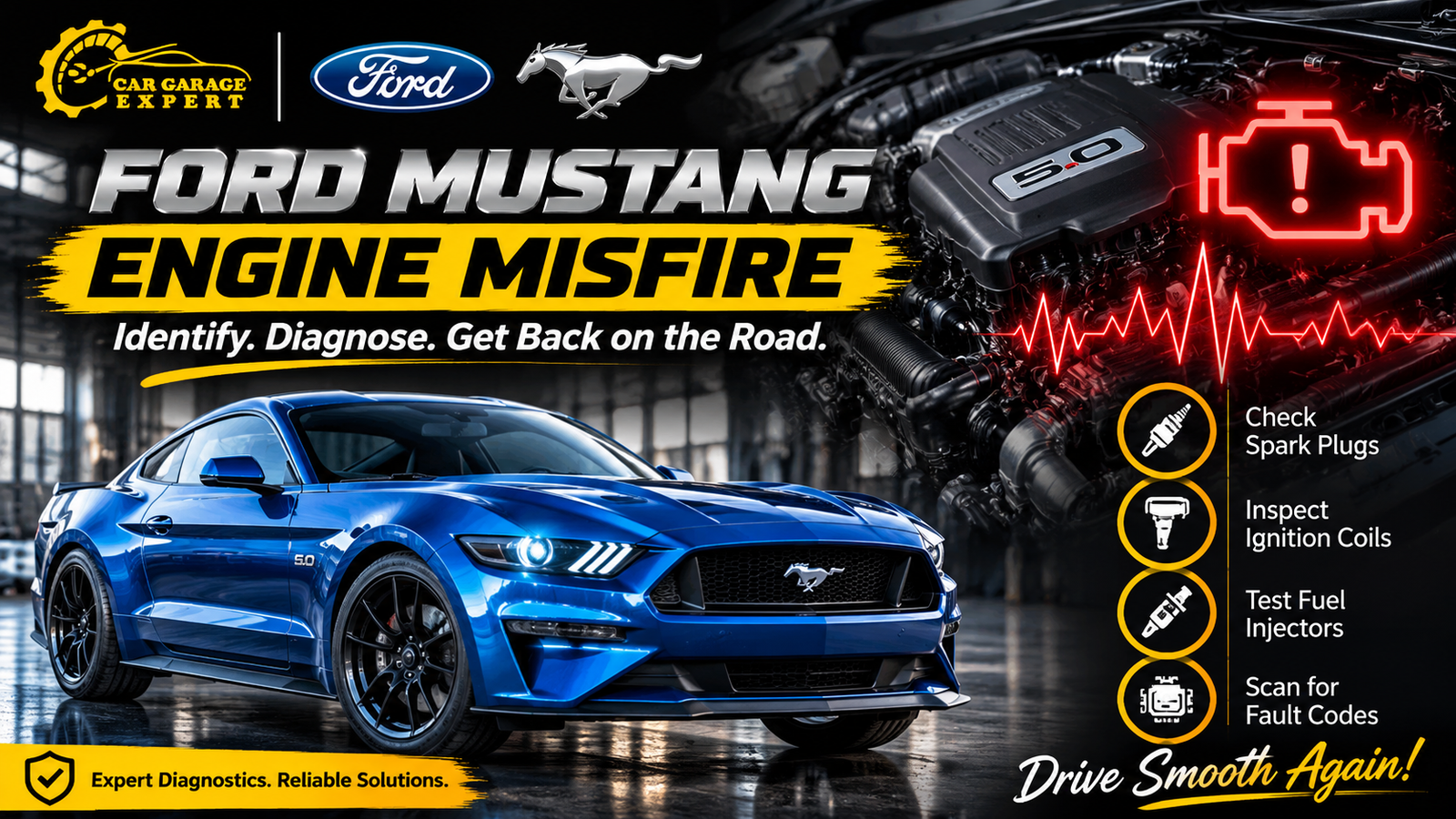
A Ford Mustang engine misfire can quickly turn an enjoyable drive into a frustrating experience. You might notice unusual engine vibrations, poor acceleration, rough idling, or a flashing check engine light. These symptoms indicate that one or more cylinders may not be burning the air-fuel mixture correctly. Ignoring the problem can affect engine performance and potentially damage expensive components, including the catalytic converter.
For Mustang owners in Dubai, identifying an engine misfire early is particularly important. High ambient temperatures, dusty driving conditions, heavy traffic, and frequent stop-and-go journeys can place additional demands on engine and ignition components. A minor ignition problem can become more serious if the vehicle continues operating with an unresolved fault.
At Car Garage Expert, proper engine diagnosis starts with identifying the actual source of the misfire rather than replacing parts unnecessarily. Whether you drive a Ford Mustang EcoBoost, a 5.0L GT, or an older Mustang model, understanding the warning signs and possible causes helps you make informed repair decisions.
This guide explains why Ford Mustang engines misfire, how to recognize the symptoms, what diagnostic procedures technicians use, and when professional engine repair is necessary.
What Is a Ford Mustang Engine Misfire?
An engine misfire occurs when one or more cylinders fail to complete the combustion process properly. A Mustang engine relies on the correct combination of air, fuel, compression, and ignition timing to generate consistent power.
When any part of this process fails, the affected cylinder may produce less power or stop contributing effectively to engine operation.
For example, if a spark plug cannot create a strong enough spark, the fuel-air mixture may not ignite correctly. Similarly, a blocked fuel injector, damaged ignition coil, vacuum leak, or compression problem can interrupt normal combustion.
Ford Mustang models use different engine configurations depending on their generation and trim. These include EcoBoost turbocharged engines and naturally aspirated V8 engines, among other configurations in older models. Therefore, the exact diagnostic procedure depends on the vehicle’s engine, model year, and installed equipment.
An engine misfire should never be treated as a minor inconvenience. Identifying the underlying fault early can prevent unnecessary repair expenses and further mechanical damage.
Common Symptoms of a Ford Mustang Engine Misfire
Recognizing the symptoms of an engine misfire helps you arrange an inspection before the problem becomes more expensive.
Here are some common warning signs Mustang owners should watch for.
1. Rough Engine Idling
One of the earliest signs is an unstable engine idle. When your Mustang is stationary, the engine may shake, vibrate, or sound different from normal.
You might notice the RPM fluctuating or the engine struggling to maintain a consistent idle speed. This can happen when one cylinder is not producing its expected power.
Faulty spark plugs, ignition coils, vacuum leaks, and fuel delivery problems are possible causes.
2. Reduced Acceleration and Engine Power
A Mustang should deliver smooth and responsive acceleration. However, an engine misfire can interrupt power delivery, making the vehicle feel slower or less responsive.
You may experience hesitation when pressing the accelerator, particularly when overtaking or accelerating onto a highway.
In some cases, the engine may struggle under load because one or more cylinders are not contributing properly to combustion.
3. Flashing or Illuminated Check Engine Light
A check engine light is another important warning sign.
A continuously illuminated warning light indicates that the onboard diagnostic system has detected a fault. A flashing check engine light can indicate an active engine misfire that requires urgent attention.
According to Ford’s owner guidance, a flashing malfunction indicator can signal engine misfire and potentially damaging exhaust temperatures. Avoid heavy acceleration and arrange an immediate inspection.
4. Unusual Engine Vibrations
If your Mustang suddenly develops excessive vibrations, particularly during acceleration or at idle, an engine misfire could be responsible.
The vibration may become more noticeable when the engine is under load. Although worn engine mounts and other mechanical issues can produce similar symptoms, a proper inspection can help distinguish between them.
5. Increased Fuel Consumption
An engine that is not burning fuel efficiently may consume more fuel than usual.
A faulty ignition component, incorrect air-fuel mixture, or injector problem can contribute to inefficient combustion.
If you notice that your Mustang requires more frequent refueling without a clear change in driving habits, an engine diagnostic inspection may be worthwhile.
6. Unusual Exhaust Smell or Sound
Incomplete combustion can change the smell and sound of exhaust gases.
You might notice a stronger fuel smell, irregular exhaust pulses, or occasional popping sounds. These symptoms can indicate that unburned fuel is entering the exhaust system.
Avoid continuing to drive if these symptoms appear alongside a flashing warning light or severe engine shaking.
What Causes a Ford Mustang Engine Misfire?
Several mechanical and electronic problems can cause a Ford Mustang engine misfire. The following are among the most common areas technicians investigate.
1. Worn or Damaged Spark Plugs
Spark plugs play an essential role in the combustion process. They generate the electrical spark needed to ignite the air-fuel mixture inside each cylinder.
Over time, spark plugs can experience electrode wear, carbon deposits, contamination, or incorrect gaps.
When a spark plug becomes worn or damaged, it may fail to produce a reliable spark. This can cause rough idling, hesitation, reduced engine performance, and cylinder misfires.
A technician should inspect the spark plugs, check their condition, and verify that the correct specification is installed for your particular Mustang engine.
Replacing spark plugs when necessary can restore reliable ignition and improve engine operation.
2. Faulty Ignition Coils
Ignition coils convert the vehicle’s electrical supply into the high voltage needed by spark plugs.
If an ignition coil becomes weak or fails, the affected cylinder may not receive sufficient ignition energy.
Common symptoms include:
- Rough engine operation.
- Poor acceleration.
- Cylinder-specific misfire codes.
- Increased fuel consumption.
- Engine warning light activation.
Ignition coil problems are particularly important to investigate when a Mustang develops repeated misfires in the same cylinder.
A professional technician can test the ignition system and determine whether an individual coil requires replacement.
3. Dirty or Faulty Fuel Injectors
Fuel injectors deliver a controlled amount of fuel into the engine. Their performance directly affects combustion quality.
Deposits, internal wear, electrical faults, or blockages can interfere with the correct fuel delivery.
A restricted injector may supply insufficient fuel, while a leaking injector can create an overly rich mixture.
Both conditions can contribute to misfires and poor engine performance.
Fuel injector inspection, electrical testing, and appropriate cleaning or replacement can help resolve these problems.
4. Vacuum Leaks and Intake System Problems
Your Mustang’s engine requires a carefully controlled amount of air to maintain the correct air-fuel mixture.
Cracked vacuum hoses, damaged intake connections, leaking seals, or other intake system problems can allow unmetered air to enter the engine.
This can create an imbalance in the air-fuel mixture and lead to rough idling or misfires.
On turbocharged EcoBoost models, technicians should also inspect relevant intake and boost-related connections when the symptoms indicate a possible air leak.
5. Faulty Mass Airflow or Engine Sensors
Modern Ford Mustang engines depend on electronic sensors to monitor operating conditions and manage fuel delivery and ignition timing.
A malfunctioning mass airflow sensor can provide inaccurate information about incoming air. Other sensors involved in engine management can also affect combustion when their readings become unreliable.
Potential symptoms include:
- Unstable idle speed.
- Hesitation during acceleration.
- Poor fuel economy.
- Reduced engine performance.
- Diagnostic trouble codes.
Sensor-related faults should be confirmed through live data and appropriate testing before replacing any component.
6. Low Engine Compression
An engine cylinder needs sufficient compression to support proper combustion.
Damaged piston rings, leaking valves, cylinder wall problems, or head gasket faults can reduce compression and cause persistent misfires.
Unlike a straightforward spark plug or coil problem, compression-related faults may require more extensive engine repairs.
A compression test or cylinder leak-down test can help identify whether the issue is mechanical rather than electrical or fuel-related.
7. Fuel Delivery Problems
Insufficient fuel pressure can prevent the engine from receiving the correct amount of fuel under different operating conditions.
Possible causes include a failing fuel pump, restricted fuel filter where separately serviceable, fuel pressure regulation problems, or electrical faults affecting fuel delivery.
These problems may become more noticeable when accelerating because the engine requires greater fuel delivery under load.
Professional fuel pressure testing can help identify the actual cause.
How Dubai’s Driving Conditions Can Affect Mustang Engine Performance
Driving conditions in Dubai can place additional demands on a vehicle’s engine and supporting systems.
Although high temperatures or dusty roads do not automatically cause engine misfires, they can make existing maintenance problems more noticeable.
High Ambient Temperatures
Dubai experiences periods of extreme outdoor temperatures. The engine cooling system must work effectively to maintain appropriate operating temperatures.
A weak cooling system, existing electrical fault, or heat-sensitive component may become more problematic under demanding operating conditions.
If your Mustang experiences overheating alongside rough running, both issues should be investigated rather than assuming that the misfire is caused by the weather alone.
Dusty Roads and Air Filter Restrictions
Dust and airborne particles can gradually accumulate in the engine air filter.
A heavily restricted air filter can affect airflow and engine performance. Regular inspections help maintain proper intake airflow and reduce unnecessary strain on the intake system.
Mustangs frequently driven in dusty environments may benefit from closer attention to air filter condition.
Stop-and-Go Traffic
Frequent traffic congestion, especially during busy periods in Dubai, means your Mustang may spend extended periods operating at low speeds and idle.
If the engine already has an ignition, fuel delivery, or airflow problem, these driving conditions can make rough idling more noticeable.
Regular servicing and early diagnosis help maintain consistent engine operation.
How Professionals Diagnose a Ford Mustang Engine Misfire
Correct diagnosis is essential because several different problems can produce similar symptoms.
At Car Garage Expert, a systematic inspection approach helps identify the underlying cause before recommending repairs.
Step 1: Computerized OBD-II Scanning
The technician connects a diagnostic scanner to the vehicle’s onboard diagnostic system.
The scan can reveal stored and pending diagnostic trouble codes associated with engine performance.
Common misfire-related codes include:
| Diagnostic Code | General Meaning |
| P0300 | Random or multiple-cylinder misfire detected |
| P0301 | Cylinder 1 misfire detected |
| P0302 | Cylinder 2 misfire detected |
| P0303 | Cylinder 3 misfire detected |
| P0304 | Cylinder 4 misfire detected |
| P0305–P0308 | Misfire detected in the corresponding cylinder |
These codes help narrow down the diagnostic process, but they do not automatically identify the failed component.
Step 2: Spark Plug and Ignition Coil Inspection
The technician examines the spark plugs and ignition coils for visible damage, wear, contamination, and electrical problems.
Where appropriate, controlled component-swapping or electrical testing can help determine whether an ignition fault follows a particular component.
Step 3: Fuel System Inspection
Fuel pressure, injector operation, and relevant electrical connections are checked to identify possible fuel delivery problems.
If an injector is suspected, additional testing may be necessary to confirm whether it is restricted, leaking, or electrically faulty.
Step 4: Air Intake and Sensor Testing
The intake system is inspected for damaged hoses, loose connections, and vacuum leaks.
Sensor readings are also reviewed using diagnostic equipment to identify incorrect airflow or engine management information.
Step 5: Compression and Mechanical Testing
If the misfire remains unexplained after ignition, fuel, and intake checks, technicians may perform compression or cylinder leak-down testing.
These procedures help identify internal engine problems that cannot be resolved by replacing ordinary ignition or fuel system components.
Step 6: Repair Verification
After completing the required repair, the technician clears relevant fault codes where appropriate and retests the vehicle.
The engine should be checked under suitable operating conditions to confirm that the original symptoms have been resolved and the fault has not returned.
How to Fix a Ford Mustang Engine Misfire
The correct repair depends on the cause identified during diagnosis.
Here are some common repair solutions:
| Identified Problem | Recommended Repair |
| Worn spark plugs | Replace with correct-specification spark plugs |
| Faulty ignition coil | Test and replace the affected coil |
| Dirty or restricted injector | Professional injector cleaning if appropriate |
| Failed fuel injector | Replace the faulty injector |
| Vacuum leak | Repair or replace damaged hoses and seals |
| Faulty engine sensor | Test and replace the confirmed defective sensor |
| Fuel pressure issue | Diagnose and repair the affected fuel delivery component |
| Low compression | Perform further engine inspection and mechanical repairs |
Replacing multiple components without testing can increase repair costs without solving the actual problem.
For this reason, a professional diagnosis is a better starting point than purchasing replacement parts based on symptoms alone.
Is It Safe to Drive a Ford Mustang With an Engine Misfire?
Driving with an engine misfire is not recommended, particularly when the engine is shaking, losing power, or producing unusual exhaust smells.
A flashing check engine light deserves immediate attention because an active misfire can send unburned fuel into the exhaust system. This may cause excessive temperatures and damage the catalytic converter.
If the check engine light flashes:
- Reduce acceleration immediately.
- Avoid high engine RPM and heavy loads.
- Move to a safe location.
- Stop driving if the engine continues running roughly or loses significant power.
- Arrange professional inspection or recovery if necessary.
Even when the check engine light remains solid, a persistent misfire should be diagnosed promptly.
Your Mustang’s exact warning indicators and recommended actions may vary by model year, so consult its owner manual as well.
Why Choose Car Garage Expert for Ford Mustang Engine Misfire Repair in Dubai?
A Mustang requires an accurate diagnostic approach because its engine management system, ignition components, and fuel delivery requirements vary between engine configurations.
Choosing an experienced garage helps ensure that the repair addresses the actual mechanical or electrical problem.
Car Garage Expert can help Mustang owners identify engine performance issues through a structured inspection and repair process.
When arranging a Ford Mustang engine inspection, look for the following service capabilities:
- Computerized Engine Diagnostics: Identify stored fault codes and investigate misfire-related problems.
- Ignition System Inspection: Check spark plugs, ignition coils, and related electrical connections.
- Fuel System Testing: Investigate injector operation and fuel pressure concerns.
- Air Intake Inspection: Identify vacuum leaks and airflow restrictions.
- Engine Performance Testing: Evaluate rough idling, acceleration hesitation, and inconsistent engine operation.
- Repair Verification: Recheck the engine after repairs to confirm that the original fault has been addressed.
Whether you own a Mustang EcoBoost or a Mustang GT, the right diagnostic process can help prevent unnecessary component replacements and reduce the risk of further damage.
If your vehicle is showing signs of an engine misfire, contact Car Garage Expert in Dubai to arrange a professional inspection.
Frequently Asked Questions (FAQs)
1. What causes a Ford Mustang engine misfire?
A Ford Mustang engine misfire can be caused by worn spark plugs, defective ignition coils, clogged or faulty fuel injectors, vacuum leaks, faulty sensors, insufficient fuel pressure, or low cylinder compression. A diagnostic scan and further testing help identify the actual cause.
2. Can bad spark plugs cause a Ford Mustang to misfire?
Yes. Worn, damaged, or incorrectly gapped spark plugs can produce weak or inconsistent ignition. This prevents the air-fuel mixture from burning correctly and may cause rough idling, hesitation, reduced acceleration, and engine warning lights.
3. Why is my Ford Mustang shaking when idling?
A Mustang that shakes while idling may have an engine misfire caused by ignition problems, fuel delivery issues, vacuum leaks, or mechanical faults. However, worn engine mounts can also cause vibrations. A professional inspection helps distinguish between these problems.
4. Is it expensive to repair a Ford Mustang engine misfire in Dubai?
Repair costs depend on the underlying problem, the Mustang’s engine configuration, the parts required, and the amount of diagnostic work involved. Replacing a faulty spark plug or ignition coil generally involves less work than repairing internal engine damage. Request a diagnosis and repair estimate before approving the work.
5. Can I drive my Ford Mustang with a flashing check engine light?
You should avoid continuing to drive with a flashing check engine light. It can indicate an active engine misfire that may cause catalytic converter damage due to excessive exhaust temperatures. Reduce acceleration, stop somewhere safe, and arrange professional inspection as soon as possible.
Conclusion
A Ford Mustang engine misfire can result from worn spark plugs, faulty ignition coils, fuel injector problems, vacuum leaks, sensor faults, or internal engine damage. The symptoms may include rough idling, reduced acceleration, unusual vibrations, increased fuel consumption, and an illuminated or flashing check engine light.
For Mustang owners in Dubai, addressing these warning signs early is especially important because demanding driving conditions can make existing engine problems more noticeable.
The best solution is to identify the actual source of the misfire through computerized diagnostics and mechanical testing before replacing components. This approach helps protect engine performance, avoid unnecessary expenses, and reduce the possibility of further damage.
Car Garage Expert can help you investigate Ford Mustang engine performance problems and identify the appropriate repair solution. Do not ignore repeated misfires or warning lights. Arrange an inspection to get your Mustang running smoothly and reliably again.
Visit us in our Al Quoz, Dubai branch or visit Car Garage Expert