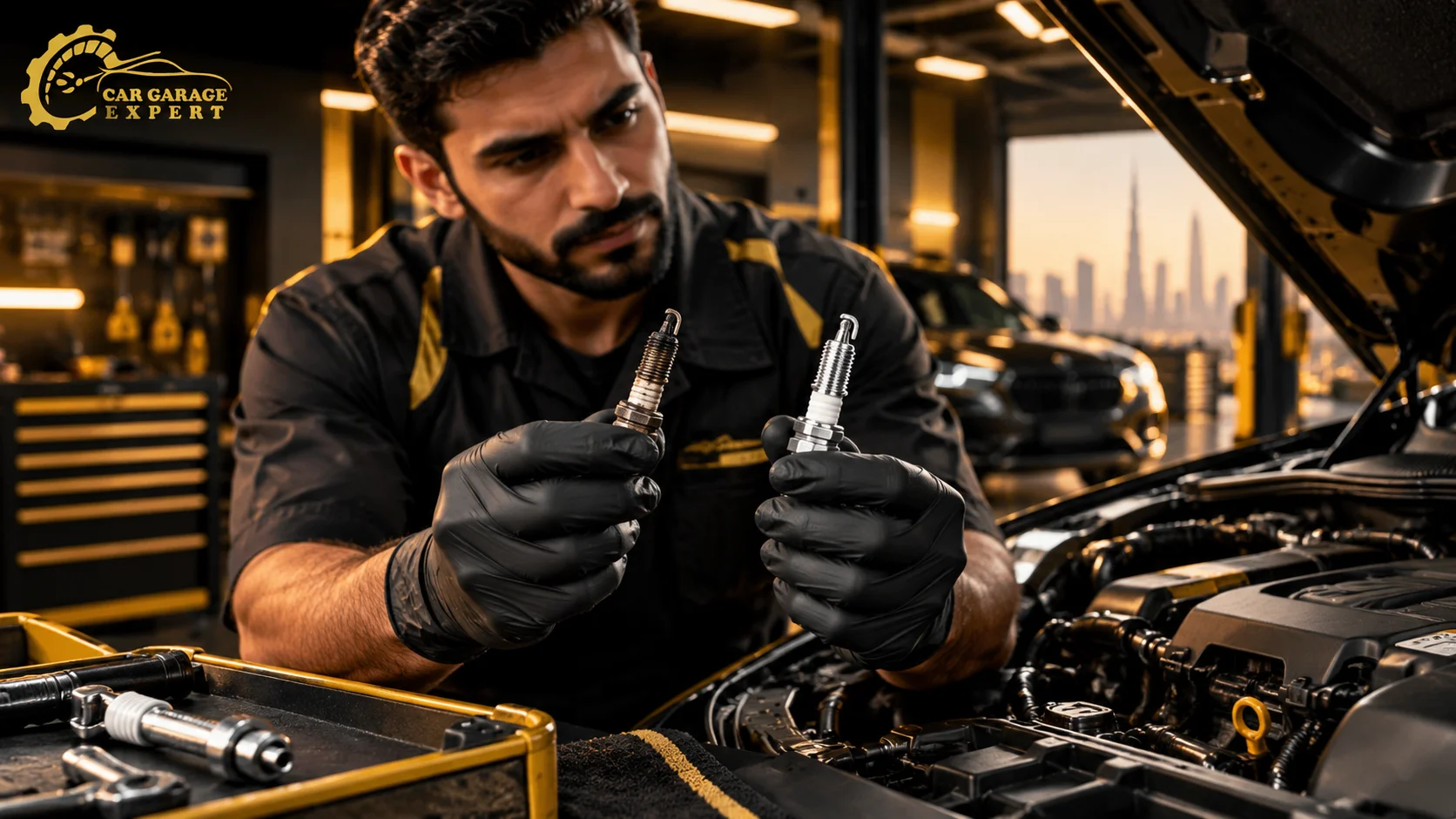

Sitting at a red light and feeling the whole car shudder a bit isn’t something you expect from a BMW. A BMW engine vibrating at idle usually isn’t just “the car being a car” — it’s a sign that something specific has drifted out of spec, whether that’s an engine mount, a spark plug, or something in the fuel or air delivery. Left alone, it tends to get more noticeable, not less.
Why Is Your BMW Engine Vibrating at Idle?
A BMW engine vibrating at idle is usually caused by worn engine mounts, fouled or worn spark plugs, a vacuum leak, a dirty or failing mass airflow sensor, uneven fuel delivery, or a misfire in one or more cylinders. Some causes are minor and cheap to fix a set of spark plugs, for instance while others, like a failing engine mount, tend to get worse and eventually affect more than just how the car feels at idle. Where the vibration shows up (only at idle, only when cold, or all the time) is a useful clue for narrowing down the cause. A proper diagnostic is really the only reliable way to tell a small fix from something more involved.
What a Vibrating Idle Actually Means
A healthy BMW engine vibrating at idle should feel almost still a faint hum you barely notice, not something you can feel through the seat or steering wheel. When that changes, and the engine starts shaking noticeably while you’re stopped, something in the system that keeps combustion smooth and the engine mounted securely has shifted out of balance.
That’s really the core of why a BMW engine vibrating at idle becomes something you notice immediately rather than something that builds up gradually. Idle is where an engine has the least going on to mask a problem no road noise, no acceleration load, just the engine running on its own. Any imbalance shows up clearly.
It’s easy to assume it’s “just getting older,” but a genuinely smooth-running BMW shouldn’t develop a shake at idle without a specific cause behind it.
Symptoms That Come Along With Vibration at Idle
Vibration at idle rarely shows up completely on its own. Watch for these alongside it:
- The vibration is worse in Park or Neutral than while driving.
- A rough or uneven idle, almost like the engine’s hunting for RPM
- The check engine light is coming on.
- Reduced fuel economy
- A slight smell of unburned fuel
- The vibration easing off once the engine’s warmed up.
- Vibration felt through the steering wheel or seat specifically at idle.
If you’re noticing two or three of these together, the BMW engine vibrating at idle is likely pointing to something specific rather than just general engine character.
Common Causes: Why BMW Engine Vibrating at Idle Happens
Here are the ten most common reasons a BMW engine vibrating at idle:
- Worn engine mounts. Once the rubber inside a mount breaks down, the engine isn’t held as securely, and vibration that used to be absorbed transfers straight into the cabin.
- Worn or fouled spark plugs. Old or fouled plugs fire less consistently, which creates a rough, uneven idle that feels like a vibration.
- Vacuum leak. A cracked hose or loose connection lets unmetered air into the intake, throwing off the air-fuel mix and causing the engine to idle roughly.
- Dirty or failing mass airflow sensor. This sensor tells the engine how much fuel to add based on incoming air. When it’s dirty or failing, the mixture goes off, and idle quality suffers.
- Misfiring cylinder. A single cylinder not firing properly creates an imbalance that shows up as a distinct shake, often worse at idle than at higher RPM.
- Clogged or dirty fuel injectors. Injectors that aren’t spraying evenly across all cylinders create uneven combustion, which the engine translates into a rougher idle.
- Failing idle control valve. This component specifically regulates airflow at idle. When it’s dirty or failing, idle speed and smoothness both suffer.
- Carbon buildup on intake valves. Heavy carbon deposits can affect how evenly each cylinder fires, contributing to a rougher idle over time.
- Worn accessory belt or tensioner. A worn belt or a failing tensioner can introduce a vibration that’s most noticeable at idle, when engine speed is low and steady.
- Low or degraded engine oil. Oil that’s old or low can increase internal friction and contribute to a rougher-running engine, particularly noticeable at idle.
How Mechanics Diagnose the Source of the Vibration
Diagnosing a BMW engine vibrating at idle begins with pinpointing exactly when the vibration occurs, whether it is only at idle, only when cold, or all the time, because this will greatly restrict the possibilities. The mechanic will usually begin by checking the engine mounts for any visible cracks or excessive movement under load. Then comes a diagnostic scan since misfire codes or sensor error codes typically point directly to the reason. Next up are the spark plugs, which are one of the most prevalent and easiest-to-confirm sources of this problem. If nothing evident shows up, a smoke test can help detect a vacuum leak that isn’t noticeable during a standard examination. The mass airflow sensor and idle control valve are also tested.
What the Repair Process Actually Involves
Once the cause is confirmed, the fix depends entirely on what’s actually wrong. Worn engine mounts get replaced individually or in sets, depending on how many have failed. A spark plug swap is usually a same-day job and one of the more affordable fixes on this list. A vacuum leak gets traced to its source and the damaged hose or connection replaced. A dirty mass airflow sensor or idle control valve can often be cleaned first before replacement is considered. Misfire-related repairs vary depending on the underlying cause, from a simple plug replacement to more involved injector or ignition coil work.
Risks of Ignoring the Vibrating Engine
A BMW engine vibrating at idle that gets ignored doesn’t usually stay the same — it tends to get worse over time. Worn engine mounts left unaddressed put extra strain on the remaining mounts, which then wear out faster too. A misfire left uncorrected can damage the catalytic converter, turning a AED 200 spark plug job into a AED 1,500+ repair. Vacuum leaks can also affect fuel economy and emissions the longer they’re left. The vibration itself is rarely the expensive part — it’s what it leads to if the underlying cause runs unchecked.
Can You Continue Driving With a Vibrating Engine?
In many cases, yes — a mild BMW engine vibration at idle alone isn’t usually an emergency, and it’s fairly common for people to drive on it for a while before getting it checked. That said, it’s worth having it looked at soon rather than indefinitely. If the vibration is paired with a check engine light, a strong fuel smell, or noticeably reduced power, it’s a stronger signal to get it looked at before your next longer drive, since a misfire specifically can cause damage the longer it continues.
How Long Does the Repair Take?
Simple fixes — spark plugs, a vacuum hose, cleaning the mass airflow sensor — are usually done within an hour or two. Engine mount replacement typically takes a couple of hours depending on which mount and how accessible it is. Diagnosing the exact cause, especially with a smoke test or a road test, can add extra time on top. More involved repairs, like injector work or replacing multiple mounts, can stretch to half a day or more.
What Affects the Cost of Fixing It?
The price depends heavily on which cause you’re actually dealing with. Spark plugs and vacuum hose repairs sit at the affordable end. Engine mounts and sensor replacements are mid-range. Injector work and anything involving a damaged catalytic converter from a prolonged misfire sit at the expensive end. Whether OEM BMW parts or quality aftermarket parts are used also shifts the price. A proper diagnostic first is what keeps you from paying to fix the wrong thing.
Prevention Tips to Keep Idle Smooth
- Stick to your BMW’s recommended spark plug and service intervals.
- Get any new vibration checked early rather than waiting for it to worsen.
- Don’t ignore a check engine light, even if the car still drives normally.
- Have engine mounts inspected during regular service, especially on higher-mileage cars
- Keep up with oil changes using the correct specification.
- Address vacuum leaks and hose cracking as soon as they’re noticed.
Dubai-Specific Advice for Heat and Traffic
Dubai’s heat is brutal on rubber parts, and engine mounts are no exception. One reason why BMW engine vibration at idle tends to show up sooner here than in cooler climes is that high temps over a long period speed up the natural hardening and cracking that mount rubber goes through. On roads like Sheikh Zayed Road, the engine spends a lot of time at idle in stop-start traffic and mounts and sensors both take a bigger battering than on smoother, more regular highways. If you discover a new vibration and you do most of your driving in city traffic, it is advisable to have the mounts and other idle-related components checked sooner rather than later, or at least before your next scheduled service.
Why Choose Car Garage Expert for Engine Repair And Services?
Car Garage Expert has diagnosed plenty of BMWs with a rough or vibrating idle across Dubai, and the team knows how to tell a worn mount apart from a spark plug issue apart from a vacuum leak — without just guessing and replacing parts at random. A proper diagnostic scan and inspection comes before any parts get quoted, so you’re not paying for a repair that doesn’t actually fix the vibration. Transparent pricing, genuine or quality aftermarket parts, and a workshop based right in Al Quoz that explains what’s actually wrong before touching your car — that’s the difference. If getting to a garage isn’t convenient, a mobile car mechanic visit can often confirm the cause on the spot.
Frequently Asked Questions
Q1: Is it normal for a BMW to vibrate a little at idle?
A very faint vibration can be normal on some models, but a noticeable shake you can feel through the seat or steering wheel usually isn’t. It’s worth getting checked rather than assuming it’s normal.
Q2: Can worn engine mounts really cause vibration at idle?
Yes. Engine mounts absorb vibration that would otherwise transfer into the cabin. Once they wear out, that vibration has nowhere to go except straight into the car.
Q3: Is a vibrating idle always a sign of a misfire?
Not always. A misfire is one common cause, but worn mounts, a vacuum leak, or a dirty sensor can all produce a similar feeling without an actual misfire happening.
Q4: Can I keep driving if my BMW vibrates at idle but runs fine otherwise?
Short term, usually yes, but it’s still worth getting diagnosed. Some causes, like a misfire, can cause further damage the longer they’re left unaddressed.
Q5: How much does it cost to fix a BMW vibrating at idle?
It depends entirely on the cause—anything from an affordable spark plug or hose fix to a more involved mount or injector repair. A diagnostic first is the only way to know which one you’re dealing with.
Related Services
If the vibration turns out to be one of several things your BMW needs looked at, Car Garage Expert also handles general car mechanic services, car painting for cosmetic work, and full car service packages in Dubai if it’s time for a broader check-up.
Conclusion
A BMW engine vibrating at idle rarely fixes itself, and it usually gets more noticeable the longer it’s left unchecked. If you’ve felt a new shake while stopped or parked, book a diagnostic with Car Garage Expert and get a straight answer on what’s actually going on. Search “garage near me” or book directly with car service in Dubai — whichever’s easier for you.
📍 Find us in Al Quoz, Dubai: Car Garage Expert on Google Maps
💬 WhatsApp: Chat with us now
🌐 Visit: cargarageexpert.com
If your BMW has stopped running or feels unsafe to drive, arrange roadside assistance rather than continuing with it.