A responsive steering system is essential for safe and comfortable driving. When the steering wheel becomes difficult to turn, develops excessive play, or makes unusual noises, the steering box may require professional inspection. Ignoring these warning signs can reduce your control over the vehicle and damage connected steering components.
At Car Garage Expert, we understand how Dubai’s heat, dust, traffic, and demanding road conditions can affect vehicle steering systems. Professional steering box repair restores accurate handling by identifying and fixing worn, damaged, or leaking components before the problem worsens.
This guide explains how the steering box works, its failure symptoms, common causes, the repair process, and when replacement may be a better option.
What Is a Steering Box and How Does It Work?
The steering box is a major part of the vehicle’s steering system. It transfers steering wheel movement to the wheels, letting the driver control the vehicle’s direction. It also reduces the effort needed to turn heavier vehicles, especially with hydraulic or electric power assistance.
When you rotate the steering wheel, the steering column sends this movement to the steering box. Internal gears convert the steering wheel’s rotation into the side-to-side movement required to turn the front wheels.
Steering boxes are commonly found in SUVs, pickup trucks, commercial vehicles, four-wheel drives, and some older passenger cars. Modern cars may use a steering rack instead. Although both components serve a similar function, their internal construction and repair procedures differ.
A professional inspection is therefore important before requesting steering box repair in Dubai. A technician must first confirm whether the vehicle uses a steering gearbox, steering rack, or another type of steering system.
Common Signs You Need Steering Box Repair
Steering problems often develop gradually. Drivers may first notice a small change in handling and assume it is due to tire pressure or wheel alignment. However, certain symptoms can indicate an internal steering box problem.
Excessive Play in the Steering Wheel
The steering wheel should respond quickly when you turn it. If you can move it several centimeters before the wheels respond, the steering box may have excessive internal wear.
Loose steering can make the vehicle feel unstable, especially when changing lanes or driving at higher speeds. Inspect the issue promptly because worn tie rods, ball joints, or steering column parts can cause similar symptoms.
Difficulty Turning the Steering Wheel
A stiff or heavy steering wheel may indicate a problem with the steering gearbox, power steering pump, fluid level, drive belt, or electrical assistance system.
The steering may feel heavier in one direction or become particularly difficult while parking. A proper diagnosis is necessary to find the actual source instead of replacing parts unnecessarily.
Power Steering Fluid Leakage
Hydraulic steering boxes depend on pressurized fluid for smooth operation. Damaged seals, worn shafts, loose connections, or cracked hoses can let fluid escape.
You may notice red, pink, or brown fluid beneath the vehicle. The power steering reservoir may also require frequent refilling. Driving with insufficient fluid can damage the steering pump and internal gearbox components.
Knocking, Grinding, or Clunking Sounds
Unusual noises while turning can result from worn gears, bearings, bushes, joints, or mounting points. A whining sound may also indicate low power steering fluid or a weak steering pump.
Because several steering and suspension faults can produce similar noises, check the entire system before starting repairs.
Vehicle Wandering or Pulling
A worn steering box may prevent the vehicle from maintaining a straight path. The driver may need to make constant corrections to keep the car within its lane.
Poor wheel alignment, uneven tire pressure, worn suspension parts, or damaged steering linkages can also cause wandering. An experienced technician will inspect these related components during diagnosis.
Steering Wheel Does Not Return Properly
After completing a turn, the steering wheel should naturally begin returning towards its central position. If it remains turned or returns slowly, the steering box may be too tight, internally damaged, or incorrectly adjusted.
Alignment problems, seized joints, and damaged suspension components can also interfere with steering return.
What Causes Steering Box Failure?
A steering box is designed to handle repeated movement and substantial road forces. However, age, driving conditions, maintenance issues, and physical damage can gradually reduce performance.
One common cause is normal internal wear. The gears, bearings, shafts, and seals move whenever the vehicle changes direction. Over time, the clearances between these parts may increase, creating looseness in the steering wheel.
Low or contaminated power steering fluid is another major concern. Fluid lubricates internal components and helps control operating temperatures. When the fluid level becomes low, friction and heat can increase. Dirt or metal particles within old fluid may also damage seals and polished surfaces.
Dubai’s high temperatures can accelerate the deterioration of rubber seals and hoses. Heat can make older seals hard, brittle, or less effective, leading to power steering fluid leaks.
Driving over potholes, curbs, rough surfaces, or road debris can put extra stress on steering components. A strong impact may damage the steering linkage, mounting points, gearbox shaft, or connected suspension parts.
Incorrect wheel alignment, worn tires, and damaged suspension components may also increase stress on the steering system. This is why a complete inspection is more reliable than examining the steering box alone.
Professional Steering Box Diagnosis in Dubai
Accurate diagnosis is the most important part of a successful repair. Replacing or rebuilding the steering box without checking the rest of the system may not solve the original problem.
A technician normally begins by discussing the symptoms with the driver. Details such as when the noise occurs, whether the steering becomes stiff when cold or hot, and how the vehicle behaves at different speeds can help narrow down the fault.
The technician then inspects the vehicle for visible fluid leaks, damaged hoses, loose connections, worn mountings, and movement in the steering linkage. The technician may also check the power steering fluid level and condition. The technician can measure the steering wheel’s free play while another technician observes the steering column, gearbox output, pitman arm, tie rods, and wheels. This helps identify where movement is being lost.
A road test may also evaluate steering response, noise, vibration, pulling, and return-to-center performance. If necessary, the vehicle may also require wheel alignment and suspension checks.
This step-by-step approach lets Car Garage Expert determine whether the fault lies within the steering box or is caused by another component.
The Steering Box Repair Process
The exact repair method depends on the vehicle, steering box design, and damage level. In many cases, the process begins by safely lifting the vehicle and removing the parts that restrict access to the gearbox.
Technicians carefully disconnect the hydraulic lines, steering shaft, linkage, and mounting bolts. The steering box can then be removed for detailed inspection.
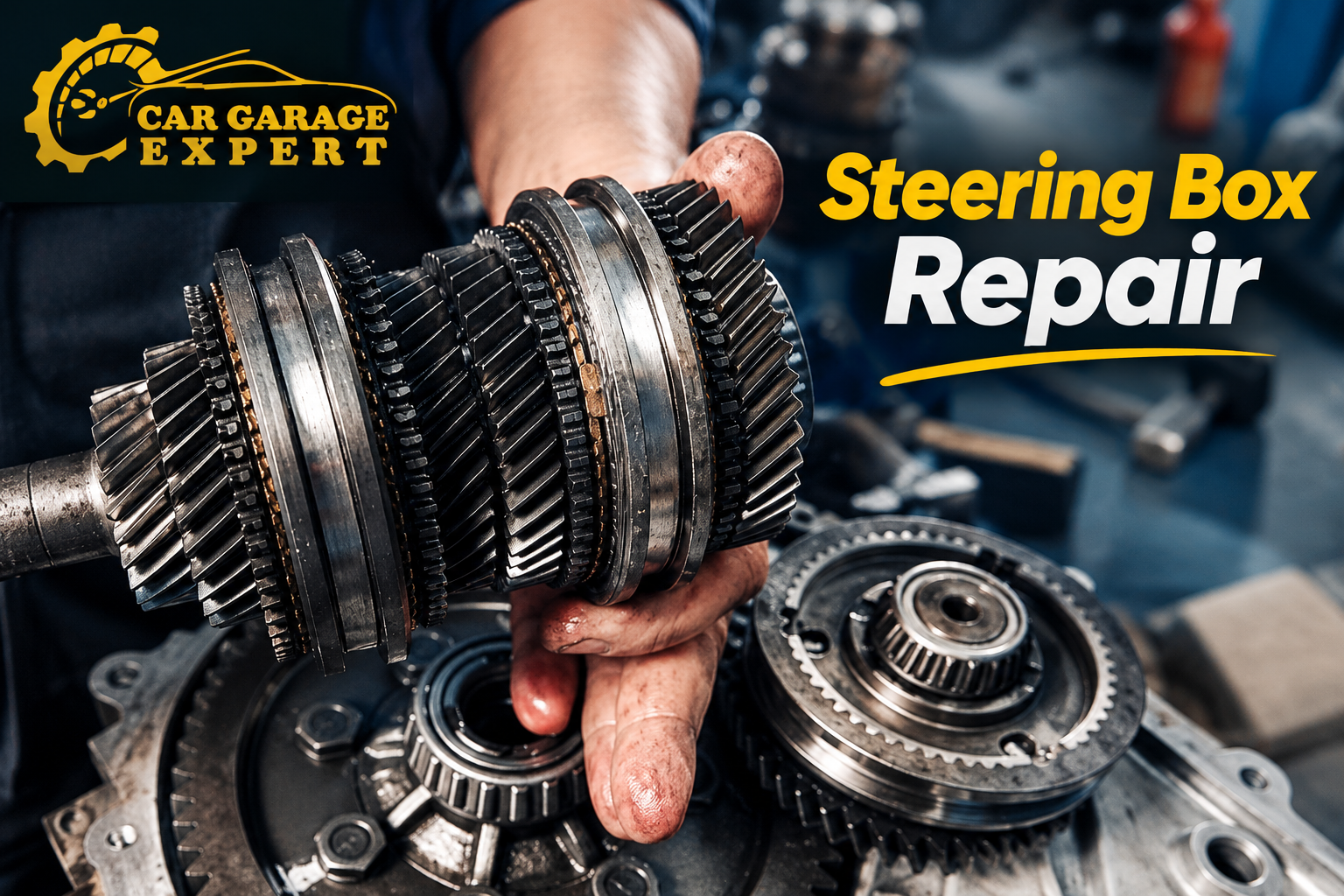
After disassembly, we clean and inspect the internal gears, shafts, bearings, seals, and housings. We replace worn seals and bearings and measure damaged gear surfaces to determine whether they’re still suitable for reuse.
Also check the gearbox housing for cracks, corrosion, scoring, or deformation. If the housing or main gears are seriously damaged, replacing the complete steering box may be more practical than rebuilding it.
During reassembly, the internal components are lubricated and adjusted according to the vehicle’s requirements. Correct adjustment is critical. A steering box that is too loose may retain excessive play, while one that is too tight can cause stiffness, poor steering return, and faster wear.
After refitting, fill the hydraulic system with the correct fluid and bleed it properly to remove trapped air. The technician should then inspect for leaks and test the steering movement.
A final road test confirms that the vehicle responds correctly and safely. Wheel alignment may also be recommended if steering or suspension components were removed or adjusted.
Steering Box Repair or Replacement Which Is Better?
Repairing the existing steering box can be suitable when the main housing and gears remain in usable condition. Replacing seals, bearings, bushes, and other serviceable components may restore proper operation without requiring a complete new unit.
However, replacement may be safer if the gearbox has a cracked housing, severely damaged gears, excessive corrosion, accident damage, or a history of repeated repairs. Some units may also have limited availability of reliable internal parts.
Consider the vehicle’s age, model, parts availability, labor requirements, and overall steering condition. A professional garage should explain the diagnosis and available options before proceeding.
The cheapest short-term option isn’t always the most economical choice. A low-quality repair that does not address damaged internal surfaces may lead to another failure. The objective should be to restore dependable steering performance, not simply stop a visible leak.
Factors Affecting Steering Box Repair Cost in Dubai
No single price applies to every steering gearbox. The final cost depends on several factors, including:
- Vehicle make, model, and production year.
- Steering box design and accessibility
- Extent of internal wear or damage
- Cost and availability of replacement parts
- Number of seals, bearings, or gears required
- Condition of the power steering pump and hoses
- Need for fluid replacement or system flushing
- Wheel alignment or additional steering work
- Whether repair, rebuilding, or complete replacement is selected
We need a proper inspection before we can provide an accurate quotation. A garage that quotes a fixed repair price without inspecting the vehicle may miss hidden internal damage or related steering problems.
Why Timely Steering Box Repair Is Important
A steering fault directly affects how the vehicle responds to driver input. Delaying repair can make the car harder to control and may increase stress on the tires, steering pump, suspension, and linkages.
A small fluid leak can eventually lower the reservoir level enough to damage the power steering pump. Similarly, minor looseness within the steering box may develop into excessive free play that affects vehicle stability.
Early inspection usually provides more repair options. If you keep driving after severe wear develops, you may damage reusable components beyond repair.
Prompt attention also helps prevent uneven tire wear. When the steering system cannot hold the wheels correctly, the tires may scrub against the road instead of rolling evenly.
If your steering feels different from normal, it’s safer to get it inspected than to wait for the problem to become obvious.
How to Help Prevent Steering Box Problems
Regular vehicle maintenance can reduce unnecessary strain on the steering system. Check the power steering fluid periodically and investigate any repeated drop in its level. Adding more fluid without repairing the leak only provides temporary relief.
Use the fluid specification recommended for the vehicle. Mixing incompatible fluids can affect lubrication and damage internal seals.
Avoid holding the steering wheel against its full-lock position for long periods, especially in a hydraulic system. This creates high pressure and additional heat within the steering circuit.
Maintain tires at the correct pressure, as underinflated tires make the steering system work harder. Correct wheel alignment and suspension problems early.
After driving over a deep pothole, striking a curb, or being involved in an accident, have the steering and suspension checked if the vehicle begins pulling, vibrating, or making unusual noises.
Steering Box Repair Services at Car Garage Expert
Car Garage Expert provides professional steering inspections and repair solutions for drivers in Dubai. We start with accurate fault identification so the recommended work matches your vehicle’s condition.
The inspection can include the steering gearbox, hydraulic fluid, hoses, power steering pump, steering column, linkages, suspension joints, tires, and alignment. This broader assessment helps prevent misdiagnosis and unnecessary part replacement.
Depending on the results, the service may involve leak repair, seal replacement, internal rebuilding, adjustment, fluid replacement, or complete steering box replacement.
If you notice loose steering, fluid leakage, unusual sounds, heavy steering, or poor vehicle control, arrange an inspection with Car Garage Expert. Addressing the problem early can help restore accurate handling and protect other steering components.
Frequently Asked Questions
1. Can a damaged steering box be repaired?
Yes, many steering boxes can be repaired or rebuilt if the main housing, shafts, and gears are still serviceable. Seals, bearings, bushes, and certain internal parts may be replaced. If the gearbox has severe gear damage, cracks, corrosion, or accident-related deformation, complete replacement may be safer.
2. Is it safe to drive with a faulty steering box?
Driving with a suspected steering box fault is not recommended. Excessive play, stiffness, fluid leakage, or unpredictable steering response can reduce vehicle control. If steering suddenly becomes very heavy, loose, or difficult to manage, stop driving and arrange professional assistance.
3. How long does steering box repair take?
Repair time depends on the vehicle design, gearbox accessibility, damage level, and parts availability. Minor external repairs may take less time, while full removal, rebuilding, adjustment, refitting, bleeding, and testing take longer. The garage can provide a clearer estimate after inspection.
4. What is the difference between a steering box and a steering rack?
Both components transfer steering-wheel input to the front wheels, but they use different mechanisms. A steering box normally uses gears and steering linkages, while a rack-and-pinion system uses a rack that moves sideways. The repair process depends on the vehicle’s system.
5. Why is my power steering fluid leaking after parking?
The leak may come from the steering box seals, power steering hoses, pump, reservoir, or connections. Fluid can travel across nearby components before reaching the ground, making the source difficult to identify visually. A pressure and leak inspection can locate the actual fault.
Conclusion
A worn or leaking steering box can affect vehicle stability, handling, tire condition, and overall driving safety. Never ignore warning signs such as loose steering, heavy movement, fluid leakage, clunking sounds, or poor directional control.
A professional diagnosis helps distinguish internal steering box problems from faults involving tires, alignment, suspension, hoses, or the power steering pump. Depending on the unit’s condition, you may repair, rebuild, adjust, or replace it.
Visit us in our Al Quoz, Dubai branch or visit Car Garage Expert
For dependable steering box repair in Dubai, contact Car Garage Expert and arrange a complete steering system inspection. Timely service can restore precise steering, prevent further component damage, and give you greater confidence on the road.