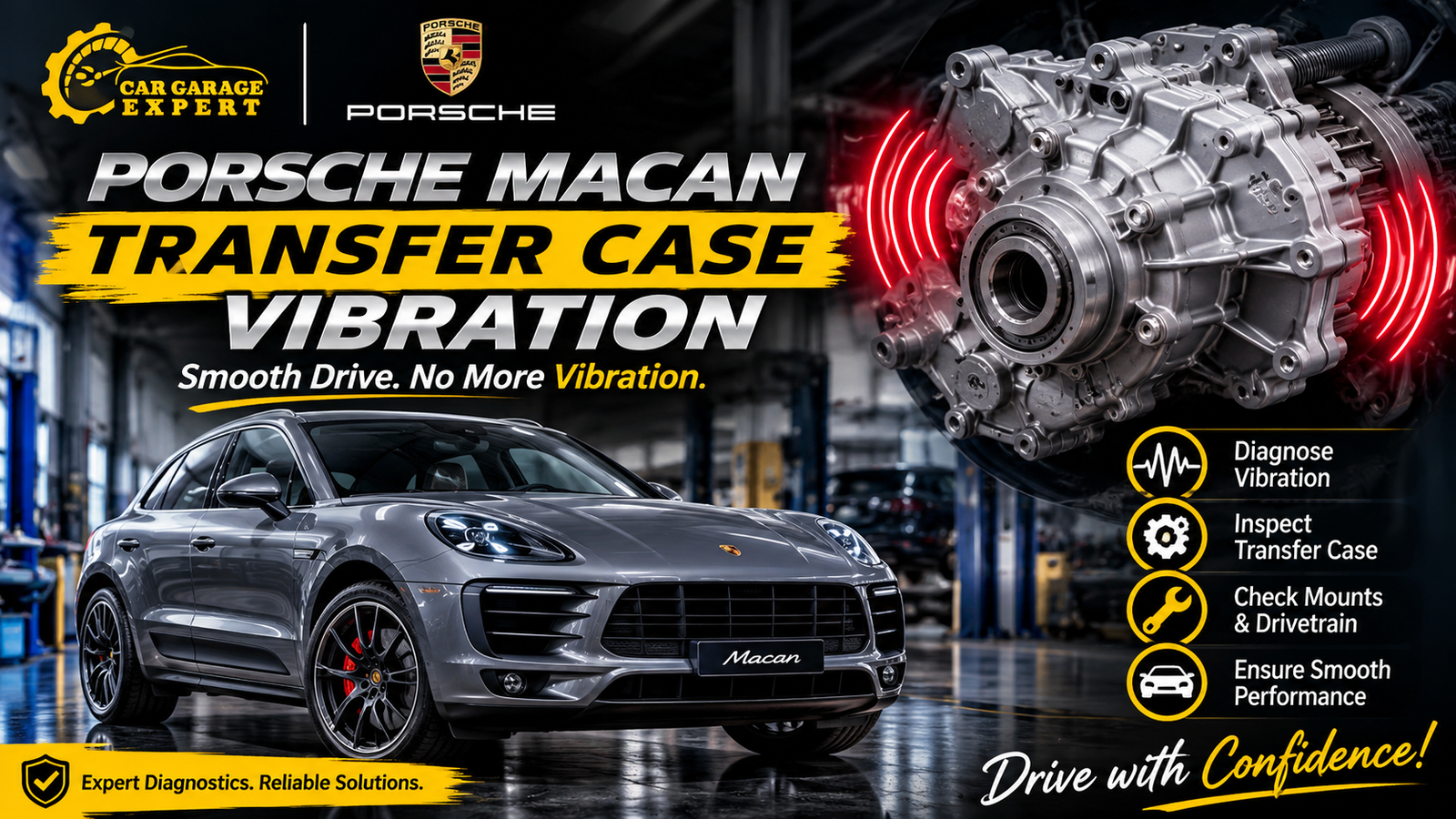
The Porsche Macan is designed to deliver a smooth driving experience, responsive acceleration and excellent all-wheel-drive performance. However, some owners experience unusual vibrations, jerking or shuddering while accelerating, turning or driving at low speeds. One possible reason is a problem with the transfer case, an important component of the vehicle’s all-wheel-drive system.
Porsche Macan transfer case vibration is a concern that should not be ignored, particularly when the shaking becomes more noticeable during acceleration or tight turns. The problem may develop because of internal transfer case wear, incorrect tyre specifications, fluid-related issues or electronic control problems. However, other drivetrain components can produce similar symptoms, so an accurate diagnosis is essential.
Dubai’s hot climate, busy traffic, frequent stop-and-go driving and long-distance journeys can also make it important to maintain the drivetrain properly. Understanding the warning signs and possible causes can help Porsche owners identify problems early and avoid unnecessary repair expenses.
In this guide, Car Garage Expert explains why Porsche Macan transfer case vibration happens, how to recognise the symptoms, what diagnostic procedures technicians use and which repair options may be suitable for your vehicle.
What Is the Transfer Case in a Porsche Macan?
The transfer case is an essential part of the Porsche Macan’s all-wheel-drive (AWD) system. Its main purpose is to manage how engine power reaches the front and rear wheels, helping the vehicle maintain traction, stability and controlled acceleration.
Unlike a conventional two-wheel-drive system, the Macan’s AWD system uses electronic controls and a multi-plate clutch arrangement to distribute torque according to driving conditions.
The transfer case works alongside several drivetrain components, including:
- Transmission: Transfers engine power into the drivetrain.
- Front and rear driveshafts: Deliver rotational power to the respective axles.
- AWD control unit: Manages the distribution of torque between the axles.
- Multi-plate clutch assembly: Controls how much torque is transferred through the AWD system.
- Differentials: Allow wheels to rotate at different speeds when cornering.
When these components operate correctly, the Macan provides stable handling and smooth power delivery. However, problems with the transfer case or its electronic controls can interrupt normal torque distribution, resulting in vibration, shuddering or unusual drivetrain behaviour.
Common Symptoms of Porsche Macan Transfer Case Vibration
Recognising the symptoms early can help prevent further drivetrain damage. Transfer case problems do not always produce the same warning signs, and the behaviour may change depending on vehicle speed, steering angle, temperature and acceleration.
Here are some common symptoms Porsche Macan owners should understand.
1. Vibration During Acceleration
One of the most noticeable symptoms is vibration when pressing the accelerator. The vehicle may feel smooth while cruising but begin shaking when additional engine power is applied.
This can happen because the transfer case is not distributing torque smoothly between the front and rear axles. Internal clutch problems or other drivetrain faults may contribute to the vibration.
If the shaking becomes stronger during uphill driving or acceleration from a low speed, arrange a professional inspection.
2. Shuddering During Low-Speed Turns
Some Porsche Macan drivers experience a jerking or binding sensation while making tight turns, particularly when parking or moving through narrow spaces.
The vehicle may feel as if the wheels are resisting movement or briefly grabbing the road surface.
This symptom deserves attention because Porsche has documented a specific low-speed transfer box shudder condition affecting certain 2022 Macan vehicles. The condition can occur in first or second gear, with slight brake application and substantial steering input at approximately 6–10 mph. It may also happen in reverse.
NHTSA
3. Jerking When Moving From a Stop
Another possible warning sign is sudden hesitation or jerking when accelerating from a stationary position.
Instead of moving forward smoothly, the vehicle may feel as though power delivery is inconsistent. This can indicate a transfer case concern, although transmission operation, engine performance and worn mounts should also be checked.
4. Unusual Clicking or Clunking Noises
A damaged drivetrain component may produce clicking, knocking or clunking sounds during low-speed manoeuvres.
These noises can sometimes originate from driveshaft joints or other connected components rather than the transfer case itself.
Porsche’s technical information for certain 2022 Macan vehicles also describes clicking or clunking noises associated with front driveshaft spline separation under the documented operating conditions.
NHTSA
5. Vibration Without a Dashboard Warning
A transfer case problem does not always trigger a warning light or store an obvious fault code.
The vehicle may continue operating normally under certain conditions but develop vibration when accelerating, turning or driving under load.
This is why a proper mechanical inspection and road test are important even when the dashboard displays no warning messages.
Main Causes of Porsche Macan Transfer Case Vibration
Several mechanical and electronic issues can cause transfer case vibration. Identifying the actual source is important because replacing the transfer case without confirming the fault can lead to unnecessary expenses.
1. Internal Transfer Case Clutch Wear
The transfer case uses multi-plate clutches to control torque distribution between the axles. Over time, internal components can experience wear.
When the clutch assembly does not operate smoothly, the AWD system may struggle to transfer power correctly. This can create shuddering, vibration or jerking during acceleration and cornering.
Vehicles with significant mileage or a history of drivetrain problems may require a more detailed internal inspection.
2. Incorrect or Mismatched Tyres
Tyre compatibility is particularly important in an all-wheel-drive Porsche Macan.
If the front and rear tyres have significantly different rolling circumferences, the wheels may rotate at different effective speeds even when the vehicle is travelling straight.
This can place additional demands on the AWD system and affect transfer case clutch operation.
Common tyre-related issues include:
- Different tyre sizes between the front and rear axles.
- Significant differences in tread depth.
- Incorrect tyre pressure.
- Mixing incompatible tyre models or specifications.
- Replacing only one or two tyres without checking compatibility.
Dubai drivers should regularly inspect tyre condition, especially when dealing with frequent highway driving and high road temperatures.
3. Degraded or Incorrect Transfer Case Fluid
Transfer case fluid helps lubricate internal components and supports the correct operation of the assembly.
Over time, fluid can deteriorate or become contaminated. An incorrect fluid specification or insufficient fluid level can also affect component performance.
Possible warning signs include unusual drivetrain noises, shuddering and fluid leakage.
A technician should inspect the fluid condition, check for leaks and confirm the correct lubricant specification using the vehicle’s model year and identification number.
4. Electronic Control Unit or Software Problems
The Porsche Macan’s AWD system relies on electronic controls to manage torque distribution.
If the control unit has an outdated software version or develops a control-related problem, the transfer case may not respond correctly to driving conditions.
Porsche’s November 2022 technical bulletin identifies a software-related issue in the AWD control unit that could cause excessive torque application to the front driveshafts during specific low-speed, high-steering-angle manoeuvres on 2022 Macan vehicles.
This demonstrates why technicians should check software and control-unit information before recommending expensive mechanical repairs.
5. Damaged Driveshafts or CV Joints
Driveshafts transfer rotational power from the drivetrain to the wheels. Their joints must operate correctly to maintain smooth power delivery.
Worn CV joints, damaged driveshaft components or excessive joint movement can produce vibrations, clicking and clunking sounds.
Sometimes these problems feel similar to transfer case failure, making a physical inspection necessary.
6. Worn Engine or Transmission Mounts
Engine and transmission mounts support the powertrain and help reduce vibrations transmitted into the vehicle’s body.
When mounts become damaged, the engine or transmission may move excessively under acceleration.
This can create noticeable shaking, particularly when moving from a stop or changing driving loads.
Although mounts are not part of the transfer case, their symptoms can overlap with drivetrain vibration.
How to Diagnose Porsche Macan Transfer Case Vibration
A proper diagnosis should involve both electronic testing and mechanical inspection. Simply replacing a component based on the driver’s description is not a reliable repair method.
Here is how a professional Porsche technician can investigate the problem.
Step 1: Review the Vehicle’s Symptoms
The technician should first understand when the vibration occurs.
Important questions include:
- Does the vehicle vibrate during acceleration?
- Is the problem worse when turning?
- Does it happen when the engine is cold or warm?
- Is the vibration present in reverse?
- Does it increase with vehicle speed?
- Are there any warning messages on the dashboard?
These details help narrow down the possible causes.
Step 2: Perform a Diagnostic Scan
A Porsche-capable diagnostic system, such as PIWIS, can help technicians inspect relevant control units and retrieve stored fault information.
The inspection should include the AWD control unit, transmission and other related drivetrain systems.
Technicians should also check the software version and relevant part information where applicable.
Step 3: Inspect Tyres and Drivetrain Components
All four tyres should be checked for correct specifications, pressure and tread condition.
The technician should also inspect:
- Front and rear driveshafts.
- CV joints and boots.
- Propshaft and related bearings.
- Transfer case housing.
- Engine and transmission mounts.
- Signs of fluid leakage.
This step helps eliminate other possible causes before focusing on internal transfer case damage.
Step 4: Conduct a Controlled Road Test
A road test allows the technician to reproduce the vibration under specific conditions.
The vehicle may be tested during gentle acceleration, low-speed movement, straight-line driving and controlled turning manoeuvres.
For relevant model years, Porsche has published specific diagnostic procedures for investigating transfer case vibration and jerking. These procedures should only be performed by trained technicians using the appropriate equipment.
NHTSA+1
Step 5: Confirm the Actual Fault
After completing the inspection, the technician should explain whether the problem comes from the transfer case, driveshafts, tyres, electronic controls or another drivetrain component.
The repair recommendation should be based on diagnostic evidence rather than symptoms alone.
Porsche Macan Transfer Case Repair and Replacement Options in Dubai
The correct repair depends on the vehicle’s condition, model year and confirmed cause of vibration. Not every transfer case problem requires a complete replacement.
Here are the main repair options.
Transfer Case Fluid Inspection and Service
If the problem is related to fluid condition, leakage or an incorrect lubricant specification, the technician may recommend the appropriate fluid service.
The old fluid should be inspected, and the correct replacement fluid should be selected according to Porsche’s specifications.
However, changing the fluid cannot automatically repair worn clutch plates, damaged bearings or internal mechanical failures.
Transfer Case Software Updates
When diagnostic results identify an applicable software issue, updating the AWD control unit may be part of the repair.
The technician should verify the vehicle’s VIN, control-unit part number and current software level before performing programming.
This is particularly relevant when investigating the specific 2022 Macan condition described in Porsche’s technical bulletin.
Driveshaft or CV Joint Replacement
If a damaged driveshaft or CV joint is responsible for the vibration, replacing the affected component may restore smooth power delivery.
The technician should inspect both front driveshafts and associated connections when the symptoms indicate a possible issue.
Transfer Case Repair or Rebuild
If internal components are worn or damaged, specialist repair or rebuilding may be an option, depending on the unit’s condition and parts availability.
The workshop should explain which components require attention and whether the repaired unit can meet the manufacturer’s operating requirements.
Complete Transfer Case Replacement
A complete replacement may be necessary when the transfer case has substantial internal damage or cannot be repaired reliably.
Before approving this work, Porsche owners should request a detailed diagnostic report and confirm that other possible causes have been excluded.
A replacement should also be checked for correct part-number compatibility with the vehicle.
Why Porsche Macan Transfer Case Problems Need Attention in Dubai
Dubai presents several driving conditions that make regular vehicle maintenance important.
Frequent traffic congestion, repeated acceleration and braking, extended highway journeys and high ambient temperatures can place demands on different vehicle systems.
Although these conditions do not automatically mean that a Macan transfer case will fail, they make proper drivetrain inspection and maintenance worthwhile.
Here are some reasons owners should pay attention to unusual vibrations.
- Frequent Stop-and-Go Driving: Repeated low-speed acceleration and manoeuvring can make existing drivetrain problems more noticeable.
- High Ambient Temperatures: Hot weather makes correct fluid condition, lubrication and general vehicle maintenance especially important.
- Long Highway Journeys: Persistent vibration during highway driving may indicate a tyre, wheel, driveshaft or drivetrain issue that needs investigation.
- Parking and Tight Manoeuvres: Binding or shuddering during sharp turns can help technicians identify specific low-speed AWD concerns.
If you notice unusual Porsche Macan transfer case vibration, arranging a professional inspection in Dubai can help identify the issue before it becomes more expensive to repair.
How to Prevent Porsche Macan Transfer Case Problems
Preventive maintenance can reduce the likelihood of avoidable drivetrain problems and help maintain consistent vehicle performance.
Consider following these maintenance recommendations:
- Use compatible tyres: Always confirm that all four tyres meet the vehicle’s approved specifications.
- Monitor tyre pressure: Incorrect pressure can affect handling and tyre wear.
- Follow the recommended service schedule: Use the maintenance requirements applicable to your exact Macan model and year.
- Inspect for fluid leaks: Check for signs of leakage around the transfer case and connected components.
- Investigate unusual vibrations early: Do not ignore repeated shuddering, jerking or clicking sounds.
- Maintain electronic systems: Have relevant control units checked when drivetrain symptoms appear.
- Keep service records: Maintain documentation of previous repairs, tyre replacements and drivetrain maintenance.
These steps can help technicians identify developing problems and prevent unnecessary component replacement.
When Should You Stop Driving Your Porsche Macan?
Not every vibration requires immediate vehicle recovery, but certain symptoms indicate that continued driving may be unsafe.
You should stop driving and arrange professional assistance if you experience:
- Severe or rapidly increasing vibration.
- Grinding or loud mechanical noises.
- Significant fluid leakage.
- Sudden loss of power transmission.
- Severe drivetrain binding during turns.
- A serious drivetrain warning or other critical dashboard alert.
If the vehicle is only experiencing mild intermittent vibration, avoid aggressive acceleration and arrange an inspection as soon as possible.
Do not attempt to disconnect transfer case electrical connectors as a DIY diagnostic test. Porsche’s workshop information restricts such procedures to controlled professional testing and includes specific driving limitations when connectors are disconnected.
NHTSA+1
Frequently Asked Questions (FAQs)
1. What causes Porsche Macan transfer case vibration?
Common causes include worn internal clutch components, incorrect tyre sizes, mismatched tread depths, degraded transfer case fluid, electronic control problems and damaged driveshafts. A professional inspection is necessary to identify the exact source.
2. Can I drive my Porsche Macan with a transfer case problem?
Driving with a minor vibration may be possible for a short distance, but it is not recommended without an inspection. Severe vibration, grinding noises, fluid leaks or drivetrain warnings require stopping the vehicle and arranging professional assistance.
3. Does changing transfer case fluid fix vibration?
It may help if the problem is related to fluid condition or lubrication. However, fluid replacement will not repair damaged clutch plates, worn bearings or defective mechanical components. The cause should be confirmed before choosing a repair.
4. How much does Porsche Macan transfer case repair cost in Dubai?
The cost depends on the model year, transfer case condition, replacement parts and labour involved. A fluid service, software update, component repair and complete transfer case replacement have different costs. Request a vehicle-specific inspection and quotation before approving repairs.
5. How can I prevent Porsche Macan transfer case failure?
Maintain compatible tyres, check tyre pressure regularly, follow the recommended maintenance schedule and investigate unusual vibrations early. Regular drivetrain inspections can also help identify potential problems before they become more serious.
Conclusion
Porsche Macan transfer case vibration can affect driving comfort, acceleration and overall drivetrain performance. Although internal clutch wear is one possible cause, tyre compatibility, driveshaft damage, fluid-related problems and electronic control issues can produce similar symptoms.
For Porsche owners in Dubai, identifying the actual problem is more important than immediately replacing expensive components. A proper diagnostic scan, tyre inspection, mechanical assessment and controlled road test can help determine the most appropriate repair.
If your Porsche Macan experiences shuddering during acceleration, vibration during tight turns or unusual drivetrain noises, do not ignore these warning signs. Arrange a professional inspection through Car Garage Expert to identify the cause and choose a suitable repair solution for your vehicle.
Visit us in our Al Quoz, Dubai branch or visit Car Garage Expert