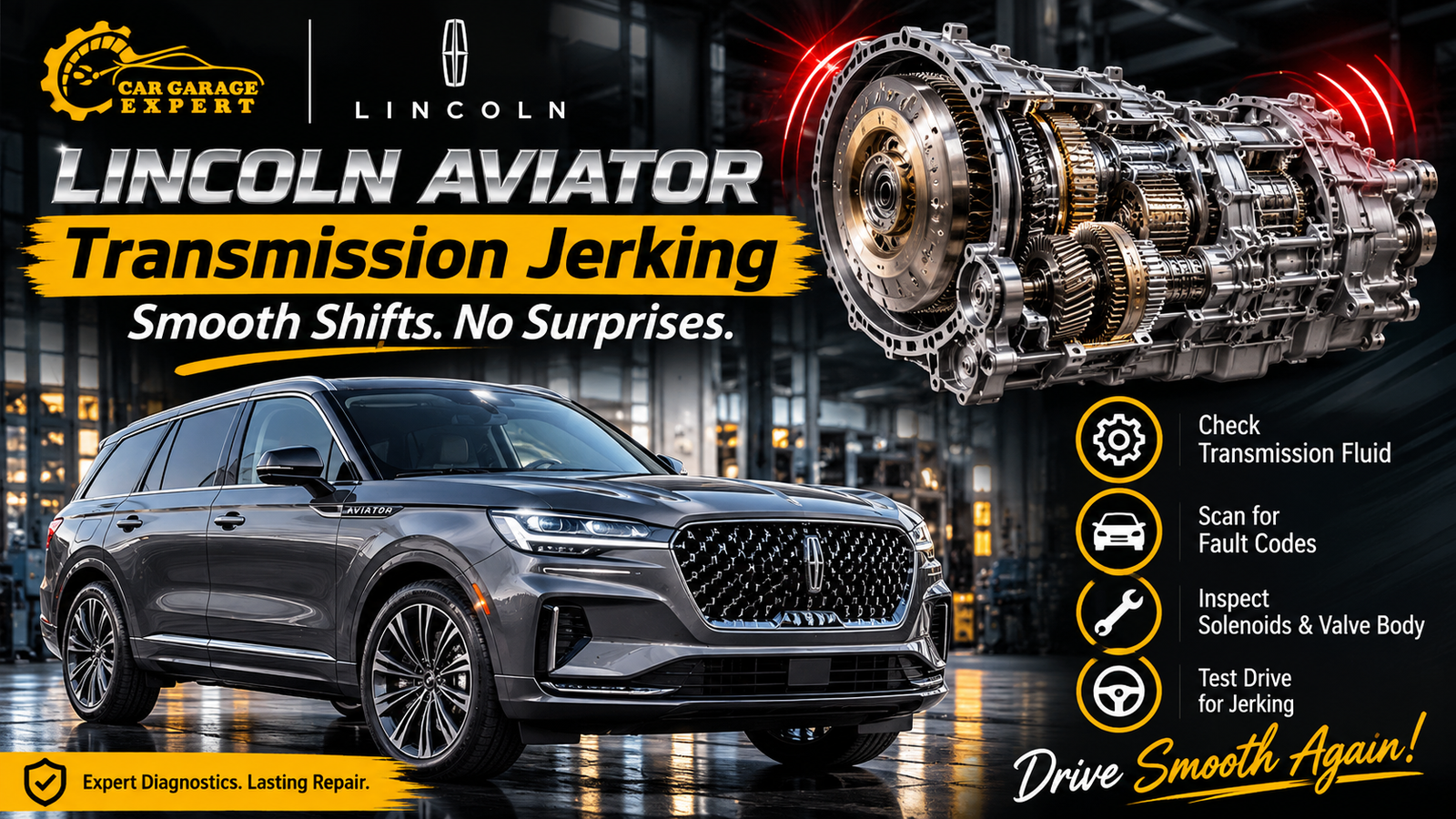
The Lincoln Aviator is a luxury SUV designed to deliver smooth acceleration, refined performance, and comfortable driving. However, like other modern vehicles, it can develop transmission-related problems over time. One issue that can affect driving comfort and vehicle performance is Lincoln Aviator transmission jerking.
If your Aviator suddenly jerks while accelerating, hesitates when changing gears, or produces a noticeable clunk when shifting from Park to Drive, these symptoms may indicate an underlying transmission or powertrain problem. Ignoring these warning signs can lead to more complicated mechanical issues and potentially expensive repairs.
Driving conditions in Dubai can also place additional demands on a vehicle. High ambient temperatures, heavy traffic, frequent stopping, and extended periods of slow-speed driving can increase the cooling demands placed on the transmission system.
At Car Garage Expert, understanding the possible causes of transmission jerking is essential before deciding which repair is necessary. This guide explains why a Lincoln Aviator may jerk during gear changes, how to identify the problem, and which repair solutions can restore smooth driving performance.
What Does Lincoln Aviator Transmission Jerking Mean?
Transmission jerking refers to an unusual movement, sudden hesitation, or noticeable vibration that occurs when the vehicle changes gears or transfers power from the engine to the wheels.
A properly functioning automatic transmission should change gears smoothly without producing strong shocks or unexpected movements.
When something goes wrong, drivers may experience:
- Sudden jerking during acceleration.
- Hard shifting between lower and higher gears.
- Delayed engagement when selecting Drive or Reverse.
- A noticeable clunk when changing transmission positions.
- Hesitation when accelerating from a complete stop.
- Unexpected changes in engine RPM.
- Shuddering or vibration during normal driving.
These symptoms do not always mean that the transmission itself is damaged. Problems involving electronic controls, engine performance, sensors, or drivetrain components can produce similar sensations.
Identifying the exact cause is important because replacing transmission components without proper diagnosis can result in unnecessary expenses.
Common Causes of Lincoln Aviator Transmission Jerking
Several mechanical and electronic problems can contribute to rough shifting in a Lincoln Aviator. The following are some of the most important areas technicians should inspect.
1. Low or Degraded Transmission Fluid
Transmission fluid plays an essential role in automatic transmission operation. It lubricates internal components, helps manage heat, and provides hydraulic pressure required for gear engagement.
When the fluid level becomes too low, the transmission may not receive the hydraulic pressure needed for smooth operation.
Old, contaminated, or incorrect transmission fluid can also affect shifting performance.
Common symptoms include:
- Jerking during gear changes.
- Delayed engagement when selecting Drive.
- Transmission slipping during acceleration.
- Unusual noises from the transmission area.
- Changes in shifting behaviour after extended driving.
In Dubai, maintaining the correct transmission fluid condition is particularly important because high ambient temperatures and demanding driving conditions can increase the thermal load on vehicle systems.
Recommended solution: A technician should inspect the transmission for leaks, assess fluid condition using the correct manufacturer procedure, and verify that the specified fluid is being used. Fluid replacement should follow the correct service procedure rather than being performed as an automatic response to every jerking complaint.
2. Transmission Control Module (TCM) Problems
Modern Lincoln Aviator models rely on electronic systems to control transmission operation.
The Transmission Control Module communicates with other vehicle systems and helps determine when gears should change, how much hydraulic pressure is required, and how the transmission responds to driving conditions.
If the control module receives incorrect information or experiences a software-related problem, gear changes may become unpredictable.
Possible symptoms include:
- Harsh or delayed gear changes.
- Jerking during acceleration.
- Unexpected transmission behaviour.
- Warning messages on the instrument cluster.
- Changes in performance between different driving conditions.
Some transmission-related concerns can also involve the Powertrain Control Module (PCM), which coordinates engine and transmission functions.
Recommended solution: Professional diagnostic equipment should be used to retrieve fault codes, review transmission data, and check for available software updates or manufacturer service procedures. Replacing the control module should only be considered after electrical and software-related causes have been investigated.
3. Faulty Transmission Solenoids
Transmission solenoids are electrically controlled valves that regulate the flow of transmission fluid through different hydraulic circuits.
These components help control gear engagement and shifting pressure.
If a solenoid becomes stuck, responds slowly, or develops an electrical fault, the transmission may struggle to select gears smoothly.
Drivers may notice:
- Sudden jerking during upshifts or downshifts.
- Delayed gear engagement.
- Harsh shifting at certain speeds.
- Transmission warning lights.
- Reduced transmission performance.
A solenoid-related issue may sometimes produce diagnostic trouble codes, although the absence of a warning light does not necessarily rule out a mechanical or hydraulic problem.
Recommended solution: A technician should inspect the transmission control system, check solenoid electrical circuits, and evaluate hydraulic operation. Depending on the findings, the affected solenoid or associated valve body components may require repair or replacement.
4. Valve Body Malfunction
The transmission valve body is an important hydraulic control component containing passages and valves that direct fluid pressure to different parts of the transmission.
If its internal valves become stuck, contaminated, or worn, the transmission may struggle to maintain the correct pressure during gear changes.
This can produce noticeable jerking, harsh engagement, and delayed shifting.
Some Lincoln Aviator vehicles equipped with particular automatic transmissions have been covered by manufacturer technical service information addressing harsh or delayed engagement and shifting. The potential causes described in relevant bulletins include software strategy, solenoid identification, sticking main control valves, and internal transmission components.
However, these bulletins apply only to specified vehicle configurations and build dates. They should not be assumed to cover every Aviator sold in Dubai.
Recommended solution: A qualified transmission specialist should perform a complete hydraulic and electronic assessment. Valve body servicing, repair, or replacement may be necessary depending on the confirmed fault.
5. Torque Converter Problems
The torque converter transfers engine power to the automatic transmission and allows the vehicle to remain stationary while the engine continues running.
It also helps multiply torque during acceleration.
When the torque converter develops a fault, the driver may experience vibration, shuddering, or inconsistent power delivery.
Common symptoms include:
- Shaking during acceleration.
- Vibration at steady cruising speeds.
- Shuddering during torque converter lockup.
- Unusual engine RPM fluctuations.
- Reduced acceleration smoothness.
A damaged torque converter clutch or related hydraulic control problem can contribute to these symptoms.
Recommended solution: A transmission specialist should evaluate torque converter slip data, fluid condition, and related control systems. Depending on the diagnosis, torque converter repair or replacement may be required.
6. Worn Internal Transmission Clutches
Automatic transmissions use internal clutch packs to engage different gear combinations.
Over time, friction materials and other internal components can wear, particularly when a transmission experiences excessive heat, lubrication problems, or prolonged mechanical stress.
When internal clutches cannot engage correctly, the vehicle may experience slipping or harsh gear changes.
Possible warning signs include:
- Engine RPM increasing without corresponding acceleration.
- Jerking during specific gear changes.
- Delayed engagement.
- Burning smells.
- Reduced driving performance.
Recommended solution: If internal clutch damage is suspected, professional transmission inspection is necessary. Depending on the extent of the damage, the transmission may require internal repair or a complete rebuild.
7. Engine Misfires and Powertrain Problems
Not every jerking sensation originates inside the transmission.
An engine misfire can interrupt power delivery and create a sensation similar to transmission slipping or harsh shifting.
Possible causes include faulty ignition coils, worn spark plugs, fuel delivery problems, or sensor-related issues.
When engine performance becomes inconsistent, the transmission may also experience irregular shift behaviour because both systems work together.
Recommended solution: Technicians should inspect engine fault codes, ignition components, fuel delivery, and relevant sensor readings before concluding that the transmission is responsible.
8. Worn Engine or Transmission Mounts
Engine and transmission mounts support the powertrain and help absorb vibrations during normal operation.
When these mounts become damaged, cracked, or excessively worn, the engine and transmission may move more than they should.
This can create a noticeable thump or jerk when accelerating, decelerating, or changing between Drive and Reverse.
Recommended solution: Inspect the engine and transmission mounts for visible damage, excessive movement, or deterioration. Replace any defective mounts with suitable manufacturer-approved components.
How Dubai Driving Conditions Can Affect Lincoln Aviator Transmission Performance
Dubai offers a combination of modern highways, busy urban roads, and demanding environmental conditions.
Although the Lincoln Aviator is designed for comfortable everyday driving, certain conditions can increase the workload on its powertrain.
High Ambient Temperatures
Summer temperatures in Dubai can be extremely high. This increases the importance of maintaining an effective vehicle cooling system.
Automatic transmissions generate heat during normal operation. When operating temperatures become excessive, transmission fluid and internal components can experience additional thermal stress.
Drivers should pay attention to transmission temperature warnings and avoid continuing to drive when the vehicle reports overheating.
Heavy Traffic and Frequent Gear Changes
Driving through busy areas such as Downtown Dubai, Business Bay, and Sheikh Zayed Road can involve repeated acceleration, braking, and low-speed movement.
Frequent changes in driving conditions increase the number of gear engagement events and can contribute to additional transmission workload.
Long-Distance Highway Driving
Regular journeys between Dubai, Abu Dhabi, and other Emirates involve extended periods of driving.
A transmission that already has a cooling, hydraulic, or mechanical problem may become more noticeable during prolonged operation.
Dust and Environmental Conditions
Dusty conditions can affect certain cooling-system components and reduce airflow if external surfaces become obstructed.
Although dust does not automatically cause transmission jerking, maintaining clean cooling-system components and following scheduled vehicle maintenance can help support reliable operation.
Warning Signs That Your Lincoln Aviator Needs Transmission Inspection
Recognising transmission problems early can help prevent additional damage.
Look for these warning signs:
- Delayed Gear Engagement: If the vehicle takes noticeably longer than usual to move after selecting Drive or Reverse, there may be a hydraulic, electronic, or mechanical issue.
- Hard Shifting: A sudden shock when the transmission changes gears may indicate a control or internal transmission problem.
- Transmission Slipping: If the engine RPM increases but the vehicle does not accelerate accordingly, the transmission may not be transferring power correctly.
- Unusual Noises: Grinding, whining, or clunking sounds should be investigated, particularly when they occur during gear changes.
- Warning Messages: Messages such as Transmission Service Required or Transmission Over Temperature should never be ignored.
- Burning Smell: An unusual burning smell may indicate overheating or another mechanical problem that requires immediate inspection.
How Professionals Diagnose Lincoln Aviator Transmission Jerking
Accurate diagnosis is essential because several different components can produce similar symptoms.
At Car Garage Expert, a systematic inspection approach can help identify the actual source of the problem.
Step 1: Initial Vehicle Inspection
The technician first discusses the symptoms with the owner.
Important questions include:
- Does the jerking happen during cold starts or after driving?
- Does it occur when accelerating or decelerating?
- Is it noticeable when shifting from Park to Drive?
- Does it happen at low speeds or on highways?
- Are any dashboard warning lights illuminated?
These details help narrow down possible causes.
Step 2: Computerised Diagnostic Scanning
Professional diagnostic equipment is used to communicate with the vehicle’s electronic control modules.
Technicians retrieve stored and pending fault codes and examine relevant live data.
Depending on the vehicle configuration, this may include transmission temperature, input and output speeds, commanded gear, solenoid operation, and torque converter slip.
Step 3: Transmission Fluid Inspection
The technician checks for leaks and assesses fluid condition according to the correct manufacturer procedure.
Using an incorrect fluid specification or incorrect service method can create additional problems.
Step 4: Road Testing
A controlled road test helps technicians reproduce the reported symptoms.
The technician observes shifting behaviour under different driving conditions to determine whether the problem occurs during acceleration, deceleration, cruising, or gear engagement.
Step 5: Mechanical and Electrical Inspection
If necessary, technicians inspect the valve body, solenoids, wiring connections, mounts, cooling system, and internal transmission components.
This process helps distinguish between a minor control issue and more serious mechanical damage.
Effective Repair Solutions for Lincoln Aviator Transmission Jerking
The correct repair depends on the confirmed diagnosis.
Possible repair solutions include:
- Transmission fluid servicing using the correct specification.
- Repairing transmission fluid leaks.
- Updating PCM or TCM software when applicable.
- Repairing or replacing defective transmission solenoids.
- Servicing or replacing a faulty valve body.
- Repairing torque converter problems.
- Replacing worn internal clutch components.
- Repairing damaged engine or transmission mounts.
- Resolving engine misfires and related powertrain faults.
A complete transmission replacement should not be the first recommendation without establishing the extent of the damage.
In some cases, a software update or a relatively limited component repair may resolve the issue.
How to Prevent Lincoln Aviator Transmission Problems
Preventive maintenance is one of the most effective ways to support long-term transmission performance.
Lincoln Aviator owners in Dubai should follow these maintenance practices:
- Follow the Manufacturer’s Maintenance Schedule: Service the vehicle according to the correct schedule for its model year, engine, transmission, and operating conditions.
- Use the Correct Transmission Fluid: Always verify the specified fluid type before carrying out transmission maintenance.
- Inspect for Fluid Leaks: Address leaks promptly to prevent lubrication and hydraulic pressure problems.
- Monitor Warning Messages: Never ignore transmission overheating or service warnings.
- Avoid Aggressive Driving: Repeated hard acceleration and unnecessary high-load driving can increase drivetrain stress.
- Maintain the Cooling System: Ensure the vehicle’s cooling components are functioning properly.
- Arrange Early Inspections: Investigate unusual vibrations, slipping, or harsh gear changes before the symptoms become more severe.
- Keep Service Records: Maintaining a record of previous transmission servicing and repairs helps technicians understand the vehicle’s maintenance history.
When Should You Stop Driving Your Lincoln Aviator?
Not every transmission jerk requires immediate roadside assistance. However, certain symptoms indicate that continuing to drive may be unsafe or could cause further damage.
Stop in a safe location and arrange professional assistance if you experience:
- A transmission overheating warning.
- Severe or repeated transmission slipping.
- Loss of drive or reverse.
- Strong grinding or banging noises.
- Significant fluid leakage.
- A burning smell accompanied by abnormal transmission behaviour.
- Sudden loss of vehicle power.
The Lincoln Aviator owner’s manual specifically instructs drivers to stop safely when the transmission displays an overheating warning and to have the system checked when service warnings appear.
If the vehicle enters a limited-function mode or cannot engage gears reliably, professional recovery is preferable to attempting to drive it to a workshop.
Why Professional Transmission Diagnosis Matters in Dubai
The Lincoln Aviator uses sophisticated electronic and mechanical systems that require appropriate diagnostic equipment and technical knowledge.
A general inspection may identify obvious problems, but complicated transmission faults often require access to manufacturer-level diagnostic information and model-specific repair procedures.
A professional transmission assessment can help identify whether the jerking is related to fluid condition, software calibration, solenoid operation, hydraulic pressure, internal clutch wear, or another powertrain component.
For Dubai vehicle owners, choosing a workshop experienced with modern luxury SUVs can help ensure that the repair process is based on accurate findings rather than guesswork.
At Car Garage Expert, the priority should always be identifying the underlying problem, recommending the appropriate repair, and helping maintain the vehicle’s performance and reliability.
Conclusion
Lincoln Aviator transmission jerking can result from several issues, including degraded transmission fluid, faulty solenoids, valve body problems, electronic control faults, torque converter issues, and worn internal components.
Dubai’s high temperatures, heavy traffic, and demanding driving conditions make regular maintenance and early diagnosis particularly important.
The most effective way to resolve transmission jerking is to identify its actual cause through proper diagnostic scanning, fluid inspection, road testing, and mechanical evaluation.
Rather than ignoring unusual shifting behaviour or replacing parts without confirmation, Lincoln Aviator owners should arrange a professional inspection as soon as persistent symptoms appear.
With the correct diagnosis, suitable repairs, and preventive maintenance, your Lincoln Aviator can continue delivering the smooth and comfortable driving experience expected from a luxury SUV.
Visit us in our Al Quoz, Dubai branch or visit Car Garage Expert
Frequently Asked Questions (FAQs)
1. Why does my Lincoln Aviator jerk when changing gears?
Transmission jerking can result from low or degraded transmission fluid, faulty solenoids, valve body problems, electronic control issues, or worn internal clutch components. A professional diagnostic inspection is necessary to identify the exact cause.
2. Can low transmission fluid cause a Lincoln Aviator to jerk?
Yes. Low transmission fluid can affect hydraulic pressure and lubrication, potentially causing harsh shifting, delayed engagement, and transmission slipping. A technician should inspect for leaks and verify the fluid level using the correct procedure.
3. Is Lincoln Aviator transmission jerking a serious problem?
It can be. Mild shifting irregularities may be related to software or control issues, while severe jerking may indicate internal mechanical damage. Persistent symptoms should be investigated before they become worse.
4. Can Dubai’s hot weather affect Lincoln Aviator transmission performance?
High ambient temperatures can increase the cooling demands placed on the transmission system. If the transmission already has a cooling or mechanical problem, high operating temperatures may make the symptoms more noticeable.
5. How can I fix Lincoln Aviator transmission jerking?
The repair depends on the underlying fault. Possible solutions include correcting fluid-related problems, updating transmission software, repairing solenoids, servicing the valve body, or replacing damaged internal components. Proper diagnosis should always come before repairs.