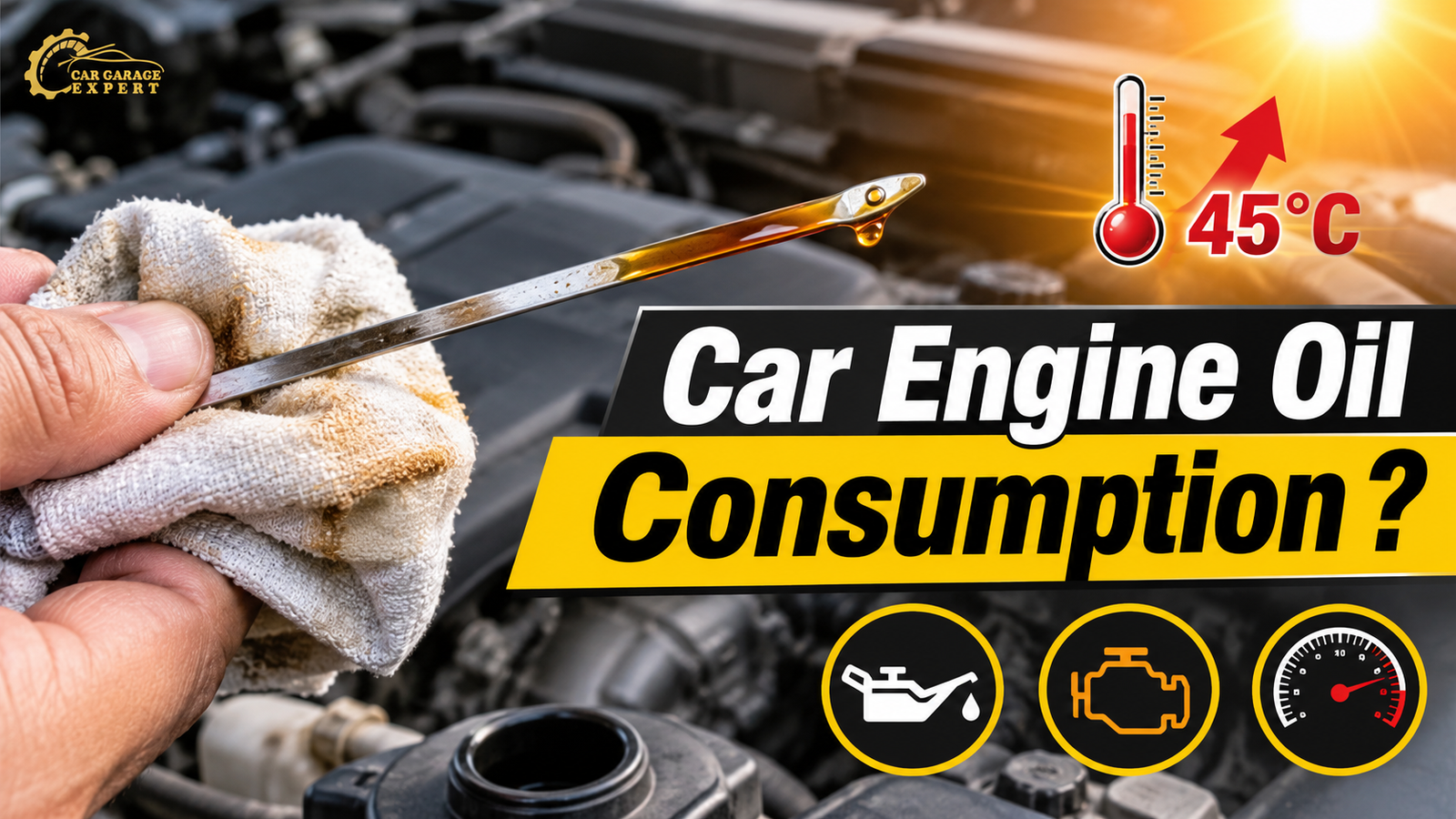
You topped up the oil last month, and the dipstick is already near the low mark again. There is no puddle under the car and no warning light yet. For many Dubai drivers, this starts every summer.
Car Engine Oil Consumption: The Quick Answer
Dubai’s heat makes your car use more oil. Thin oil gets past worn-out valve stem seals and piston rings and burns inside the engine. Some of it also evaporates and is pulled into the engine through the PCV valve. If you don’t service your car for a long time, or use old oil or the wrong grade, this can happen. The engine needs to be checked if it loses more than 1 litre of gas every 1,000 to 2,000 km. First, do a measured top-up test and a leak check. A car garage in Al Quoz can help you figure out what’s wrong before you buy new parts.
What Normal Car Engine Oil Consumption Looks Like
Every engine uses a little oil. A thin film coats the cylinder walls so the pistons can slide, and a tiny amount of that film burns each time the fuel ignites. That is normal.
A healthy modern engine usually loses less than half a liter between services. Most carmakers treat up to about 1 liter per 1,000 to 2,000 km as the outer limit. Turbo engines and high-revving sports engines sit at the top of that range.
Engine oil consumption becomes a problem when you need to top up between services, or when the rate keeps rising. A car that consumes too much engine oil is telling you something inside is wearing, sticking, or leaking.
Signs Your Car Is Using Too Much Oil
High engine oil consumption shows up in a few clear ways. Some are easy to miss until the level is already low.
Engine Oil Level Dropping Between Services
The simplest sign is a dipstick that reads lower each week. If you need to add oil more than once between services, you’re losing it too fast.
Blue or Grey Smoke From the Exhaust
Blue smoke means oil is burning in the cylinders. A puff right after a cold start often points to valve stem seals. Smoke when you accelerate hard points to piston rings or a turbo.
Burning Oil Smell in the Cabin
A sharp burning smell after a drive often means oil is leaking onto the hot exhaust. That is an external leak, not burning inside the engine.
Oil Warning Light at Idle or in Turns
The oil pressure light flickers when the level is very low, especially in sharp turns or roundabouts. By then, the engine is already short of oil.
Oily Spark Plugs or Rough Running
Oil fouls spark plugs over time. You may notice a misfire, a rough idle, or a check engine light.
Why Engines Burn More Oil in Hot Weather
Engine oil consumption in hot weather rises for both physical and mechanical reasons. Heat makes small faults show up faster.
Heat Thins the Oil
Oil gets thinner as it heats up. On a 45°C day, oil temperature in a hard-working engine can sit well above 110°C. Thin oil slips past rings and seals more easily, so more of it reaches the combustion chamber and burns.
Oil Evaporates at High Temperature
Some of the oil’s lighter parts turn to vapor when they get very hot. Cheaper oils evaporate more. That vapor leaves the crankcase and the level drops, even with no leak in sight.
PCV Valve Pulling Oil Vapor Into the Intake
The PCV system vents crankcase gases back into the intake to be burned. When the PCV valve sticks open, it pulls oil mist straight into the engine. This is one of the cheapest fixes and one of the most often missed.
Worn or Stuck Piston Rings
The oil control rings scrape oil off the cylinder walls. Carbon can glue them in their grooves, especially in engines that do short trips or skip services. Stuck rings leave too much oil behind, and the car engine oil burning gets worse over time.
Hardened Valve Stem Seals
Small rubber seals stop oil running down the valves into the cylinders. Years of heat make them hard and cracked. The typical sign is blue smoke for a few seconds after the car sits overnight.
Turbocharger Seal Wear
Turbos spin very fast and run very hot. Worn turbo seals push oil into the intake or exhaust. You may see oil inside the intercooler pipes.
Wrong Oil Grade or Overdue Oil Change
Oil that is thinner than the manufacturer asks for, or oil that has broken down from too many kilometers, burns faster. Overfilling also causes problems, because the crankshaft whips the extra oil into foam.
External Leaks
Not all oil loss is burning. Valve cover gaskets, oil pan gaskets and the rear main seal can drip slowly. In Dubai’s heat, small drips often burn off the hot engine before they reach the ground.
Match the Clue to the Likely Cause
Use this table to link your engine oil consumption problems to the part most likely behind them.
| What you notice | Most likely cause | First test |
| Blue smoke for a few seconds after a cold start | Valve stem seals | Cold start smoke check |
| Blue smoke when accelerating | Piston rings or turbo seals | Compression and leak-down test |
| Oil loss without leaks, no smoke | PCV valve stuck or oil evaporation | PCV valve check |
| Burning smell, oily engine bay | Gasket or seal leak | UV dye leak test |
| Oil inside intercooler pipes | Turbo seal wear | Turbo shaft play check |
| Level drops faster after a summer road trip | Thin or wrong grade oil | Oil grade and service history check |
| Oily spark plugs on one cylinder | Rings or seals on that cylinder | Plug inspection and borescope |
How Mechanics Find Where the Oil Is Going
A proper diagnosis measures first and opens the engine last. Skipping steps leads to costly repairs that don’t fix the problem. Any car mechanic you visit should follow an order like this.
Measured Consumption Test
The mechanic changes the oil and fills it exactly to the full mark. You then drive 1,000 km and come back. The mechanic measures how much it takes to refill, which gives a real number instead of a guess.
Leak Inspection
We clean the engine and inspect it on a lift.
UV Dye Test
We add a UV dye to the oil. After a short drive, a UV lamp shows exactly where oil is escaping.
Seal and Gasket Check
We check the valve cover, oil pan, timing cover, and rear main seal for wet spots and fresh oil.
PCV and Turbo Check
The PCV valve is tested for free movement. On turbo cars, the intake pipes are checked for oil, and the turbo shaft is checked for side play.
Compression and Leak-Down Tests
A compression test shows how well each cylinder seals. A leak-down test pumps air into each cylinder and listens for where it escapes. Air at the oil filler cap means worn rings.
Spark Plug and Borescope Check
The plugs are pulled and read for oil deposits. A small camera through the plug hole shows carbon, scoring, and oil on the pistons.
Oil Analysis
You can send a sample to a lab. The report shows fuel dilution, coolant, and metal wear, which helps decide between a cheap fix and an engine rebuild.
How High Oil Consumption Gets Fixed
The repair depends on what the tests show. Car engine oil repair work ranges from a new valve to a full rebuild, and most cars need only one or two of these jobs.
Oil and Filter Change With the Right Grade
The first step is often the correct oil grade from the owner’s manual, ideally a full synthetic with low evaporation. Many cars use less oil after this change alone.
PCV Valve Replacement
Replace a stuck PCV valve, and check the hoses for cracks. Some engines also benefit from an oil catch can to trap vapor.
Gasket and Seal Repair
Leaking gaskets and seals are replaced. The valve cover gasket is a quick job. A rear main seal needs the gearbox removed, so it takes longer.
Piston Ring Cleaning
When rings are stuck with carbon but not worn, a cleaning treatment can free them. A solvent soaks in the cylinders, and the engine gets a flush and fresh oil. It doesn’t work on badly worn rings.
Valve Stem Seal Replacement
On many engines, you can change the seals without removing the cylinder head. This often stops cold-start smoke completely.
Turbo Repair or Replacement
We rebuild or replace a turbo with worn seals. We clean the oil feed and return lines at the same time.
Engine Overhaul
When rings and cylinders are badly worn, the engine needs new rings, bearings, and seals. This is the last option, used only when the tests confirm heavy wear.
What Happens If You Keep Topping Up and Ignore It
Topping up keeps the engine alive for a while, but excessive engine oil consumption causes damage of its own. Burning oil coats the catalytic converter and can clog it. A new catalytic converter can cost more than the repair that would have prevented it.
Oil fouls spark plugs and leaves carbon on the valves. If you forget a top-up and the level falls too low, the bearings run short of oil. That is how an AED 500 problem becomes an AED 15,000 engine.
Can You Keep Driving a Car That Uses Oil?
You can usually keep driving with raised car engine oil consumption for a short time, as long as you check the level every week and top up. Keep a liter of the correct oil in the boot.
Stop driving if the oil pressure light comes on, if you hear knocking from the engine, or if thick smoke pours from the exhaust. In those cases, call roadside assistance instead of driving to the workshop.
How Long Oil Consumption Repairs Take
Repair time for car engine oil consumption depends on the fault and parts stock. These are typical times at Dubai workshops:
- Measured consumption test: 1,000 km of your normal driving, usually 1 to 2 weeks
- Leak and PCV inspection: 1 to 2 hours
- Compression and leak-down tests: 1 to 2 hours
- PCV valve or valve cover gasket: 1 to 3 hours
- Piston ring cleaning: half a day
- Valve stem seals: 1 day
- Rear main seal: 1 to 2 days
- Turbo replacement: 1 to 2 days
- Engine overhaul: 5 to 10 working days
What Oil Consumption Repairs Cost in Dubai
The bill depends on the cause, the engine type, and whether you choose OEM or aftermarket parts. Car engine oil consumption repairs range from a cheap valve to a full rebuild. These are rough Dubai market ranges, not fixed prices:
- Synthetic oil and filter change: AED 150 to 450
- Compression and leak-down tests: AED 150 to 400
- PCV valve: AED 150 to 600, fitted
- Valve cover gasket: AED 300 to 900, fitted
- Piston ring cleaning treatment: AED 300 to 800
- Valve stem seals: AED 1,500 to 4,000
- Rear main seal: AED 1,200 to 3,000
- Turbo replacement: AED 3,000 to 8,000
- Engine overhaul: AED 6,000 to 18,000 or more
Ask for the test results before you agree to a big repair. A compression or leak-down number tells you whether an overhaul is truly needed.
Habits That Slow Down Oil Loss
A few habits can slow excessive oil consumption in Dubai.
- Check the dipstick every two weeks, in the morning, on level ground, with the engine cold.
- Use the exact grade in your owner’s manual. A full synthetic with low evaporation holds up best in heat.
- Follow the severe service interval in your manual. Dubai heat, dust, and traffic count as severe conditions for most carmakers.
- Don’t overfill. Stop at the full mark.
- Let a turbo engine idle for 30 seconds after a hard drive before switching off.
- Book a car service package that includes a PCV check and oil top-up record.
Dubai Driving Habits That Make Engines Thirsty
Local driving habits raise car engine oil consumption in their own ways. Knowing them helps you spot the problem early.
Long Idling With the AC On
Cars often sit idling for 20 minutes with the AC running in school pick-up queues or parking lots. Idling raises oil temperature without much airflow, and carbon builds up on the rings.
Fast Highway Runs in Summer
A drive from Dubai to Abu Dhabi at 120 km/h on a 45°C afternoon puts the oil under heavy heat load. Check the level after long summer trips, not just at the next service.
Short Trips in Winter
Short trips in cooler months never let the engine fully warm up. Moisture and fuel build up in the oil and help glue the rings.
Underground Parking Ramps
Checking the dipstick on a sloped ramp gives a false reading. Always check on flat ground, or you may add too much oil.
Why Choose Car Garage Expert for Car Engine Oil Consumption in Dubai
Car Garage Expert is a strong choice for drivers dealing with oil loss because this problem needs measuring and testing before changing any parts. Changing rings when the real cause is an AED 200 PCV valve is a costly mistake.
Test Results Before a Quote
Consumption figures, leak tests and compression readings come before the quote. You see the reason for each repair before you pay for it.
Small Fixes Checked First
We check PCV valves, gaskets, and oil grade before talking about an overhaul. Many oil-burning cars only need one of these.
Easy to Reach in Al Quoz
The workshop sits in Al Quoz, close to Sheik Zayed Road and Al Khail Road. You can drop in for a dipstick check or a leak test without crossing the city.
Help When You Can’t Drive In
If the oil light comes on and you can’t drive safely, a mobile car mechanic can check the level and top up where the car is parked.
FAQs
Q1: How much oil loss is normal per month?
For most cars, under half a liter between services is normal. Most carmakers accept up to 1 liter per 1,000 to 2,000 km.
Q2: Why does my car burn oil in summer?
Heat thins the oil and makes it evaporate faster. Thin oil slips past rings and seals and burns in the cylinders.
Q3: Can the wrong oil grade increase consumption?
Yes. Oil thinner than the manual calls for burns faster, especially in high heat.
Q4: Is blue smoke always a bad sign?
Blue smoke always means oil is burning. A short puff at start-up often means valve seals, which is cheaper than worn rings.
Q5: Does synthetic oil reduce oil consumption?
It often helps. Good synthetic oil evaporates less at high temperatures, but it won’t fix worn rings or seals.
Q6: Will an oil additive stop oil burning?
Additives may slow it for a short time. They don’t repair worn parts, and some can block small oil passages.
Q7: What causes engine oil loss without leaks?
Common causes include worn rings, valve stem seals, a stuck PCV valve, or turbo seals. A compression test and PCV check narrow it down.
Related Services for Oil-Burning Engines
Car Garage Expert also handles these jobs, which often go together with oil consumption repairs:
- Engine diagnostics and compression testing
- Spark plug and ignition coil replacement
- Catalytic converter checks after long-term oil burning
- Turbo inspection and repair
- Car painting for bumpers and panels stained by exhaust smoke and oil mist
Book an Oil Consumption Check in Al Quoz
If your dipstick keeps dropping, don’t wait for the oil light. Fixing engine oil consumption early is cheaper than waiting until it damages the catalytic converter or bearings. Book a check with Car Garage Expert, and bring a note of how much oil you’ve added and over how many kilometers. If you are searching for a garage near me, that note helps any mechanic start in the right place.
Send a message on WhatsApp, find the workshop on Google Maps, or see all services at cargarageexpert.com.