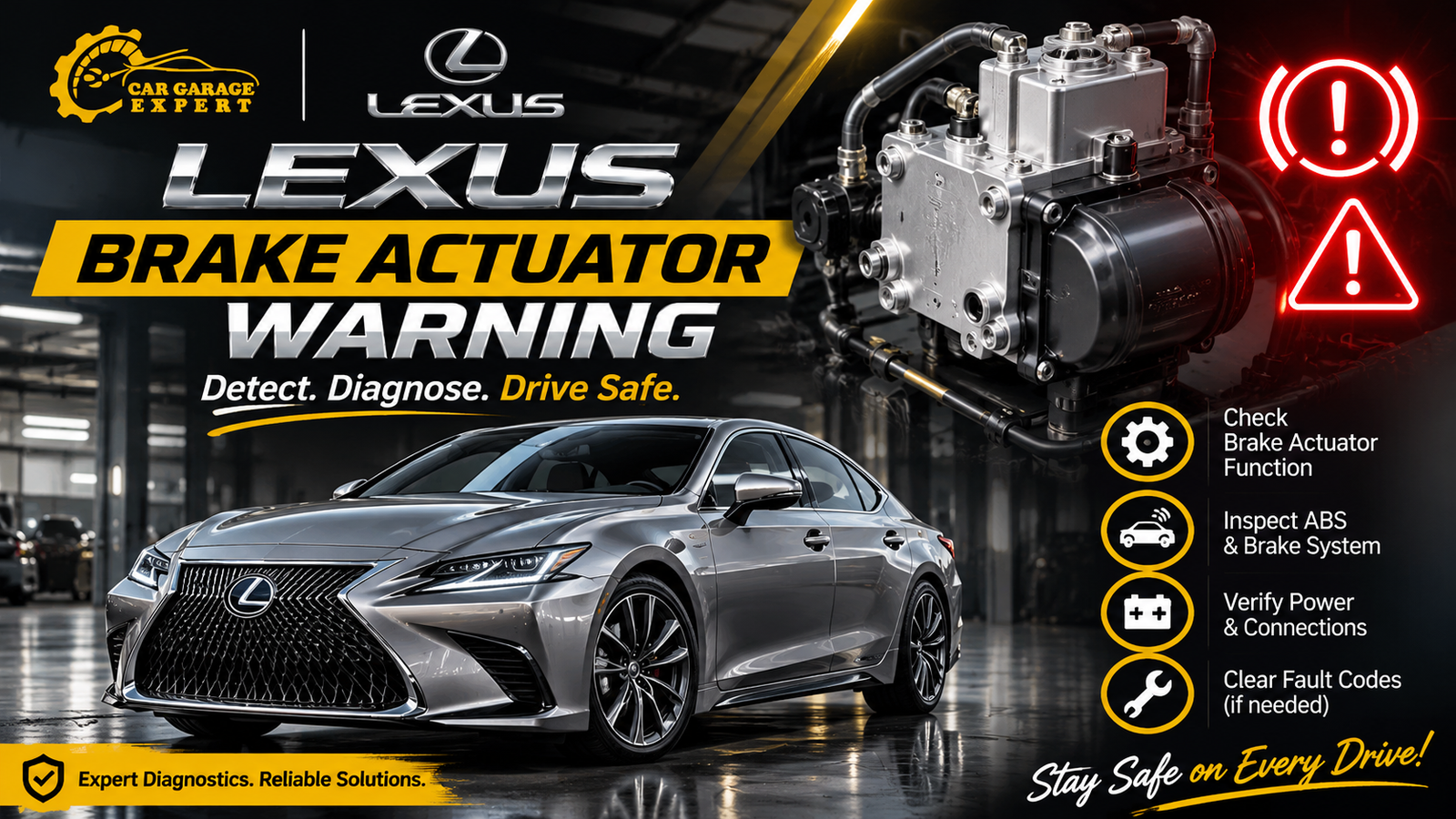
Lexus vehicles are widely recognized for their luxury, reliability, advanced engineering, and exceptional driving comfort. However, like every modern vehicle, Lexus models rely on sophisticated electronic and hydraulic systems that require proper maintenance. One key component of the braking system is the brake actuator, which regulates braking pressure and supports essential safety technologies such as the Anti-lock Braking System (ABS), Traction Control System (TRAC), and Vehicle Stability Control (VSC).
If a Lexus brake actuator warning appears on the dashboard, never ignore it. This warning may indicate a problem with the brake actuator assembly, hydraulic pressure regulation, electronic control components, or another part of the braking system. Depending on the underlying issue, drivers may also notice unusual brake noises, changes in pedal response, or additional warning lights.
For Lexus owners in Dubai, identifying brake-related problems early is particularly important. Daily traffic, frequent stop-and-go driving, long-distance journeys, and demanding environmental conditions make regular vehicle inspections essential.
In this guide, Car Garage Expert explains why the Lexus brake actuator warning appears, the symptoms to recognize, possible causes, professional diagnostic procedures, and the most effective repair solutions.
What Does a Lexus Brake Actuator Warning Mean?
The brake actuator is a key component of the electronic braking system in various Lexus models, particularly those equipped with advanced electronically controlled braking systems and hybrid technology.
Its primary function is to regulate hydraulic brake pressure based on driver input and information from the vehicle’s electronic control systems.
In many Lexus models, the brake actuator works alongside the brake booster, accumulator, master cylinder, and skid control electronic control unit. Together, these components help maintain controlled braking performance and support vehicle safety systems.
When the vehicle detects an abnormal condition within the braking system, it may illuminate one or more dashboard warning lights.
Depending on the model and fault, you might see:
- Brake system warning light.
- ABS warning light.
- TRAC warning light.
- VSC warning light.
- Check VSC message.
- Brake system malfunction notification.
A Lexus brake actuator warning does not automatically confirm that the actuator itself has failed. Other faults, including hydraulic pressure problems, electrical issues, fluid leakage, or sensor malfunctions, can produce similar warnings.
Professional diagnosis is therefore necessary before replacing any components.
Common Symptoms of a Lexus Brake Actuator Problem
Recognizing the symptoms of a failing brake actuator can help you arrange an inspection before the problem becomes more serious.
Here are some common warning signs Lexus owners should understand.
1. ABS and Brake Warning Lights Illuminate
One of the most noticeable symptoms is the simultaneous appearance of the ABS and brake warning lights.
These indicators may suggest that the vehicle has detected a malfunction affecting its braking or stability control systems.
In some cases, the dashboard may also display a Check VSC message.
If the red brake warning light and ABS warning light remain illuminated together, stop in a safe location and arrange professional assistance. Continuing to drive may compromise braking stability.
2. Unusual Brake Pump Noise
A Lexus with an actuator or brake accumulator problem may produce unusual buzzing, humming, or mechanical noises from the engine compartment.
The brake pump normally maintains the required hydraulic pressure. However, if it cannot maintain pressure properly, the pump may activate more frequently than expected.
Repeated or unusually frequent pump operation should be investigated by a qualified technician.
3. Changes in Brake Pedal Feel
Another possible symptom is an unusual change in brake pedal response.
You might experience:
- A harder-than-normal brake pedal.
- An inconsistent pedal feel.
- Unusual pedal movement.
- Changes in braking response.
These symptoms can indicate a hydraulic or brake assistance problem.
Because other braking system faults can also affect pedal behavior, a complete inspection is important.
4. Reduced Braking Performance
A malfunction within the brake actuator or associated hydraulic system may affect the vehicle’s ability to deliver consistent braking assistance.
Drivers may notice that the brakes do not respond as expected or that stopping requires unusual pedal effort.
Treat any unexpected reduction in braking performance as a serious safety concern.
Do not continue driving simply because the vehicle is still moving or the brakes appear to work intermittently.
5. Frequent Brake Pump Activation
If you hear the brake pump operating repeatedly while the vehicle is stationary or during normal driving, it may indicate that the system is struggling to maintain hydraulic pressure.
Possible reasons include internal leakage, accumulator pressure loss, or actuator-related faults.
A technician should inspect the system and check the relevant diagnostic information to identify the actual cause.
Main Causes of a Lexus Brake Actuator Warning
Understanding the possible causes helps Lexus owners make informed decisions about diagnosis and repair.
1. Internal Brake Actuator Leakage
Internal hydraulic leakage is one documented cause of brake actuator-related warnings in certain Lexus applications.
An internal leak can affect the system’s ability to maintain the required hydraulic pressure.
Lexus technical service documentation has identified internal brake fluid leakage as a possible cause of brake, ABS, and TRAC warning lights on certain model-specific applications.
This type of issue may also trigger diagnostic trouble codes such as C1391, C1252, C1253, or C1256.
However, these codes are not universal proof of actuator failure. Confirm their meaning and diagnostic relevance against the specific Lexus model and applicable repair information.
2. Brake Booster Pump Failure
The brake booster pump helps generate and maintain the hydraulic pressure needed for electronically controlled braking systems.
If the pump becomes defective, the system may struggle to maintain the correct pressure.
Potential symptoms include frequent pump activation, warning lights, and changes in brake assistance.
A technician should check pump operation, electrical supply, pressure readings, and related components before recommending replacement.
3. Electrical and Wiring Problems
Modern Lexus braking systems depend on electronic signals and communication between multiple control modules.
Damaged wiring, loose connectors, corrosion, or electrical supply problems can interfere with actuator operation.
A weak battery or unstable voltage may also trigger electronic system warnings.
Inspecting the wiring harness, connectors, fuses, and electrical supply is an important part of accurate diagnosis.
4. Faulty Pressure Sensors
The brake actuator system uses pressure-related sensors to monitor hydraulic conditions.
If a sensor provides incorrect information, the electronic control unit may identify an abnormal operating condition.
This can trigger warning indicators even when the actuator assembly itself is not necessarily defective.
Sensor testing and live diagnostic data help determine whether the problem originates from the sensor, wiring, or hydraulic system.
5. Brake Fluid Problems
Brake fluid plays an essential role in transmitting hydraulic pressure throughout the braking system.
Low brake fluid levels, contamination, or fluid leakage can affect braking performance and trigger warning indicators.
If the brake fluid level is below the recommended range, identify the underlying cause rather than simply topping up the reservoir.
Always use the brake fluid specification recommended for your particular Lexus model.
6. Age and Component Wear
As a vehicle accumulates mileage and years of use, hydraulic seals, electrical connections, pumps, and other braking components can deteriorate.
Normal wear does not mean every older Lexus will develop an actuator problem. However, regular inspections can help identify developing faults before they affect vehicle safety.
How Is a Lexus Brake Actuator Warning Diagnosed?
Accurate diagnosis is essential because replacing the actuator without confirming the underlying problem can result in unnecessary expenses.
At Car Garage Expert, a professional diagnostic approach involves examining the entire braking system rather than relying on dashboard warning lights alone.
The following steps explain how technicians typically investigate this problem.
Step 1: Computerized Diagnostic Scanning
The first step is to connect a suitable diagnostic scanner to the vehicle’s onboard diagnostic system.
A Lexus-compatible diagnostic platform, such as Toyota Techstream (where applicable), can retrieve stored diagnostic trouble codes from the relevant control modules.
The technician checks the available fault codes and associated system information.
Step 2: Brake Fluid Inspection
The technician inspects the brake fluid reservoir, fluid condition, and hydraulic system.
The technician checks for:
- Low brake fluid levels.
- Visible fluid leakage.
- Contamination.
- Damaged hydraulic connections.
- Signs of pressure-related problems.
Technicians must identify and repair any leaks before the vehicle is safe to drive.
Step 3: Brake Actuator and Pump Testing
Technicians examine the actuator assembly and booster pump to determine whether they are operating correctly.
Depending on the Lexus model, technicians may check accumulator pressure, pump activation frequency, sensor readings, and actuator operation using appropriate diagnostic equipment.
Step 4: Electrical System Inspection
The technician checks the wiring, connectors, fuses, battery condition, and electrical connections.
This helps eliminate electrical faults that may cause incorrect signals or interfere with brake system operation.
Step 5: Repair Verification
After the necessary repair, the technician follows the applicable Lexus bleeding, calibration, and verification procedures.
The technician addresses stored fault codes and tests the braking system using the manufacturer’s specified procedures.
Perform a controlled road test only after confirming the vehicle is safe for testing.
Lexus Brake Actuator Repair and Replacement Options
The correct repair depends on the actuator’s condition and the condition of related components.
Not every Lexus brake actuator warning requires replacing the entire assembly.
Brake Actuator Repair
If diagnosis identifies a repairable issue involving an electrical connection, sensor circuit, or another serviceable component, the technician may be able to resolve the problem without replacing the entire actuator assembly.
The repair must follow the vehicle’s approved technical procedures.
Brake Booster Pump Replacement
If the booster pump is confirmed defective, replacing the affected pump assembly may restore the system’s ability to maintain hydraulic pressure.
The technician should also investigate why the pump failed and inspect the associated hydraulic components.
Brake Actuator Replacement
If the actuator has internal damage, confirmed hydraulic leakage, or another non-serviceable fault, replacement may be necessary.
The replacement component must match the vehicle’s specifications.
After installation, the braking system may require specialized bleeding, electronic calibration, and diagnostic verification.
Brake Fluid Replacement and System Bleeding
Contaminated brake fluid or air within the hydraulic system can affect braking performance.
A professional brake fluid replacement and bleeding procedure may be necessary, depending on the diagnosis and the manufacturer’s repair instructions.
Electronically controlled Lexus braking systems can require specialized scan-tool procedures. Conventional bleeding methods should not be assumed sufficient for every model.
How Much Does Lexus Brake Actuator Repair Cost in Dubai?
The cost of repairing a Lexus brake actuator warning in Dubai depends on several factors.
No single price applies to every Lexus because different models use different braking system configurations and replacement components.
Important pricing factors include:
Vehicle model and year: An RX, ES, GS, LS, or NX may have different actuator assemblies and repair requirements.
Type of fault: A wiring issue or sensor problem may require a different repair from a defective actuator or booster pump.
Spare parts: Genuine Lexus parts, approved replacement components, and aftermarket alternatives can have different prices.
Labor requirements: Some repairs require additional diagnostic work, specialized bleeding procedures, and electronic calibration.
Additional damage: If related hydraulic components or electrical connections are also damaged, the overall repair cost may increase.
Before approving a repair, request a detailed quotation explaining the diagnosed fault, required parts, labor charges, and any additional work.
A proper diagnosis can help prevent unnecessary component replacement and unexpected expenses.
Why Lexus Owners in Dubai Should Not Ignore Brake Actuator Warnings
Dubai’s driving environment makes reliable braking performance especially important.
Motorists regularly encounter busy highways, urban traffic, frequent stops, and long journeys across the UAE.
These driving conditions make a properly maintained braking system essential.
High Temperatures and Vehicle Maintenance
Dubai experiences particularly demanding summer conditions.
Although high temperatures should not automatically be blamed for brake actuator failure, maintaining the entire vehicle becomes especially important in a hot climate.
Regularly check your brake fluid, hydraulic connections, battery performance, tires, and other safety-related components.
Dubai’s Roads and Transport Authority also encourages motorists to carry out regular vehicle inspections and maintain braking components to support road safety.
Stop-and-Go Traffic
Frequent acceleration and braking in heavy traffic make a responsive, properly functioning braking system even more important.
If your Lexus displays an actuator-related warning, don’t assume the vehicle is safe just because it can still stop.
The condition of ABS, traction control, and stability control systems also matters during unexpected road situations.
Long-Distance Driving
Journeys along Sheikh Zayed Road and other major UAE highways require dependable vehicle safety systems.
Investigate a brake actuator warning before planning a long journey.
If braking performance is affected or a serious brake warning remains illuminated, arrange recovery instead of driving to a garage.
How to Prevent Lexus Brake Actuator Problems
Although some actuator failures cannot be prevented, proper maintenance can help identify related problems early.
Consider the following maintenance practices:
- Schedule regular brake inspections: Have the brake pads, discs, hydraulic connections, and related components inspected periodically.
- Check brake fluid condition: Follow the manufacturer’s recommended brake fluid replacement interval and use the correct specification.
- Pay attention to unusual noises: Check repeated brake pump activation or unusual sounds promptly.
- Monitor dashboard warnings: Never ignore persistent ABS, BRAKE, TRAC, or VSC warning indicators.
- Maintain battery health: Have the battery and charging system checked to reduce the possibility of electrical supply-related faults.
- Use qualified technicians: Electronic braking systems require appropriate diagnostic tools and model-specific repair knowledge.
- Check recall eligibility: Some Lexus models and production years have been included in brake-related service campaigns or recalls in particular markets. Check your vehicle’s VIN with an authorized Lexus representative in the UAE to confirm whether any applicable campaign remains outstanding.
Preventive maintenance cannot guarantee that an actuator will never fail, but it can help detect developing problems and protect overall braking system performance.
Why Choose Professional Lexus Brake Diagnostics in Dubai?
Lexus braking systems combine mechanical, hydraulic, and electronic components. Correctly identifying a fault requires more than simply clearing dashboard warning lights.
Professional diagnosis helps establish whether the problem involves the actuator, booster pump, pressure sensor, wiring, brake fluid, or another component.
For Lexus owners seeking reliable automotive information and repair guidance, Car Garage Expert emphasizes accurate fault identification and safety-focused maintenance.
When selecting a garage in Dubai, look for:
- Experience with Lexus braking systems.
- Lexus-compatible diagnostic equipment.
- Knowledge of hybrid and electronically controlled braking systems.
- Proper brake bleeding and calibration capabilities.
- Quality replacement parts.
- Transparent repair estimates.
- Post-repair system verification.
The objective should always be to restore the braking system to the manufacturer’s required operating condition, not simply to switch off the warning light.
Frequently Asked Questions (FAQs)
1. Can I Drive My Lexus With a Brake Actuator Warning?
Driving with a Lexus brake actuator warning is not recommended until a technician diagnoses the fault. If the red brake warning light and ABS light remain on together, or braking performance changes, stop safely and arrange vehicle recovery. Continuing to drive may compromise braking and stability control functions.
2. What Causes a Lexus Brake Actuator Warning?
Common possible causes include internal hydraulic leakage, a defective brake booster pump, faulty pressure sensors, electrical problems, low brake fluid, and actuator assembly damage. A professional diagnostic scan and hydraulic inspection are necessary to identify the exact cause.
3. How Do I Know If My Lexus Brake Actuator Is Failing?
Possible symptoms include ABS and brake warning lights, a Check VSC message, frequent brake pump operation, unusual buzzing noises, changes in brake pedal feel, and reduced braking assistance. These symptoms can also indicate other brake system faults, so professional inspection is essential.
4. Does a Lexus Brake Actuator Always Need Replacement?
No. Replacement is needed only when testing confirms the actuator assembly is defective or cannot be repaired per the manufacturer’s procedures. Some warnings may result from electrical faults, sensors, hydraulic leaks, or booster pump problems that require different repairs.
5. How Can I Check Whether My Lexus Has a Brake-Related Recall in Dubai?
Contact an authorised Lexus representative in the UAE and provide your vehicle identification number (VIN). The representative can check applicable recalls and service campaigns for your particular vehicle. Recall eligibility depends on the model, production date, vehicle specification, and campaign market.
Conclusion
A Lexus brake actuator warning is an important safety notification that should never be overlooked. Whether the underlying problem involves internal hydraulic leakage, a failing booster pump, electrical connections, pressure sensors, or actuator damage, identifying the fault early is essential for maintaining reliable braking performance.
Visit us in our Al Quoz, Dubai branch or visit Car Garage Expert
For Lexus owners in Dubai, regular brake inspections and professional diagnostic checks are particularly important because dependable braking performance is essential for everyday city driving and highway journeys.
Avoid replacing expensive components based on warning lights alone. A proper diagnostic process can identify the root cause, determine the best repair, and help prevent unnecessary expenses.
Car Garage Expert encourages Lexus owners to take brake system warnings seriously, follow manufacturer-recommended maintenance procedures, and seek qualified automotive assistance whenever braking performance becomes uncertain.
Your Lexus deserves professional attention, and your safety should always come first.