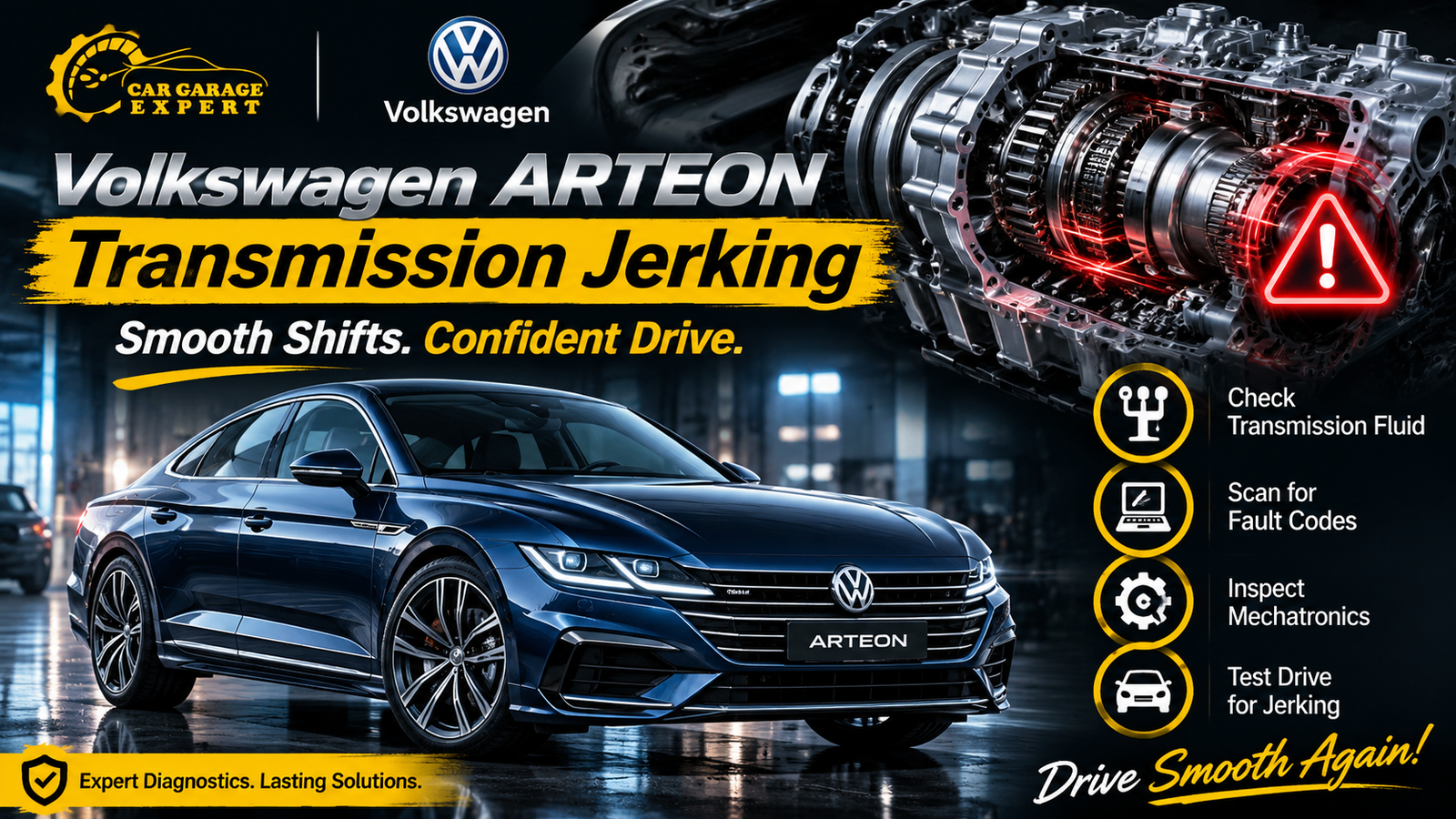
The Volkswagen Arteon is a premium vehicle known for its elegant design, comfortable interior, powerful engine, and smooth driving experience. Its automatic transmission is designed to deliver responsive gear changes and consistent performance. However, when the transmission jerks, slips, or hesitates during acceleration, driving can quickly become uncomfortable.
Volkswagen Arteon transmission jerking is a problem you shouldn’t ignore, especially if it happens repeatedly during normal driving. You might notice a sudden lurch when shifting from first to second gear, a delay when accelerating, or an uncomfortable vibration in slow traffic.
In Dubai, vehicles regularly experience high temperatures, busy roads, frequent traffic stops, and long driving periods. These conditions can put extra strain on transmission components, especially if a vehicle already has a maintenance issue.
Understanding why your transmission jerks can help you avoid unnecessary repairs and prevent further gearbox damage. In this guide, Car Garage Expert explains the common symptoms, possible causes, diagnostic procedures, and repair solutions for Volkswagen Arteon transmission problems in Dubai.
What Causes Volkswagen Arteon Transmission Jerking?
The Volkswagen Arteon is available with different engine and transmission configurations depending on its model year and market. Many versions use Volkswagen’s Direct Shift Gearbox (DSG), which combines automatic convenience with dual-clutch technology.
Unlike a traditional automatic transmission that uses a torque converter, a DSG gearbox uses two clutches to manage different gear sets. This arrangement allows quick gear changes and efficient power delivery.
However, several components must work together correctly to maintain smooth shifting. Issues with transmission fluid, the clutch assembly, the mechatronic unit, sensors, or engine performance can cause jerking.
Here are the most common causes to investigate.
1. Low or Degraded Transmission Fluid
Transmission fluid plays an important role in maintaining gearbox performance. Depending on the transmission design, it lubricates internal components, manages operating temperatures, and supports hydraulic functions.
When the fluid level is incorrect, or its condition has deteriorated, transmission performance can become inconsistent.
You may experience:
- Jerking when shifting between gears.
- Delayed engagement when selecting Drive or Reverse.
- Rough gear changes during acceleration.
- Unusual transmission noises.
- Inconsistent shifting when the vehicle is warm.
Dubai’s high ambient temperatures and demanding traffic conditions make proper vehicle maintenance particularly important. However, heat alone doesn’t confirm that transmission fluid is causing jerking.
A professional technician should inspect the transmission for leaks, check the fluid condition where applicable, and verify the correct fluid specification.
Using the wrong transmission fluid can create additional problems. Always follow the manufacturer’s requirements for your specific Arteon transmission.
2. DSG Mechatronic Unit Problems
The mechatronic unit is one of the most important components in a DSG transmission. It combines electronic controls and hydraulic functions to manage clutch operation and gear selection.
The unit receives information from different sensors and controls how the transmission changes gears.
When the mechatronic system develops a fault, the gearbox may struggle to select the correct gear or smoothly engage the clutch.
Common symptoms include:
- Sudden jerking during gear changes.
- Delayed shifting when accelerating.
- Gear selection problems.
- Flashing gear indicators.
- Transmission warning messages.
- Emergency or limp mode activation.
Sometimes, the vehicle may operate normally for a short period before the problem returns.
A complete diagnostic scan is necessary to identify mechatronic-related faults. Depending on the findings, the solution may involve electrical repairs, hydraulic repairs, software-related procedures, or mechatronic unit replacement.
Replacing the entire unit without proper testing can result in unnecessary expenses.
3. Worn or Damaged DSG Clutch Packs
The DSG transmission uses two clutches to manage gear engagement. One clutch generally handles odd-numbered gears, while the other manages even-numbered gears and reverse, depending on the transmission design.
Over time, clutch components can experience wear due to driving conditions, mileage, and operating temperatures.
When clutch engagement becomes inconsistent, the Arteon may develop noticeable juddering or jerking.
You might notice these problems when:
- Moving away from a complete stop.
- Accelerating slowly in traffic.
- Shifting between lower gears.
- Reversing into a parking space.
- Driving uphill.
Clutch wear can also cause slipping, where the engine speed increases without a matching increase in vehicle speed.
A technician should evaluate clutch operation, inspect relevant transmission data, and check for stored fault codes.
Depending on the transmission type and inspection results, the repair may involve clutch adaptation, adjustment procedures where applicable, or replacing the clutch pack.
4. Transmission Overheating
Transmission overheating is another possible reason for rough shifting and abnormal gearbox behavior.
In Dubai, summer temperatures can become extremely high. Combined with heavy traffic, repeated acceleration, and frequent stopping, these conditions can increase the operating demands on a vehicle’s transmission.
DSG transmissions can become particularly hot during repeated starts, extended low-speed creeping, and stop-and-go driving.
Possible warning signs include:
- Jerking after extended driving.
- Delayed gear engagement.
- Transmission overheating warnings.
- Reduced transmission performance.
- Unusual shifting behavior.
Volkswagen owner documentation identifies frequent starts and prolonged creeping as possible causes of DSG overheating.
If an overheating warning appears, follow the instructions in your vehicle’s owner’s manual. A red transmission overheating warning requires you to stop driving and allow the transmission to cool safely. If the warning remains or returns, arrange professional assistance rather than continuing your journey.
Ignoring repeated overheating warnings can increase the risk of expensive transmission damage.
5. Faulty Transmission Sensors
Modern Volkswagen transmissions rely on electronic sensors to monitor operating conditions and communicate information to the transmission control system.
These sensors help determine vehicle speed, transmission temperature, gear position, and other operating parameters.
If a sensor sends incorrect information, the transmission control module may not manage gear changes correctly.
This can produce:
- Unexpected gear changes.
- Jerking during acceleration.
- Delayed shifting.
- Incorrect gear selection.
- Warning lights on the dashboard.
A faulty sensor doesn’t always need immediate replacement. Wiring damage, loose electrical connections, damaged connectors, or communication problems can create similar symptoms.
A professional diagnostic inspection helps identify whether the issue comes from the sensor itself or another part of the electrical system.
6. Transmission Software or Adaptation Issues
The Arteon’s DSG transmission uses electronic control strategies to manage clutch engagement and gear changes.
These systems depend on software and learned operating values to maintain appropriate transmission behavior.
In some cases, software issues or incorrect adaptation values can contribute to rough shifting.
Possible signs include:
- Hesitation when selecting Drive.
- Jerking during low-speed gear changes.
- Inconsistent clutch engagement.
- Unusual shifting after transmission repairs.
- Repeated shifting behavior that does not improve.
A qualified Volkswagen technician can check for relevant software updates, inspect transmission control module fault codes, and determine whether an adaptation procedure is appropriate.
Resetting transmission adaptations is not a universal solution. If the clutch or mechatronic unit is mechanically damaged, a software reset won’t fix the underlying problem.
7. Engine Problems Affecting Transmission Performance
Not every jerking problem comes directly from the gearbox.
The engine and transmission work together to deliver power to the wheels. If the engine produces inconsistent power, the driver may feel movements similar to transmission jerking.
Possible engine-related causes include:
- Faulty ignition coils.
- Worn spark plugs.
- Fuel delivery problems.
- Faulty engine sensors.
- Air intake leaks.
- Engine misfires.
For example, a misfiring engine can produce hesitation during acceleration. This may feel like the transmission is struggling to change gears.
A proper inspection should include both engine and transmission diagnostics before replacing any major component.
Common Symptoms of Volkswagen Arteon Transmission Problems
Recognizing the early warning signs can help you arrange repairs before the problem becomes more serious.
Here are some symptoms Volkswagen Arteon owners should watch for.
Jerking During Acceleration
If your Arteon moves forward unevenly when you press the accelerator, the issue may involve clutch engagement, transmission control, or engine performance.
This symptom may be more noticeable during slow acceleration or when pulling away from traffic lights.
Delayed Gear Changes
A noticeable pause between selecting a gear and receiving the expected vehicle response may indicate a transmission or control system issue.
Investigate delayed engagement, especially if it happens repeatedly.
Shaking When Moving From a Stop
If the vehicle vibrates or judders when pulling away, the clutch assembly may not be engaging smoothly.
However, you should also check the engine mounts and other drivetrain components.
Sudden Shifting Between Lower Gears
Rough transitions between lower gears can make city driving uncomfortable.
This may be associated with clutch wear, mechatronic faults, incorrect transmission fluid, or adaptation problems.
Transmission Warning Light
Never ignore a transmission warning light or dashboard message.
Some warnings indicate a fault that requires immediate attention. Others may allow limited operation under specific conditions.
Always follow the warning instructions in your Volkswagen owner’s manual.
How Dubai Driving Conditions Can Affect Your Arteon’s Transmission
Dubai offers a combination of highways, busy urban roads, parking areas, and frequent traffic congestion. These driving conditions can influence how hard your transmission works.
Understanding these factors can help you maintain your Volkswagen Arteon properly.
High Ambient Temperatures
Summer heat can increase the thermal demands on vehicle systems. The transmission cooling system must work correctly to maintain suitable operating temperatures.
Regular inspections can help identify cooling-related issues before they affect gearbox performance.
Stop-and-Go Traffic
Frequent stopping and starting can place additional demands on a dual-clutch transmission.
Repeated low-speed creeping and frequent starts may contribute to DSG overheating under demanding conditions.
Where possible, avoid unnecessarily creeping forward in heavy traffic. Use the brake appropriately instead of holding the vehicle on the accelerator.
Long Highway Journeys
Extended highway driving differs from repeated low-speed city driving, but it still requires proper transmission lubrication and cooling.
If jerking appears after a long journey, have the transmission inspected rather than assuming it’s simply due to temperature.
Delayed Maintenance
Skipping scheduled maintenance can allow small problems to develop into more expensive repairs.
Follow the correct maintenance schedule for your specific transmission, including the manufacturer’s fluid and filter requirements where applicable.
How Car Garage Expert Diagnoses Volkswagen Arteon Transmission Jerking
Finding the actual cause is more important than replacing parts based on symptoms alone.
At Car Garage Expert, we follow a systematic diagnostic approach to identify the source of Volkswagen Arteon transmission jerking and recommend the right repair.
Step 1: Initial Vehicle Inspection
The technician begins by discussing the symptoms with the vehicle owner.
Important information includes when the jerking happens, whether the vehicle is cold or warm, which gears are affected, and whether warning lights appear.
The technician may also inspect visible leaks and relevant drivetrain components.
Step 2: Computer Diagnostic Scan
A professional diagnostic scanner is connected to the vehicle’s onboard diagnostic system.
The scan helps identify stored fault codes in the transmission control module, engine control module, and related systems.
Diagnostic codes provide useful information, but they must be interpreted correctly. A fault code does not automatically prove that a particular component needs replacement.
Step 3: Transmission Fluid Inspection
Where applicable, the technician checks the transmission fluid condition and level according to the manufacturer’s procedure.
Follow the correct fluid specification, temperature requirements, and filling method.
The technician should also investigate any visible leaks.
Step 4: Clutch and Mechatronic Evaluation
The technician evaluates clutch engagement, relevant adaptation values, and mechatronic system operation using suitable diagnostic equipment.
This helps determine whether the issue is related to clutch wear, hydraulic control, electrical faults, or another transmission component.
Step 5: Controlled Road Test
If the vehicle is safe to operate, a controlled road test may help reproduce the jerking problem.
The technician can observe shifting behavior, acceleration response, and relevant live diagnostic data.
A road test should not be performed if the vehicle has a serious transmission warning or unsafe operating condition.
Step 6: Repair Recommendation
After identifying the likely cause, the garage should explain the findings and recommend a repair.
The owner should receive information about the required parts, labor, expected repair time, and any additional inspection requirements before approving the work.
Volkswagen Arteon Transmission Repair Solutions
The correct repair depends on the gearbox and related components’ actual condition.
Common repair options include the following.
DSG Transmission Fluid and Filter Service
If inspection identifies overdue maintenance or a fluid-related issue, we may recommend a transmission service.
Depending on the gearbox configuration, this can involve:
- Draining the old transmission fluid.
- Replacing the filter where applicable.
- Inspecting the transmission for leaks.
- Filling with manufacturer-approved fluid.
- Checking the correct fluid level.
- Performing any required service procedures.
Confirm the transmission type and its official maintenance requirements before servicing.
Mechatronic Unit Repair
If testing confirms a mechatronic fault, the technician may recommend repairing or replacing the affected components.
The decision depends on the failure type, the component’s condition, and the availability of suitable parts.
DSG Clutch Replacement
When clutch wear is confirmed, replacing the affected clutch assembly may be necessary.
The repair generally requires specialized tools and procedures.
After installation, the transmission may also require specified calibration or adaptation procedures.
Sensor and Electrical Repairs
If a damaged sensor, wiring issue, or electrical connection causes the fault, the technician should repair the affected component or circuit.
This can resolve incorrect signals that interfere with normal transmission operation.
Transmission Software Updates
Where Volkswagen has an applicable software update or a confirmed adaptation issue, a qualified technician can perform the recommended procedure.
Software work should be based on vehicle compatibility and diagnostic findings, not a random attempt to eliminate jerking.
How Much Does Volkswagen Arteon Transmission Repair Cost in Dubai?
The cost of Volkswagen Arteon transmission repair in Dubai depends on the gearbox configuration, vehicle model year, mileage, and the nature of the fault.
A minor electrical repair or service may cost considerably less than replacing a clutch assembly or repairing a mechatronic unit.
The following factors influence the final repair bill:
- Type of DSG transmission installed.
- Transmission fluid and filter requirements.
- Condition of the clutch assembly.
- Mechatronic unit condition.
- Availability of genuine or compatible replacement parts.
- Labor and diagnostic requirements.
- Additional damage caused by delayed repairs.
Rather than relying on a general price estimate, request a vehicle-specific inspection and written quotation.
Car Garage Expert can use the diagnostic findings to help determine which repair options are appropriate for your Volkswagen Arteon.
Always confirm the final price, parts specification, and warranty terms before authorizing repairs.
How to Prevent Volkswagen Arteon Transmission Jerking
Preventive maintenance can help reduce the risk of transmission problems and support long-term vehicle performance.
Consider the following maintenance practices:
- Follow the Correct Service Schedule: Maintain the gearbox according to your specific Arteon transmission’s requirements.
- Use Approved Transmission Fluid: Never use an incorrect or low-quality fluid that does not meet the required specification.
- Avoid Excessive Low-Speed Creeping: Repeatedly moving forward at walking speed in heavy traffic can increase DSG operating temperatures.
- Respond to Warning Lights: Arrange an inspection when a transmission warning appears, rather than ignoring it.
- Check for Fluid Leaks: Have any visible transmission leaks inspected and repaired promptly.
- Avoid Aggressive Driving: Repeated hard acceleration and harsh driving can increase the demands placed on transmission components.
- Arrange Regular Diagnostics: If you notice unusual shifting, hesitation, or vibration, investigate the issue early.
- Use Qualified Volkswagen Technicians: DSG systems require suitable diagnostic equipment and knowledge of the specific gearbox configuration.
Why Choose Car Garage Expert for Volkswagen Arteon Transmission Repairs in Dubai?
Choosing the right garage matters when working on a modern Volkswagen transmission.
DSG gearboxes contain mechanical, hydraulic, and electronic components that require a proper understanding of how the complete system operates.
Car Garage Expert focuses on identifying vehicle problems through proper inspection and recommending suitable automotive repair solutions.
When arranging a Volkswagen Arteon transmission inspection, look for:
- Experience with Volkswagen vehicles and DSG systems.
- Suitable diagnostic equipment.
- Technicians familiar with European automotive engineering.
- Correct transmission fluid and replacement parts.
- Clear explanations of diagnostic findings.
- Written repair estimates before work begins.
- Appropriate warranty information for completed repairs.
A professional approach helps avoid unnecessary part replacement and gives vehicle owners a clearer understanding of the work their cars actually need.
Whether your Arteon has rough gear changes, delayed engagement, clutch judder, or a transmission warning, arranging an inspection can help identify the issue before further damage occurs.
Frequently Asked Questions (FAQs)
1. Why Is My Volkswagen Arteon Jerking When Changing Gears?
Your Volkswagen Arteon may jerk during gear changes because of clutch wear, mechatronic unit problems, incorrect transmission fluid levels, sensor faults, or software-related issues. Engine misfires can also produce similar symptoms. A professional diagnostic scan and physical inspection can help identify the actual cause.
2. Is It Safe to Drive a Volkswagen Arteon With Transmission Jerking?
It depends on the severity of the problem. Mild occasional symptoms should still be inspected promptly. However, severe jerking, loss of drive, slipping, burning smells, or transmission overheating warnings can indicate a serious fault. Stop safely and arrange professional assistance if the vehicle displays a serious warning or becomes unsafe to drive.
3. Can Dubai’s Heat Cause Volkswagen Arteon Transmission Problems?
High ambient temperatures can increase the thermal demands on vehicle systems. Heavy stop-and-go traffic and repeated low-speed creeping can also contribute to DSG overheating. However, heat does not automatically mean the transmission is faulty. Proper diagnosis is necessary to identify the underlying cause.
4. How Do I Know If My Arteon’s DSG Clutch Is Worn?
Common signs include juddering when moving from a stop, slipping during acceleration, inconsistent gear engagement, and rough low-speed shifting. These symptoms can also come from other components, so recommend clutch replacement only after proper testing.
5. How Much Does Volkswagen Arteon Transmission Repair Cost in Dubai?
The cost depends on the transmission type and the problem identified. Fluid serviciFluid servicing, electrical repairs, clutch replacement, and mechatronic repairs require different labor and parts.al inspection is the best way to receive an accurate quotation for your vehicle.
Conclusion
Volkswagen Arteon transmission jerking can develop for several reasons, including degraded transmission fluid, clutch wear, mechatronic faults, overheating, sensor problems, and software-related issues. Identifying the right cause is essential to choose an effective repair.
For Volkswagen owners in Dubai, regular maintenance and early diagnosis are especially important because frequent traffic stops and demanding operating conditions can increase transmission workload.
Do not ignore repeated jerking, delayed gear changes, or unusual transmission warnings. Arrange a professional inspection to protect your vehicle and avoid potentially expensive gearbox damage.
Visit us in our Al Quoz, Dubai branch or visit Car Garage Expert
Car Garage Expert recommends addressing transmission symptoms early and using qualified technicians who understand Volkswagen DSG technology. With the correct diagnosis, suitable replacement parts, and manufacturer-recommended maintenance procedures, you can help restore smooth shifting and maintain your Arteon’s driving performance.