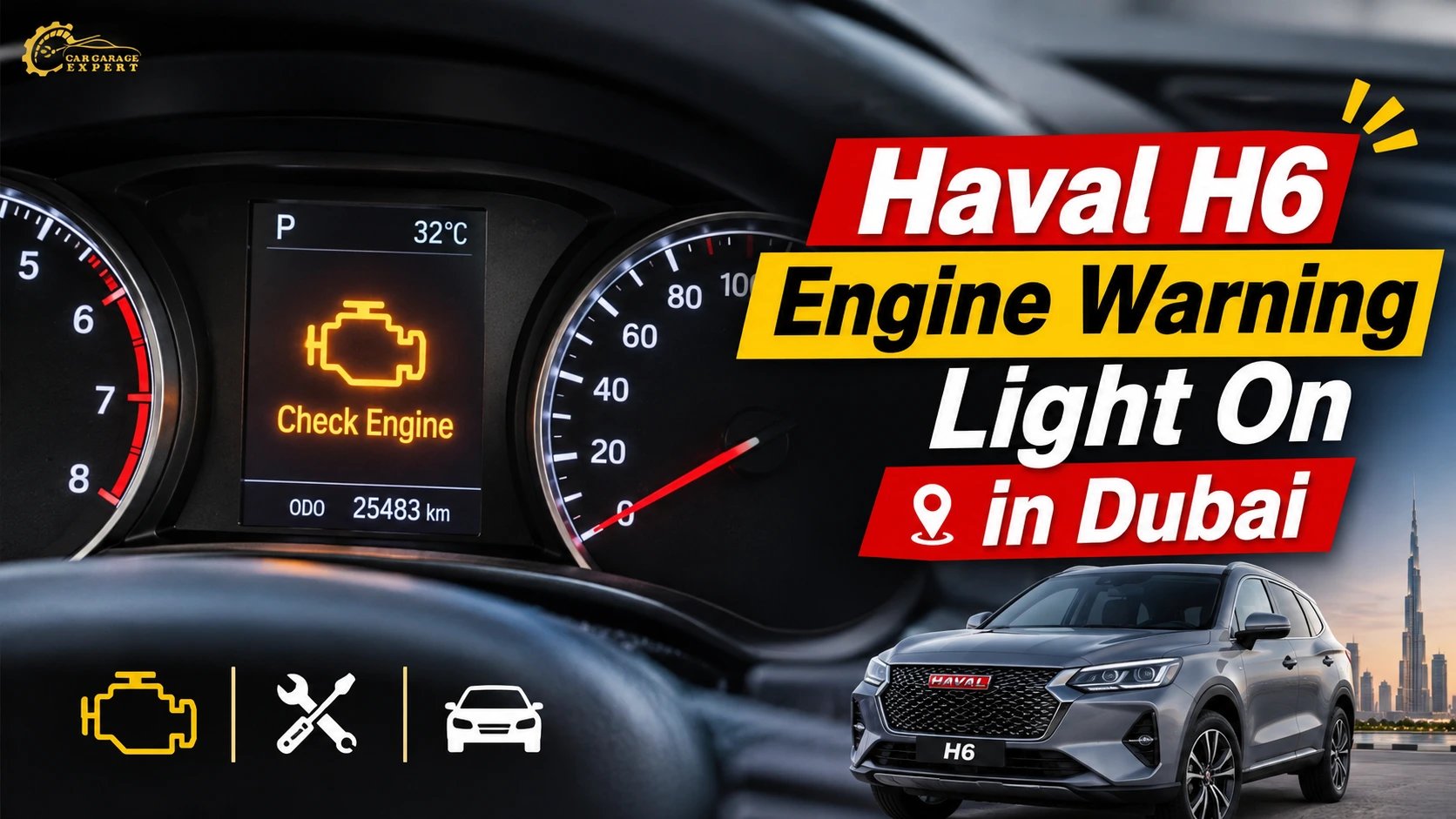
You start your Haval H6 in the morning, and an orange engine symbol stays lit on the dash. The car still drives. It might feel a little weak, or it might feel normal. Most owners wait and hope it goes away.
That wait can be cheap or very expensive. Some causes are as small as a loose fuel cap. Others, like a misfire or a turbo leak, can damage the catalytic converter within days. Below, you will find what the light means, why it comes on more often in Dubai, how a workshop finds the real fault, and what each repair costs.
What Does the Haval H6 Engine Warning Light Mean?
When the Haval H6 engine warning light comes on, the engine computer has found a problem. It saves a trouble code. Common causes are worn spark plugs and weak ignition coils. A bad oxygen sensor can do it too. So can a turbo boost leak, dirty fuel injectors or carbon on the intake valves. Even a loose fuel cap or a weak battery can turn it on. A steady light means book a check soon. A flashing light means the engine is misfiring. Slow down and avoid hard driving. Short trips and stop-start traffic in Dubai make these faults more common. A code scan with GWM software finds the exact cause before any parts are changed.
How the Haval H6 Engine Warning Light Works
The Haval H6 engine management system watches dozens of sensors every second. It checks airflow, fuel pressure, boost, spark timing, and exhaust gases. When a reading goes outside its normal range, the computer stores a code and turns on the light.
Steady Light vs Flashing Light
A steady Haval H6 engine warning light means a fault that needs checking soon but is not an emergency. A Haval H6 engine warning light flashing means an active misfire. Unburnt fuel goes into the exhaust, and it can quickly overheat the catalytic converter.
Which Haval H6 Engines Are Common in Dubai
Most H6 models in the UAE use a 1.5-liter or 2.0-liter turbo petrol engine with direct injection. The newer H6 HEV hybrid adds an electric motor and battery. On the hybrid, the light can also point to a hybrid system fault, so the scan must cover both systems.
What Trouble Codes Tell You
Haval H6 OBD2 diagnostic trouble codes start with a letter and four digits. P0300 to P0304 mean misfires. P0130 to P0141 point to oxygen sensors. P0299 means low turbo boost. P0420 means the catalytic converter is not working well enough.
Warning Signs That Come With the Light
The light rarely comes on alone. Other signs help narrow down the cause.
Shaking and Rough Running
Haval H6 engine misfire symptoms include shaking at idle, a jerk when you speed up, and a rough feel at traffic lights. A misfire is the most common reason the light starts flashing.
Loss of Power
If the Haval H6 engine loses power, the turbo or a boost leak is likely to blame, especially when passing or going up a ramp. The car could also go into “limp mode,” which slows down to protect the engine.
Higher Fuel Use and Strange Smells
A failing oxygen sensor or a leaking injector makes the engine burn more fuel. A rotten-egg smell from the exhaust can mean the catalytic converter is struggling.
Hard Starts and Stalling
Trouble starting or stalling at low speed can mean a fuel pressure problem or a weak battery. If any of these signs show up with the light, a trained car mechanic should scan the car before you drive far.
Why the Light Comes On: The Real Causes
Each cause below has a clear reason. Knowing the reason helps you prevent it from coming back.
Worn Spark Plugs and Ignition Coils
Turbo engines put high pressure on spark plugs, so they wear faster than in older engines. Haval H6 ignition coil problems often follow. Heat in the engine bay can crack a coil, causing misfires under load.
Oxygen Sensor Failure
The H6 has sensors before and after the catalytic converter. A Haval H6 oxygen sensor malfunction happens when the sensor gets coated with carbon or oil, or simply ages. The engine then mixes fuel badly.
Turbo and Boost Leaks
Most Haval H6 turbocharger issues start with a split intake hose, a loose clamp, or a wastegate that won’t move. The engine loses power and records a low-boost code because the turbo can’t hold boost.
Injector Faults and Carbon Build-Up
Haval H6 fuel injection system problems include clogged or leaking injectors. Direct injection also means fuel never washes the intake valves. Carbon slowly builds up, which disrupts airflow and causes misfires at idle.
Small Faults That Still Trigger the Light
An evaporative leak code means that the fuel cap is loose or worn out. A weak 12-volt battery can throw off sensors and trigger random codes. The same thing can happen if the purge valve or vacuum hose is broken.
Haval H6 Warning Light Compared: Sign, Cause and Safety
Use this quick guide to match what you see with the most likely cause and whether you can keep driving.
| What You Notice | Most Likely Cause |
Safe to Drive? |
| Steady light, car drives normally | Loose fuel cap, sensor fault, EVAP leak | Yes, book a check this week |
| Flashing light, engine shaking | Misfire from plugs, coils or injectors | No, slow down and stop soon |
| Light plus loss of power | Boost leak or turbo fault | Short, gentle trips only |
| Light plus higher fuel use | Oxygen sensor or injector problem | Yes, but fix soon |
| Light after a battery change or flat battery | Low voltage or stored old codes | Yes, rescan after charging |
| Light plus rotten-egg smell | Failing catalytic converter | Short trips only, book now |
How a Workshop Diagnoses a Haval H6 Engine Fault
A proper diagnosis finds the cause, not just the code. Car Garage Expert follows a step-by-step process for the Haval H6 engine warning light, making it a sensible first stop for owners in Dubai.
Step 1: Read the Codes With the Right Scanner
Many cheap code readers only see basic codes. Haval ECU fault diagnosis needs software that can read GWM-specific codes and live data. Without it, a workshop may miss the real fault.
Step 2: Run the Engine Tests
Several tests confirm what the codes suggest.
Live Data Check
The technician watches fuel trims, boost pressure, misfire counts, and sensor readings while the engine runs. Live data shows faults the code alone cannot explain.
Ignition Test
Plugs are removed and inspected. Coils are swapped between cylinders to see if the misfire moves with them.
Smoke Test for Boost and Vacuum Leaks
Smoke is pushed into the intake system. Any split hose or loose clamp shows up clearly.
Fuel and Injector Test
We check fuel pressure and test each injector for spray and leaks.
Step 3: Explain the Findings
You should get a clear list of what failed, what is urgent, and what can wait. Don’t replace anything until you agree.
How Each Haval H6 Engine Fault Gets Fixed
Haval engine repair depends on what the tests find. Most fixes are minor if caught early.
Spark Plug and Coil Replacement
Worn plugs are replaced with the correct heat range for the turbo engine. Cracked or weak coils are replaced, usually only the faulty ones.
Oxygen Sensor Replacement
A failed sensor is unscrewed and replaced. The technician then clears the codes and checks that fuel trims return to normal.
Boost Leak and Turbo Repair
Split hoses and clamps are replaced. A sticking wastegate actuator is repaired or replaced. A worn turbo is replaced only when tests prove it has failed.
Injector Service and Carbon Cleaning
Injectors are cleaned or replaced. Carbon on the intake valves is removed with walnut-shell blasting or a chemical clean, which restores a smooth idle.
Minor Fixes and Software
A new fuel cap, purge valve, or vacuum hose fixes many steady lights. Some faults also need an engine software update or an adaptation reset after the repair.
What Happens If You Ignore the Light
A small fault left alone often grows into a big one. A misfire sends raw fuel into the catalytic converter, which can melt it inside. A converter costs far more than a coil. A boost leak makes the turbo spin harder to make up for lost pressure, which wears it out sooner. Ignoring a Haval H6 engine warning light also hides new faults, since the light is already on when the next one appears.
Can You Keep Driving With the Light On?
The answer depends on what the light is doing.
When It Is Okay to Drive
A steady light with no shaking or power loss usually lets you drive to a workshop. Avoid hard acceleration and long highway runs until a mechanic checks it.
When You Should Stop
Stop if the light flashes, the engine shakes hard, or the temperature gauge rises. Call for roadside assistance instead of pushing on. If the car is safe where it is parked and the fault looks minor, a mobile car mechanic can often scan it on the spot.
How Long Haval H6 Engine Repairs Take
Most fixes take less time than owners think. It takes one to two hours to do a code scan and make a diagnosis. Most of the time, we can do plugs, coils, or an oxygen sensor the same day. Fixing a boost leak takes between six hours and a day. Cleaning carbon takes one day. Getting a new turbo or catalytic converter can take two to five days, mostly because you have to wait for parts.
Habits That Keep the Warning Light Off
Most causes of a Haval H6 engine warning light can be prevented with regular care.
- Change spark plugs every 30,000 to 40,000 km on turbo engines.
- Use the fuel grade your handbook asks for, usually Special 95 or Super 98.
- Change engine oil every 7,500 to 10,000 km with oil that meets the latest API SP spec, which helps protect small turbo engines.
- Tighten the fuel cap until it clicks after every fill-up.
- Replace the battery every two to three years in UAE heat.
- Do a highway drive at least once a week to burn off deposits.
Adding these checks to a car service package in Dubai keeps them on schedule without extra visits.
Why Car Garage Expert Is a Smart Choice for a Haval H6 Engine Warning Light in Dubai
For Haval H6 owners dealing with a warning light that won’t go away, Car Garage Expert is a strong pick. These four reasons explain why.
It Finds the Cause Before Clearing the Code
Each job starts with a full scan, live data, and hands-on tests. The light stays off because the fault is actually fixed.
It Is a Good Place for a Second Opinion
Owners with a dealer quote can bring the car in for a fresh scan. A second set of test results helps you decide what really needs fixing.
It Explains Each Repair
Owners get a clear list of faults, sorted by urgency. Nothing is replaced without approval.
It Is Easy to Reach in Al Quoz
The workshop sits in Al Quoz, close to Sheik Zayed Road and Al Khail Road. Owners can also send their car details on WhatsApp before the visit.
FAQs
Why is my Haval H6 engine light on?
The most common causes are worn spark plugs, a bad ignition coil, a failed oxygen sensor, or a boost leak. A loose fuel cap can also trigger it.
Is it safe to drive with the check engine light?
A steady light is usually safe for a short trip. A flashing light is not. Stop and get help.
What does a flashing engine light mean?
It means the engine is misfiring. Unburnt fuel can quickly damage the catalytic converter.
How much does Haval engine repair cost?
Most fixes cost AED 300 to 1,800 in Dubai. Turbo or catalytic converter work can cost AED 3,000 to 7,000.
Can a loose fuel cap cause it?
Yes. A loose or worn cap causes a fuel vapor leak code. Tighten it, and the light may go off after a few drives.
Will the light reset by itself?
It can if the fault clears, like a loose cap. Most faults need a repair before the light stays off.
Does a weak battery trigger warning lights?
Yes. Low voltage can confuse sensors and set several codes at once.
Related Car Services in Dubai
Engine faults often show up alongside other summer wear. If you need a trusted garage near me for battery tests, cooling checks, or a full service, one visit can cover them. Owners who want to refresh sun-faded paint on an older H6 can also look at car painting services.
Book Your Haval H6 Engine Check in Al Quoz
Get your Haval H6 checked out right away if it has an engine light, shakes when it’s not moving, or feels weak on the highway. Before any work, Car Garage Expert can check the Haval H6 engine warning light, identify the issue, and explain how to fix it.
Visit us and send your car details on WhatsApp, or find the workshop on Google Maps.