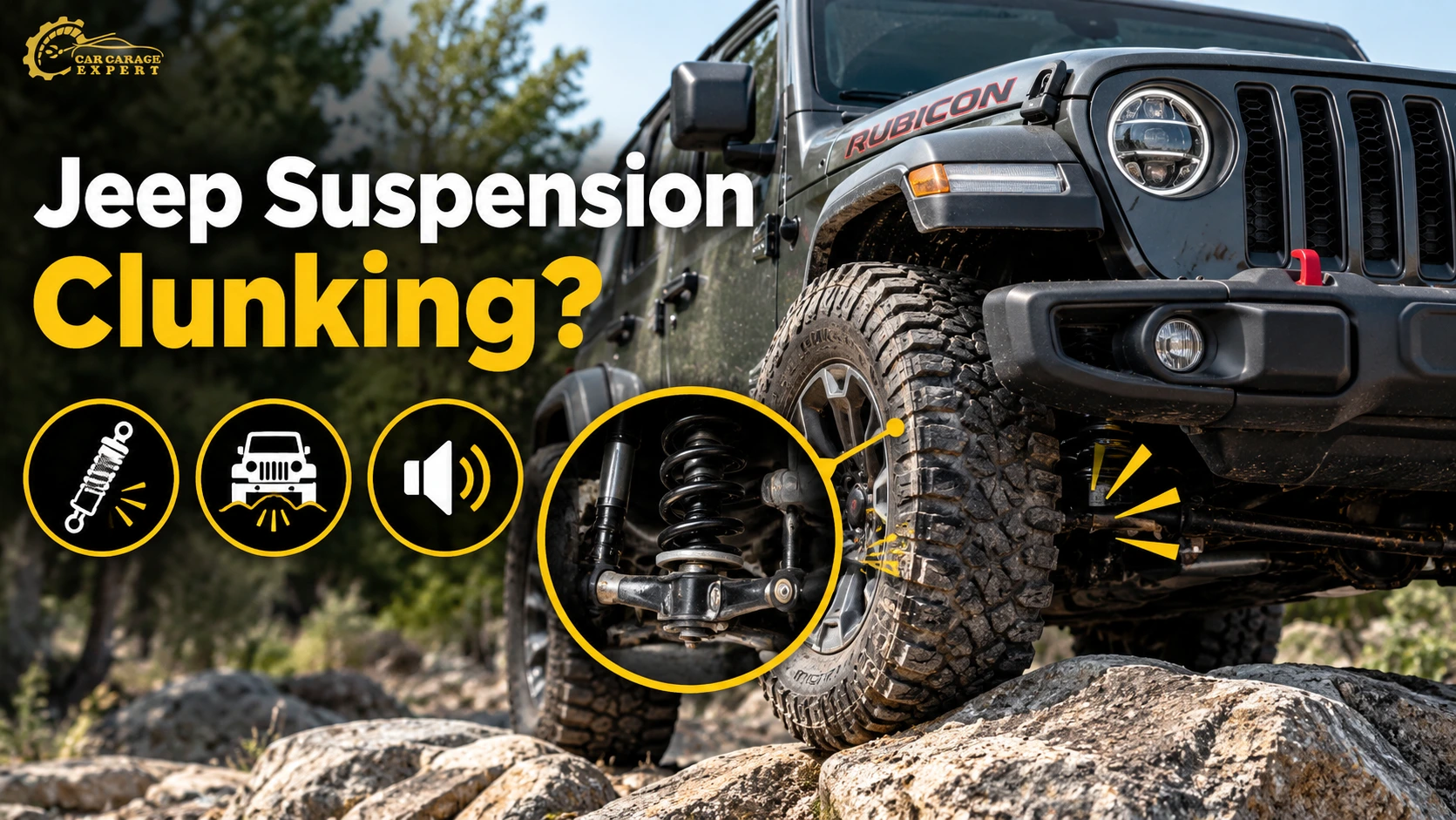
Jeep suspension clunking usually comes from a worn or loose steering or suspension part. The most common causes are worn sway bar links, a loose track bar, and tired control arm bushings. Worn ball joints, shocks, and loose bolts after a lift kit are also common. You hear it most over bumps, potholes, and when turning or braking. Dubai heat, speed bumps, and desert driving wear these parts out faster. A mechanic finds the cause with a road test and a lift check. Most fixes take 1 to 4 hours. Get it checked early, before a small clunk turns into a bigger repair.
Table of Contents
This guide covers the following topics:
- How Your Jeep Suspension Works and Why It Clunks
- Signs Your Jeep Suspension Needs Attention
- Clunking Sounds Compared: Where It Comes From and Why
- 8 Common Causes of Jeep Suspension Clunking
- Why Dubai Roads and Desert Trips Wear Jeep Suspension Faster
- How a Mechanic Tracks Down the Clunk
- How the Repair Is Done and What to Replace
- What Happens If You Ignore the Noise
- Is It Safe to Keep Driving Your Jeep?
- How Long the Repair Takes
- What Affects the Repair Cost in Dubai
- Simple Habits That Keep Your Jeep Quiet
- Jeep Tips for Dubai Heat, Sand and Speed Bumps
- Why Choose Car Garage Expert for Jeep Suspension Clunking
- Jeep Suspension Questions Owners Ask
- Other Services That Pair Well With Suspension Work
- Book Your Jeep Suspension Check in Al Quoz Today
How Your Jeep Suspension Works and Why It Clunks
Most Wranglers and Gladiators use solid axles at the front and rear. Control arms, a track bar, sway bar links, shocks, and coil springs hold each axle in place. The Grand Cherokee and Compass use a different setup with independent front suspension. Both designs rely on rubber bushings and joints.
Each part has a small amount of rubber or a joint that lets it move. When that rubber wears out, or a bolt works loose, metal parts start to knock together. That knock is the clunking sound you hear inside the cabin.
Jeeps are built tough, but they take a lot of abuse. Heavy tires, lift kits, and off-road trips all add load. That is why Jeep suspension clunking problems are so common, even on newer models.
Signs Your Jeep Suspension Needs Attention
Jeep suspension clunking rarely comes alone. Most owners notice a few of these signs together.
Clunking Noise Over Bumps and Potholes
This is the most common complaint. You hear a clunking noise over bumps, speed bumps, and uneven roads. A clunking noise over potholes is often louder, since the wheel drops further.
Clunking When Turning
A knock when you turn the wheel, often in car parks, points to steering parts. The track bar, tie rod ends, and ball joints are the usual suspects.
Clunking When Braking
A thud as you brake or pull away often means something is loose. Worn control arm bushings let the axle shift back and forth under load.
Loose or Wandering Steering
The steering may feel sloppy or need constant correction on the highway. This often comes with a front suspension clunk.
Front Wheel Shake at Speed
On solid axle Jeeps, a violent shake after a bump at around 70 to 90 km/h is called death wobble. It is frightening but usually comes from a worn track bar, ball joints, or loose steering parts.
Uneven Tire Wear or a Leaning Jeep
Worn parts change the wheel angles. This wears tires unevenly. A sagging corner can point to a broken spring or a weak shock.
Clunking Sounds Compared: Where It Comes From and Why
Use this table to match the noise you hear with the likely cause. It also shows how soon you should act.
| When You Hear It | Where It Comes From | Likely Reason | How Urgent |
| Over small bumps | Front or rear corners | Worn sway bar links or bushings | Book a check within 2 weeks |
| Over potholes | Front or rear | Worn shocks or loose shock bolts | Book a check this week |
| When turning the wheel | Front axle, near steering | Loose track bar or worn tie rod ends | Book a check this week |
| When braking or pulling away | Under the cabin | Worn control arm bushings | Book a check this week |
| Rear suspension clunk over bumps | Rear axle | Worn rear links, bushings or shocks | Book a check within 2 weeks |
| After a lift kit install | Anywhere | Loose bolts or wrong part angles | Get it checked right away |
| Violent shake at speed | Front end | Track bar, ball joints or steering damper | Stop and get help |
8 Common Causes of Jeep Suspension Clunking
The Jeep suspension clunking noise can come from several places. These are the causes we find most often in the workshop.
Worn Sway Bar Links
This is the top cause of a Jeep suspension clunking noise. The small ball joints or bushings at each end of the link wear out. The link then knocks every time the body rolls or hits a bump.
Loose or Worn Track Bar
The track bar keeps the axle centered under the Jeep. Its bushing or bolt can wear or loosen. You then feel a clunk when turning and a loose steering feel.
Worn Control Arm Bushings
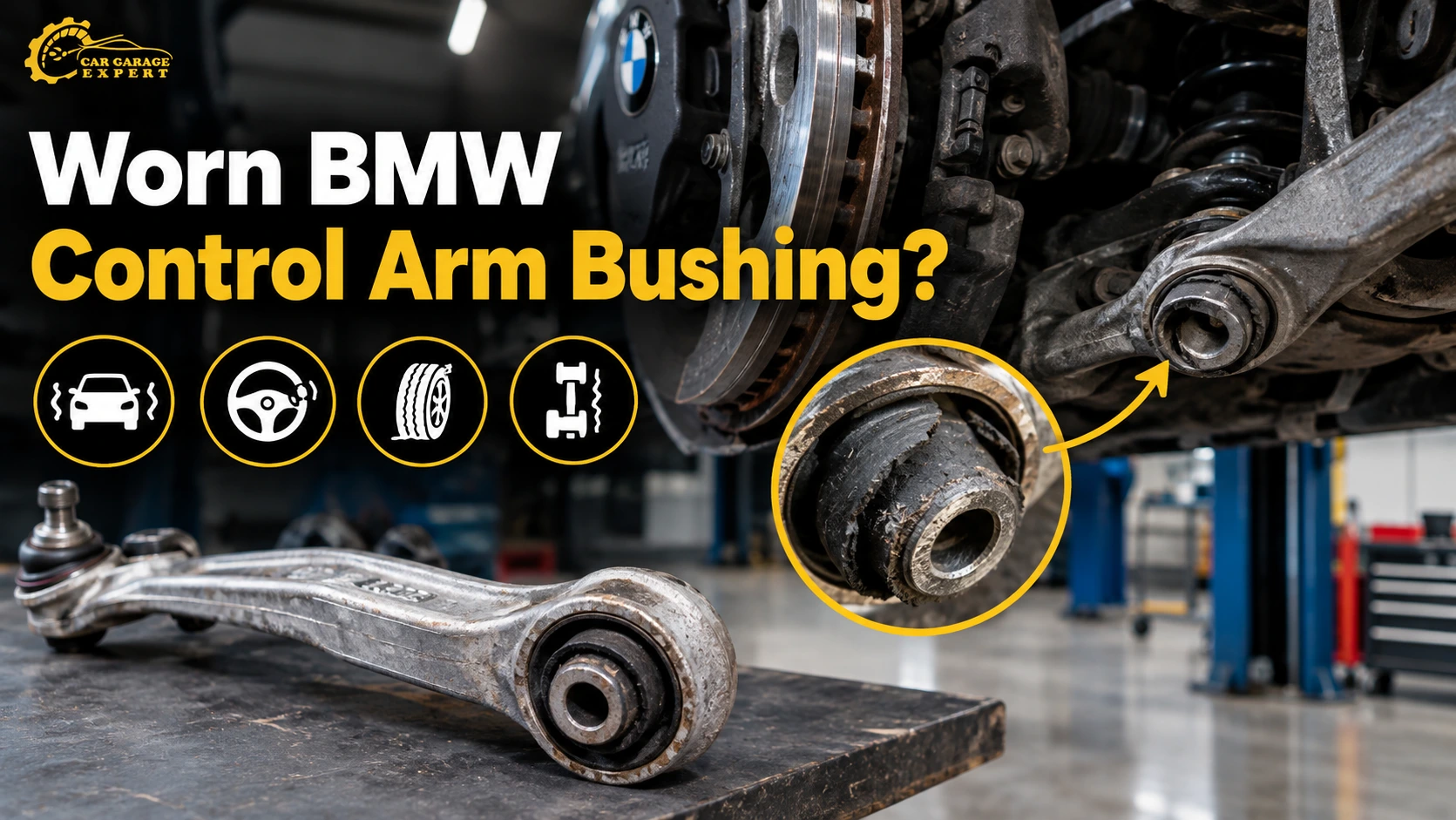
Control arms hold the axle forward and back. When their rubber bushings wear out, the axle moves under braking and acceleration. This causes clunking when braking and on take-off.
Worn Ball Joints
Ball joints let the front wheels steer and move up and down. Worn ones cause a front suspension clunk and loose steering. Heavy tires wear them faster.
Worn Shocks or Loose Shock Mounts
Tired shocks let the axle bounce too far. The bushings at each end can also wear out. This leads to a knock over rough roads.
Tie Rod Ends and Steering Parts
Worn tie rod ends, drag link ends, or a loose steering box can clunk when you turn. They also make the steering feel vague.
Coil Springs and Spring Isolators
A broken coil spring or a worn rubber isolator can clunk as the spring shifts in its seat. This is more common on older or lifted Jeeps.
Loose Bolts After a Lift Kit or Off-Road Trip
Lift kits change the angles of every link. If you don’t tighten bolts at ride height, they can loosen. Rough trails can also shake bolts loose.
Why Dubai Roads and Desert Trips Wear Jeep Suspension Faster
Dubai conditions make Jeep suspension clunking far more common. Heat and rough roads speed up wear on every rubber part.
- Heat. High summer temperatures dry out rubber bushings. They go hard, crack, and start to knock.
- Speed bumps. Residential areas, malls and car parks have many of them. Each one loads the links and bushings.
- Desert driving. Dune trips at Al Qudra or Big Red twist the suspension hard. Sand also gets into joints and wears them out.
- Big tires and lifts. Many Dubai Jeeps run larger tires. Extra weight stresses ball joints and steering parts.
- Low tire pressure off-road. Airing down is normal for sand. Forgetting to air back up adds strain on the highway.
How a Mechanic Tracks Down the Clunk
A clunk can sound like it comes from one spot but start somewhere else. That is why a proper Jeep suspension inspection matters. Here is how we check it:
- Road test. We drive over bumps, turn in tight circles, and brake firmly to recreate the noise.
- Dry steer test. With the Jeep on the ground, someone turns the steering wheel back and forth. The mechanic watches every joint for movement.
- Lift check. The mechanic checks each bushing, link, and joint for cracks, tears, and play.
- Pry bar check. Parts are gently levered to find hidden looseness.
- Bolt torque check. We check all suspension bolts, especially on lifted Jeeps.
- Tire check. Uneven wear helps confirm which parts are worn.
How the Repair Is Done and What to Replace
Jeep suspension repair depends on what the inspection finds. Most jobs follow the same pattern:
- The Jeep is raised, and the technician unbolts the worn part.
- The technician fits the new part or bushing.
- Bolts are tightened with the Jeep’s weight on the wheels. This stops new rubber from twisting and tearing.
- We do a wheel alignment if we change any steering or axle parts.
- We road-test the Jeep to confirm the noise is gone.
Services We Suggest at the Same Time
A few extra jobs stop the noise from coming back:
- Replace parts in pairs. Replace sway bar links and shocks on both sides.
- Check the whole front end. Track bar, ball joints, and tie rod ends often wear together.
- Upgrade worn parts on lifted Jeeps. An adjustable track bar and stronger links suit bigger tires.
- Re-torque all bolts after any lift kit or off-road trip.
- Do a wheel alignment after steering or control arm work.
What Happens If You Ignore the Noise
Jeep suspension clunking is a warning. Ignoring it lets the damage spread:
- One loose part puts extra load on the parts next to it.
- Tires wear out faster and unevenly.
- Steering gets looser and less safe.
- Worn front parts can trigger death wobble.
- A failed ball joint or track bar can affect Jeep control.
Replacing one worn link is much cheaper than rebuilding the whole front end.
Is It Safe to Keep Driving Your Jeep?
A light knock over bumps usually means a worn sway bar link or bushing. You can drive for a short time, but book a check soon.
Stop driving if the steering feels very loose or the front end shakes violently at speed. The same goes for loud banging over every bump. Call roadside assistance instead of risking the highway.
How Long the Repair Takes
Most jobs are done on the same day:
- Inspection: about 30 to 60 minutes.
- Sway bar links: about 1 hour.
- Track bar or shocks: about 1 to 2 hours.
- Control arms or ball joints: about 2 to 4 hours.
- Wheel alignment: about 1 hour extra.
Parts for the Wrangler and Grand Cherokee are usually easy to find in Dubai. Some upgrade parts may take a few days.
What Affects the Repair Cost in Dubai
The final price depends on a few things:
- Which part failed. Sway bar links cost far less than ball joints or control arms.
- Model. Wrangler, Gladiator, and Grand Cherokee parts differ in price.
- Genuine, aftermarket, or upgrade parts. Heavy-duty upgrade parts cost more but last longer on lifted Jeeps.
- Number of parts. Worn parts often come in groups.
- Alignment. You need this after most steering or axle work.
As a rough guide, sway bar links cost around AED 300 to AED 800 fitted. Ball joints or control arms can run AED 1,000 to AED 3,000 or more. Always ask for a written quote first.
Simple Habits That Keep Your Jeep Drive Smoothly
A few habits help your suspension last longer:
- Slow right down for speed bumps and potholes.
- Air your tires back up after a desert trip.
- Wash sand out of the suspension after off-road driving.
- Check bolt torque after fitting a lift kit, and again after 500 km.
- Ask for a suspension check at every service. Our car service packages in Dubai are a good time to catch early wear.
Jeep Tips for Dubai Heat, Sand and Speed Bumps
Summer and the desert season are hard on Jeeps. Rubber is at its weakest in peak heat.
After a weekend of dune driving, listen for new noises on the drive home. Any new clunk is worth checking before the next trip.
Planning a lift or bigger tires? Budget for matching upgrades like a track bar and steering damper. This keeps the handling safe on the highway.
Can’t bring the Jeep in? A mobile car mechanic can do a first check at your home or office.
Why Choose Car Garage Expert for Jeep Suspension Clunking
Our team at Car Garage Expert in Al Quoz works on Jeeps every week, from stock Grand Cherokees to lifted Wranglers. This is what you get with us:
- A full road test, dry steer test, and lift check.
- A clear quote that shows exactly which parts are worn.
- A choice of genuine, aftermarket, or heavy-duty upgrade parts.
- Bolts torqued at ride height, the right way.
- A wheel alignment and final road test on every job.
Searching for a trusted garage near me for Jeep suspension repair? We recommend booking a check with us before a small knock becomes a big bill.
FAQ’s
Q1: Why does my Jeep clunk over bumps?
Worn sway bar links are the most common cause. Worn bushings and shocks can also do it.
Q2: What causes Jeep clunking when turning?
A loose track bar, worn tie rod ends, or worn ball joints are the usual causes.
Q3: Is Jeep death wobble dangerous?
Yes. The front end shakes hard, and control is reduced. Slow down safely and get it checked straight away.
Q4: Can a lift kit cause Jeep suspension noise?
Yes. Loose bolts or wrong link angles after a lift often cause clunks.
Q5: How often should Jeep suspension be checked?
At every service, and after any off-road trip or lift kit install.
Q6: Do sway bar links cause clunking?
Yes. They are the most common source of a light knock over small bumps.
Other Services That Pair Well With Suspension Work
While your Jeep is in the workshop, you can take care of other jobs too:
- Car suspension repair for shocks, springs, links, and bushings.
- An expert car mechanic for engine, brake, and electrical checks.
- Car painting for scratches from off-road trips.
Book Your Jeep Suspension Check in Al Quoz Today
Don’t let Jeep suspension clunking turn into a costly front-end rebuild. A quick check now costs far less than a big repair later.
Visit Car Garage Expert in Al Quoz for a full suspension inspection. We recommend booking before your next desert trip.
- WhatsApp: Chat with our team
- Find us: Get directions on Google Maps.