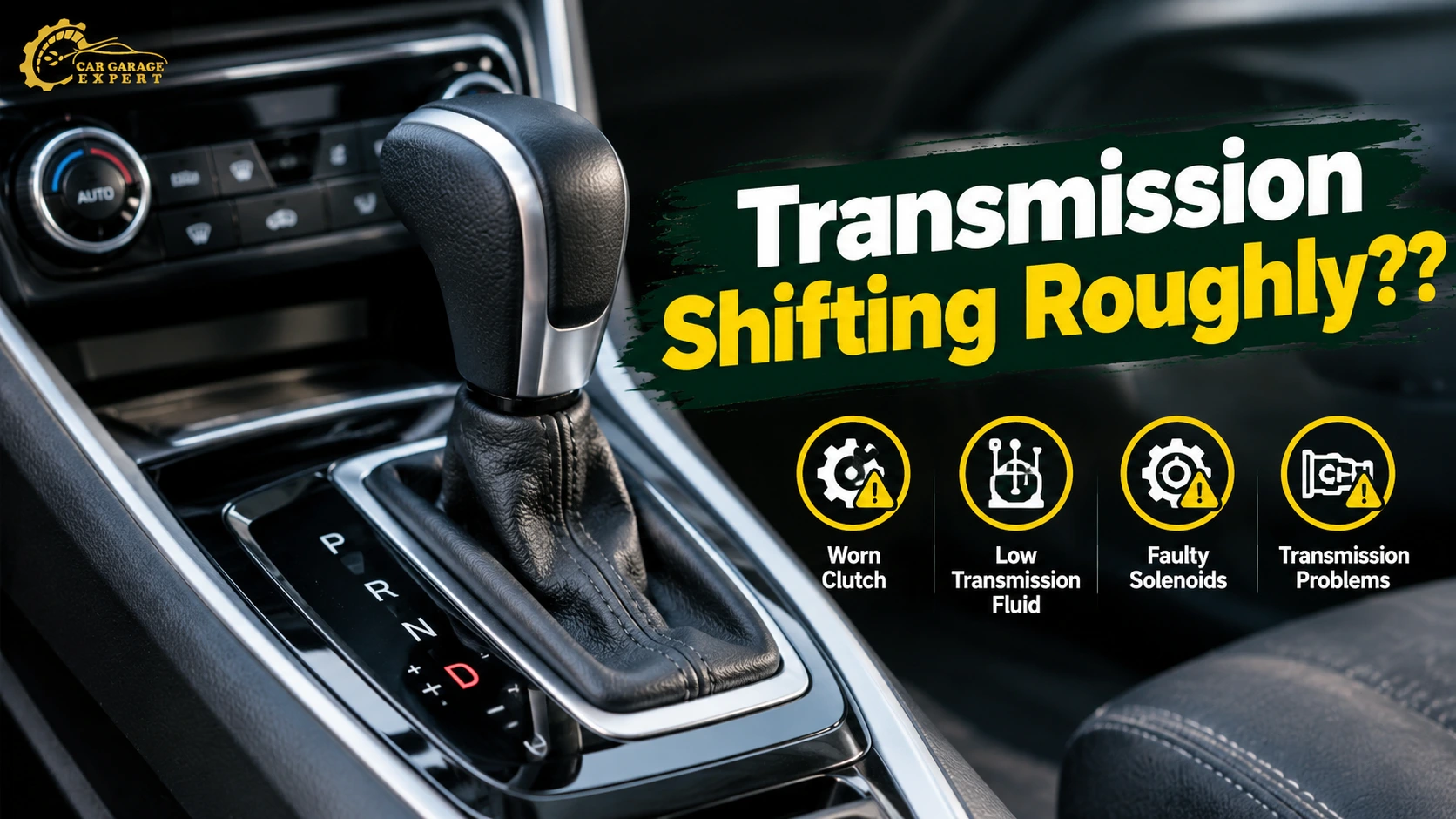
You back off the gas pedal and the automobile shifts into second gear. Or it clunks forcefully when you put it in Drive. These harsh gear shifts are irritating. Your gearbox is telling you something is wrong. This tutorial describes why it happens. How mechanics diagnose the problem is your transmission shifting roughly and what repairs solve it.
Transmission Shifting Roughly:
Transmission shifting roughly is often caused by low or old transmission fluid. Other common reasons include a defective gearbox solenoid, a bad sensor, worn engine mounts or a gearbox computer that needs a reset or upgrade. In Dubai, heat and stop-start traffic degrade fluid considerably faster than typical. This can cause the gearbox to shift forcefully, hesitate or slip. A good mechanic will check the fluid, road-test the car, and scan for problem codes. Many issues can be fixed with a fluid service or a small part. “A cheap repair can become a full gearbox rebuild if you ignore it.”
Table of Contents
- How Your Gearbox Is Supposed to Change Gears
- Warning Signs Your Gearbox Is Shifting Hard
- Common Causes of Transmission Shifting Roughly
- How Mechanics Diagnose Rough Gear Changes
- How Rough Shifting Gets Fixed
- What Happens If You Ignore Hard Shifting
- Can You Keep Driving With a Jerky Gearbox?
- How Long Transmission Repairs Take
- What Affects Transmission Repair Costs in Dubai
- How to Keep Your Transmission Shifting Smoothly
- How Dubai Heat and Traffic Wear Out Your Gearbox
- Why Choose Car Garage Expert for Transmission Repair in Dubai
- Rough Shifting FAQs for Dubai Drivers
- Related Services for Your Car
- Book Your Gearbox Check Today
How Your Gearbox Is Supposed to Change Gears
A healthy automatic gearbox should shift so smoothly you barely notice. It uses fluid pressure to engage clutches inside the box. A computer, called the TCM, decides when to shift. Small electric valves, called solenoids, control where the fluid goes.
When any part of this system has a problem, the timing goes wrong. The gear change happens too late, too hard, or not fully. That’s what you feel is transmission shifting roughly.
It can happen in any gearbox. Regular automatics, CVTs, dual-clutch boxes, and manuals all have their own weak points. The cause is often simple. But you need to find it early.
Warning Signs Your Gearbox Is Shifting Hard
Rough shifting shows up in different ways. Watch for these signs:
- A jolt or thud when the car changes gear.
- A clunk when you move from Park into Drive or Reverse.
- A delay before the car moves after selecting Drive.
- Transmission hesitation when you press the accelerator.
- Engine revs flaring up between gears. This is transmission slipping.
- The car jerks when changing gears at low speed.
- A check engine light or gearbox warning on the dash.
- The car is stuck in one gear, often called limp mode.
- A burning smell or red fluid under the car.
If you notice two or more of these, search for a trusted garage near me with gearbox experience. Early checks usually mean smaller bills.
Common Causes of Transmission Shifting Roughly
Most cases of transmission shifting roughly come from a short list of problems. Here’s what’s usually behind them.
Low Transmission Fluid
Low transmission fluid means less pressure inside the gearbox. The clutches can’t engage properly, so gear changes feel harsh or delayed. Fluid usually drops because of a leak from a seal, a pan gasket, or a cooler line.
Old or Burnt Transmission Fluid
Transmission fluid isn’t just a lubricant. It also cools the gearbox and takes the pressure off. Over time, heat destroys it. The old liquid turns black, smells of burning and ceases functioning correctly. The first indicator is usually hard gear changes.
Wrong Type of Fluid
Every gearbox needs a specific fluid. The wrong one can change how the clutches grip. This can lead to shuddering, slipping, or harsh shifts, sometimes right after a service.
Faulty Transmission Solenoid
Solenoids open and close to send fluid where it’s needed. When one sticks or fails, the shift happens at the wrong time. You may feel a hard slam into one gear, or the car may refuse to shift at all.
Bad Transmission Sensor
The gearbox relies on sensors for speed, throttle position, and fluid temperature. If a transmission sensor sends wrong data, the computer makes bad shift decisions. Jerky changes and odd timing are common results.
Gearbox Computer Needs a Reset or Update
Modern gearboxes learn how you drive… Over time, these learned parameters can fade away. They can also be reset badly after a repair or battery swap. Sometimes the repair is a software update; sometimes it’s an adaptive reset.
Worn Valve Body
The valve body is the gearbox’s control center. It has small channels and valves that direct fluid. Wear or debris makes the valves stick. This causes harsh, delayed, or uneven shifts.
Worn Engine or Gearbox Mounts
Mounts hold the engine and gearbox in place. When the rubber wears out, the engine rocks with every shift. The gearbox may be fine, but the jolt feels like a hard shift.
Torque Converter Problems
The torque converter links the engine to an automatic gearbox. When it wears out, you may feel shuddering, slipping, or a jerk at certain speeds.
Dual-Clutch and Manual Gearbox Wear
Dual-clutch gearboxes can shudder at low speeds when the clutches wear out. The control unit is called the mechatronic unit, and this might also fail. In manual autos, a worn clutch or fatigued synchros will make gears grind or feel stiff.
How Our Car Mechanics Diagnose Rough Gear Changes
Wasting money on replacing parts without testing. There is a proper way to diagnose it. This is how a good shop checks the transmission shifting roughly:
- Talk through the symptoms. When does it happen? Cold or hot? At which gear? Any warning lights?
- Scan for fault codes. A diagnostic tool reads codes from the engine and gearbox computers. Codes often point to a solenoid, sensor, or pressure problem.
- Check live data. The mechanic watches fluid temperature, gear selection, and slip while the car runs.
- Check the fluid. Check the level, color, and smell. Dark, burnt fluid or metal bits are warning signs. Many modern gearboxes need this done at a set temperature.
- Road test. The car is driven in traffic and at speed to feel exactly when the problem happens.
- Pressure test. Fluid pressure is measured inside the gearbox to check the pump and valve body.
- Solenoid and wiring checks. Solenoids are tested for resistance. The mechanic checks wiring and plugs for damage.
- Mount inspection. The technician rocks the engine to check for worn mounts.
An experienced car mechanic will explain what the tests show before suggesting any repair.
How Rough Shifting Gets Fixed
The fix depends on what the tests find. Here are the most common repairs, from simple to major.
Transmission Fluid and Filter Service
The technician drains the old fluid and replaces it with the correct type. The filter is changed where the gearbox has one. We then set the level at the correct temperature. This alone fixes many cases of rough shifting.
Gearbox Adaptation Reset and Software Update
The learned shift settings are cleared with a diagnostic tool. The car then relearns during a road test. If the maker has released a software update, it’s installed too.
Solenoid or Sensor Replacement
The faulty part is replaced. Wiring is repaired if needed. We clear the codes and test the gearbox again.
Valve Body Repair or Replacement
We remove, clean, and repair the valve body, or replace it with a new one. Fresh fluid is added afterward.
Engine and Gearbox Mount Replacement
Worn mounts are replaced. This removes the jolt and protects other parts from extra movement.
Torque Converter or Clutch Replacement
We remove the gearbox to access these parts. On dual-clutch gearboxes, the clutch pack may be replaced. On manuals, a new clutch kit goes in.
Gearbox Rebuild or Replacement
If the damage is inside the gearbox, it may need a full rebuild. Technicians replace worn clutches, seals, and bands. In some cases, a replacement gearbox is cheaper. A good car transmission repair specialist will compare both options for you.
Services That Stop the Problem Coming Back
After any gearbox repair, these steps help it last:
- Refill with the exact fluid the maker specifies.
- Reset the gearbox adaptations so it relearns properly.
- Clean or flush the fluid cooler if the old fluid was dirty.
- Fit an extra gearbox cooler if you tow or drive in the desert.
- Book the next fluid change based on Dubai conditions, not the brochure.
What Happens If You Ignore Hard Shifting
Rough shifting rarely fixes itself. Here’s what can happen if you wait:
- More wear inside. Every harsh shift stresses clutches and gears.
- Overheating. Slipping creates heat, and heat destroys fluid and seals.
- Limp mode. The car may lock into one gear to protect itself.
- Getting stuck. A failing gearbox can leave you stranded, sometimes in heavy traffic.
- Much bigger bills. A fluid service costs a fraction of a rebuild.
Transmission shifting roughly for a few weeks can turn into a full gearbox failure. Acting early saves money.
Can You Keep Driving With a Jerky Gearbox?
It depends on how bad it is. If the shifts feel slightly firm but the car drives normally, short trips are usually fine while you book a check.
Stop driving if:
- The engine revs, but the car doesn’t speed up.
- The car goes into limp mode.
- A gearbox warning light comes on.
- You smell burning or see fluid leaking.
- The car won’t go into Drive or Reverse.
Driving on with these signs can destroy the gearbox. Pull over safely and call roadside assistance. Towing is much cheaper than a new gearbox.
If your transmission shifting roughly but mild, book a diagnostic with Car Garage Expert in Al Quoz. You’ll get a clear answer before the problem grows.
How Long Transmission Repairs Take
Repair time depends on the cause and whether the gearbox needs to come out.
| Repair | Typical Time |
| Diagnostic scan and road test | 1–2 hours |
| Fluid and filter service | 1–3 hours |
| Adaptation reset or software update | 1–2 hours |
| Solenoid or sensor replacement | 2–5 hours |
| Engine or gearbox mounts | 1–3 hours |
| Valve body repair | 4–8 hours |
| Torque converter or clutch | 1–2 days |
| Full gearbox rebuild | 3–7 days |
Parts supply matters too. Common parts are usually in stock in Dubai. Some gearbox parts need to be ordered.
What Affects Transmission Repair Costs in Dubai
Several things decide the final price:
- Gearbox type. CVT and dual-clutch repairs often cost more than regular automatics.
- Car make and model. European and luxury cars usually have pricier parts.
- Part location. Repairs that need the gearbox removed take more labor.
- Parts choice. Genuine, OEM-quality, or used parts all cost different amounts.
- Extra damage. Driving too long on a bad gearbox adds more worn parts to the bill.
Here are rough price guides. Your exact quote depends on your car.
| Service | Estimated Cost (AED) |
| Diagnostic scan | 150–400 |
| Fluid and filter service | 500–1,500 |
| Adaptation reset or software update | 200–800 |
| Transmission sensor | 400–1,500 |
| Transmission solenoid | 800–2,500 |
| Engine or gearbox mounts | 400–1,500 |
| Valve body repair | 2,500–7,000 |
| Torque converter | 3,000–8,000 |
| Dual-clutch pack | 4,000–10,000 |
| Gearbox rebuild | 6,000–15,000 |
How to Keep Your Gearbox Shifting Smoothly
A few simple habits protect your gearbox for years:
- Change the transmission fluid every 40,000–60,000 km in Dubai.
- Use only the fluid your car’s maker specifies.
- Fix fluid leaks as soon as you spot them.
- Come to a full stop before shifting into Park or Reverse.
- Avoid hard launches from traffic lights.
- Don’t hold the car on a slope using the accelerator.
- Keep your battery healthy, since low voltage confuses gearbox electronics.
- Ask about gearbox software updates at each service.
Many cars are sold with “lifetime” gearbox fluid. In Dubai’s heat, that lifetime is much shorter. A regular fluid check as part of your car service catches problems early.
How Dubai Heat and Traffic Wear Out Your Gearbox
Dubai is hard on gearboxes. The heat and traffic push them beyond normal limits. That’s a big reason transmission shifting roughly is so common here.
- Extreme heat. Summer temperatures above 45°C make gearbox fluid run hotter. Hot fluid breaks down much faster.
- Stop-start traffic. Crawling on Sheik Zayed Road or Al Khail Road means constant shifting between first and second.
- Idling with the AC on. The engine and gearbox stay hot while the car isn’t moving, so there’s little airflow to cool them.
- Towing. Boats, jet skis, and caravans add a heavy load, especially on long summer drives.
- Desert driving. Dune trips keep the gearbox working hard at low speed, where it gets hottest.
- Sand and dust. Dust clogs the radiator and gearbox cooler, so less heat escapes.
If you tow or drive off-road, ask about an extra gearbox cooler. Before long drives to Oman or Hatta, get the fluid checked.
Can’t bring the car in? A mobile car mechanic can scan for fault codes at your home or office.
Why Choose Car Garage Expert Transmission Repair in Dubai
Rough shifting has many possible causes, so testing matters more than guessing. Here’s what you get when you bring your car to us:
- Proper diagnosis first. We scan, check the fluid, and road test before recommending any repair.
- The right fluid. We use the fluid your gearbox maker specifies, not a one-size-fits-all product.
- Simple fixes first. If a fluid service or reset solves it, we won’t push a rebuild.
- Clear quotes. You’ll know the cause and the cost before work starts.
- All gearbox types. Automatic, CVT, dual-clutch, and manual.
- Easy to reach. Our workshop is in Al Quoz, close to major Dubai roads.
If your gearbox is shifting hard, book a check with us and get a straight answer.
FAQs
These are the questions drivers ask us most about hard and jerky gear changes.
Q1: Why does my car jerk when shifting?
Low or old fluid is the most common reason. A faulty solenoid, bad sensor, or worn mounts can also cause it. A diagnostic scan and fluid check usually find the cause.
Q2: Can low transmission fluid cause hard shifting?
Yes. Low fluid means low pressure inside the gearbox. The clutches can’t engage smoothly, so shifts feel harsh or delayed.
Q3: Why does my car shift hard when cold?
Cold fluid is thicker, so the first few shifts can feel firm. If it doesn’t smooth out once warm, the fluid may be old or a solenoid may be sticking.
Q4: Will a transmission flush fix shifting problems?
It can, if the cause is old or dirty fluid. It won’t fix a broken solenoid, worn clutches, or bad mounts. Diagnose first, then service.
Q5: Can bad engine mounts cause jerky shifting?
Yes. Worn mounts permit the engine to rock during shifting. The gearbox could be fine, but the jolt feels like a hard shift.
Q6: How much to fix rough shifting?
In Dubai, a fluid service usually costs AED 500–1,500. A solenoid repair costs around AED 800–2,500. A full rebuild can cost AED 6,000 or more.
Q7: Is it safe to drive with rough shifting?
Short trips are usually fine if it’s mild. Stop driving if the gearbox slips, goes into limp mode, or shows a warning light.
Related Services for Your Car
Gearbox problems often link to other parts of the car. These services may also help:
- Engine diagnostics: Misfires and throttle faults can feel like rough shifting.
- Cooling system check: A healthy radiator keeps the gearbox fluid cooler too.
- Battery testing: A weak battery can cause odd gearbox behavior.
- Car painting: While your car is in, fix sun-faded paint or stone chips.
Book Your Gearbox Check Today
Don’t wait for your gearbox to fail in traffic. Transmission shifting roughly is an early warning, and early fixes cost far less.
Visit Car Garage Expert in Al Quoz for a full gearbox diagnosis. Message us on WhatsApp to book, or find us on Google Maps.