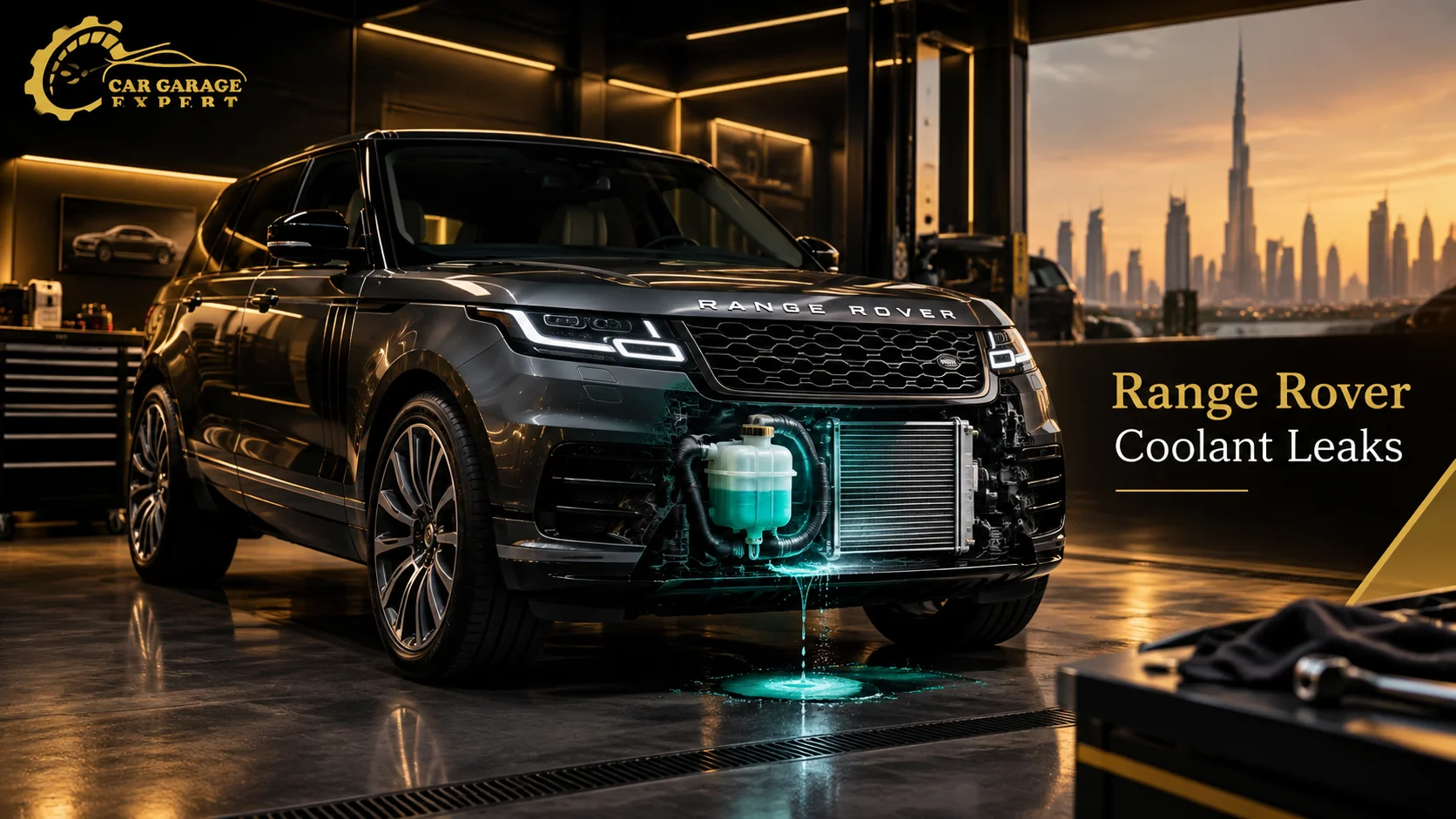
Range Rover Coolant Leaks can happen because of a damaged hose, radiator, water pump, thermostat housing, expansion tank or loose connection. A small leak may start as a few drops but can become serious if the coolant level falls too low. You may notice a sweet smell, coolant under the vehicle, an overheating warning or steam from the engine bay. Dubai’s hot weather can put extra stress on cooling system parts. Finding the leak early can prevent overheating and major engine damage. If your Range Rover is losing coolant, have a Car Garage expert inspect it before you keep driving.
Table of Contents
- Problem Overview: Why Is Your Range Rover Losing Coolant?
- Symptoms That Point to a Coolant Leak
- Common Causes of Coolant Loss
- Diagnostic Process: How Mechanics Find the Leak
- Repair Process: Fixing the Cooling System
- Risks of Ignoring a Coolant Leak
- Can You Continue Driving?
- Typical Repair Time
- Main Cost Factors
- Prevention Tips for Range Rover Owners
- Dubai-Specific Cooling System Advice
- Why Choose Car Garage Expert for Roadside Assistance?
- Frequently Asked Questions
- Related Services
- Final Call-to-Action
Problem Overview: Why Is Your Range Rover Coolant Leaks?
Your Range Rover cooling system keeps the engine at a safe operating temperature. It uses coolant to remove heat from the engine.
When a leak occurs, the coolant level decreases. The engine may then run hotter than usual.
Range Rover Coolant Leaks can be difficult to spot at first. Some leaks happen only when the engine is hot or the system is under pressure.
Don’t ignore a small leak. Coolant loss can become worse during long drives or heavy traffic.
Symptoms That Point to a Range Rover Coolant Leaks
Knowing the early signs can help you act before the problem becomes expensive.
Common symptoms include:
- Coolant drops under the vehicle
- Low coolant warning on the dashboard
- Sweet smell from the engine bay
- Engine temperature rising
- Steam from under the bonnet
- Frequent need to add coolant
- Wet areas around hoses or the radiator
- White or colored coolant residue
- Heater performance becoming weaker
If you keep topping up coolant, you likely have an underlying problem that needs checking.
Common Causes of Coolant Loss in a Range Rover
Several cooling system parts can develop leaks over time.
| Possible Cause | Common Sign | Typical Repair |
|---|---|---|
| Damaged coolant hose | Wet hose or dripping coolant | Hose replacement |
| Radiator leak | Coolant around radiator | Radiator repair or replacement |
| Water pump leak | Coolant near pump area | Water pump replacement |
| Thermostat housing | Coolant around housing | Housing replacement |
| Expansion tank crack | Coolant around tank | Tank replacement |
| Loose connection | Slow coolant loss | Tightening or sealing |
| Failed gasket | Coolant loss and overheating | Gasket repair |
Range Rover Coolant Leaks: Common Parts That Fail
Hoses are a common cause. Rubber and plastic parts can become brittle with age.
The radiator can also crack or leak. This may happen because of age, pressure or physical damage.
The water pump is another important part. A worn pump seal can allow coolant to escape.
The thermostat housing and expansion tank can also crack. These parts face repeated heat cycles.
In some cases, a head gasket problem can cause coolant loss. This is a more serious fault and needs proper testing.
Diagnostic Process: How a Garage Finds the Leak
A proper inspection should find the source instead of simply adding more coolant.
A mechanic may start by checking the coolant level and looking around the engine bay.
The mechanic can then pressure-test the cooling system. This helps reveal leaks that may not be visible during a normal inspection.
The mechanic may inspect:
- Coolant hoses and clamps
- Radiator and radiator connections
- Expansion tank
- Water pump area
- Thermostat housing
- Cooling system pressure
- Engine oil and coolant condition
A diagnostic scan may also be used if the vehicle has stored temperature or cooling-system faults.
Car Garage expert can inspect the cooling system and identify the likely source before recommending repairs.
Repair Process: Fixing the Cooling System Correctly
The repair depends on where the coolant is escaping.
A damaged hose may only need replacement. A cracked expansion tank may also be relatively straightforward to replace.
A leaking radiator or water pump usually requires more work.
After the repair, refill the system with the correct coolant. Air should also be removed from the cooling system where required.
Then check the vehicle for leaks and monitor it for normal operating temperature.
Simply topping up the coolant does not fix the cause.
Risks of Ignoring a Coolant Leak
Ignoring Range Rover Coolant Leaks can lead to much bigger problems.
The most serious risk is engine overheating. Excessive heat can damage engine components.
A severe overheating event may result in:
- Cylinder head damage
- Head gasket failure
- Warped engine components
- Reduced engine performance
- Expensive engine repairs
- Vehicle breakdown
A small leak is usually easier to deal with than an overheated engine.
Can You Continue Driving?
It depends on how serious the leak is.
If the coolant level is dropping quickly, the temperature is rising or steam is coming from the engine bay, stop driving as soon as it is safe.
Do not open the coolant reservoir while the engine is hot. The system can be under pressure and may cause burns.
For a serious leak, roadside assistance can be safer than driving to a workshop.
If the coolant level is stable and the engine temperature remains normal, a short trip to a garage may sometimes be possible. However, you should still have the vehicle inspected as soon as possible.
Typical Repair Time for a Coolant Leak
Repair time depends on the failed component and vehicle model.
| Repair Type | Approximate Time |
|---|---|
| Cooling system inspection | 30–60 minutes |
| Pressure test | 30–60 minutes |
| Coolant hose replacement | 1–2 hours |
| Expansion tank replacement | 1–2 hours |
| Thermostat housing repair | 2–4 hours |
| Radiator replacement | 3–5 hours |
| Water pump replacement | 3–6+ hours |
| Major cooling system repair | Depends on fault |
These are general estimates. Actual time can vary based on the Range Rover model and the condition of other parts.
Main Cost Factors for Coolant Leak Repairs
The cost of repairing Range Rover Coolant Leaks depends on several factors.
The main cost factors include:
- Range Rover model and engine
- Failed cooling system component
- Genuine or aftermarket parts
- Labor time
- Coolant type and quantity
- Additional damaged components
- Difficulty of accessing the faulty part
- Need for diagnostic testing
A simple hose repair will usually involve less work than a water pump or major engine repair.
It is better to diagnose the exact leak before getting a repair quote.
Prevention Tips for Range Rover Owners
Regular checks can lessen the likelihood of a sudden cooling system failure.
Follow these simple habits:
- Check the coolant level regularly
- Look for leaks after parking
- Inspect hoses for cracks
- Do not ignore temperature warnings
- Use the correct coolant
- Follow the recommended service schedule
- Replace aging hoses when needed
- Keep the radiator and cooling system clean
- Have unusual coolant loss checked quickly
Regular maintenance is especially useful for vehicles driven in hot conditions.
Dubai-Specific Advice for Range Rover Owners
Dubai heat can place extra stress on the cooling system. Long traffic delays can also keep the engine running for extended periods.
Air conditioning use adds another load to the vehicle, especially during very hot weather.
If you notice a coolant smell after driving, check the vehicle rather than waiting for a warning light.
Drivers in Al Quoz and other busy Dubai areas should also take overheating seriously. Getting stuck in traffic with a cooling system problem can quickly turn a small leak into a breakdown.
If you search for a garage near me, choose a workshop that can properly pressure-test and inspect the cooling system.
Why Choose Car Garage Expert for Roadside Assistance?
When Range Rover Coolant Leaks cause a breakdown, getting help quickly can prevent unnecessary engine damage.
Car Garage Expert provides roadside assistance for drivers who cannot safely continue their journey.
Our team can assess the situation and help determine whether the vehicle needs roadside support or workshop repairs.
If your Range Rover is overheating or losing coolant rapidly, roadside assistance is a practical option instead of risking further damage by driving.
Frequently Asked Questions
How do I know if my Range Rover has a coolant leak?
Look for coolant under the vehicle, a sweet smell, low coolant warnings or rising engine temperature.
Can a coolant leak cause overheating?
Yes. Low coolant can reduce the cooling system’s ability to control engine temperature.
Is it safe to drive if your coolant is leaking?
If you see a major leak or an overheating alert, pull over and seek roadside help.
How long does a coolant leak repair take?
Simple hose or tank repairs may take 1–2 hours. Larger repairs can take several hours.
Why is my Range Rover losing coolant but not leaking visibly?
Some leaks only appear when the engine is hot or the cooling system is pressurized. A pressure test can help find them.
Related Services
If you are experiencing Range Rover Coolant Leaks, other services may also be useful:
- Range Rover engine diagnostics
- Cooling system inspection
- Radiator repair and replacement
- Water pump replacement
- Thermostat repair
- Engine overheating diagnosis
- Car roadside assistance
- Mobile mechanic service
Final Call-to-Action
Do not ignore repeated coolant loss or an overheating warning. Range Rover Coolant Leaks can become much more expensive when the vehicle continues to run without enough coolant.
For reliable inspection and repair support in Dubai, contact Car Garage Expert and have the cooling system checked before a small leak becomes a major engine problem.
If your vehicle has already overheated or cannot be driven safely, arrange roadside assistance instead of taking the risk.