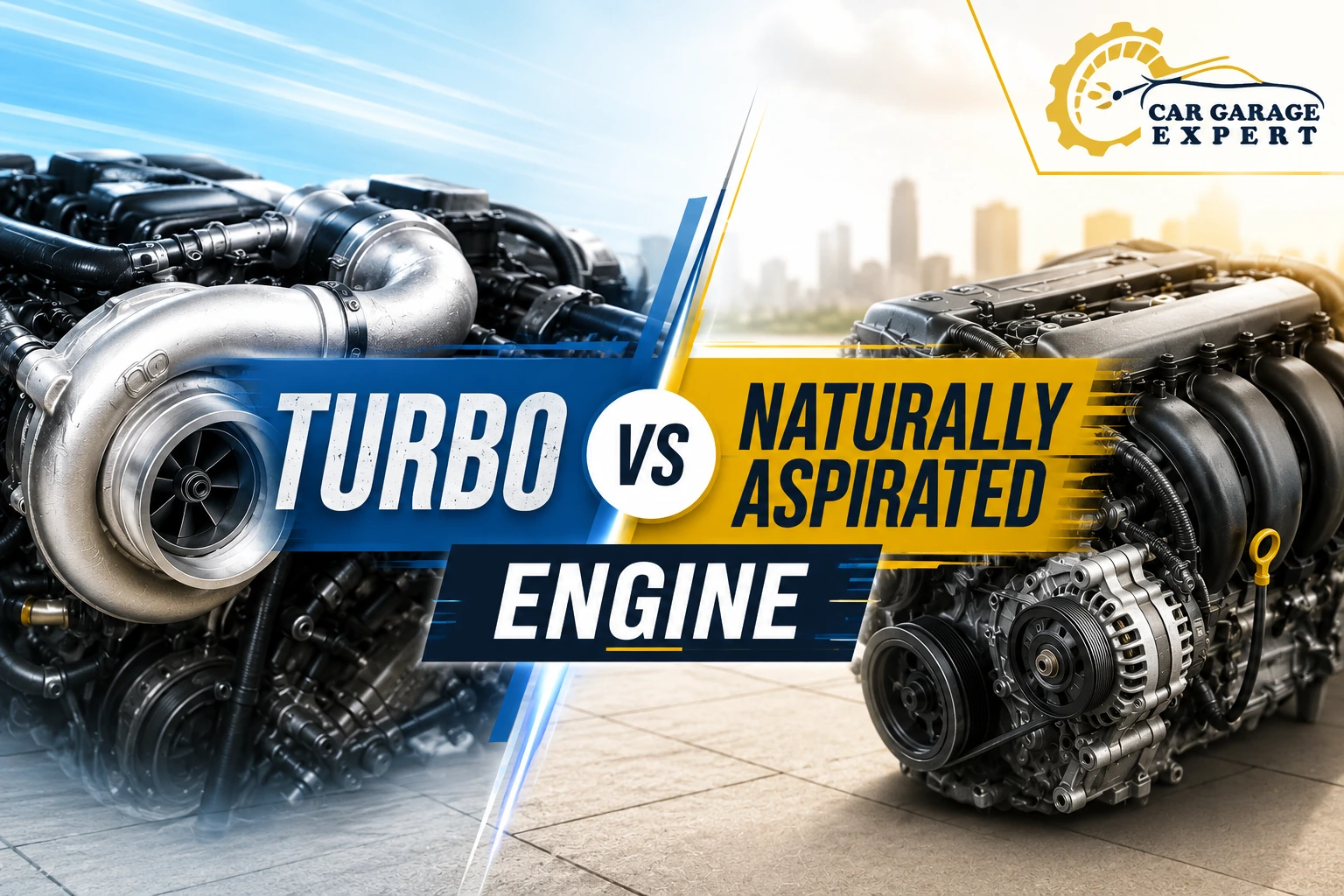
The Turbo vs Naturally Aspirated Engine debate usually comes down to simplicity versus performance. Naturally aspirated engines have fewer moving parts, no turbocharger to fail, and generally cost less to maintain over the long run, which tends to make them the more forgiving option in Dubai’s heat. Turbocharged engines deliver more power from a smaller displacement and better fuel economy on paper. But they do get hotter, rely more on the quality of oil, and have additional parts: the turbo itself, intercooler, and associated hoses that are more likely to wear out quickly in stop-start traffic and extreme temperatures. Both are reliable if properly maintained, although the turbo cars require higher levels of care.
Table of Contents
- Understanding the Debate: What Turbo vs Naturally Aspirated Engine Really Means for Reliability
- Turbo vs Naturally Aspirated Engine: Quick Comparison Table
- Warning Signs Each Engine Type Is Starting to Struggle
- Common Reasons Turbo and Naturally Aspirated Engines Develop Problems
- How We Diagnose Reliability Issues on Both Engine Types
- Typical Repair Process for Turbo and NA Engine Problems
- What Happens If You Ignore Early Warning Signs
- Can You Keep Driving With a Developing Engine Issue?
- How Long Do These Repairs Usually Take?
- What Affects the Cost of Fixing Either Engine Type
- Prevention Tips to Keep Either Engine Running Longer
- Dubai-Specific Advice for Turbo and Naturally Aspirated Owners
- Why Choose Car Garage Expert for Engine Repair and Services?
- Frequently Asked Questions
- Related Services
- Book Your Car In Today
What Turbo vs Naturally Aspirated Engine Really Means for Reliability
The Turbo vs Naturally Aspirated Engine question comes up constantly at the workshop, usually from someone deciding between two similar cars or trying to understand why their turbocharged model needs more attention than their last one did. The short answer is that both designs can last well past 200,000 km with proper care, but they fail differently and for different reasons.
A naturally aspirated engine sucks air in utilizing just the natural vacuum formed by the pistons sliding down the cylinder. There’s no forced induction, no extra pressurized parts, and fewer things that can go wrong under stress. A turbocharged engine adds a turbine driven by exhaust gases that forces more air into the cylinders, which increases power considerably but adds a component that spins at very high speeds, runs hot, and depends solely on clean, well-maintained oil to live.
Turbo vs Naturally Aspirated Engine: Quick Comparison Table
| Factor | Naturally Aspirated | Turbocharged |
| Mechanical complexity | Lower, fewer components | Higher, turbo and intercooler add parts |
| Typical long-term reliability | Generally more forgiving | Reliable if oil changes are strict |
| Heat sensitivity in Dubai | Lower | Higher, turbo runs very hot |
| Oil change sensitivity | Moderate | High, degraded oil causes rapid wear |
| Power delivery | Linear, predictable | Stronger but can lag at low RPM |
| Fuel efficiency | Lower per horsepower | Better per horsepower on paper |
| Common failure points | Timing components, gaskets | Turbo bearings, wastegate, intercooler hoses |
| Typical repair cost when issues arise | Lower on average | Higher due to turbo-specific parts |
Warning Signs Each Engine Type Is Starting to Struggle
Naturally aspirated engines tend to show trouble through:
- A gradual loss of power over time rather than a sudden drop
- Rough idling or misfires linked to spark plugs or ignition coils
- Oil consumption creeping up between changes.
- Unusual knocking sounds under load.
Turbocharged engines often show different symptoms first:
- A whining or whistling noise from the turbo under acceleration
- Blue or grey smoke from the exhaust, which usually points to oil getting into the turbo
- Noticeable turbo lag that’s worse than when the car was new
- Loss of boost pressure, felt as flat acceleration despite pressing the pedal harder.
- A burning oil smell from the engine bay after hard driving
Common Reasons Turbo and Naturally Aspirated Engines Develop Problems
Understanding the turbo vs. naturally aspirated engine reliability gap means understanding what actually breaks on each one.
On naturally aspirated engines, the usual culprits are worn timing belts or chains, aging gaskets that start to seep oil or coolant, and spark plugs or coils that degrade with mileage. These are well-understood failure points with decades of data behind them, which is part of why Naturally Aspirated engines have a reputation for being predictable.
On turbocharged engines, the turbo bearings themselves are the most common failure site, especially if you go too long or miss oil changes. The wastegate can stick or fail and can control the boost pressure. Intercooler hoses crack with heat and pressure cycling . Carbon buildup on direct-injection turbo engines might influence performance over time . The heat of Dubai accelerates most of these, as the turbo is already at severe temperatures before it has to deal with the 45°C ambient heat on top of that.
How We Diagnose Reliability Issues on Both Engine Types
The diagnosis starts the same no matter what engine type you have – a comprehensive scan to pull stored problem codes, then a visual inspection of the engine area for evident leaks, fractured hoses or oil residue. For turbocharged engines, we pay special attention to boost pressure measurements, comparing them to the manufacturer’s requirements, and check the turbo shaft for play, one of the most obvious symptoms of bearing wear.
For naturally aspirated engines, we pay additional attention to compression testing across the cylinders, looking for uneven wear indicating a valve or piston ring issue. If the car is due for that service interval, we also pay particular attention to timing components. Some problems only show up under real load, and not at idle. A road test finishes the diagnosis for both engine types.
Typical Repair Process for Turbo and NA Engine Problems
For naturally aspirated engines, common repairs include:
- Timing belt or chain replacement on schedule, before failure rather than after
- Gasket replacement where oil or coolant seepage is found
- Spark plug and coil replacement to restore smooth running
- Compression testing to confirm the repair resolved the underlying issue
For turbocharged engines, the process usually looks like:
- Boost leak testing to isolate the source of lost pressure.
- Turbo replacement or rebuild if bearing wear or shaft play is confirmed
- Intercooler hose replacement if cracking or boost leaks are found there.
- Wastegate inspection and repair if boost control is inconsistent
- A full road test under load to confirm boost pressure and power delivery are back to normal.
What Happens If You Ignore Early Warning Signs
On a naturally aspirated engine, ignoring early symptoms like oil consumption or minor knocking can lead to more serious internal wear, eventually affecting compression and power output significantly. On a turbocharged engine, ignoring a whining turbo or blue exhaust smoke tends to escalate faster — a failing turbo can shed metal fragments into the intake system, which then travel further into the engine and cause damage well beyond the turbo itself. This is one of the clearest practical differences in the Turbo vs Naturally Aspirated Engine reliability conversation: turbo problems generally punish delay more severely.
Can You Keep Driving With a Developing Engine Issue?
For naturally aspirated engines, mild symptoms like slightly reduced power or minor oil consumption usually allow for continued driving to a workshop, though it shouldn’t be put off indefinitely. For turbocharged engines, a whining turbo or visible exhaust smoke is a stronger signal to get the car checked soon rather than later, since turbo failure can happen without much additional warning. If the engine warning light comes on alongside any of these symptoms, or power drops suddenly, it’s safer to stop driving and arrange roadside assistance rather than risk further damage on the road.
How Long Do These Repairs Usually Take?
A gasket repair, spark plug replacement, or other routine job on normally aspirated engines will usually take a couple of hours or half a day. Replacing a timing belt or chain is more labor-intensive and, as such, normally takes closer to a full day. Diagnosing a boost leak and repairing hoses may often be done in less than half a day on turbocharged engines. However, a full turbo replacement or rebuild normally takes one to two days, depending on availability of parts and difficulty of the engine bay layout.
What Affects the Cost of Fixing Either Engine Type
Several factors influence pricing across both engine types:
- Whether the issue is a wear item, like a gasket or hose, versus a major component like a turbo unit
- Genuine versus quality aftermarket parts
- Labor time, which tends to run higher on turbocharged engines due to more components sharing limited space
- Whether secondary damage occurred from delayed repair, such as debris reaching the engine after turbo failure
- The specific make and model, since some turbocharged engines are simpler to access than others
Naturally aspirated engine repairs tend to average lower overall, largely because there’s no turbo-specific hardware to source or replace.
Prevention Tips to Keep Either Engine Running Longer
- Stick to manufacturer oil change intervals, and consider shortening them slightly for turbocharged engines given Dubai’s heat.
- Use the correct oil specification, since turbo engines are far less forgiving of the wrong grade or degraded oil.
- Let a turbocharged engine idle briefly after hard driving before switching off, allowing the turbo to cool gradually.
- Address small symptoms early rather than waiting for a warning light on either engine type.
- Keep up with routine servicing rather than reactive repairs, which catches most issues before they become expensive, our car service Dubai plans are built around exactly this kind of preventative check.
Dubai-Specific Advice for Turbo and Naturally Aspirated Owners
Heat alters the calculus on this topic more than most people realise. The naturally aspirated engine does a pretty good job of coping with the Dubai summer, provided the cooling system is serviced regularly. A turbocharged engine is inherently under greater continual thermal stress, and that stress is exacerbated by ambient temperatures that often surpass 45°C on the road surface.
It’s not to say turbo engines are a poor choice here; many run for years without issue, but it does imply that oil quality and maintenance intervals are more important than in a cooler region. Routine checks are worth saving for a trusted service near me, and a roadside assistance contact if a turbo issue suddenly crops up on a summer drive.
Why Choose Car Garage Expert for Engine Repair and Services?
Whichever side of the Turbo vs Naturally Aspirated Engine debate your car falls on, the workshop handling it needs to understand both. At Car Garage Expert in Al Quoz, our technicians work on turbocharged and naturally aspirated engines from European, Japanese, and American manufacturers daily, and know the specific failure points each design tends to develop in this climate. We use proper diagnostic equipment to confirm boost pressure, compression, and timing component wear rather than guessing, and every engine repair comes with an artistry warranty. If your engine is showing early signs of trouble, Car Garage Expert can get it diagnosed properly before a small issue becomes a major one.
Frequently Asked Questions
Q1: Which is genuinely more reliable, a turbo or naturally aspirated engine?
Naturally aspirated engines are generally more forgiving of maintenance lapses due to having fewer components, but a well-maintained turbocharged engine can be just as reliable long-term. The gap comes down to consistency in oil changes and how quickly small issues get addressed.
Q2: Do turbocharged engines really need more frequent oil changes?
Many manufacturers recommend shorter intervals for turbocharged engines, and in Dubai’s heat it’s often worth sticking to the shorter end of that range or even slightly ahead of it, since oil degrades faster under the extra heat a turbo generates.
Q3: Is turbo lag a sign of a problem or how turbos work?
A small amount of lag is normal, especially on older turbo designs. Noticeably worse lag than when the car was new, or lag accompanied by a whining sound, usually points to a developing turbo issue worth checking.
Q4: Are naturally aspirated engines being phased out because they’re less reliable?
Not because of reliability. Manufacturers are shifting toward turbocharged engines mainly for fuel efficiency and emissions reasons, not because naturally aspirated engines perform worse over time.
Q5: How much more expensive is it to maintain a turbocharged engine in Dubai?
It varies by model, but turbocharged engines generally cost somewhat more to maintain due to the extra components and stricter oil requirements, particularly in a hot climate where those components work harder.
Related Services
If your visit uncovers other concerns while you’re in, our team also handles car mechanic diagnostics for general engine troubleshooting, mobile car mechanic callouts if your car isn’t safe to drive in, and car painting near me touch-ups for any cosmetic wear alongside mechanical work. For routine maintenance on either engine type, check our car service packages in Dubai, and for a faster diagnostic booking, visit our garage near me.
Book Your Car In Today
Whether your car runs a turbocharged or naturally aspirated engine, staying ahead of small symptoms is what actually determines long-term reliability, not just which design you started with. Bring your car to Car Garage Expert in Al Quoz and let our technicians run a proper diagnostic, whether it’s a turbo whine, an oil consumption question, or just routine peace of mind.
📍 Find us on Google Maps
💬 Message us directly on WhatsApp