Common Subaru CVT warning signs include shuddering or jerking during acceleration, delayed engagement when selecting Drive or Reverse, unusual whining noises, slipping or inconsistent acceleration, transmission overheating warnings, burning smells, and dashboard warning lights. These symptoms may indicate low or degraded CVT fluid, faulty solenoids, valve-body problems, sensor issues, overheating, or internal transmission wear. Dubai’s extreme temperatures and stop-and-go traffic can place additional thermal stress on a CVT. If your Subaru develops persistent transmission symptoms, arrange a professional diagnostic inspection before continuing to drive it extensively.
Problem Overview: Understanding Subaru CVT Problems
Subaru uses Continuously Variable Transmission technology in many of its popular vehicles. Instead of changing between a fixed number of traditional gears, a CVT continuously adjusts its transmission ratio to balance engine performance, fuel efficiency, and driving conditions.
When operating correctly, the system can provide smooth acceleration. However, like any complex transmission, a Subaru CVT can develop problems due to heat, fluid degradation, electrical faults, valve body issues, sensor problems, or mechanical wear.
Recognizing Subaru CVT warning signs early is particularly important for motorists in Dubai. High ambient temperatures, long periods of stop-and-go traffic, frequent highway driving, and demanding summer conditions can increase the workload placed on the vehicle’s cooling and transmission systems.
A minor hesitation does not automatically mean that an entire CVT has failed. The actual cause could range from an electrical or sensor-related fault to a fluid, valve-body, solenoid, cooling, or internal transmission issue. Accurate diagnosis is therefore more important than replacing components based on symptoms alone.
Symptoms: What Are the Main Subaru CVT Warning Signs?
CVT problems do not always appear suddenly. In many cases, drivers notice small changes in transmission behavior before a more serious fault develops.
1. Shuddering or Juddering
One of the most noticeable Subaru CVT warning signs is a shudder or vibration while accelerating.
You may experience it when:
- Moving away from a traffic signal
- Accelerating at low speed
- Driving uphill
- Reaccelerating after slowing down
- Applying moderate throttle
A brief shudder should be professionally evaluated if it becomes frequent or stronger, or is accompanied by warning lights or unusual noises. 2. Delayed Drive or Reverse Engagement.
After shifting from Park into Drive or Reverse, the vehicle should engage predictably.
If there is an unusual pause before the vehicle begins moving, or if engagement is followed by a pronounced jolt, there may be an issue that requires investigation. Possible causes include fluid-related problems, hydraulic pressure irregularities, valve-body faults, control problems, or internal wear.
3. Whining, Humming, or Unusual Transmission Noise
A healthy CVT naturally has a different operating sound from a conventional automatic transmission. However, a new or increasingly loud whining, humming, grinding, or mechanical noise should not be ignored.
The source may not always be the transmission itself. Bearings, wheel components, differentials, engine accessories, or other drivetrain parts can produce similar noises, which is why professional diagnosis matters.
4. Hesitation During Acceleration
You press the accelerator, but your Subaru takes longer than expected to respond.
A hesitation that occurs repeatedly during acceleration may indicate a transmission, engine management, hydraulic, electronic, or mechanical issue.
Because engine faults can sometimes resemble transmission problems, technicians should evaluate relevant systems rather than automatically assuming the CVT is responsible.
5. RPM Rises, but Vehicle Speed Does Not Increase Normally
If engine speed rises noticeably while road speed increases more slowly than expected, the driver may interpret the sensation as a slipping transmission.
CVTs behave differently from conventional automatic transmissions, so changes in RPM are not automatically a defect. However, a clear change from the vehicle’s normal behavior—especially when accompanied by hesitation, warning lights, vibration, or loss of performance—should be inspected.
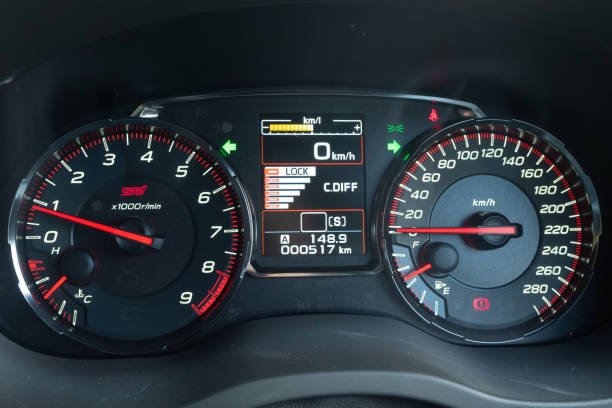
6. AT OIL TEMP Warning Light
This is one of the most important Subaru CVT warning signs to understand.
Subaru documentation states that an illuminated AT OIL TEMP warning on applicable CVT models may indicate excessive transmission-fluid temperature. Certain Subaru manuals also explain that a flashing warning light can indicate a problem with the transmission control system.
Do not simply clear the warning and continue driving as normal without determining why it appeared.
7. Burning Smell
A burning smell coming from the vehicle can have numerous causes, including overheated fluids, oil leaking onto hot components, electrical problems, or other mechanical faults.
If the smell occurs alongside transmission warnings, poor acceleration, or abnormal shifting behavior, stop using the vehicle and arrange an inspection.
8. Check Engine or Transmission-Related Warning Lights
Modern Subaru vehicles continually monitor multiple engine and drivetrain systems.
When a relevant fault is detected, the vehicle may store diagnostic trouble codes. Warning lights are useful diagnostic clues, but a code by itself does not necessarily prove that a particular component requires replacement.
Correct diagnosis should combine trouble-code scanning with physical inspection and operational testing.
Causes: What Causes Subaru CVT Problems?
Several different problems can produce similar CVT symptoms.
CVT Fluid Condition
CVT fluid performs critical lubrication, hydraulic, friction-control, and heat-management functions.
Fluid that is unsuitable, contaminated, deteriorated, incorrectly filled, or operating under excessive temperature can affect transmission performance.
The correct fluid specification is particularly important because CVT systems are sensitive to fluid characteristics.
Transmission Overheating
Heat is one of the major challenges faced by automatic transmission systems.
Heavy traffic, prolonged low-speed driving, high ambient temperatures, towing where applicable, steep gradients, cooling system problems, or an existing transmission fault may contribute to increased operating temperatures.
This deserves special attention in Dubai.
Valve-Body or Solenoid Faults
The valve body helps manage hydraulic pressure and CVT operation. Solenoids in the transmission control system help regulate various functions.
A faulty component in this system can cause warning lights, abnormal engagement, poor drivability, or stored transmission fault codes. Importantly, a valve body or solenoid-related fault does not necessarily mean the entire transmission assembly requires replacement.
Electrical and Sensor Problems
Modern CVTs rely heavily on electronic controls.
Faulty wiring, damaged connectors, sensor issues, voltage irregularities, or control system faults can affect transmission operation. This is another reason why replacing mechanical parts before conducting proper diagnostic testing can be unnecessarily expensive.
Internal Mechanical Wear
In higher-mileage vehicles or in transmissions that have experienced severe operating conditions, internal components may eventually wear out.
Mechanical damage can produce noise, vibration, performance problems, contaminated fluid, or more severe transmission symptoms.
Determining the exact condition may require additional testing beyond a basic electronic scan.
Cooling-System Problems
Transmission performance and temperature management can be influenced by the vehicle’s overall cooling condition.
Cooling problems should therefore be considered when investigating repeated overheating symptoms, particularly in Dubai’s summer climate.
Diagnostic Process: How Subaru CVT Problems Should Be Checked
Reliable Subaru CVT repair in Dubai begins with diagnosis rather than guesswork.
At Car Garage Expert, a professional diagnostic process should systematically examine the symptoms to identify the root cause of the problem.
Step 1: Customer Symptom Assessment
The technician first needs to understand:
- When the problem occurs
- Whether the vehicle is hot or cold
- Whether symptoms appear during acceleration or deceleration
- Whether warning lights are present
- Whether a smell or unusual noise has developed
- Whether previous transmission work has been performed
This information helps reproduce the fault more effectively.
Step 2: Electronic Diagnostic Scan
A professional scan can reveal stored or pending diagnostic trouble codes associated with transmission, engine, communication, electrical, or related systems.
Codes provide direction for further testing; they should not be treated as automatic instructions to replace parts.
Step 3: Visual Inspection
Technicians may inspect for visible leaks, damaged wiring, loose connectors, signs of overheating, fluid contamination where accessible, and related drivetrain problems.
Step 4: Fluid and Temperature Evaluation
Where appropriate for the model and transmission, CVT fluid condition, correct level-setting procedures, operating temperature, and signs of leakage or contamination may be evaluated.
Subaru CVTs can require specific procedures for checking and servicing fluid, so generic automatic-transmission methods should not be assumed to apply.
Step 5: Road Test
A controlled road test can help identify:
- Shuddering
- Delayed engagement
- Abnormal noises
- Acceleration hesitation
- Temperature-related behavior
- Problems appearing only under particular loads
Step 6: Advanced Testing
Depending on the initial findings, further testing may involve electrical circuits, pressure-related operation, solenoid performance, sensors, valve-body function, transmission adaptation data, or mechanical condition.
The goal should always be to identify the failed system before recommending major repairs.
Repair Process: How Are Subaru CVT Problems Fixed?
The repair depends entirely on the diagnostic results.
CVT Fluid Service
If the problem is related to fluid condition and no significant internal damage is present, an appropriate CVT fluid service may be recommended.
The correct Subaru-compatible CVT fluid specification and proper service procedure are essential.
Electrical or Sensor Repair
Damaged wiring, connectors, sensors, or related electrical components may be repaired or replaced when they are responsible for the fault.
Solenoid or Valve-Body Repair
When testing identifies a valve body or solenoid problem, repairing or replacing the affected assembly may restore proper operation without replacing the entire CVT, depending on the transmission condition and model.
Software or Adaptation Procedures
Certain drivability concerns may require diagnostic procedures, software checks, relearning, or adaptations, as applicable to the specific Subaru model. These procedures should only be performed when supported by diagnostic findings.
CVT Overhaul or Replacement
If testing confirms substantial internal transmission damage, the appropriate solution may involve rebuilding, overhauling, or replacing the CVT assembly.
This is generally a larger repair and should be recommended only after confirming that less extensive repairs will not resolve the underlying problem.
Risks of Ignoring Subaru CVT Warning Signs
Continuing to drive with persistent transmission symptoms may turn a manageable problem into a more expensive one.
Potential consequences include:
- Increasing transmission temperatures
- Accelerated internal wear
- Reduced acceleration
- Unpredictable engagement
- Progressive fluid deterioration
- Additional component damage
- Vehicle entering a reduced-performance mode.
- Complete loss of normal transmission operation
A warning light that disappears does not necessarily mean the underlying problem has permanently resolved. Diagnostic trouble codes or operating data may still provide useful information about what happened.
Early inspection gives technicians the best opportunity to identify a smaller fault before secondary damage develops.
Can You Continue Driving With Subaru CVT Warning Signs?
It depends on the symptom.
If you notice only a very mild change in drivability with no warning lights, severe vibration, burning smell, overheating, fluid leakage, or loss of power, drive conservatively and arrange an inspection as soon as practical.
However, you should avoid continuing to drive if the Subaru develops:
- A transmission-temperature warning
- Severe shuddering or violent jerking
- Significant loss of acceleration
- A strong burning smell
- Grinding or serious mechanical noises
- Visible transmission-fluid leakage
- Difficulty engaging Drive or Reverse
- A flashing transmission warning
- A situation where the vehicle feels unsafe or unpredictable
If continuing to drive could make the problem worse or compromise safety, recovery to a workshop is the safer approach.
Subaru CVT Repair Time
The amount of time required for Subaru CVT repair depends on the diagnosed problem.
A diagnostic inspection may be completed much more quickly than a major transmission repair. Electrical problems, fluid servicing, sensor replacement, and some external component repairs may require only a relatively limited amount of workshop time.
Valve-body work typically requires additional labor and testing.
A complete CVT overhaul or replacement requires considerably more time because the transmission may need to be removed, repaired or replaced, installed, filled correctly, checked for faults, and tested before the vehicle is returned.
Parts availability can also affect completion time in Dubai.
For the most useful estimate, obtain a diagnosis first rather than estimating repair time based on symptoms alone.
Subaru CVT Repair Cost Factors in Dubai
There is no single price for every Subaru CVT problem. Your final Subaru CVT repair cost in Dubai can depend on several factors.
Vehicle Model
A Subaru Forester, Outback, XV/Crosstrek, Legacy, Impreza, WRX, or other model may use different drivetrain configurations and transmission components.
Model Year
Subaru has used different CVT designs and control systems across different generations. Parts and repair procedures therefore vary.
Type of Failure
A wiring repair will normally involve a very different level of work from that of a valve-body replacement or a complete transmission overhaul.
Parts Required
Repair costs depend on whether the vehicle needs fluid, seals, sensors, solenoids, a valve-body assembly, electronic components, internal transmission parts, or a complete transmission.
Labour Required
Repairs that require transmission removal naturally involve more workshop labor than external electrical or diagnostic work.
Extent of Secondary Damage
Continuing to drive after a serious warning can potentially increase the number of damaged components.
Early diagnosis can therefore make a significant difference to the eventual repair strategy.
Prevention Tips for Subaru CVT Problems
You cannot prevent every mechanical failure, but good maintenance habits can reduce unnecessary stress on the transmission.
Follow the Correct Maintenance Requirements
Use the servicing recommendations appropriate to your specific Subaru model, year, engine, and driving conditions.
Use the Correct CVT Fluid
Never assume all CVT fluids are interchangeable. Transmission-fluid specification matters.
Address Fluid Leaks Quickly
Even a small leak deserves investigation. Fluid loss can affect lubrication, hydraulic operation, and temperature control.
Keep the Cooling System Healthy
Because Dubai experiences extreme heat, ensure the engine cooling system is properly maintained.
Radiators, coolant, fans, thermostats, hoses, and related components should not be neglected.
Avoid Ignoring New Driving Symptoms
A minor shudder or intermittent warning may be the first sign of a developing issue.
Early diagnosis is usually preferable to waiting until the car becomes difficult to drive.
Avoid Excessive Load When a Problem Exists
If the transmission is already overheating, slipping, shuddering, or displaying warning lights, aggressive acceleration and prolonged driving can increase stress.
Dubai-Specific Advice for Subaru CVT Owners
Driving a Subaru in Dubai can expose the transmission and cooling systems to demanding conditions, particularly during summer.
Ambient temperatures can become extremely high, while traffic may require extended periods of low-speed operation with the air conditioning running continuously. These conditions make preventive maintenance particularly important.
Pay Extra Attention to Cooling Performance
A vehicle that begins running hotter than usual deserves prompt attention. Cooling system efficiency matters not only to the engine but also to the drivetrain’s overall operating environment.
Do Not Ignore Temperature Warnings
If an AT OIL TEMP warning appears, treat it seriously. Avoid assuming that Dubai’s weather alone is responsible. Extreme outside temperatures can increase thermal load, but repeated overheating may indicate a problem that requires diagnosis.
Have Used Subaru Inspected Before Purchase
If you are buying a pre-owned Subaru in Dubai, consider having its transmission behavior inspected before completing the purchase.
Look for delayed engagement, warning lights, fluid leaks, shuddering, unusual noises, and incomplete service history.
Be Cautious After Long Periods of Storage
Vehicles that remain parked for extended periods may develop battery, fluid, seal, or electrical issues.
If your Subaru has been unused for a long time and begins displaying drivetrain warnings, a professional inspection can distinguish a genuine transmission defect from another electrical or mechanical problem.
Diagnose Before Replacing
Dubai has a large automotive repair market, but transmission repairs can become expensive when parts are replaced through trial and error. A structured diagnosis is the better approach.
Why Choose Car Garage Expert for Subaru CVT Service in Dubai?
When your vehicle begins showing Subaru CVT warning signs, you need more than a quick assumption that the transmission has failed.
At Car Garage Expert, the focus is on identifying the source of the problem and recommending repairs based on the vehicle’s actual condition.
A professional Subaru CVT inspection can include electronic fault-code diagnosis, symptom evaluation, road testing where appropriate, fluid and leak inspection, electrical checks, and assessment of relevant transmission components.
Whether the issue involves CVT fluid, a sensor, wiring, valve-body operation, overheating, or a more serious internal transmission fault, accurate diagnosis helps prevent unnecessary replacement of expensive parts.
For Subaru owners throughout Dubai, choosing a garage familiar with modern transmission systems can make the repair process clearer, more efficient, and easier to understand.
FAQs About Subaru CVT Warning Signs
1. What are the first signs of a Subaru CVT going bad?
Early warning signs may include unusual shuddering, hesitation when accelerating, delayed engagement into Drive or Reverse, abnormal whining sounds, changes in normal transmission behavior, or intermittent dashboard warnings. Because some engine and drivetrain problems can produce similar symptoms, professional diagnosis is recommended before assuming the CVT itself is failing.
2. What does the AT OIL TEMP light mean on a Subaru?
On applicable Subaru CVT models, an illuminated AT OIL TEMP warning may indicate that transmission-fluid temperature is too high. A flashing warning can also indicate a transmission control system fault, depending on the vehicle. If the warning appears while driving, follow the guidance in your vehicle owner’s manual and arrange professional diagnosis if the warning persists or returns.
3. Can low or poor CVT fluid cause Subaru transmission problems?
Incorrect fluid level, unsuitable fluid, contamination, deterioration, or leakage can contribute to abnormal CVT operation. However, similar symptoms can also result from electrical, hydraulic, valve-body, cooling, sensor, or internal mechanical faults. The fluid should be checked using procedures appropriate to the specific Subaru CVT.
4. Does a shudder mean my Subaru CVT needs replacement?
No. Shuddering does not automatically mean the complete transmission needs replacement. The cause may involve fluid condition, transmission control, valve-body operation, drivetrain components, engine performance, mounts, or internal CVT wear. A diagnostic inspection should determine the actual cause before major components are replaced.
5. Where can I get Subaru CVT diagnostics in Dubai?
If your Subaru is showing transmission warning lights, shuddering, hesitation, overheating, unusual noises, or delayed engagement, contact Car Garage Expert in Dubai for a professional inspection. Diagnosing the problem early can help determine whether the vehicle requires a relatively minor repair, transmission servicing, valve-body work, or a more extensive CVT repair.
Conclusion Subaru CVT Warning Signs
Understanding Subaru CVT warning signs can help you recognize transmission trouble before it develops into a more serious and expensive problem.
Shuddering, delayed engagement, unusual noises, hesitation, burning smells, abnormal acceleration, and AT OIL TEMP warnings should not simply be ignored—particularly when symptoms are becoming more frequent.
For Subaru drivers in Dubai, the combination of high summer temperatures, congestion, and demanding driving conditions makes cooling-system and transmission maintenance especially important.
At the same time, not every unusual CVT symptom means that the complete transmission has failed. Sensor faults, wiring problems, fluid issues, valve-body components, overheating, and other drivetrain faults can produce similar symptoms. The smartest first step is accurate diagnosis.
Book Your Subaru CVT Inspection With a Car Garage Expert Today
Is your Subaru shuddering, hesitating, overheating, displaying an AT OIL TEMP warning, or behaving differently during acceleration?
Do not wait for a small transmission problem to become a major repair.
Contact Car Garage Expert in Dubai today to schedule a professional Subaru CVT diagnostic inspection. Our team can assess the warning signs, identify the likely cause, explain the available repair options, and help you get your Subaru back on the road with confidence.
Book your Subaru CVT inspection with Car Garage Expert today and address transmission warning signs before they become bigger problems.
Visit us in our Al Quoz, Dubai branch or visit Car Garage Expert